Guide · · 11 min read
Warehouse Slotting & SKU Velocity: Faster, Cheaper Picking
Pickers spend most of their time walking, not picking. Slotting your fastest movers into the right spots is the cheapest way to cut fulfillment labour cost.
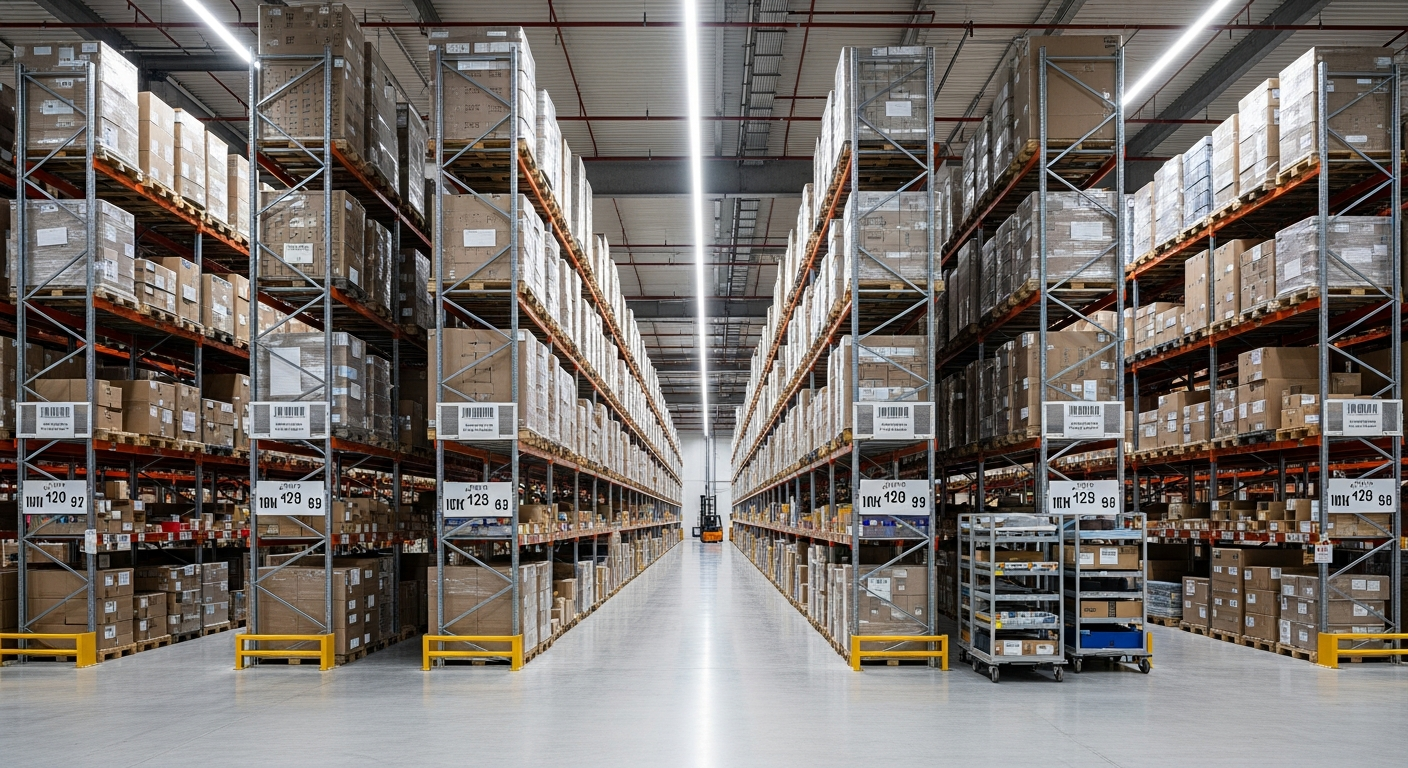
In a typical pick operation, the majority of a picker's time is spent travelling between locations, not actually picking items. That means the single biggest lever on picking labour — and therefore on cost per order — is where your products live in the warehouse. Slotting is the discipline of assigning each SKU to the optimal location based on how fast it moves, how big it is, and how it's ordered together with other items. Done well, slotting quietly removes a large share of wasted travel. This guide explains SKU velocity, ABC analysis, golden zones, and how a re-slotting cadence keeps a warehouse fast as your catalog changes.
SKU velocity: not all products are equal
SKU velocity measures how frequently a product is picked over a period. In almost every catalog, a small fraction of SKUs drives the majority of pick activity — the classic 80/20 pattern. Treating every SKU the same (storing them alphabetically, or wherever there's space) ignores this reality and forces pickers to walk past slow movers to reach fast ones. Velocity analysis ranks SKUs by pick frequency so the operation can prioritize the items that actually drive labour. It's the input that makes every other slotting decision rational.
 SKU velocity: not all products are equal
ABC analysis and the golden zone
ABC analysis groups SKUs by velocity: A items (the fast movers driving most picks), B items (moderate), and C items (the slow long tail). The slotting principle that follows is simple but powerful: put A items in the most accessible, least-travel locations — the 'golden zone' at waist-to-shoulder height near pack-out and main pick paths — and push C items to higher, lower, or more distant locations. This minimizes travel and reach for the picks that happen most often. Layering in product size and weight (heavy items low, bulky items in appropriate space) and affinity (items frequently ordered together placed near each other) refines it further.
| Class | Share of picks | Slotting priority |
|---|
| A — fast movers | Majority of picks | Golden zone, near pack-out, prime paths |
| B — moderate | Middle band | Secondary accessible locations |
| C — slow / long tail | Minority of picks | Higher, lower, or distant locations |
| Affinity pairs | Often ordered together | Co-located to cut multi-line travel |
Pick paths and the cost of travel
Slotting and pick-path logic work together. Even with perfect slotting, a poorly sequenced pick path sends workers zig-zagging across the floor. Good systems batch orders and sequence picks so a worker travels a logical, minimal route — and good slotting ensures that route passes the highest-velocity items efficiently. The combined effect on cost per order is significant because labour is the largest controllable cost in most fulfillment operations. Reducing average travel per pick directly reduces the labour minutes baked into every order you ship.
Labour is the biggest controllable cost in fulfillment, and travel is the biggest component of labour. Slotting plus smart pick paths attack that travel directly — which is why they move cost per order more than almost anything else.
Re-slotting: keeping the layout honest
Slotting is not a one-time project. Velocity shifts with seasons, promotions, new launches, and discontinued SKUs, so a layout that was optimal six months ago slowly decays. Leading operations re-slot on a cadence — reviewing velocity data periodically and moving SKUs as their patterns change, with extra attention before peak season. The discipline is balancing the gain from better placement against the labour cost of moving stock, so re-slotting focuses on the SKUs whose velocity has changed most. Continuous, data-driven re-slotting is what separates a warehouse that stays fast from one that gradually slows down.
- Review SKU velocity on a regular cadence, not once
- Re-slot ahead of peak season and major launches
- Prioritize SKUs whose velocity has shifted most
- Weigh placement gains against the labour to move stock
- Retire dead SKUs from prime locations promptly
How ByExpress slots for speed
ByExpress uses velocity and order-affinity data to slot fast movers into golden-zone locations, co-locate frequently paired items, and sequence pick paths to minimize travel. We re-slot on a cadence and ahead of peak so the layout stays aligned with real demand. Because picking labour is the largest controllable cost in fulfillment, this directly lowers cost per order — savings that show up across every order a brand ships, not just at peak.
Frequently Asked Questions
What is warehouse slotting?
Slotting is assigning each SKU to an optimal storage location based on how fast it moves, its size and weight, and which items it's commonly ordered with. The goal is to minimize picker travel and reach for the most frequent picks, which lowers labour cost per order.
What is SKU velocity?
SKU velocity is how frequently a product is picked over a period. Most catalogs follow an 80/20 pattern where a small set of SKUs drives most pick activity. Ranking SKUs by velocity is the input that makes slotting rational — fast movers get the best locations.
What is the golden zone in a warehouse?
The golden zone is the most accessible picking area — roughly waist-to-shoulder height, near pack-out and main pick paths — where items can be picked with minimal reach and travel. Fast-moving A-class SKUs belong here; slow movers are pushed to higher, lower, or more distant locations.
How often should a warehouse be re-slotted?
On a regular cadence rather than once, because velocity shifts with seasons, promotions, and catalog changes. Many operations review velocity data periodically and re-slot the SKUs whose patterns changed most, with extra attention before peak season. The aim is to keep the layout aligned with current demand.
How much does slotting actually save?
Because most pick time is travel, and labour is the largest controllable fulfillment cost, better slotting and pick paths can meaningfully reduce cost per order. The exact figure depends on catalog and layout, but the savings recur on every order shipped, which is why slotting is one of the highest-ROI warehouse disciplines.
Related ByExpress resources