Sustainability is no longer a trend—it’s a competitive advantage. Businesses operating in Seattle and Vancouver are under increasing pressure to reduce their environmental footprint while maintaining fast, scalable fulfillment operations. Eco-friendly fulfillment services are now the backbone of modern logistics, helping brands meet consumer expectations while aligning with environmental standards.
This guide delivers a deep, actionable breakdown of how eco-friendly fulfillment works, why it matters, and how to leverage it for long-term growth across the Pacific Northwest.
What Are Eco-Friendly Fulfillment Services?
Eco-friendly fulfillment services refer to logistics operations designed to minimize environmental impact across the entire supply chain. This includes warehousing, packaging, transportation, and last-mile delivery—all optimized for sustainability.
Core Components of Green Fulfillment
- Carbon-neutral shipping methods
- Energy-efficient warehouses
- Sustainable packaging materials
- Optimized inventory and route planning
- Waste reduction and recycling systems
Modern fulfillment providers are integrating these practices into scalable systems that don’t compromise speed or efficiency.
For a deeper understanding of how sustainability integrates into logistics, explore this resource on green logistics in modern warehousing.
Why Seattle & Vancouver Are Leading Eco-Friendly Logistics Hubs
Seattle and Vancouver are uniquely positioned as leaders in sustainable fulfillment due to their infrastructure, environmental policies, and consumer demand.
Strategic Advantages
- Access to major ports for reduced transportation emissions
- Strong government sustainability regulations
- High adoption of clean energy technologies
- Growing demand for eco-conscious brands
Both cities are aligned with environmental initiatives such as the EPA Sustainable Materials Management Program, which encourages reduced waste across supply chains.
How Eco-Friendly Fulfillment Drives Business Growth
Sustainability is directly tied to profitability and brand perception. Businesses that adopt eco-friendly fulfillment see measurable improvements across key performance indicators.
Key Business Benefits
1. Reduced Operational Costs
Energy-efficient warehouses and optimized shipping routes significantly cut costs over time. Learn how to maximize warehouse efficiency and cut costs.
2. Increased Customer Loyalty
Consumers prefer brands that prioritize sustainability. Green fulfillment enhances trust and retention.
3. Regulatory Compliance
Avoid penalties and future-proof operations by aligning with environmental standards.
4. Competitive Differentiation
Eco-friendly logistics positions your brand as a leader in innovation and responsibility.
Sustainable Warehousing: The Foundation of Green Fulfillment
Warehousing is one of the largest contributors to logistics emissions. Modern eco-friendly fulfillment centers are designed with sustainability at their core.
Key Features of Green Warehouses
- Solar-powered energy systems
- LED lighting and motion sensors
- Smart temperature control systems
- Waste reduction protocols
- Water conservation systems
Advanced technologies such as AI and automation further enhance efficiency. Discover how AI is transforming logistics in 2025.
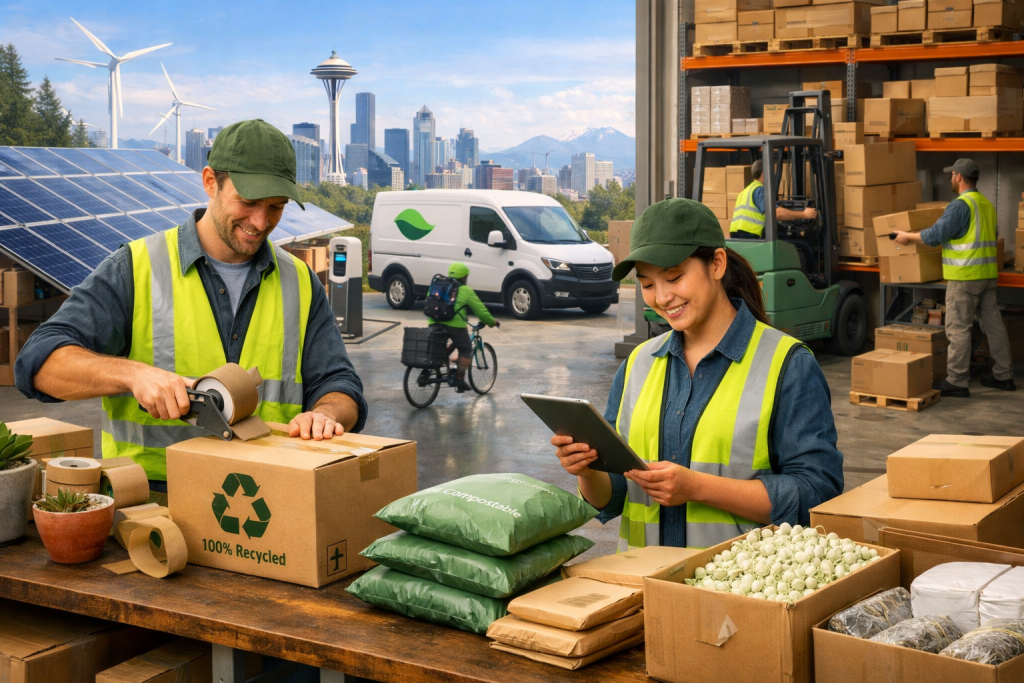
Eco-Friendly Packaging Solutions
Packaging plays a critical role in sustainable fulfillment. Businesses are shifting toward materials and processes that reduce waste without compromising product protection.
Best Practices for Sustainable Packaging
- Use biodegradable or recyclable materials
- Reduce packaging size and weight
- Eliminate unnecessary fillers
- Implement reusable packaging systems
According to Natural Resources Canada, sustainable packaging significantly reduces carbon emissions in transportation and production.
Carbon-Neutral Shipping & Last-Mile Delivery
Shipping is often the most carbon-intensive part of fulfillment. Eco-friendly providers are leveraging innovative strategies to reduce emissions.
Sustainable Shipping Methods
- Electric delivery vehicles
- Route optimization software
- Consolidated shipments
- Carbon offset programs
These strategies align with insights from how to lower fulfillment costs without sacrificing quality, proving that sustainability and efficiency go hand in hand.
The Role of Technology in Sustainable Fulfillment
Technology is the driving force behind eco-friendly logistics. From AI to real-time tracking, innovation enables smarter, greener operations.
Key Technologies
- Warehouse Management Systems (WMS)
- AI-driven demand forecasting
- Real-time inventory tracking
- Automated picking and packing systems
Explore how warehouse automation is shaping the future.
Cross-Border Eco-Friendly Fulfillment Between Seattle & Vancouver
Operating across the U.S.-Canada border introduces complexity—but also opportunity.
Sustainable Cross-Border Strategies
- Use regional distribution hubs
- Optimize customs clearance processes
- Reduce duplicate shipments
- Implement shared inventory systems
For broader strategies, review optimizing your supply chain for global challenges.
Choosing the Right Eco-Friendly Fulfillment Partner
Not all fulfillment providers are created equal. Selecting the right partner is critical to achieving sustainability goals.
What to Look For
- Proven sustainability initiatives
- Advanced technology integration
- Transparent reporting and analytics
- Scalable infrastructure
- Strategic warehouse locations
A comprehensive guide is available here: choosing the right fulfillment partner.
Challenges in Implementing Green Fulfillment (And How to Overcome Them)
Common Challenges
- Higher initial investment
- Limited supplier options
- Complex logistics integration
Solutions
- Start with scalable sustainability initiatives
- Partner with experienced 3PL providers
- Use data analytics to optimize performance
Future Trends in Eco-Friendly Fulfillment
The future of fulfillment is undeniably green. Businesses that adapt early will dominate their markets.
Emerging Trends
- Micro-fulfillment centers in urban areas
- AI-powered sustainability optimization
- Fully electric delivery fleets
- Circular supply chain models
Seattle and Vancouver are expected to lead North America in these innovations.
How ByExpress Supports Eco-Friendly Fulfillment
ByExpress provides advanced, scalable fulfillment solutions designed for sustainability and efficiency.
Key Services
- E-commerce fulfillment
- Inventory management systems
- Real-time tracking and analytics
- Cross-border logistics support
Businesses can also explore service locations via ByExpress service locations to optimize regional distribution.
To start building a sustainable fulfillment strategy, request a quote here:
👉 Get a fulfillment quote
Eco-Friendly Fulfillment Strategies for E-Commerce Brands
E-commerce brands must align fulfillment operations with sustainability goals to remain competitive.
Actionable Strategies
- Consolidate shipments to reduce emissions
- Use distributed warehousing models
- Implement smart inventory control systems
- Reduce return rates through better product descriptions
Learn more about improving operations through warehouse space optimization.
FAQs: Eco-Friendly Fulfillment Services
1. What is eco-friendly fulfillment?
Eco-friendly fulfillment involves sustainable logistics practices that reduce environmental impact across warehousing, packaging, and shipping.
2. Are green fulfillment services more expensive?
Initial costs may be higher, but long-term savings from efficiency and reduced waste offset the investment.
3. How can businesses reduce shipping emissions?
By using electric vehicles, optimizing routes, and consolidating shipments.
4. Why are Seattle and Vancouver ideal for green logistics?
Both cities have strong infrastructure, environmental policies, and access to clean energy.
5. What industries benefit most from eco-friendly fulfillment?
E-commerce, retail, health products, and subscription-based businesses benefit significantly.
Conclusion: Build a Future-Proof, Sustainable Fulfillment Strategy
Eco-friendly fulfillment services in Seattle and Vancouver are not just a smart choice—they are essential for long-term growth. Businesses that integrate sustainability into their logistics operations gain a powerful competitive edge, reduce costs, and align with evolving consumer expectations.
The path forward is clear: sustainable fulfillment is the future of logistics.