What Are Micro-Fulfillment Centers and Why They Matter in 2025
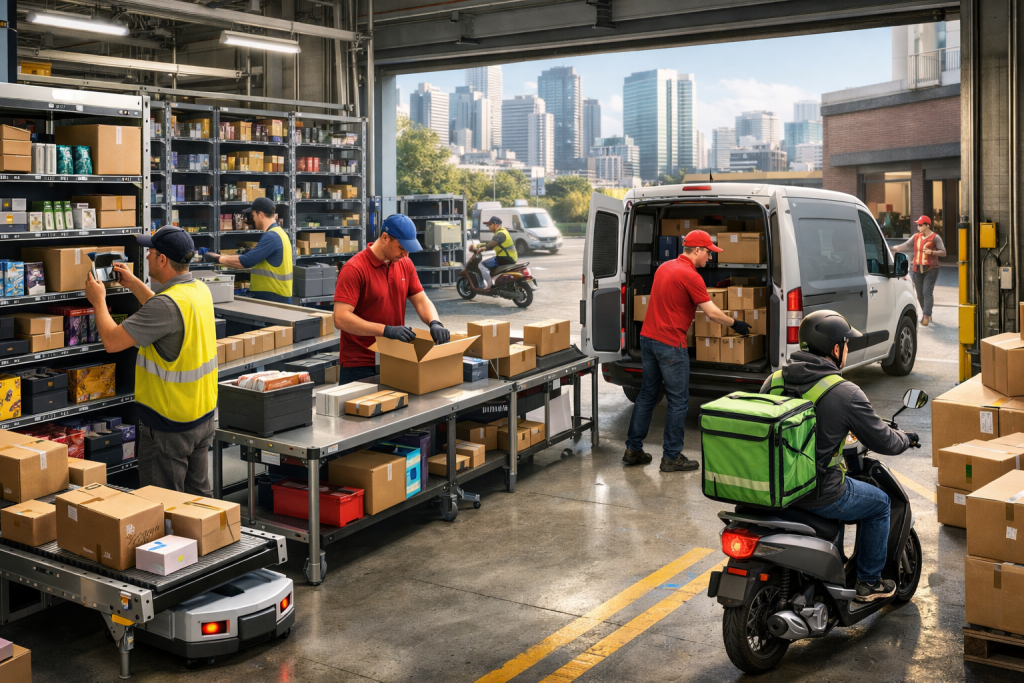
Micro-fulfillment centers (MFCs) are compact, highly automated warehouses strategically located in urban areas to enable rapid order processing and ultra-fast delivery. Designed to bring inventory closer to the customer, these facilities eliminate the inefficiencies of traditional centralized distribution models.
Unlike large-scale fulfillment warehouses located outside cities, micro-fulfillment centers operate within dense metropolitan zones. This proximity dramatically reduces last-mile delivery time, which is the most expensive and time-sensitive part of the supply chain.
The rise of MFCs aligns directly with modern consumer expectations—same-day or even one-hour delivery is no longer a luxury but a baseline requirement. Businesses that fail to meet these expectations risk losing customers to competitors who have already optimized their fulfillment strategies.
For a deeper understanding of how fulfillment works at scale, explore this detailed guide on what is a fulfillment center and how it works.
How Micro-Fulfillment Centers Work
Automated Storage and Retrieval Systems (AS/RS)
Micro-fulfillment centers rely heavily on automation technologies such as robotic picking systems, conveyor belts, and AI-powered inventory management. These systems ensure high-speed order processing with minimal human intervention.
Urban Location Strategy
MFCs are typically located in:
- Retail store backrooms
- Urban warehouses
- Converted commercial spaces
This allows businesses to maintain inventory within close proximity to customers, reducing delivery distances and transportation costs.
Integration with E-commerce Platforms
Modern MFCs integrate seamlessly with online stores, ensuring real-time inventory updates and order processing. Learn more about the role of data in fulfillment through this resource on real-time inventory updates.
Why Micro-Fulfillment Centers Are Dominating Urban Logistics
1. Faster Delivery Speeds
Speed is the primary advantage of micro-fulfillment centers. By positioning inventory closer to customers, businesses can offer:
- Same-day delivery
- Next-day shipping
- On-demand fulfillment
This aligns with consumer demand for instant gratification and improves conversion rates.
2. Reduced Last-Mile Costs
Last-mile delivery accounts for over 50% of total shipping costs. MFCs reduce these costs by shortening delivery distances and optimizing routing.
To understand how logistics optimization reduces costs, refer to 5 ways to lower shipping costs without compromising speed.
3. Improved Inventory Accuracy
With automated systems and real-time tracking, MFCs significantly reduce errors in order fulfillment. This results in:
- Higher customer satisfaction
- Fewer returns
- Better inventory control
4. Scalability for Growing Businesses
Micro-fulfillment centers allow businesses to scale operations without investing in massive infrastructure. This is particularly beneficial for e-commerce brands experiencing rapid growth.
Micro-Fulfillment vs Traditional Warehousing
Key Differences
| Feature |
Micro-Fulfillment Centers |
Traditional Warehouses |
| Location |
Urban areas |
Outskirts or rural |
| Size |
Small to medium |
Large-scale |
| Automation |
High |
Moderate |
| Delivery Speed |
Same-day |
2–5 days |
| Cost Efficiency |
Optimized for last-mile |
Optimized for bulk storage |
Strategic Advantage
Traditional warehouses are still essential for bulk storage and long-distance distribution. However, combining them with micro-fulfillment creates a hybrid logistics model that maximizes efficiency.
Explore how distributed logistics models are evolving in this article on why businesses are switching to distributed warehousing.
The Role of Technology in Micro-Fulfillment
Artificial Intelligence and Predictive Analytics
AI plays a critical role in forecasting demand, optimizing inventory placement, and automating operations. Businesses leveraging AI can anticipate customer behavior and stock products accordingly.
Dive deeper into AI-driven logistics in how AI is transforming the logistics industry in 2025.
Robotics and Automation
Robotic systems increase picking speed and reduce labor costs. These systems operate 24/7, ensuring continuous fulfillment operations.
IoT and Real-Time Tracking
Internet of Things (IoT) devices enable real-time monitoring of inventory and shipments, improving transparency and efficiency.
For broader industry insights, refer to this external resource from the World Economic Forum on logistics innovation.
Benefits of Micro-Fulfillment Centers for E-commerce Businesses
Enhanced Customer Experience
Faster delivery leads to higher customer satisfaction and increased brand loyalty. Customers are more likely to return when their expectations are consistently met.
Lower Operational Costs
By reducing transportation distances and improving efficiency, MFCs lower overall logistics costs.
Better Space Utilization
Micro-fulfillment centers are designed to maximize storage capacity within limited space. Learn how to optimize space effectively in how to improve warehouse space utilization.
Increased Order Accuracy
Automation minimizes human error, ensuring accurate order fulfillment and reducing returns.
Challenges of Micro-Fulfillment Centers
High Initial Investment
Setting up automated systems and securing urban real estate can be costly. However, the long-term ROI often outweighs the initial expenses.
Limited Storage Capacity
Due to their smaller size, MFCs cannot store large volumes of inventory. Businesses must carefully manage stock levels.
Complex Integration
Integrating MFCs with existing supply chain systems requires advanced technology and expertise.
Industries Benefiting from Micro-Fulfillment
Retail and E-commerce
Online retailers benefit the most from MFCs due to the need for fast delivery and high order volumes.
Grocery and Food Delivery
Perishable goods require rapid fulfillment, making MFCs ideal for grocery chains and food delivery services.
Pharmaceuticals
Fast and accurate delivery is critical in healthcare logistics, making MFCs highly valuable.
Micro-Fulfillment and Sustainability
Micro-fulfillment centers contribute to sustainability by:
- Reducing transportation emissions
- Optimizing delivery routes
- Minimizing waste
For more insights into eco-friendly logistics, explore this guide on the environmental impact of delivery services.
Additionally, the U.S. Environmental Protection Agency (EPA) provides valuable resources on sustainable logistics practices.
Future Trends in Micro-Fulfillment
Hyperlocal Delivery Networks
Businesses will continue expanding micro-fulfillment networks to cover more urban areas, enabling faster delivery times.
Integration with Smart Cities
MFCs will play a key role in smart city infrastructure, integrating with traffic systems and urban planning.
Advanced Robotics
Next-generation robotics will further enhance efficiency and reduce operational costs.
On-Demand Warehousing
Flexible warehousing solutions will allow businesses to scale operations based on demand. Learn more in on-demand warehousing explained.
How to Implement a Micro-Fulfillment Strategy
Step 1: Analyze Demand
Identify high-demand areas where faster delivery would have the greatest impact.
Step 2: Choose the Right Location
Select urban locations that minimize delivery time and maximize accessibility.
Step 3: Invest in Technology
Implement automation systems, inventory management software, and real-time tracking tools.
Step 4: Partner with Experts
Working with experienced logistics providers ensures a smooth implementation process.
For guidance on selecting a partner, read guide to choosing the right fulfillment partner.
Why Micro-Fulfillment Is the Future of Urban Delivery
Micro-fulfillment centers represent a fundamental shift in logistics strategy. By bringing inventory closer to customers and leveraging advanced technology, businesses can achieve:
- Faster delivery times
- Lower costs
- Higher customer satisfaction
Companies that adopt micro-fulfillment early gain a competitive edge in an increasingly demanding market.
Frequently Asked Questions (FAQs)
1. What is a micro-fulfillment center?
A micro-fulfillment center is a small, automated warehouse located in urban areas designed for fast order processing and delivery.
2. How do micro-fulfillment centers reduce costs?
They reduce last-mile delivery distances, optimize routes, and improve operational efficiency through automation.
3. Are micro-fulfillment centers suitable for small businesses?
Yes, especially when combined with third-party logistics providers, allowing scalability without heavy investment.
4. What industries benefit most from micro-fulfillment?
E-commerce, retail, grocery, and pharmaceuticals benefit the most due to high demand for fast delivery.
5. How do micro-fulfillment centers improve customer satisfaction?
By enabling faster delivery, accurate order fulfillment, and real-time tracking.
Get Started with Smarter Fulfillment Today
Businesses looking to dominate urban delivery must embrace micro-fulfillment strategies. Whether optimizing last-mile logistics or improving inventory accuracy, the right approach can transform operations and drive growth.
Take the next step and explore tailored solutions here:
👉 Request a Quote