The New Era of Logistics Efficiency
The logistics industry in 2025 is no longer driven by guesswork, static routing plans, or outdated dispatch systems. Instead, it is dominated by artificial intelligence—specifically AI-powered route optimization systems that continuously analyze data, predict conditions, and dynamically adjust delivery routes in real time.
For businesses dealing with tight margins, rising fuel costs, and increasing customer expectations, route optimization is not just an upgrade—it is a competitive necessity. Companies that fail to implement AI-driven logistics strategies risk losing profitability, efficiency, and market share.
Modern logistics operations are now interconnected ecosystems where route planning, warehousing, inventory management, and last-mile delivery all work together. Businesses already leveraging advanced logistics strategies, such as those outlined in this guide on how AI is transforming the logistics industry in 2025, are seeing measurable gains in both cost savings and delivery performance.
What Is AI-Powered Route Optimization?
Understanding Intelligent Routing Systems
AI-powered route optimization uses machine learning algorithms, real-time data, and predictive analytics to determine the most efficient delivery routes. Unlike traditional routing tools, AI systems:
- Continuously adapt to traffic conditions
- Optimize multi-stop deliveries dynamically
- Predict delays before they happen
- Factor in fuel efficiency and driver behavior
- Reduce idle time and unnecessary mileage
This transforms logistics from reactive to proactive, enabling businesses to minimize operational inefficiencies at scale.
Why Delivery Costs Are Increasing in 2025
Key Cost Drivers in Modern Logistics
Delivery costs have surged due to several factors:
- Fuel price volatility
- Labor shortages and rising wages
- Increased demand for same-day delivery
- Urban congestion and traffic unpredictability
- Inefficient route planning
Without optimization, these variables compound quickly. Businesses relying on manual or static routing systems often overspend significantly on fuel, labor hours, and vehicle maintenance.
Organizations addressing these issues through strategic planning—like those explored in optimizing your supply chain for global challenges—are outperforming competitors in both cost control and delivery speed.
How AI Route Optimization Reduces Delivery Costs
1. Fuel Efficiency Through Smart Routing
Fuel is one of the largest expenses in logistics. AI minimizes fuel consumption by:
- Eliminating redundant routes
- Reducing idle time in traffic
- Optimizing delivery sequences
Even small improvements in route efficiency can lead to massive cost savings at scale.
2. Reduced Labor Costs
AI reduces driver hours by creating shorter, more efficient routes. This results in:
- Lower overtime expenses
- Increased delivery capacity per driver
- Improved workforce productivity
By aligning delivery schedules with real-time conditions, businesses maximize output without increasing headcount.
3. Real-Time Adaptation to Traffic and Delays
AI systems integrate live data sources such as:
- GPS trackingc
- Traffic feeds
- Weather conditions
For example, resources like the U.S. Department of Transportation provide real-time infrastructure insights.
This ensures that routes are continuously optimized, preventing costly delays and missed delivery windows.
4. Improved Last-Mile Delivery Efficiency
The last mile is the most expensive part of logistics. AI optimizes this phase by:
- Clustering deliveries geographically
- Reducing failed delivery attempts
- Improving time window accuracy
Companies focusing on last-mile optimization often combine AI routing with strategies like those in how smart warehousing solutions improve delivery times.
5. Lower Vehicle Maintenance Costs
Efficient routing reduces wear and tear on vehicles by:
- Minimizing unnecessary mileage
- Reducing stop-and-go driving
- Improving route consistency
This extends vehicle lifespan and lowers maintenance expenses over time.
The Role of Data in Route Optimization
Data-Driven Logistics Decision Making
AI route optimization relies on large volumes of data, including:
- Historical delivery patterns
- Traffic trends
- Customer location data
- Driver performance metrics
Government-backed data resources like support the broader ecosystem by enabling access to critical transportation and geographic datasets.
When combined with internal logistics data, AI systems create highly accurate predictive models that continuously improve performance.
Integration With Warehouse and Fulfillment Operations
Why Routing Alone Is Not Enough
Route optimization is most effective when integrated with warehousing and fulfillment strategies. Businesses that align inventory placement with optimized delivery routes gain a significant advantage.
For example:
- Strategic warehouse placement reduces delivery distance
- Real-time inventory ensures accurate routing decisions
- Faster order processing improves delivery timelines
Advanced insights can be found in the ultimate guide to efficient warehousing, where operational alignment is emphasized as a core driver of efficiency.
AI and Predictive Logistics Planning
From Reactive to Predictive Supply Chains
AI enables logistics teams to anticipate demand and optimize routes before issues arise. This includes:
- Predicting peak delivery times
- Adjusting routes based on seasonal trends
- Allocating resources proactively
Businesses implementing predictive analytics alongside routing systems often experience a dramatic reduction in delivery costs and service disruptions.
Scalability: Handling Growth Without Increasing Costs
AI Enables Efficient Expansion
As businesses grow, delivery complexity increases. AI systems allow companies to scale operations without proportional cost increases by:
- Automating route planning
- Managing larger delivery volumes efficiently
- Maintaining consistent service levels
Companies leveraging scalable logistics models—like those discussed in top 10 fulfillment strategies to reduce costs and increase customer loyalty—are better positioned for long-term growth.
Common Mistakes Businesses Make Without AI Routing
Costly Inefficiencies to Avoid
Businesses that fail to adopt AI route optimization often struggle with:
- Manual route planning errors
- Inefficient delivery sequences
- Lack of real-time visibility
- High fuel and labor costs
Avoiding these pitfalls requires a shift toward intelligent logistics systems and continuous optimization.
Future Trends in AI Logistics (2025 and Beyond)
What’s Next for Route Optimization
The future of AI-powered logistics includes:
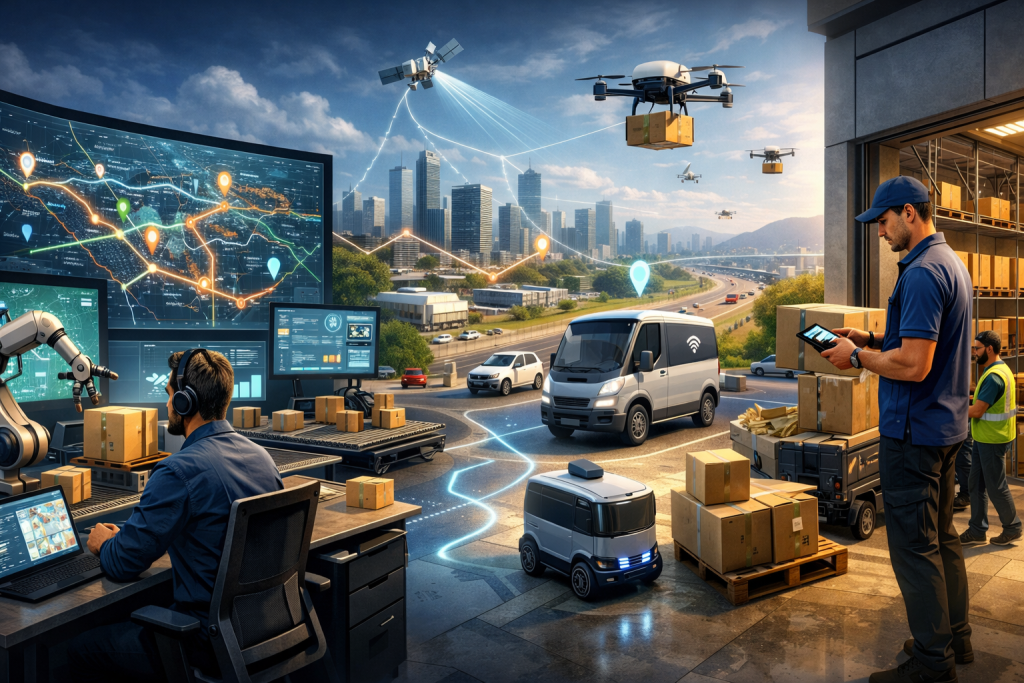
- Autonomous delivery vehicles
- AI-driven demand forecasting
- Hyper-local distribution hubs
- Real-time route collaboration across fleets
Emerging innovations are already shaping next-generation logistics strategies, as explored in how automation, AI, and robotics are transforming logistics.
Choosing the Right AI Route Optimization Solution
Key Features to Look For
When selecting a solution, prioritize:
- Real-time data integration
- Predictive analytics capabilities
- Scalability
- Easy integration with existing systems
- User-friendly dashboards
Businesses that invest in the right technology see immediate improvements in cost efficiency and operational performance.
Conclusion: Turning Logistics Into a Competitive Advantage
AI-powered route optimization is no longer optional—it is the foundation of cost-efficient logistics in 2025. Businesses that embrace intelligent routing systems gain:
- Lower delivery costs
- Faster delivery times
- Improved customer satisfaction
- Greater operational control
By combining route optimization with advanced warehousing, data analytics, and supply chain strategies, companies can transform logistics from a cost center into a powerful growth engine.
FAQs
1. How does AI reduce delivery costs in logistics?
AI reduces costs by optimizing routes, minimizing fuel usage, reducing labor hours, and improving delivery efficiency through real-time data analysis.
2. Is AI route optimization suitable for small businesses?
Yes, scalable AI solutions are available for businesses of all sizes, allowing even small companies to reduce costs and improve efficiency.
3. What industries benefit most from route optimization?
E-commerce, retail, food delivery, and freight logistics benefit significantly due to high delivery volumes and tight timelines.
4. How quickly can businesses see results?
Most companies see measurable cost reductions within weeks of implementing AI-powered routing systems.
5. Does AI replace human dispatchers?
No, AI enhances decision-making by providing data-driven insights, allowing dispatchers to operate more efficiently.
Get Started With Smarter Logistics
Businesses ready to reduce delivery costs and improve efficiency can take the next step by exploring tailored logistics solutions.
👉 Request a Quote