Guide · · 8 min read
Cross-Docking in Toronto and Los Angeles: Reshaping Retail Supply Chains
Toronto and Los Angeles cross-dock operations are the operational foundation behind faster on-shelf availability and lower inventory carrying cost for North American retailers. Here's the inside view.
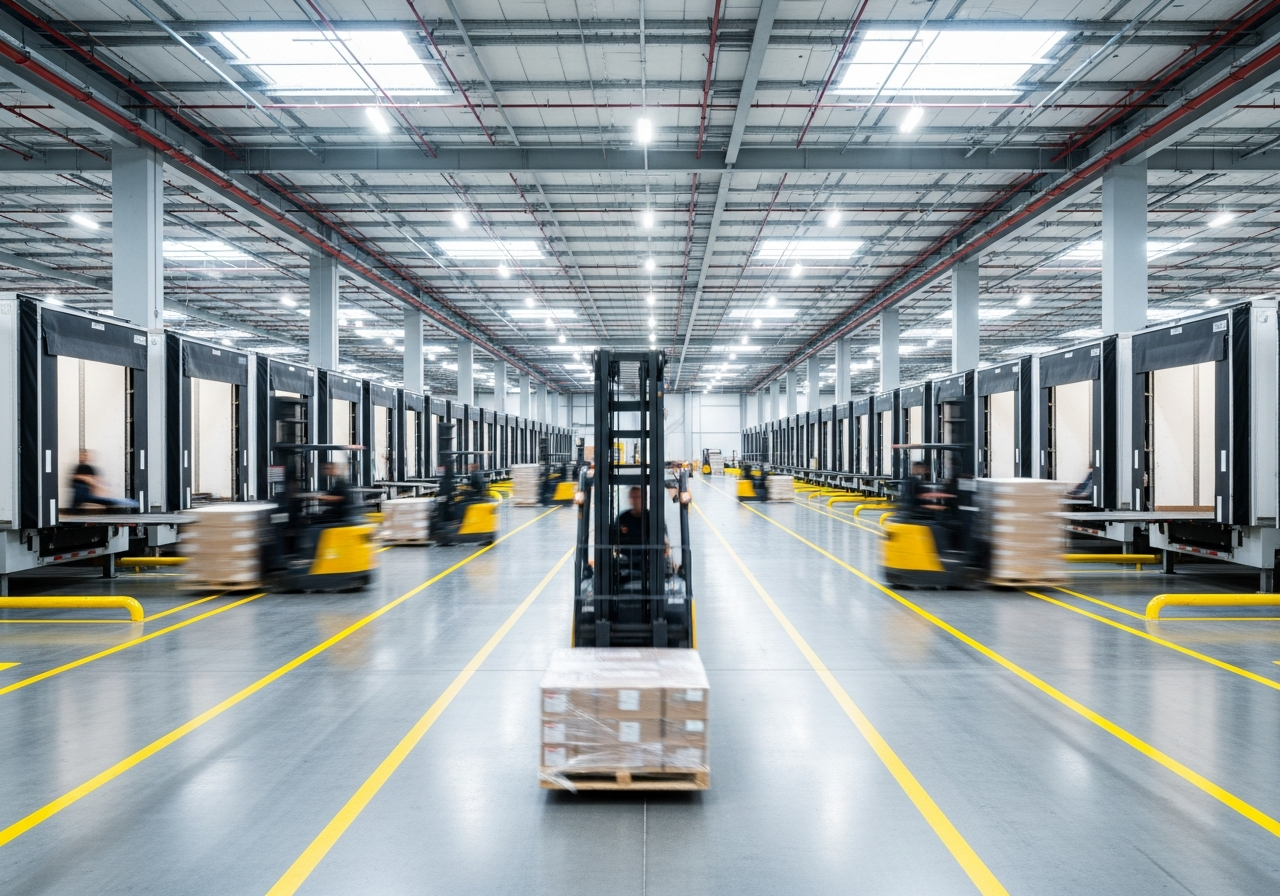
Cross-docking is the engine behind modern retail supply chain velocity. In the Toronto-Los Angeles corridor — the busiest combined retail logistics axis in North America — cross-docking is what makes 48-hour vendor-to-shelf timelines achievable at scale. Retailers from Costco to Loblaw to Target rely on it. This guide explains how cross-docking improves retail supply chains, what vendor compliance looks like on this corridor, and what brands need to operate effectively.
Why cross-docking matters for retail
Major North American retailers operate cross-dock distribution networks where vendor freight arrives at retailer DCs, is sorted by destination store within hours, and reloaded onto outbound store delivery trucks the same day. Inventory never sees rack storage. The result is dramatically compressed vendor-to-shelf timelines (often 48 hours) and significantly lower retailer inventory carrying cost. To participate as a vendor, brands must meet strict vendor compliance requirements: accurate ASN, scheduled receiving windows, proper labeling, and palletization standards.
Toronto-LA corridor cross-dock flow
Toronto-origin vendor freight bound for California retail destinations flows through Mississauga consolidation, line-haul south through Windsor-Detroit, west through Chicago and Denver, and into LA-area retailer DCs in 5-7 days. LA-origin freight bound for Canadian retail flows in reverse. Cross-docking at both ends of the corridor compresses what would otherwise be 14-21 day vendor-to-shelf cycles into 7-10 days end-to-end.
- Vendor ASN required 24-72 hours pre-delivery (retailer-specific)
- Scheduled receiving windows enforced strictly
- GS1-128 label compliance mandatory
- Palletization standards: typically 40x48 GMA pallets, 8' max height
- Cross-dock vs store-DC routing decided at vendor consolidation step
Vendor compliance readiness
Brands entering major North American retail (Costco, Walmart, Loblaw, Target, Sobeys) need 3PL partnerships that can meet vendor compliance requirements: EDI 856 ASN generation, GS1-128 label printing, palletization to retailer standards, scheduled appointment compliance. Failure to comply triggers vendor compliance chargebacks (often $250-1,500 per incident) that quickly erode margin. ByExpress operates EDI 856/810/850 flows from our Mississauga hub for vendors shipping into Canadian and US retail buyers.
Vendor compliance chargebacks are the single largest source of unexpected cost for first-year retail vendors. Get your 3PL EDI and labeling capability right before your first PO — not after.
Frequently Asked Questions
What's required to participate in retailer cross-dock programs?
EDI 856 ASN compliance, GS1-128 labeling, scheduled receiving appointment compliance, palletization to retailer specifications, and a 3PL operationally able to execute on all of these consistently.
How much does vendor compliance failure cost?
Chargebacks range $250-1,500 per incident depending on retailer and infraction type. Sustained non-compliance can result in vendor delisting. The annual cost can reach 2-5% of revenue for non-compliant vendors.
Does ByExpress support EDI flows for major Canadian retailers?
Yes — we support EDI 850/856/810 flows for Costco Canada, Walmart Canada, Loblaw, Sobeys, Canadian Tire, and major US retailers including Target, Walmart USA, and Costco USA.