Guide · · 11 min read
Bonded Warehousing for Government of Canada Contractors (2026)
A practical 2026 guide to customs bonded warehousing for federal contractors in Ottawa — duty deferral, CBSA licensing, sufferance vs bonded, and the records government buyers expect.
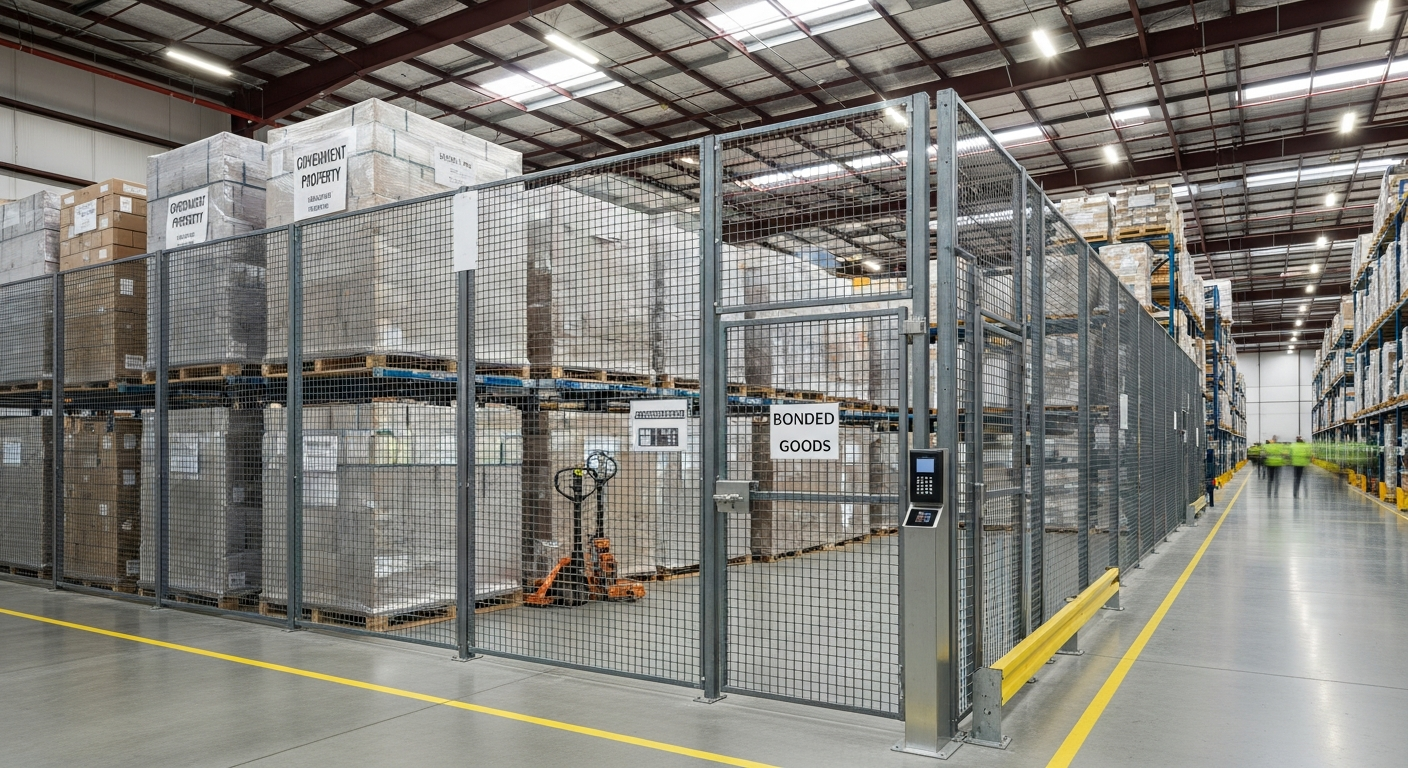
If you hold a Government of Canada supply contract that involves imported goods, bonded warehousing is the mechanism that lets you defer duty and GST until product is actually released for use — which matters when you're staging equipment for a multi-year PSPC contract or holding imported components against a Department of National Defence delivery schedule. Ottawa is a particular case: the buyers (PSPC, DND, Shared Services Canada, RCMP) sit in the National Capital Region, much of the inbound freight clears through the Ottawa, Cornwall, or Lansdowne/Prescott corridors or arrives bonded in-transit from Montreal and Toronto, and federal contracts layer their own security and record-keeping demands on top of the Canada Border Services Agency (CBSA) rules. This guide explains how bonded warehousing actually works for federal contractors in Ottawa — what a CBSA bonded licence is, how it differs from a sufferance warehouse, when duty deferral helps your bid, and the documentation a government buyer and a CBSA auditor will both want to see.
What a customs bonded warehouse actually is
A customs bonded warehouse is a facility licensed by CBSA under the Customs Act and the Customs Bonded Warehouses Regulations where imported goods can be stored with duty and GST/HST suspended — not waived — until the goods are released for domestic consumption, re-exported, or otherwise accounted for. The importer or licensee posts security and operates under a CBSA licence number, and every movement in and out is logged against that licence. For a Government of Canada contractor, the practical value is cash-flow and timing: you can land imported product in Ottawa, hold it bonded against a contract delivery schedule, and only pay duty and tax on the portion released as the government takes delivery. Goods can typically remain in a bonded warehouse for up to four years, with some categories more restricted.
Bonded vs sufferance vs free circulation — know the difference
Contractors routinely confuse three distinct customs statuses, and using the wrong one in a bid or a contract delivery plan creates compliance exposure:
Rule of thumb: sufferance is for goods passing through customs, bonded is for goods you intend to hold, and free circulation is for goods already accounted for. A federal contract delivery plan should state which status applies at each stage.
| Status | What it is | Typical hold time | Best for |
|---|
| Sufferance warehouse | Short-term CBSA-controlled holding for goods awaiting release or examination | Days (short-term) | Freight clearing customs at first port |
| Customs bonded warehouse | Licensed long-term storage with duty/GST deferred until release | Up to ~4 years | Staging imported goods against a contract schedule |
| Free circulation | Duty and tax already paid; goods are domestic for all purposes | Unlimited | Product ready for immediate domestic delivery |
Why duty deferral matters on a federal bid
Duty deferral is not just a tax convenience — on a multi-year federal contract it changes your working-capital math and can sharpen your price. When imported components or finished goods sit bonded, the duty and GST are suspended, so you are not financing tax on inventory the government has not yet drawn down. For re-exported goods (for example, equipment imported for integration in Ottawa and then shipped to a mission abroad), duty can be relieved entirely. CBSA also runs the Duty Deferral Program, which includes the Duties Relief Program and the Drawback Program alongside bonded warehousing — contractors importing inputs that are later exported should evaluate all three. The cash freed up by deferral is real money you can either keep or reflect in a more competitive bid price.
When bonded storage meets controlled goods and security
Federal contracts frequently combine bonded customs status with security obligations, and the two regimes are separate. Goods controlled under Canada's Controlled Goods Program (CGP) — much defence and dual-use technology — must be stored and handled only by registered persons with assessed and authorized personnel, regardless of their customs status. A bonded warehouse holding controlled goods therefore needs both the CBSA bonded licence and CGP registration, plus the physical security (access control, perimeter, surveillance) the contract specifies. ITAR-controlled US-origin defence articles add a further layer. The operational reality in Ottawa is that a contractor often needs one facility that can simultaneously satisfy CBSA, the Controlled Goods Directorate, and the contract's PSPC security clauses.
When bonded storage meets controlled goods and security
Records CBSA and government buyers both demand
Bonded warehousing is a records-intensive activity, and federal contracts compound the documentation expectation. A CBSA auditor and a Government of Canada contract authority will both expect a clean, reconcilable trail. At minimum you should maintain:
- The CBSA bonded warehouse licence number and the licensee of record
- Receiving records tying each lot to its accounting document (B3 / CAD) and import status
- A perpetual inventory reconciled to physical counts, with no unexplained variances
- Movement logs for every entry, transfer, and release against the bonded licence
- Duty and GST/HST accounting at the point each lot is released for consumption
- Controlled Goods records and access logs where CGP applies
- Retention of records for the statutory period (generally six years) and availability on demand
The fastest way to fail a CBSA bonded audit — or a federal contract review — is an inventory that does not reconcile to the licence records. Cycle-count discipline is not optional in a bonded operation.
How bonded freight actually moves into Ottawa
Most imported freight destined for Ottawa federal contractors does not clear at an Ottawa port of first arrival. Ocean freight typically arrives at Montreal or Halifax and moves in-bond by truck or rail to the National Capital Region; air freight clears at Montreal-Trudeau or Toronto Pearson; and US-origin road freight crosses at the Ontario land borders (Cornwall, Lansdowne/Thousand Islands, and the Quebec crossings near Ottawa-Gatineau). Goods can travel in-bond from the port of arrival to a bonded warehouse in Ottawa, where they are entered against the bonded licence. For contractors, the practical implications are transit time (build a one-to-three-day in-bond move into your delivery schedule), the choice of customs broker, and confirming that your Ottawa warehouse partner actually holds a CBSA bonded licence rather than only a sufferance privilege.
Choosing a bonded 3PL partner in the National Capital Region
Not every Ottawa 3PL is a licensed bonded operator, and the difference is contractual, not marketing. When you evaluate a partner for a Government of Canada contract, confirm the CBSA bonded warehouse licence is held by the operator (ask for the number), that they can demonstrate a reconcilable bonded inventory system, and that they can meet the contract's security tier — whether that is Controlled Goods registration, personnel screening, or a PSPC-specified physical-security standard. Ask how they handle partial releases against a delivery schedule, how duty and GST are accounted for on release, and how they support re-export relief if your contract involves goods leaving Canada. The right partner lets you bid bonded capability with confidence rather than scrambling for it after award.
Frequently Asked Questions
What is a customs bonded warehouse and how is it different from regular storage?
A bonded warehouse is CBSA-licensed under the Customs Bonded Warehouses Regulations, letting you store imported goods with duty and GST/HST deferred until the goods are released. Regular (free-circulation) storage holds goods on which duty and tax are already paid. The bonded status is what enables deferral and re-export relief for federal contractors.
How long can goods stay in a bonded warehouse in Ottawa?
Generally up to about four years for most goods under the Customs Bonded Warehouses Regulations, though some categories are more restricted. The clock and conditions are set by CBSA, and the licensee must keep movement and inventory records reconciled to the licence the entire time.
Do I need both a CBSA bonded licence and Controlled Goods registration?
If your federal contract involves goods controlled under Canada's Controlled Goods Program, yes — the two regimes are separate. CBSA governs the customs status while the Controlled Goods Directorate governs who may store and handle the goods. A contractor holding bonded controlled goods needs both authorizations plus the contract's security requirements.
Does bonded warehousing actually save money on a government contract?
It can. Deferring duty and GST until release frees working capital you would otherwise tie up in tax on undelivered inventory, and re-exported goods may qualify for full duty relief. On a multi-year contract that cash-flow benefit is real and can be reflected in a more competitive bid price.
Where do imported goods for Ottawa contractors usually clear customs?
Most clear at Montreal or Halifax (ocean), Montreal-Trudeau or Toronto Pearson (air), or the Ontario/Quebec land borders for US road freight, then move in-bond to a bonded warehouse in the National Capital Region. Build one to three days of in-bond transit into your delivery schedule.
Related ByExpress resources