By Martin Vassilev / 24 Oct, 2025
In today’s hyper-competitive logistics market, businesses are under constant pressure to cut freight costs while maintaining — or even improving — delivery quality. With shipping expenses often representing one of the largest portions of supply chain costs, striking this balance is essential for profitability and customer satisfaction. The good news? With the right strategies, technologies, and partners, it’s entirely possible to achieve both.
Freight costs include much more than just carrier charges. They encompass packaging, fuel, labor, handling, warehousing, and last-mile delivery expenses. By dissecting these elements, companies can pinpoint areas of inefficiency and focus their cost-reduction efforts strategically.
For instance, businesses operating across regions like Calgary and Dallas logistics hubs can explore strategic routing and hub optimization to reduce redundancies and cut unnecessary miles (learn more).
One of the most effective ways to reduce freight costs is through route optimization and shipment consolidation. By combining multiple small shipments into larger loads, companies reduce the number of trips, save on fuel, and maximize truck capacity.
Using advanced logistics software and data analytics, companies can identify patterns and merge deliveries heading in similar directions. This is especially useful in regional distribution networks, such as Ottawa warehousing and fulfillment systems (discover efficient models here).
Pro Tip: Partner with a logistics provider that leverages AI and real-time data for dynamic route optimization. These technologies help reroute shipments instantly in response to traffic, weather, or port delays.
Selecting between LTL (Less-than-Truckload), FTL (Full-Truckload), rail, or air freight depends on cargo size, urgency, and budget. Misaligned freight modes can inflate your costs unnecessarily.
LTL is ideal for smaller, non-urgent shipments.
FTL works best for larger, dedicated shipments.
Rail offers cost-efficiency for long distances.
Air provides speed for high-value, time-sensitive goods.
Understanding when to switch between these modes can save thousands annually. Refer to ByExpress’s guide on LTL vs. FTL shipping for detailed insights on optimizing your mode selection.
A major but often overlooked factor in freight cost management is warehouse efficiency. Inefficient warehousing leads to delays, mismanagement, and higher last-mile expenses.
Implementing smart warehouse management systems (WMS) helps automate inventory tracking, reduce picking errors, and ensure faster outbound loading. Learn how to maximize warehouse efficiency and cut costs in this detailed guide from ByExpress (read more).
Additionally, you can reduce costs by:
Using cross-docking to eliminate storage time.
Placing inventory closer to high-demand regions.
Leveraging on-demand warehousing for seasonal peaks.
Carrier negotiation is an art form. To secure better rates:
Compare quotes across multiple carriers.
Analyze your shipping volume and frequency for leverage.
Establish long-term contracts for volume discounts.
Use freight auditing tools to identify hidden surcharges.
Partnering with a logistics consultant like ByExpress Logistics can help you analyze contracts and benchmark rates across the industry to ensure you’re not overpaying.
In 2025, data is the new fuel for logistics optimization. AI-driven systems can forecast demand, optimize inventory locations, and predict transportation delays before they happen.
Explore how AI is transforming the logistics industry by improving speed, accuracy, and cost-efficiency in freight management (read full article).
Example: Predictive analytics can determine the most cost-effective carrier based on historical performance, distance, and delivery accuracy.
For additional reading, check out government insights on supply chain digitization and freight sustainability at Transportation Canada and the U.S. Department of Transportation.
Lean logistics focuses on reducing waste — whether that’s empty miles, idle time, or overstocked inventory. Applying lean principles can significantly lower freight costs while maintaining delivery reliability.
Read ByExpress’s article on Lean Warehousing and Its Benefits to understand how the concept applies to modern freight systems.
Practical lean techniques include:
Implementing continuous improvement (Kaizen).
Optimizing truck loading sequences.
Using reusable and lightweight packaging.
Visibility across every stage of the delivery process is essential for both cost control and quality assurance. Real-time freight tracking reduces customer support calls, prevents lost shipments, and enhances accountability among carriers.
Learn how modern tracking systems are revolutionizing logistics in this comprehensive guide.
Transparent tracking also helps identify recurring inefficiencies — for instance, if a certain route consistently experiences delays or cost overruns.
Outsourcing your logistics operations to a 3PL like ByExpress can significantly reduce overall freight costs. A professional partner provides:
Negotiated carrier rates.
Scalable warehousing and fulfillment.
Real-time visibility and tracking technology.
Expertise in customs and compliance for cross-border freight.
Explore why outsourcing is often more cost-effective than in-house management in this resource (read here).
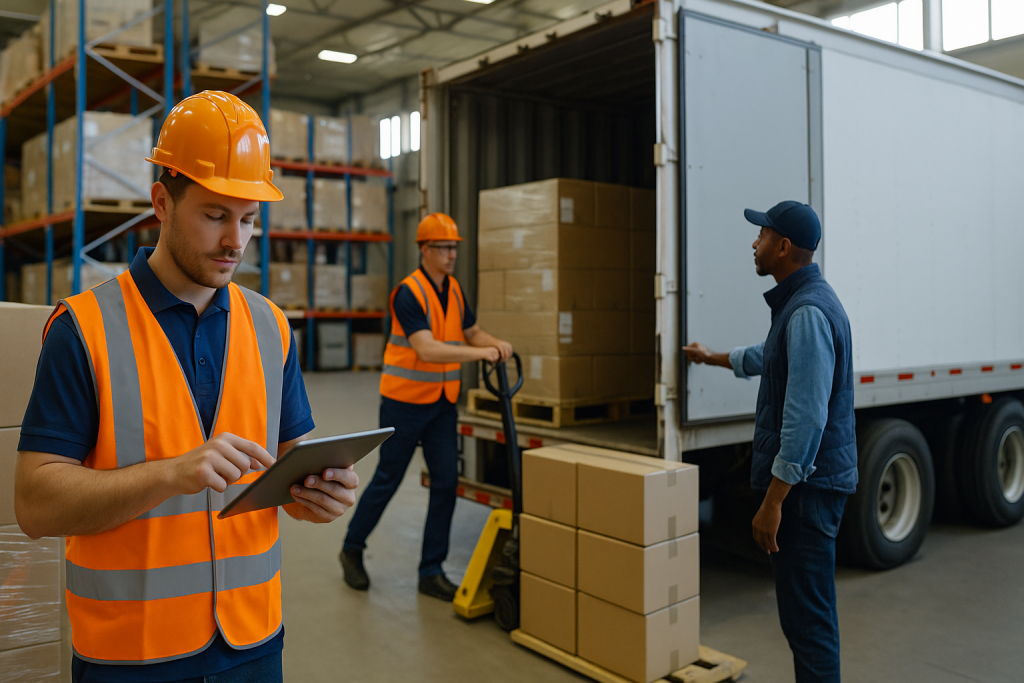
Inefficient packaging not only increases material costs but also wastes valuable cargo space. Reducing package dimensions — even slightly — can lead to major freight savings.
Tips for cost-effective packaging:
Use lightweight materials.
Eliminate empty space with custom-fit boxes.
Standardize packaging to simplify stacking.
Reuse materials when possible.
Combined with sustainable logistics practices, this strategy supports both financial and environmental goals. Learn how green logistics can complement your freight strategy (read more).
Manual freight audits are prone to human error and can miss hidden fees like fuel surcharges or dimensional weight adjustments. Automating the process ensures you pay only for what you owe.
Automated freight auditing systems:
Identify overcharges instantly.
Flag rate inconsistencies.
Generate accurate cost-per-shipment reports.
This not only saves money but also helps maintain transparency with logistics partners.
Cost reduction must never come at the expense of delivery quality. In logistics, reliability is non-negotiable. Poor service leads to lost customers and damaged reputation.
To maintain quality:
Monitor on-time delivery rates.
Track damage claims and returns.
Maintain communication with customers through proactive updates.
High-performing logistics partners like ByExpress Ottawa Logistics combine affordability with guaranteed reliability across Canada and the U.S.
Freight optimization isn’t a one-time effort — it’s an evolving process. Conduct quarterly reviews of:
Carrier performance.
Delivery accuracy.
Freight spend by route and product type.
Leverage data from your supply chain efficiency reports to stay ahead of market fluctuations and evolving fuel prices.
1. How can small businesses reduce freight costs without sacrificing quality?
Small businesses can partner with regional 3PLs, consolidate shipments, and leverage shared distribution centers to access enterprise-level savings.
2. What’s the most cost-effective freight mode for long-distance shipping?
Rail is typically the most cost-efficient for long-haul freight, while LTL and FTL options suit medium-range distribution.
3. How does AI help in freight cost reduction?
AI predicts demand, automates route planning, and reduces human error, saving both time and money while maintaining high delivery accuracy.
4. What role does packaging play in reducing shipping costs?
Optimized packaging reduces dimensional weight charges, maximizes vehicle capacity, and minimizes damage risk during transport.
5. Should I outsource freight management or handle it in-house?
Outsourcing to an experienced logistics provider like ByExpress offers economies of scale, advanced tracking, and flexible warehousing solutions that are often more cost-effective than managing in-house.


“Thanks to Byexpress all my shipping and fulfillment costs are in line now”

“All my issues were solved by Byexpress team that I had with pervious 3pl provider.”

“Thank you Byexpress team could not done it without you guys.”

“Their integration and customer service were the key for me”

“Outstanding delivery service! The package was well-packaged, and
the delivery team was professional and courteous”

“Great and knowledgeable team to work with.”

Thanks, guys, for reducing my shipping rates
Ottawa Office
2411 Holly Lane
Ottawa, ON, K1V 7P2
Toronto Office
13-280 West Beaver Creek Road Unit #136
Richmond Hill, ON, L4B 3Z1
Alexandria Office
173 Kenyon Street West
Alexandria, ON, K0C 1A0
Montreal Office
4388 Saint-Denis Street Unit #200
Montreal, QC, H2J 2L1
California Office
155 North Riverview Drive
Anaheim Hills, CA, 92808
Call Us
Toll-Free: 1-866-744-7122
Local : 613-739-3000
Email Us
Multilingual Services