By Martin Vassilev / 17 Dec, 2025
Canada’s urban logistics landscape is undergoing a structural transformation. As eCommerce demand accelerates, customer expectations tighten, and real estate dynamics shift in major cities, micro-fulfillment centers (MFCs) are emerging as a strategic solution for businesses that need speed, flexibility, and cost control. From Toronto and Vancouver to Calgary, Montreal, and Ottawa, micro-fulfillment is redefining how inventory is stored, picked, packed, and delivered within dense metropolitan areas.
This article explores the rise of micro-fulfillment centers in Canadian urban areas, why they matter now, how they differ from traditional warehouses, and how forward-thinking businesses are using them to gain a competitive edge in an increasingly demanding market.
Micro-fulfillment centers are small, strategically located distribution facilities positioned close to end customers—often within city cores or near high-density neighborhoods. Unlike large regional distribution centers located on city outskirts, MFCs prioritize proximity over scale.
These facilities typically range from 5,000 to 50,000 square feet and focus on fast-moving SKUs, automated picking systems, and rapid last-mile delivery. Their purpose is not to replace traditional warehouses entirely, but to complement them within a distributed fulfillment network.
By integrating MFCs into urban supply chains, businesses significantly reduce delivery times, transportation costs, and operational friction associated with long-distance order fulfillment.
Canada’s largest cities continue to attract population growth. According to Statistics Canada, urban centers account for the majority of population increases, intensifying demand for same-day and next-day delivery options. Serving these dense markets from distant warehouses is no longer efficient or cost-effective.
Micro-fulfillment centers allow brands to stage inventory closer to demand, reducing delivery windows from days to hours while improving reliability.
Canadian consumers no longer view fast delivery as a premium feature—it is an expectation. Same-day and next-day shipping are becoming standard, particularly in major metro areas. This shift is closely tied to conversion rates, customer retention, and brand trust.
Micro-fulfillment directly supports these expectations by shortening last-mile routes and enabling hyper-local delivery models, including same-day courier services and scheduled delivery windows.
This aligns closely with strategies outlined in The Ultimate Guide to Fast Fulfillment, where proximity-driven logistics is identified as a core performance driver.
Traditional large-scale warehousing faces growing challenges in Canadian cities:
Rising industrial real estate costs
Limited availability of large plots
Zoning restrictions
Competition from mixed-use developments
Micro-fulfillment centers solve this by repurposing smaller urban spaces, including underutilized industrial units, retail backrooms, and light commercial properties. When paired with automation and optimized layouts, these compact spaces deliver disproportionately high output.
For deeper insight into space optimization strategies, see How to Improve Warehouse Space Utilization for Maximum Efficiency.
Micro-fulfillment is only viable at scale because of advanced logistics technology. These centers rely heavily on:
Automated storage and retrieval systems (AS/RS)
AI-driven demand forecasting
Real-time inventory synchronization
Robotics-assisted picking
Integrated warehouse management systems (WMS)
Automation allows small facilities to handle high order volumes with minimal error rates. Businesses adopting MFCs often integrate AI-powered workflows similar to those discussed in The Future of Warehouse Automation: What Businesses Need to Know.
| Aspect | Traditional Warehouse | Micro-Fulfillment Center |
|---|---|---|
| Location | Suburban / Rural | Urban / Near customers |
| Size | Large-scale | Compact |
| Delivery Speed | 2–5 days | Same-day / Next-day |
| Inventory Focus | Broad SKU range | High-velocity SKUs |
| Last-Mile Cost | Higher | Lower |
| Scalability | Capital-intensive | Modular & flexible |
Rather than choosing one over the other, Canadian businesses are increasingly adopting hybrid fulfillment models that blend centralized warehousing with micro-fulfillment nodes.
This distributed approach mirrors trends outlined in Why Businesses Are Switching to Distributed Warehousing.
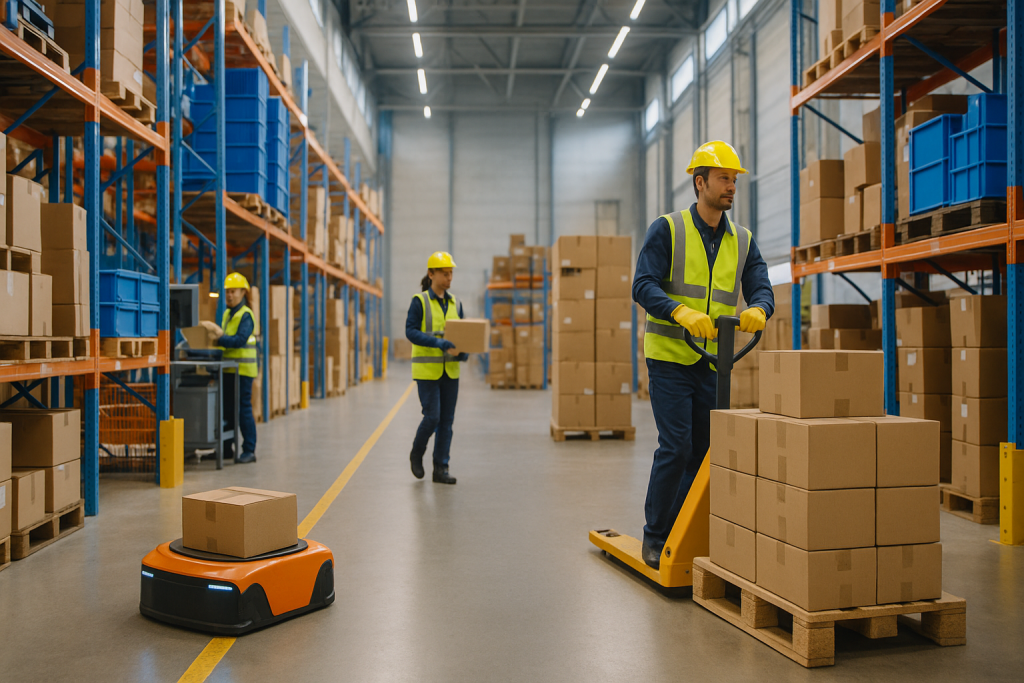
Toronto’s dense population, traffic congestion, and real estate costs make it a prime environment for micro-fulfillment. Brands operating in the GTA use MFCs to shorten delivery windows and reduce reliance on long-haul courier routes.
Geographic constraints and high real estate prices in Vancouver have accelerated adoption of compact, tech-enabled fulfillment hubs that maximize throughput per square foot.
As a growing logistics hub, Calgary blends affordability with strategic access to western markets. MFCs here support rapid regional distribution and urban last-mile efficiency.
Ottawa’s expanding eCommerce sector benefits from localized fulfillment strategies, as highlighted in Logistics in Ottawa. Micro-fulfillment enables faster service without the overhead of large-scale facilities.
Micro-fulfillment is not just about speed—it’s about protecting margins. By reducing last-mile distances, businesses cut fuel costs, carrier fees, and delivery failures. Urban fulfillment also lowers return handling costs by keeping inventory closer to customers.
These advantages tie directly into broader cost-reduction strategies discussed in How to Maximize Warehouse Efficiency and Cut Costs.
One of the most powerful advantages of micro-fulfillment is real-time inventory accuracy. Because MFCs manage smaller SKU sets and integrate closely with digital inventory systems, businesses achieve higher order accuracy and fewer stockouts.
This approach complements principles detailed in Real-Time Inventory Updates: Why They Matter for Modern Supply Chains.
Micro-fulfillment also supports sustainability goals. Shorter delivery routes reduce emissions, while optimized inventory placement lowers waste from overstocking and spoilage.
The Government of Canada has emphasized sustainable supply chain practices as part of broader economic and environmental strategies (see Government of Canada – Supply Chain Strategy ). Micro-fulfillment aligns with these priorities by making urban logistics more efficient and environmentally responsible.
Retailers are increasingly blending physical and digital experiences. Micro-fulfillment centers enable ship-from-store, curbside pickup, and hybrid retail-warehouse models that improve omnichannel performance.
This evolution reflects national economic trends tracked by Statistics Canada, where eCommerce continues to represent a growing share of retail activity across Canada.
Analyze order density by postal code to identify high-volume urban zones.
Micro-fulfillment works best when focused on fast-moving products.
Compact facilities require automation to remain efficient.
Working with a fulfillment partner that already operates distributed warehousing networks reduces risk and accelerates deployment.
Micro-fulfillment is no longer experimental—it is a competitive necessity in Canada’s urban logistics ecosystem. Businesses that deploy localized fulfillment infrastructure gain faster delivery, lower costs, improved inventory control, and stronger customer loyalty.
As cities grow denser and consumer expectations rise, micro-fulfillment centers will continue to shape the future of Canadian supply chains.
Organizations looking to implement micro-fulfillment should evaluate their current fulfillment network, delivery performance, and growth trajectory. Working with a partner that offers scalable, technology-driven solutions can simplify the transition and unlock immediate performance gains.
For tailored guidance and implementation support, connect directly through BYExpress Contact & Consultation to explore urban fulfillment strategies aligned with your business goals.
A micro-fulfillment center is a small, urban-based warehouse designed to store fast-moving inventory close to customers for rapid delivery.
Yes. Micro-fulfillment is highly scalable and can be implemented through third-party logistics partners without heavy capital investment.
They shorten last-mile delivery routes, reduce fuel usage, and minimize carrier fees associated with long-distance shipping.
No. They complement traditional warehouses as part of a distributed fulfillment strategy.
Toronto, Vancouver, Calgary, Montreal, and Ottawa currently see the highest impact due to population density and delivery demand.


“Thanks to Byexpress all my shipping and fulfillment costs are in line now”

“All my issues were solved by Byexpress team that I had with pervious 3pl provider.”

“Thank you Byexpress team could not done it without you guys.”

“Their integration and customer service were the key for me”

“Outstanding delivery service! The package was well-packaged, and
the delivery team was professional and courteous”

“Great and knowledgeable team to work with.”

Thanks, guys, for reducing my shipping rates
Ottawa Office
2411 Holly Lane
Ottawa, ON, K1V 7P2
Toronto Office
13-280 West Beaver Creek Road Unit #136
Richmond Hill, ON, L4B 3Z1
Alexandria Office
173 Kenyon Street West
Alexandria, ON, K0C 1A0
Montreal Office
4388 Saint-Denis Street Unit #200
Montreal, QC, H2J 2L1
California Office
155 North Riverview Drive
Anaheim Hills, CA, 92808
Call Us
Toll-Free: 1-866-744-7122
Local : 613-739-3000
Email Us
Multilingual Services