By Martin Vassilev / 30 Dec, 2025
Shipping costs are not random. They are calculated using structured geographic systems designed to measure distance, transit time, and network complexity. One of the most influential—and most misunderstood—factors behind shipping pricing is shipping zones. Businesses that understand how shipping zones work gain a measurable advantage: lower delivery costs, faster transit times, and higher customer satisfaction.
This guide breaks down shipping zones in practical, commercial terms. It explains how zones are calculated, how they influence rates across carriers, and—most importantly—how businesses can strategically reduce costs without sacrificing delivery speed or reliability.
Shipping zones are geographic distance bands used by carriers to determine pricing. Each shipment is assigned a zone based on how far it travels from its origin point (warehouse, fulfillment center, or shipping hub) to its destination.
The farther a package travels, the higher the zone—and the higher the cost.
Zones are not based on borders like provinces or states. Instead, they are calculated using mileage ranges or transit regions defined by each carrier’s network design.
Carriers use shipping zones to account for:
Fuel consumption
Driver labor and route complexity
Sorting and hub transfers
Transit time guarantees
Risk exposure during transit
Understanding zones means understanding the true cost drivers of delivery.
While zone structures vary by carrier, the core logic remains consistent.
Shipping zones are calculated from the origin postal code or distribution hub. A package shipped 30 km away may fall into Zone 1 or 2, while a shipment traveling across provinces may fall into Zone 6 or higher.
Each carrier maintains its own zone charts. Two shipments traveling the same distance may fall into different zones depending on:
Carrier routing strategy
Hub density
Regional infrastructure
This is why rate shopping and network optimization matter.
Cross-border shipments introduce additional layers:
Customs clearance
International handling
Border inspection delays
Documentation requirements
These factors increase both zone classification and total landed cost.
Shipping zones influence more than base rates. They affect nearly every cost component tied to fulfillment.
Higher zones equal higher base rates. This difference compounds quickly at scale, especially for eCommerce businesses shipping hundreds or thousands of orders per month.
Fuel surcharges are often calculated as a percentage of base rates. Higher zones increase fuel exposure, magnifying costs.
Remote delivery, residential surcharges, and extended delivery area fees are more common in higher zones.
Faster delivery across higher zones often requires air freight or expedited services—significantly increasing costs.
Many businesses unknowingly design fulfillment strategies that force most orders into higher zones. The result is inflated costs and reduced margins.
Common mistakes include:
Operating from a single centralized warehouse
Ignoring regional order distribution data
Choosing fulfillment partners without multi-node coverage
Failing to align inventory placement with demand
These issues are explored in depth in Understanding Fulfillment Pricing and Hidden Cost Structures, which outlines how zone inefficiencies quietly erode profitability.
Your warehouse location determines your average shipping zone. This single decision has more long-term cost impact than almost any carrier negotiation.
Businesses that position inventory closer to customers reduce:
Average shipping zones
Transit times
Fuel surcharges
Customer service issues related to delays
This is why logistics hubs matter. A strong example is outlined in Calgary–Dallas Logistics Hubs and Regional Optimization, which explains how strategic placement reshapes shipping economics across North America.
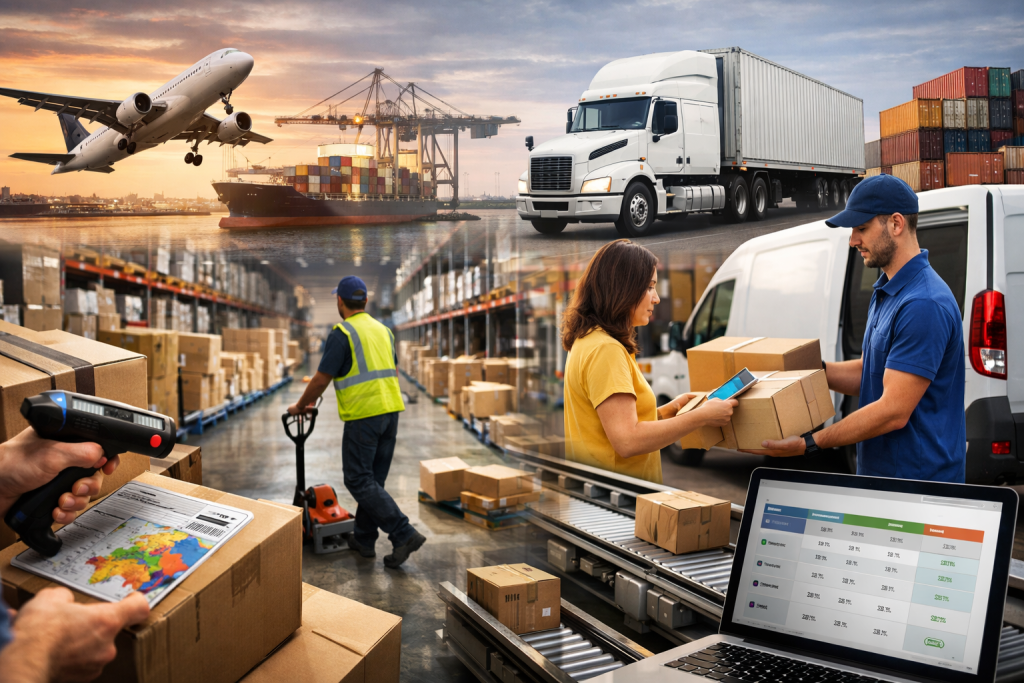
Zone skipping consolidates shipments and moves them closer to the destination before injecting them into carrier networks.
Bulk freight is moved to a regional hub
Packages enter the carrier network closer to end customers
Final delivery occurs at lower zones
This method significantly reduces per-package shipping costs, especially for high-volume shippers.
Zone skipping becomes even more effective when paired with optimized warehousing strategies, such as those detailed in How Smart Warehousing Solutions Improve Delivery Times.
Shipping zones influence more than cost—they directly impact customer experience.
Customers expect fast, predictable delivery. Lower zones allow:
Same-day or next-day delivery
Reduced shipping fees
Higher checkout conversion rates
High shipping costs caused by long-distance zones are a leading cause of cart abandonment. Reducing zones improves both cost control and conversion performance.
This relationship is further explored in The Ultimate Guide to Fast Fulfillment.
Distributed warehousing places inventory across multiple regional locations rather than a single central warehouse.
Lower average shipping zones
Faster delivery times
Reduced reliance on air freight
Greater resilience during peak seasons
Businesses adopting distributed fulfillment models consistently outperform competitors on delivery cost and speed metrics.
Modern logistics platforms use data to minimize zone exposure.
Advanced systems analyze order history and forecast demand to place inventory closer to customers.
Technology enables real-time carrier comparisons to select the lowest-cost option per zone and service level.
Artificial intelligence continuously refines shipping routes to reduce mileage and transit complexity, as explained in How Technology Is Revolutionizing the Delivery Industry.
Cross-border shipping adds complexity to zone calculations.
Customs clearance delays increase transit risk and cost variability. Government agencies such as the Canada Border Services Agency (CBSA) provide guidance on cross-border shipping compliance.
For U.S. shipments, the U.S. International Trade Administration outlines shipping and customs considerations.
Understanding regulatory requirements reduces delays that often push shipments into higher-cost service tiers.
Businesses that consistently control shipping costs follow these principles:
Identify where customers are located and calculate average shipping zones.
Move high-demand SKUs closer to dense customer regions.
Avoid relying on a single warehouse for national distribution.
Different carriers perform better in different zones.
Expert fulfillment partners design zone-efficient networks tailored to your business model.
These principles align closely with the strategies outlined in Top 10 Fulfillment Strategies to Reduce Costs and Increase Customer Loyalty.
Shipping zones are not just an operational detail—they are a scalability constraint.
As order volume grows:
Zone inefficiencies scale linearly
Margins compress
Customer expectations increase
Businesses that plan zone optimization early maintain profitability while expanding into new markets.
Shipping zones measure how far a package travels from origin to destination and directly influence shipping cost and delivery speed.
No. Each carrier defines zones differently based on its network and infrastructure.
By placing inventory closer to customers, using distributed warehousing, and optimizing carrier selection.
No. Freight zones consider weight, palletization, and lane density, while parcel zones focus on distance and service level.
Yes. Cross-border shipments introduce additional zone layers due to customs, regulatory handling, and international transit.
Shipping zones quietly dictate delivery costs, transit times, and customer satisfaction. Businesses that understand and actively manage zone exposure gain control over one of the most powerful levers in logistics.
Reducing shipping zones is not about cutting corners—it is about designing smarter fulfillment networks, leveraging data-driven insights, and partnering with logistics providers who understand regional optimization.
To evaluate how your current shipping zones are affecting your costs and explore optimized fulfillment strategies, connect directly through the BYExpress Contact Page.


“Thanks to Byexpress all my shipping and fulfillment costs are in line now”

“All my issues were solved by Byexpress team that I had with pervious 3pl provider.”

“Thank you Byexpress team could not done it without you guys.”

“Their integration and customer service were the key for me”

“Outstanding delivery service! The package was well-packaged, and
the delivery team was professional and courteous”

“Great and knowledgeable team to work with.”

Thanks, guys, for reducing my shipping rates
Ottawa Office
2411 Holly Lane
Ottawa, ON, K1V 7P2
Toronto Office
13-280 West Beaver Creek Road Unit #136
Richmond Hill, ON, L4B 3Z1
Alexandria Office
173 Kenyon Street West
Alexandria, ON, K0C 1A0
Montreal Office
4388 Saint-Denis Street Unit #200
Montreal, QC, H2J 2L1
California Office
155 North Riverview Drive
Anaheim Hills, CA, 92808
Call Us
Toll-Free: 1-866-744-7122
Local : 613-739-3000
Email Us
Multilingual Services