Guide · · 9 min read
Calgary and Atlanta: Twin Fulfillment Hubs for Cross-Border Distribution
Why Calgary in Western Canada and Atlanta in the US Southeast are becoming the most strategic 3PL pairing for cross-border merchants — and how to structure a two-node network across the corridor.
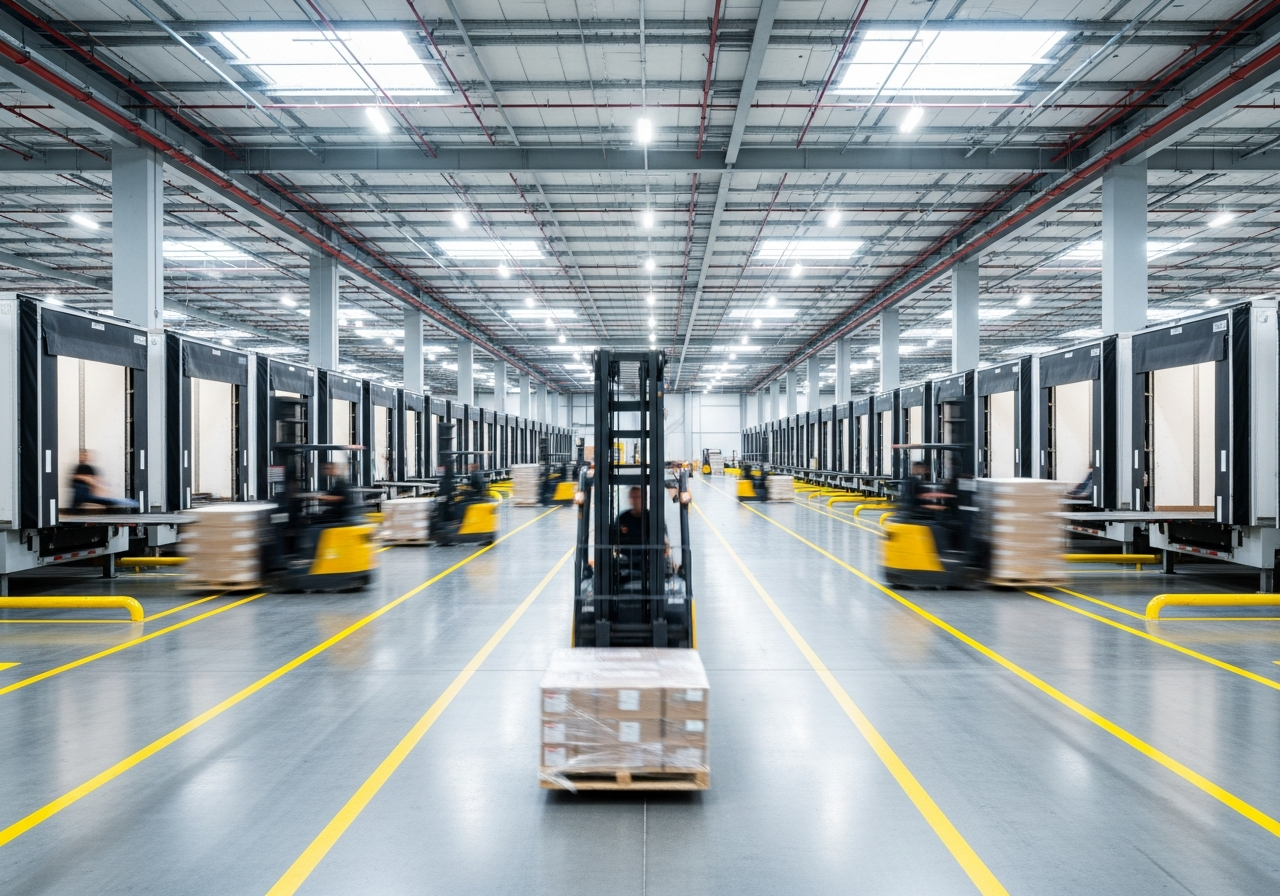
Two cities, two countries, one supply chain. Calgary and Atlanta are the unsung anchors of a growing class of cross-border merchant — Canadian DTC brands scaling into the US Sunbelt, and Southeast US suppliers reaching Western Canadian retail. The geography is no accident: Calgary covers 80% of Western Canadian population within 2-day ground, Atlanta covers 80% of the US Southeast within 2-day ground, and the corridor between them moves through some of the most efficient cross-border lanes on the continent. This guide breaks down why this pairing works, what the unit economics look like, and how merchants should structure a two-node fulfillment network across the corridor.
Why Calgary and Atlanta work as a fulfillment pair
Most cross-border conversations default to Toronto and New York, or Vancouver and Los Angeles. But for brands whose customer base skews to the Sunbelt — outdoor, fitness, automotive, ranch and rural ecommerce — Calgary–Atlanta is structurally better. Calgary anchors a Western Canadian network covering Alberta, BC, Saskatchewan, and Manitoba with overnight to 2-day ground. Atlanta sits on I-75, I-85, and I-20 at the geographic center of the US Southeast, with same-day truck access to Florida, Tennessee, Alabama, the Carolinas, and Georgia metros — collectively 60M+ US consumers in 2-day ground range.
- Calgary 2-day ground: AB, SK, MB, interior BC (8M+ consumers)
- Atlanta 2-day ground: GA, FL, TN, AL, SC, NC (60M+ consumers)
- Cross-border lane: Coutts/Sweetgrass → I-15 → I-70 → I-40/I-20 to Atlanta in 3-4 days truckload
- Section 321 outbound eligibility on parcels under $800 USD
What the unit economics look like
For a 1.5 lb parcel shipped to a US Southeast customer, the cost difference between Atlanta-origin fulfillment and Toronto-origin cross-border parcel can be $4-7 per shipment — the difference between a profitable DTC unit and a loss-leader. Atlanta-origin gives you UPS/USPS domestic zones, no customs brokerage per parcel, and 2-day ground transit to 60M consumers. Calgary-origin keeps Canadian-side parcels in the same low-cost zone they always were. The result is a two-node network where each parcel ships from its lowest-cost origin without ever paying cross-border duty drag per unit.
Rule of thumb: if more than 25% of your US revenue lands in the Southeast quadrant, you've outgrown single-node Canadian fulfillment for the US market.
How to structure a two-node Calgary–Atlanta network
The clean implementation is: hold ~30 days of forward-deploy inventory in Atlanta, replenished monthly from your Canadian hub via truckload across the corridor. Calgary holds primary inventory and serves all of Canada plus US Northwest. Atlanta serves all of the US Southeast plus opportunistic Midwest fill-in. Order routing logic in your OMS picks origin based on customer zip — most modern OMS platforms (Shopify, NetSuite, ShipStation Enterprise) support this natively. ByExpress can operate both nodes as a single inventory pool with unified WMS visibility.
Frequently Asked Questions
Do I need a US business entity to fulfill from Atlanta?
Not always. Many Canadian brands use a US 3PL's Importer of Record service or bonded warehouse structure to hold inventory in Atlanta without a US entity. Larger brands typically incorporate a US subsidiary once their US revenue passes $1M annually for tax and banking reasons.
How often do I replenish Atlanta from Calgary?
Most brands replenish monthly via 53' truckload across the corridor — the per-unit freight cost on a full truckload (~$4,500 Calgary-to-Atlanta) is meaningfully cheaper than parcel cross-border on equivalent volume.
What about returns from US Southeast customers?
Atlanta-origin shipments accept returns at Atlanta — never route returns back to Canada per parcel. Returns are consolidated and either restocked at Atlanta, liquidated locally, or trucked back to Calgary on the next inbound replenishment leg.