Guide · · 12 min read
Calgary 3PL: The Complete Fulfillment Guide for Alberta & the Prairies
Why Calgary is the most under-utilized 3PL hub in Canada — and how to evaluate Alberta fulfillment providers serving DTC, B2B, oilfield, and Prairie distribution without overpaying for the wrong network.
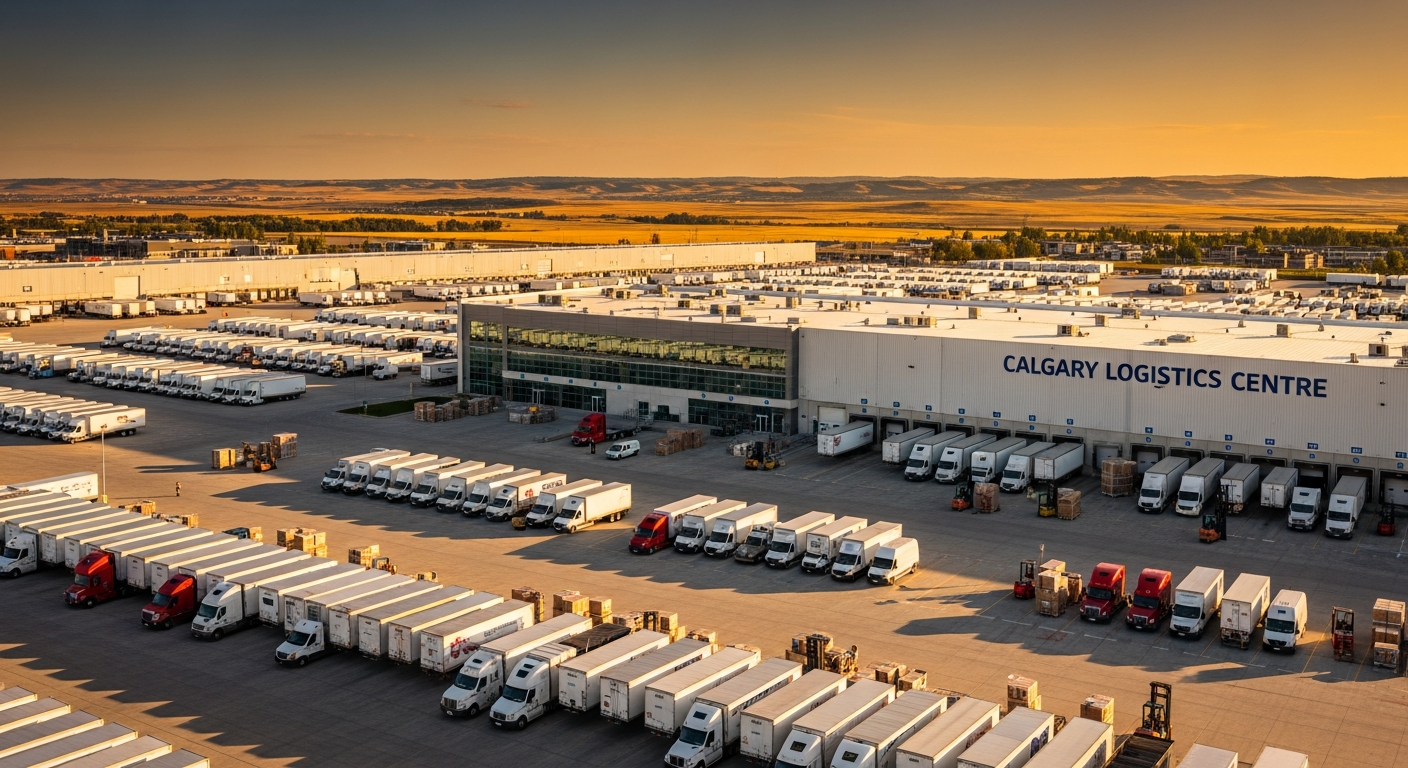
Calgary is the third-largest industrial market in Canada by absorption, the country's primary intermodal junction between the Pacific port system and the rest of North America, and the natural fulfillment node for any brand with serious Alberta or Prairie demand. Despite that, it is dramatically under-served by Canadian 3PLs — most operators treat Calgary as an afterthought satellite of their Vancouver or Toronto operations rather than a primary node. For brands shipping into Alberta, Saskatchewan, and Manitoba, that gap creates an opportunity: a properly run Calgary 3PL can take two to three transit days off Prairie deliveries and meaningfully reduce blended shipping cost. This guide explains why, what real Calgary fulfillment pricing looks like, and what to demand from any prospective Alberta 3PL.
Why Calgary is structurally under-served — and why that's an opportunity
Most Canadian DTC brands fulfill the entire Prairie region from either Vancouver or Toronto, eating three to five transit days and an inter-provincial zone surcharge on every parcel into Alberta, Saskatchewan, and Manitoba. The default behaviour persists because most brands hit Prairie demand at a scale (a few hundred orders a month) where opening a third or fourth fulfillment node feels premature. But the math has shifted. Calgary industrial real estate is meaningfully cheaper than Vancouver and modestly cheaper than the GTA, with absorption above 5 million square feet annually for most of the past decade. Carrier rate increases on cross-Prairie lanes have outpaced general inflation. And the natural-resources economy keeps Alberta's e-commerce per-capita spending among the highest in Canada — a market large enough to justify dedicated fulfillment for any brand doing more than roughly 250 orders/month into Alberta alone.
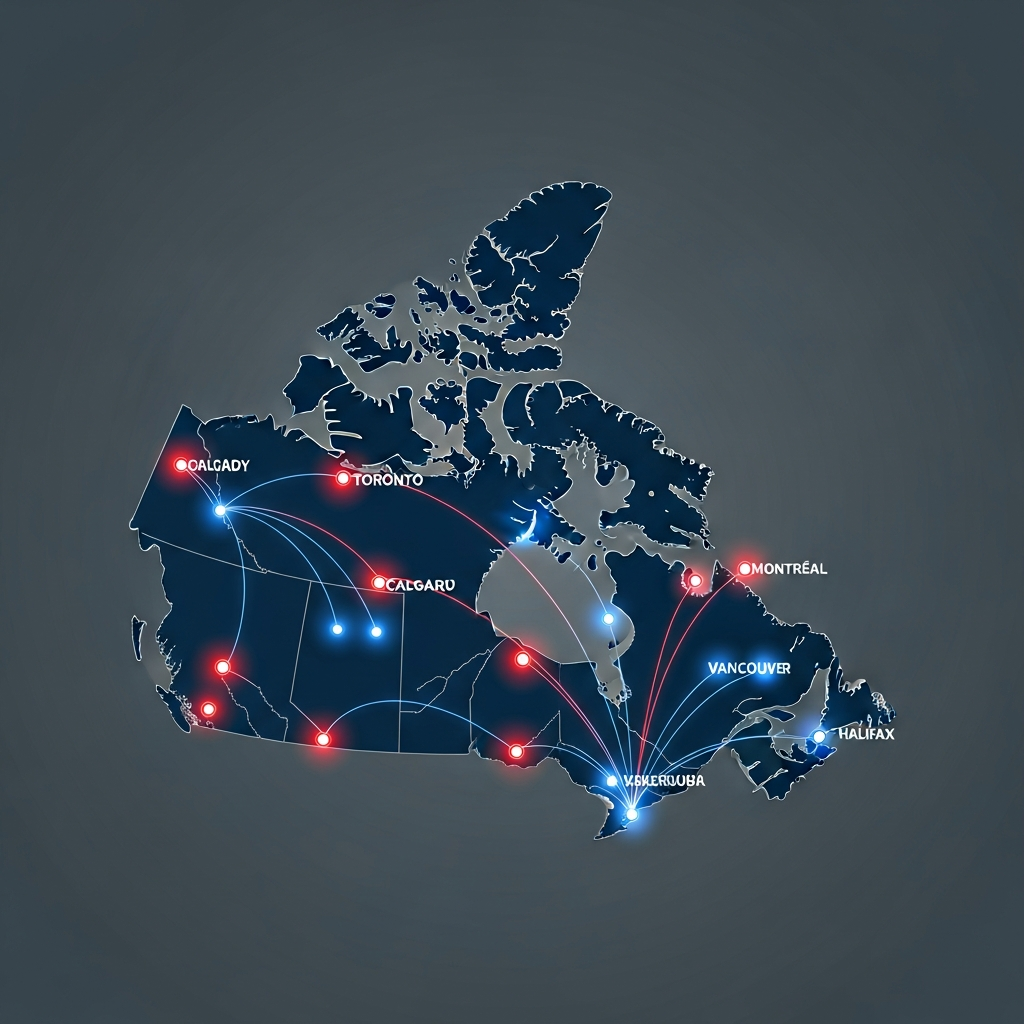 Calgary is within one business day of Edmonton and two days of Saskatoon, Regina, and Winnipeg.
CN and CP intermodal: Calgary's underrated logistics asset
Calgary is one of only two cities in North America with major intermodal terminals from both Class I Canadian railroads — CN's Calgary Logistics Park and CP's Calgary Intermodal Facility. For brands moving inbound containers from the Port of Vancouver to a Prairie or central-Canada DC, Calgary intermodal is among the most cost-efficient inland container moves in the country. Trans-Pacific containers can be discharged at Vancouver, railed to Calgary in 36–48 hours, and devanned into a Calgary 3PL warehouse for $700–$1,100 per container — typically 30–45% less than equivalent OTR (truck) transit from Vancouver to Toronto for inland fulfillment. Brands importing meaningful Asian volume but selling primarily into central and eastern Canada often quietly use Calgary as a transload hub rather than fulfilling from Vancouver directly.
Calgary 3PL pricing benchmarks for 2026
Calgary fulfillment generally runs 5–9% below the GTA and roughly 8–13% below Vancouver, with the savings concentrated in lease cost and labour. Alberta's lack of provincial sales tax on operational inputs (no PST equivalent) creates a small but meaningful additional advantage for service costs. The bands below reflect mid-2026 quotes from credible multi-tenant 3PLs operating in the Calgary region (primarily in the southeast Calgary industrial corridor, Foothills, Rocky View County, and Balzac).
| Service | Typical Range (Calgary) | Notes |
|---|
| Pick & pack (first item) | $2.45 – $3.30 | Includes basic pack, label, dunnage |
| Pick & pack (each add'l item) | $0.32 – $0.58 | Per additional SKU on the same order |
| Receiving (per pallet) | $28 – $44 | Inbound count, putaway, ASN reconciliation |
| Storage (pallet/month) | $22 – $32 | Ambient, rack-stored |
| Storage (bin/month) | $0.85 – $1.40 | Small-SKU shelf storage |
| Devanning (full container) | $500 – $850 | From a Calgary intermodal terminal or OTR delivery |
| Returns processing | $3.50 – $6.00 | Inspect, photograph, restock or grade |
 Calgary 3PL pricing benchmarks for 2026
Calgary transit times across Western Canada and the U.S. Mountain region
From a Calgary node, ground transit profiles open up in ways that surprise most operators used to thinking of Calgary as remote. Edmonton is a same-day or next-day ground move via every major carrier. Saskatoon and Regina are next-day ground. Winnipeg is two days. Vancouver is one to two days ground depending on carrier and service level. Even Toronto is reachable in three to four days ground or one to two days air, comparable to fulfilling Toronto from a Vancouver node. Equally important: Calgary has strong cross-border lanes into Montana, Idaho, Utah, and the U.S. Mountain region via the Coutts/Sweetgrass and Carway crossings, opening U.S. distribution lanes that are awkward from any other Canadian node.
- Edmonton: same-day to next-day ground (FedEx, UPS, Purolator, Canada Post)
- Saskatoon: 1 business day ground
- Regina: 1 business day ground
- Winnipeg: 2 business days ground
- Vancouver: 1–2 business days ground
- Toronto / GTA: 3–4 business days ground; 1–2 days air
- U.S. Mountain (MT, ID, UT, WY): 1–3 business days via Coutts crossing
- U.S. Pacific Northwest (WA, OR): 2–3 business days via Carway or Coutts crossing
What to look for in a Calgary 3PL
Calgary's 3PL market is bifurcated between two camps: legacy oilfield-and-B2B operators who came up serving the energy industry and have strong heavy-freight, palletized B2B, and project logistics capabilities — but often weaker DTC technology and integrations; and newer DTC-first operators with modern WMS platforms but smaller footprints and less B2B depth. The right answer depends on your mix. If you are a pure DTC brand, prioritize integration depth, multi-carrier rate shopping, and Shopify/Amazon native connectors. If your business has meaningful B2B retail or industrial customers, prioritize EDI capability, oversize-freight handling, and certifications relevant to your category (TDG for transportation of dangerous goods, GMP for supplements, organic certification for food).
If you sell into Alberta-headquartered retail (London Drugs, Save-On-Foods, Federated Co-op, Peavey Mart), confirm your Calgary 3PL has direct EDI relationships and recent receiving experience with those accounts. Compliance details and label requirements vary by chain and inexperience here can cost you chargebacks.
Carrier coverage and last-mile in Alberta
All major national carriers operate aggressive Calgary hubs (Canada Post, Purolator, FedEx, UPS, DHL eCommerce). Alberta and Saskatchewan have a strong B2B LTL ecosystem — Day & Ross, Manitoulin, Bison Transport, Mullen Group, and several Calgary-headquartered owner-operator networks compete hard on Western Canadian palletized freight. For urban DTC, Intelcom has built meaningful coverage in Calgary and Edmonton and frequently beats national carriers on residential parcels in those metros. A serious Calgary 3PL rate-shops across all of these — and for Prairie-rural deliveries, also evaluates Canada Post (which still wins many small-parcel rural lanes due to community mailbox economics).
 Carrier coverage and last-mile in Alberta
Industries that win with a Calgary 3PL
Outdoor and athletic gear (the Alberta outdoor industry is among the most active in Canada per capita); natural health and supplements (mature regulatory and contractor base); pet food and pet products (large category in Alberta); industrial and oilfield supply (legacy strength of the Calgary 3PL market); food and beverage with Western Canadian retail distribution (Save-On-Foods, Federated Co-op); apparel brands with disproportionate Prairie demand; cannabis-adjacent products. Calgary is rarely the right primary node for brands whose demand is heavily Ontario- and Quebec-skewed, though it can be a strong second node for those brands once they cross roughly 600 orders/month into Alberta and Saskatchewan combined.
ByExpress in Calgary
ByExpress operates a Calgary fulfillment node as part of our five-city Canadian network. The facility serves both standalone Calgary fulfillment for Alberta and Prairie demand, and acts as a transload hub for brands routing inbound containers via Vancouver–Calgary intermodal en route to central Canada. The Calgary node integrates with the same in-house WMS, rate-shopping platform, and consolidated reporting as our Ottawa, Toronto, Montreal, and Vancouver locations — giving brands a single inventory and order view across all five cities, with automatic order routing to the warehouse best positioned to fulfill each order at lowest landed cost.
Frequently Asked Questions
How much does Calgary 3PL cost?
Expect $2.45–$3.30 for the first pick-and-pack item, $0.32–$0.58 per additional item, $22–$32 per pallet per month for ambient storage, and $28–$44 per pallet for receiving. Calgary runs 5–9% below GTA pricing and 8–13% below Vancouver, helped by the absence of Alberta provincial sales tax on most operational inputs.
Is Calgary a viable single fulfillment node for a Canadian DTC brand?
Generally only if your demand is heavily Western Canadian (35%+ from BC, Alberta, Saskatchewan, Manitoba). For nationally distributed brands, Calgary works best as a second or third node alongside an Ontario or Quebec primary location. As a single node, Calgary's transit time to the Toronto/Ottawa/Montreal corridor (3–4 days ground) is too long for most brand standards.
Can I ship from Calgary to the U.S. cost-effectively?
Yes — particularly into the U.S. Mountain region (Montana, Idaho, Utah, Wyoming) via the Coutts/Sweetgrass crossing. Cross-border ground from Calgary to U.S. injection partners in Great Falls, Spokane, or Salt Lake City puts parcels on USPS or UPS Ground Saver for one-to-three-day Mountain region last-mile. For U.S. Northeast or Southeast volume, an eastern Canadian or U.S. East Coast node is more economical.
What is intermodal transload and why does it matter for Calgary?
Intermodal transload means discharging an ocean container at a port (Vancouver), railing it inland to a rail terminal (Calgary), then devanning into a 3PL warehouse for distribution. Calgary has direct CN and CP intermodal terminals, making it among the cheapest North American inland container moves. For brands importing from Asia but distributing centrally, Calgary intermodal is often 30–45% cheaper than over-the-road inland from Vancouver.
Do Calgary 3PLs handle TDG and dangerous goods?
Many do — Calgary's oilfield and industrial heritage means TDG (Transportation of Dangerous Goods) certified operators are more common here than in most Canadian markets. If your products fall under TDG (lithium batteries, aerosols, certain chemicals, perfumes), confirm that the 3PL holds current Transport Canada certifications and has trained operators on staff.
How do Calgary carrier costs compare to other Canadian markets?
Carrier costs from Calgary into Edmonton and the immediate Prairie corridor are among the cheapest in Canada (single-zone moves). Costs into Toronto, Montreal, and the Atlantic provinces from Calgary are higher than equivalent moves from Ontario-based fulfillment. Net-net, Calgary wins on cost for any order shipping to a Western Canadian or U.S. Mountain destination and loses on cost for orders shipping to Eastern Canada.
Related ByExpress resources