Guide · · 8 min read
Calgary and Dallas: Cross-Border Logistics Hubs
The Calgary–Dallas corridor connects two energy-rooted economies with strong B2B replenishment needs and growing DTC ecommerce demand. Here's why the corridor matters and how merchants should structure freight.
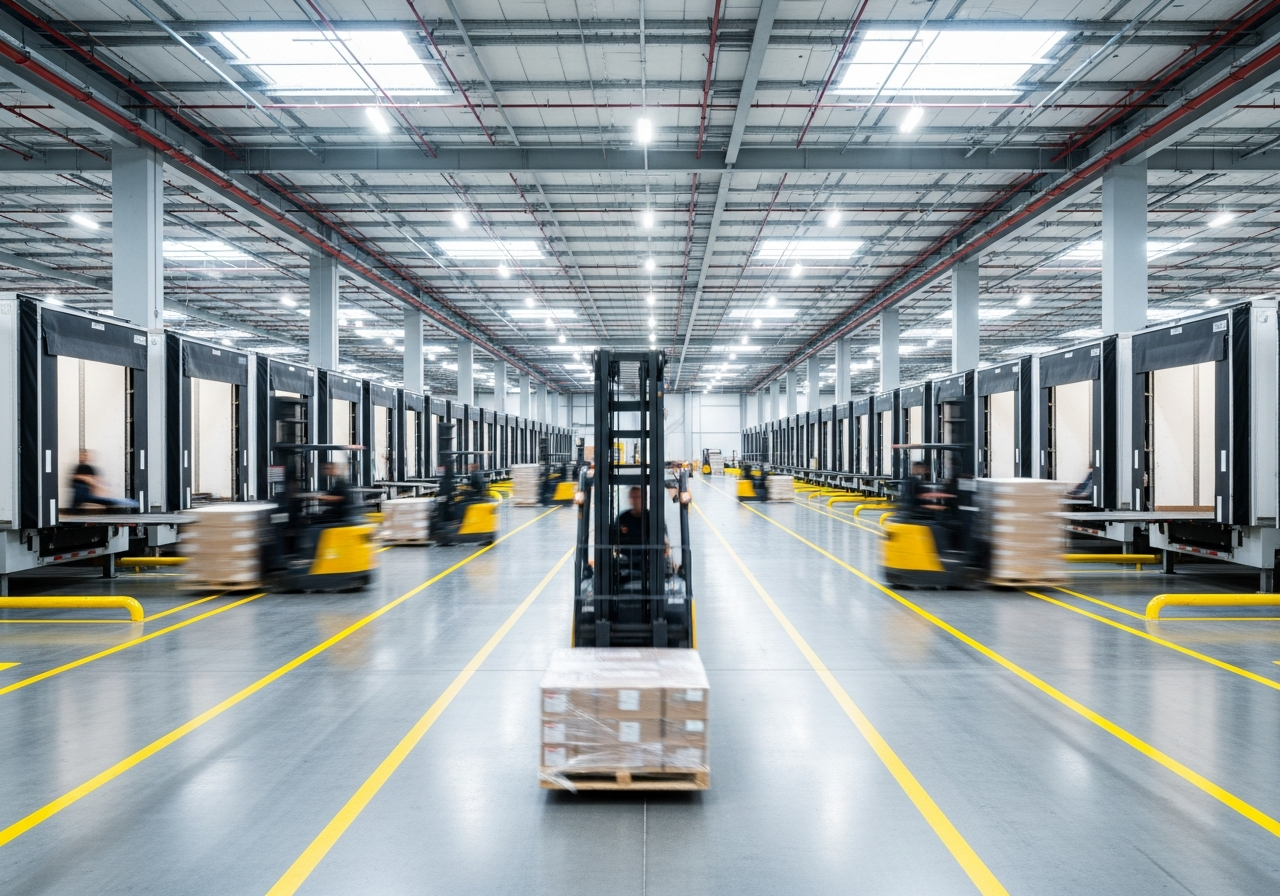
Calgary and Dallas-Fort Worth share more than oil-and-gas economies. Both anchor major rail networks, both serve as continental logistics gateways, and both are hubs for industrial, energy, automotive, and increasingly ecommerce freight. The Calgary–Dallas corridor — running south through Montana, Wyoming, Colorado, and into Texas — has quietly become one of the highest-throughput cross-border lanes for B2B replenishment and energy-sector supply chain in North America. This guide explains why the corridor works, what types of merchants benefit, and how to structure a two-node distribution network across it.
Why the Calgary–Dallas corridor works
The Calgary–Dallas axis runs through the heart of North America's energy and industrial economy. Truckload freight moves daily from the Coutts/Sweetgrass crossing south on I-15, transferring to I-25 through Denver, then I-40/I-44 east to Dallas — a 3-4 day move for standard truckload. CN and CPKC rail networks both serve direct intermodal lanes Calgary-Dallas with 5-6 day transit and meaningfully better per-unit economics for non-time-sensitive freight. For brands serving B2B energy-sector customers (oilfield services, MRO consumables, automation hardware), this corridor compresses what was traditionally a 7-10 day delivery experience into 3-5 days at a competitive landed cost.
Who benefits from a Calgary–Dallas two-node network
The clearest fits are: energy-sector B2B (Alberta oil patch to Texas oil patch and vice versa), automotive parts and aftermarket, industrial automation and MRO, and growing categories like outdoor/recreation and ranch ecommerce that share customer demographics across both regions. DFW serves as a gateway not just to Texas (30M consumers, 4th largest US state ecommerce market) but also to Oklahoma, Louisiana, Arkansas, and New Mexico — collectively another 12M consumers within 2-day ground from Dallas. Calgary anchors the Western Canadian side and provides direct freight access to Edmonton, Saskatchewan, and Manitoba.
- Energy/oilfield MRO B2B replenishment
- Automotive aftermarket and OEM parts
- Outdoor/recreation/ranch ecommerce
- Industrial automation hardware
- Cold-chain compliant freight (both hubs have refrigerated capacity)
Freight structure and customs flow
Replenishment between nodes typically moves as monthly 53' truckload or biweekly LTL consolidated via established Calgary-Dallas carriers. US Customs Broker handles formal entry at Sweetgrass, MT. For DTC ecommerce parcels, Section 321 (under $800 USD) entry remains the dominant path. ByExpress handles both DTC parcel and B2B palletized flows from our Calgary hub, with established carrier rates south through the Coutts/Sweetgrass crossing and consolidation partners in Dallas-Fort Worth for last-mile fulfillment.
Calgary-Dallas freight tip: book southbound truckload around oil-and-gas activity peaks — capacity tightens dramatically during major drilling seasons and rates can swing 30%+ within weeks.
Frequently Asked Questions
What's the transit time Calgary to Dallas by truckload?
3-4 business days via Coutts/Sweetgrass and I-15/I-25/I-40. Intermodal rail is 5-6 days at meaningfully lower per-unit cost for non-time-sensitive freight.
Can ByExpress handle TDG/hazmat freight on this corridor?
Yes. Our Calgary facility is TDG-certified and we work with cross-border hazmat carriers experienced in oilfield and industrial freight regulation on both sides of the border.
What's the right warehouse footprint in Dallas for a Western Canadian brand?
Most brands start with a 3PL-managed 2,000-5,000 sq ft forward-deploy node in DFW or south Dallas, replenished monthly from Calgary. Dedicated lease space typically only makes sense above $5M annual US revenue from the Southeast/South-Central.