Guide · · 12 min read
Canada–US Customs Documents for Ecommerce Shipments: A 3PL Readiness Checklist
A border-ready ecommerce operation depends on accurate product data and clear handoffs, not paperwork assembled at the last minute. Use this checklist to prepare invoice fields, classification, origin, valuation, broker instructions and exception ownership with your 3PL.
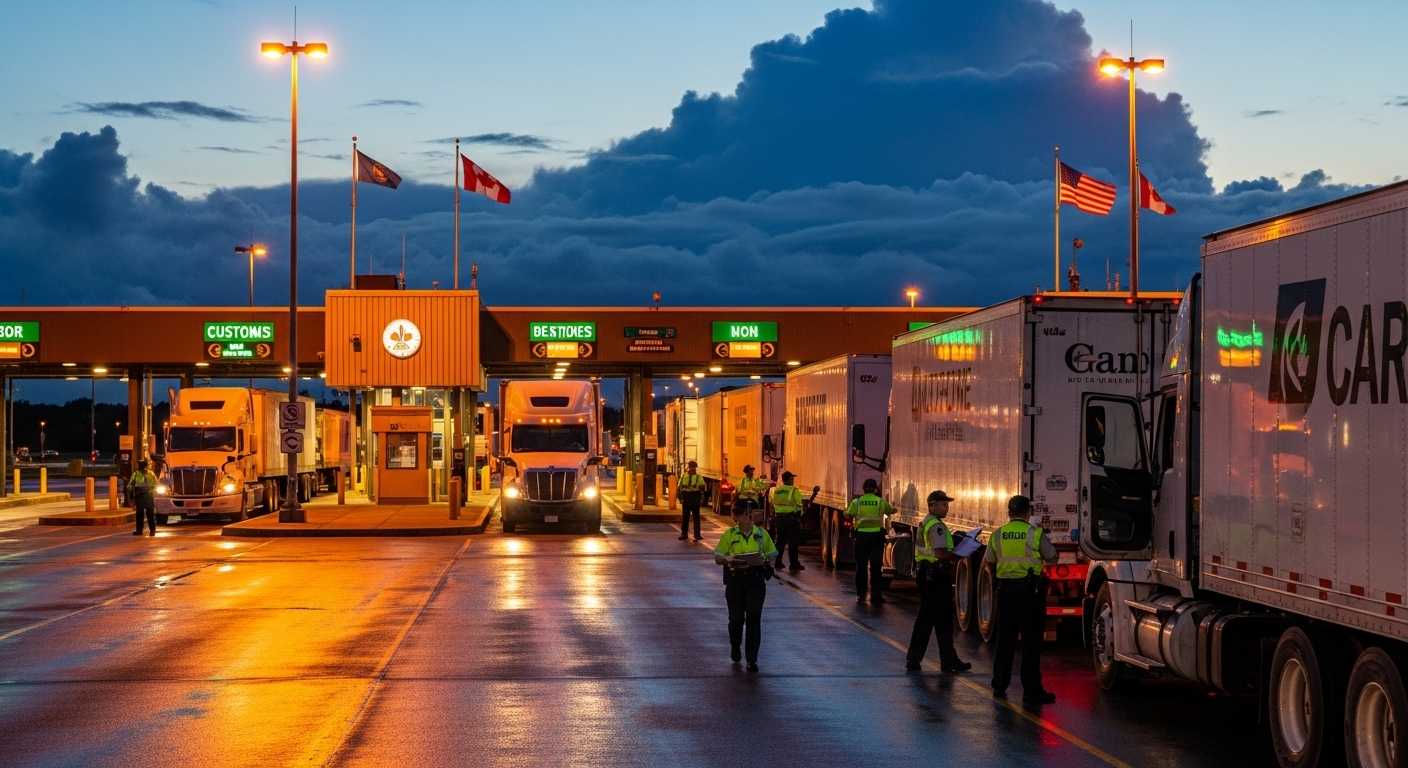
Cross-border ecommerce can look deceptively simple: accept an order, print a label and give the parcel to a carrier. Yet the shipment also carries a structured description of the transaction. Customs authorities, carriers, brokers and importers use that information to understand what is moving, where it came from, what it is worth and who is responsible for the entry. If those parties receive incomplete or conflicting data, a perfectly packed order may still pause at the border. A capable 3PL can automate document production and broker handoffs, but it should not be expected to invent product facts or make unapproved classification and valuation decisions. Readiness therefore begins with a governed product-data record and a responsibility map shared by the merchant, 3PL, carrier and broker. This guide provides an operational checklist rather than customs, tax or legal advice. Requirements vary with the goods, transaction, route and importer arrangement, so confirm your setup with a qualified customs broker and other professional advisers.
Start with the transaction and importer model
Before configuring documents, map the commercial transaction. Record the seller, purchaser, ship-from party, consignee, importer of record and any broker. Decide how duties and taxes will be presented to the customer and which party has authority to instruct the broker. Incoterms or delivery terms should reflect the actual commercial arrangement rather than being selected as a convenient software default. Returns, replacements, samples and warranty shipments may follow different data paths from ordinary sales, so include them in the map. The 3PL needs an approved shipping rule for each order type and destination, while the merchant retains ownership of commercial decisions. A short written operating profile prevents a platform setting, carrier label and invoice from describing three different versions of the same transaction.
Operational checklist only: customs treatment depends on the product and transaction. Have a qualified customs broker or adviser validate the model before launch and when circumstances change.
Build complete, consistent commercial invoice data
A commercial invoice should be generated from controlled order and product data, not free text entered at the packing bench. Common fields include seller and consignee details, invoice reference and date, a plain-language item description, quantity, unit and total value, currency, country of origin, classification code, weight and delivery terms. Whether a particular shipment uses a commercial invoice, electronic data or another form should be confirmed for the service and lane. Descriptions such as “parts,” “gift” or an internal SKU rarely explain the goods adequately. Use a description that states what the item is and, where useful, its material or purpose. Reconcile line totals, freight or other charges and the invoice total to the transaction record. Keep the source order, generated document and transmission result linked by a stable shipment identifier.
- Approved product description that a third party can understand
- Quantity, unit value, total value and stated currency
- Country of origin and classification at item level
- Parties, addresses and contact details appropriate to the transaction
- Invoice, order and shipment identifiers that reconcile across systems
- Document version and evidence of successful electronic transmission
Govern HS classification, origin and valuation separately
Classification, origin and valuation answer different questions and should occupy separate fields. An HS-based code describes the goods; its required precision and tariff treatment can depend on the importing country. Origin generally concerns where goods were produced under applicable rules, not the warehouse they left or the seller’s address. Valuation should represent the appropriate customs value for the transaction and should not be reduced simply to avoid charges. Promotions, sets, samples, replacements, assists and related-party transactions can require extra analysis. Ask a broker or qualified adviser to establish an approved position, then store the result with its rationale, effective date and reviewer. The 3PL should apply that approved master data and flag missing values, not improvise a code or origin during packing.
| Data element | Primary owner | 3PL control | Review trigger |
|---|
| Item description | Merchant/product team | Validate presence and print approved text | New SKU or material change |
| HS classification | Merchant with qualified adviser | Use approved destination-aware field | Product or tariff nomenclature change |
| Country of origin | Merchant/supplier with adviser | Transmit item-level value | Supplier or production change |
| Customs value | Merchant/finance with adviser | Map transaction values and currency | New promotion or transaction type |
| Broker instruction | Importer/merchant | Route data to named broker | Broker, carrier or importer change |
Design the carrier and broker handoff
Document generation is only half the workflow; the right party must receive usable data before or with the shipment. During onboarding, confirm who appoints the broker, how authorization is handled, which account numbers apply and whether data moves through an API, carrier platform, EDI or document pouch. Test that item-level fields are not truncated and that currency, units and special characters survive transmission. Define who responds when the broker requests clarification, and provide escalation contacts across business hours and time zones. The physical parcel, carrier manifest and electronic customs record should share identifiers. A successful label response does not necessarily prove that complete customs data reached the broker, so retain acknowledgements and test a representative set of SKUs and order types.
A label is not proof of customs-data acceptance. Include transmission acknowledgements and broker feedback in launch testing.
Create an exception queue before the first shipment
Prevent questionable orders from silently entering the carrier stream. Validation rules can hold an order when classification, origin, value, currency, phone number or importer instruction is missing; when a restricted-destination rule is triggered; or when invoice totals do not reconcile. Each hold needs a reason code, owner, response target and permitted resolution. Broker questions should return to a central queue rather than an individual inbox. If a parcel is already moving, record whether it will be corrected, returned, abandoned or otherwise handled under professional guidance. Analyse recurring holds by SKU, sales channel and cause. The goal is not merely to release today’s order, but to correct the source data so tomorrow’s order flows automatically.
- Stop the order and assign a specific reason code
- Route product questions to the merchant and entry questions to the broker
- Record the approved correction without overwriting the audit trail
- Re-transmit and retain acceptance evidence
- Correct the source catalogue or channel mapping
- Review repeat causes in a regular merchant–3PL meeting
Make data ownership and change control explicit
A responsibility matrix should name who creates, approves, stores, transmits and updates every critical field. Merchants are normally best placed to know the product, supplier and sale; brokers provide specialized entry guidance; 3PLs execute the approved rules; carriers transport the shipment and may facilitate brokerage. Avoid shared spreadsheets with no owner or effective dates. Restrict edits to authorized roles, record changes and make destination-specific values possible where needed. Establish retention practices with advisers based on applicable obligations and business needs rather than assuming one universal period. When a source system changes, test mappings in a non-production or controlled environment before releasing live orders.
Run a representative readiness test and monitor quality
A useful pilot covers more than one easy order. Select low- and high-value baskets, multi-line orders, discounts, goods from different origins, returns or replacements, and every intended carrier service. Compare storefront, warehouse, invoice and broker records field by field. Confirm who sees border-status events and how customer service communicates a delay without guessing at a clearance date. After launch, monitor first-pass data acceptance, missing-field holds, broker queries, corrections and border-related returns. These are process indicators, not promises of clearance speed. Review the results with the 3PL and broker, retire temporary workarounds and repeat testing whenever products, systems, carriers, brokers or commercial terms change.
Questions to ask a cross-border 3PL
Ask prospective partners to demonstrate the actual field mapping and exception screen rather than only describing “customs support.” Determine whether product attributes are stored by destination, whether documents can be regenerated without losing history, and how broker responses are attached to a shipment. Request a responsibility matrix and a sample implementation plan. A sound 3PL will distinguish operational execution from advice reserved for licensed or qualified professionals, will surface missing data instead of supplying guesses, and will support a controlled pilot. ByExpress can coordinate warehousing, fulfilment, carrier selection and data handoffs while working with a merchant’s chosen customs professionals on the approved cross-border design.
Frequently Asked Questions
What customs information does a Canada–US ecommerce shipment need?
The exact requirement depends on the goods, service and transaction. Common data includes the parties, clear item descriptions, quantities, values and currency, origin, classification, weight and delivery terms. Confirm the required documents and fields with the carrier and a qualified customs broker.
Can a 3PL choose HS codes for my products?
A 3PL should not guess. The merchant should establish and approve classifications with qualified advice, while the 3PL stores, validates and transmits that controlled data. Clarify contractually whether any provider offers classification services and on what basis.
Is country of origin the country the parcel ships from?
Not necessarily. Origin generally relates to where goods were produced under relevant rules, while ship-from identifies the dispatch location. Because origin determinations can be fact-specific, validate them with suppliers and a qualified adviser.
Who owns commercial invoice accuracy?
Responsibilities should be explicit. The merchant generally owns commercial product and transaction facts; the 3PL executes approved mappings; and the broker advises on entry requirements. Each party should validate the fields it controls.
How should customs exceptions be managed?
Hold affected orders in a visible queue, assign a reason and owner, obtain an approved correction, retain the original record and fix the source data. Broker requests should have named escalation contacts rather than relying on ad hoc email.
How often should customs master data be reviewed?
Use event-driven review for new or changed products, suppliers, production locations, transaction types, destinations and system mappings, plus a periodic governance review. Ask advisers whether external nomenclature or policy changes require updates.
Related ByExpress resources