Guide · · 14 min read
Creatine & Sports Supplement Fulfillment in Canada: The Complete 3PL Playbook
Creatine is one of the fastest-growing sports nutrition categories in Canada — and one of the least forgiving to ship. Moisture ruins it, powder is heavy, Health Canada regulates it, and subscribers expect it on time. Here's how to fulfill creatine and sports supplements properly, from climate-controlled storage to carrier strategy.
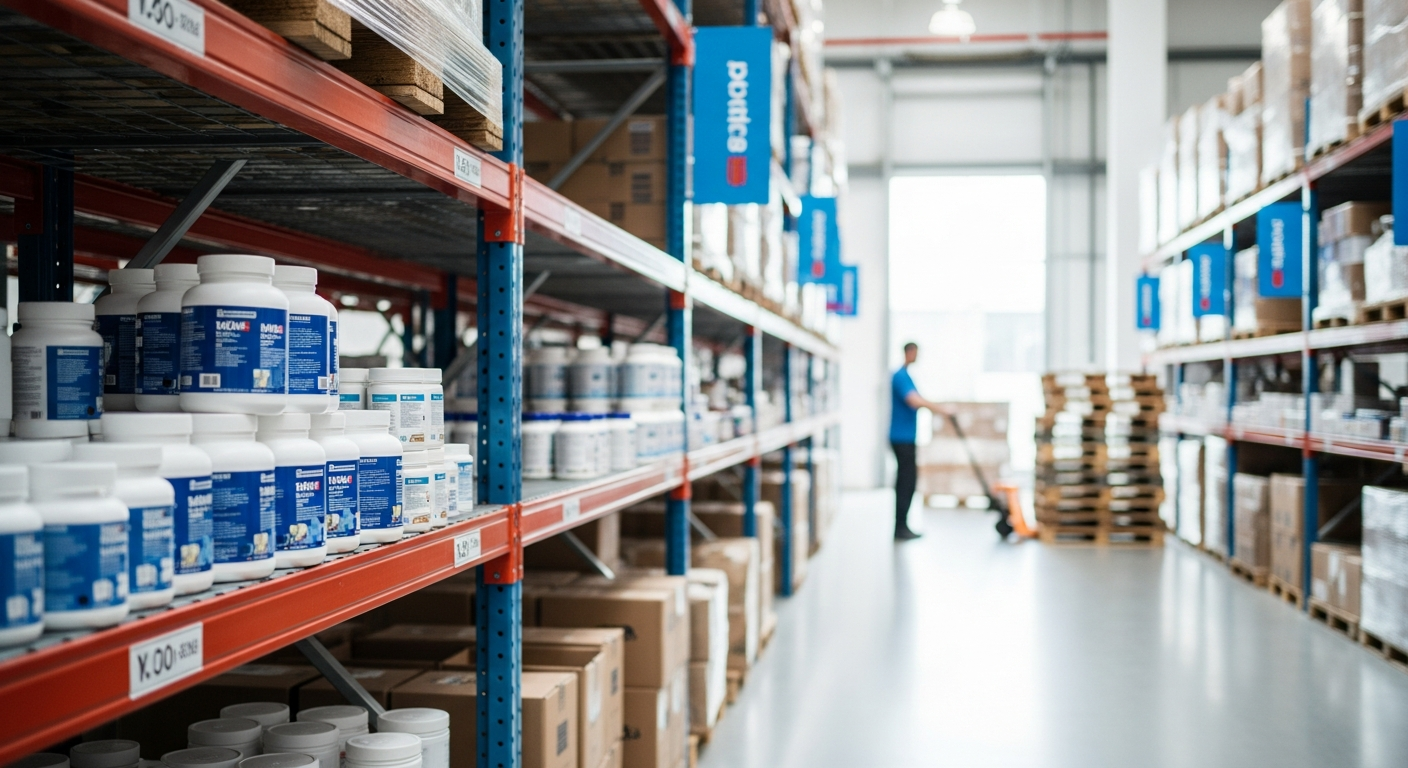
Creatine monohydrate is the most-researched sports supplement in the world and one of the fastest-growing e-commerce categories in Canada. Canadian brands and retailers like CREATINE.CA have turned a single ingredient into thriving direct-to-consumer businesses built on repeat purchases and subscriptions. But behind every five-star unboxing is a logistics problem most founders underestimate: creatine is a fine, hygroscopic powder that clumps and degrades when it meets humidity, it is dense and heavy relative to its size, it is regulated by Health Canada as a natural health product, and subscribers churn the moment a shipment is late. This guide breaks down exactly what it takes to store, pick, pack, and ship creatine and sports supplements across Canada — and how to choose a third-party logistics (3PL) partner that treats a tub of powder with the same discipline as a pharmaceutical.
Why creatine is a booming — and demanding — category in Canada
Creatine has crossed over from bodybuilding niche to mainstream wellness. It is now marketed for strength, recovery, healthy aging, and even cognitive support, which has pulled in a far broader Canadian customer base than traditional sports nutrition. Canadian-focused brands and specialist retailers have capitalized on this by offering creatine monohydrate, micronized creatine, gummies, and flavoured blends direct to consumers. The upside is obvious: creatine buyers are loyal, they re-order predictably, and subscription models fit the category perfectly. The operational challenge is equally real. Powder supplements are heavy for their cube, sensitive to moisture and heat, subject to Health Canada regulation, and often sold in bundles or subscription boxes that require kitting. A brand can win on product and marketing and still bleed margin — or lose customers — on fulfillment that isn't built for the category. That is why the choice of a fulfillment partner matters more for supplement brands than for almost any other DTC vertical.
Creatine's biggest fulfillment risk isn't shipping speed — it's moisture. A single humid week in the wrong warehouse can clump an entire pallet of monohydrate and turn saleable inventory into returns.
Moisture, heat, and why creatine storage is unforgiving
Creatine monohydrate is hygroscopic: it actively pulls water from the air. In a warehouse without humidity control, powder cakes, clumps, and can begin converting to creatinine — the degradation byproduct that reduces potency. Protein powders, pre-workouts, and greens face the same enemy. The fix isn't complicated, but it must be deliberate: sealed primary packaging, climate-controlled storage that holds temperature and relative humidity within a defined band, desiccant management, pallet wrapping that protects against ambient moisture, and dock discipline so product isn't left on a hot or humid loading bay. Just as important is inventory rotation. Supplements carry lot codes and expiry dates, so a serious 3PL runs FIFO (first-in, first-out) pick logic to ship the oldest saleable stock first and prevent expiry write-offs. The table below shows the storage conditions a sports-nutrition-ready fulfillment centre should be able to guarantee and document.
| Storage factor | Target for supplements | Why it matters |
|---|
| Relative humidity | Controlled, low & stable | Prevents clumping and creatine → creatinine degradation |
| Temperature | Cool, stable ambient | Heat accelerates breakdown and reduces shelf life |
| Stock rotation | FIFO by lot & expiry | Avoids expired write-offs and recall exposure |
| Pallet handling | Wrapped, off-floor, sealed | Blocks ambient moisture on dock and in racking |
| Lot traceability | Captured at receiving | Enables fast, targeted recalls |
 Climate-controlled, humidity-managed storage is the single biggest protector of creatine potency and shelf life.
Health Canada NPN and labelling: the compliance layer
Creatine and most sports supplements are regulated in Canada as Natural Health Products (NHPs) under the Natural Health Products Regulations. In practice that means each product generally requires a Natural Product Number (NPN) issued by Health Canada, printed on the label, and supported by bilingual (English and French) labelling that covers recommended use, dose, risk information, medicinal and non-medicinal ingredients, lot number, and expiry date. Quebec's language rules add further bilingual requirements for packing slips and customer-facing documents. Your fulfillment partner is part of this compliance chain whether or not they realize it: shipping an NHP without a valid NPN, mishandling lot codes, or being unable to identify which customers received a recalled lot all create regulatory exposure for the brand. A capable supplement 3PL verifies NPN status at SKU receipt, captures lot codes and expiry at receiving, and can produce lot-to-customer ship history quickly if a recall is ever required. We cover this end-to-end in our dedicated Health Canada compliance guide, and it should be table stakes for any partner you trust with regulated inventory.
If a fulfillment provider can't tell you within hours which customers received a specific lot, they aren't ready to ship regulated supplements — full stop.
The creatine fulfillment workflow, end to end
Fulfilling a creatine order looks simple from the outside — a tub goes in a box — but the reliable version is a disciplined, repeatable process. Inventory arrives and is inspected, lot codes and expiry dates are captured, and product is putaway into climate-controlled locations. When an order lands from Shopify, Amazon, or a subscription platform, it drops into the warehouse management system, is batched for efficient picking, packed with protection appropriate to a heavy powder container, weighed, rate-shopped across carriers, and handed off with tracking pushed back to the customer. Returns are received, inspected, and either restocked or quarantined. The diagram below shows this flow at a glance; the difference between an average 3PL and a great one is how tightly each step is controlled and measured.
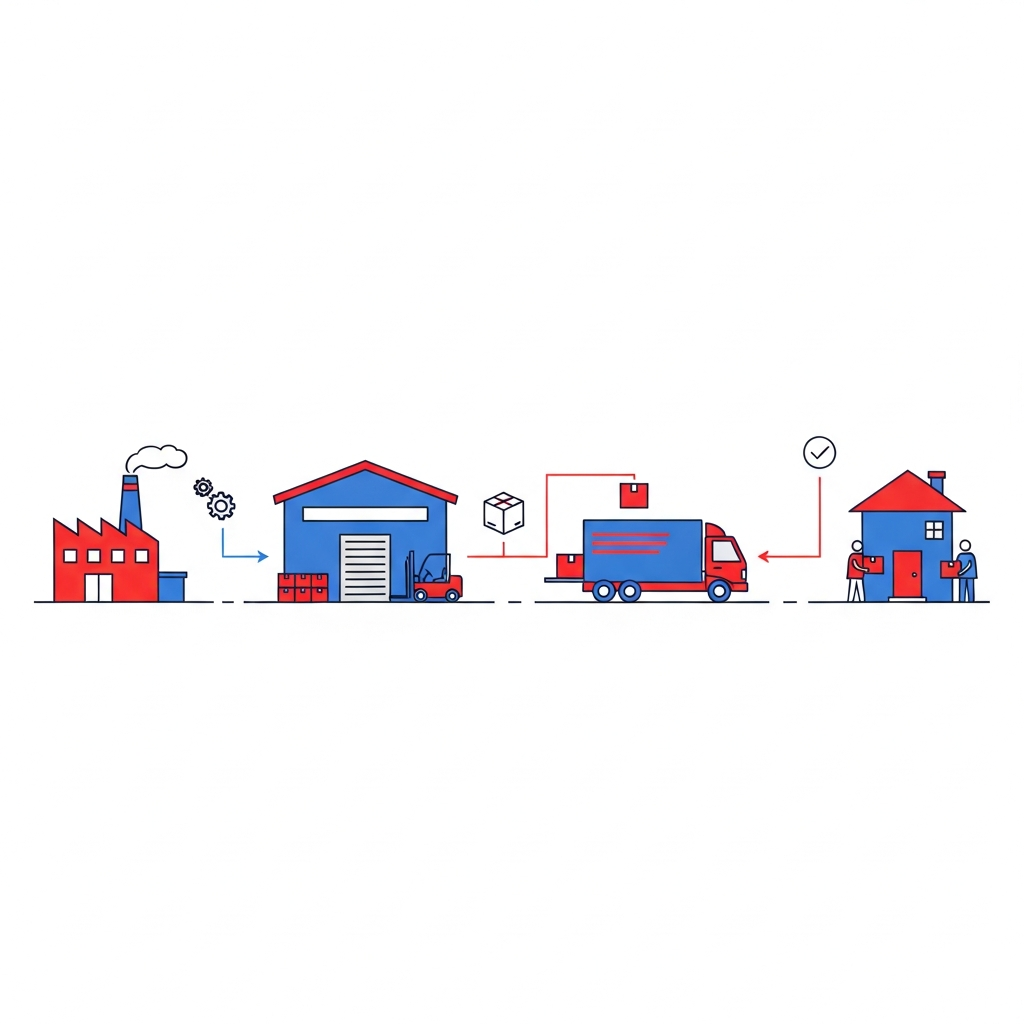 The order-to-delivery flow for supplement fulfillment: receive, store, pick, pack, rate-shop, ship, and manage returns.
Pick, pack, and the heavy-powder problem
Sports supplements punish sloppy packing. Powder containers are dense, so a small parcel can be surprisingly heavy, and carriers bill on dimensional weight — the greater of actual weight and volumetric weight. Oversized boxes with too much void fill inflate dimensional weight and shipping cost on every single order, quietly eroding margin at scale. Tubs also need enough protection that lids don't pop and seals don't break in transit, because a burst container isn't just a refund — it's a bad review. Good pick-and-pack for this category means right-sized cartons matched to common order profiles (single tub, two-tub subscription, bundle), consistent dunnage, tamper-evident sealing, and accurate scan-verified picking to keep error rates low. Kitting matters too: many creatine brands sell bundles or subscription boxes that must be assembled as a single sellable unit. The example below shows how box choice alone changes billed weight on an identical product.
| Scenario | Box choice | Billed impact |
|---|
| Single 400g creatine tub | Right-sized mailer/carton | Lowest dimensional weight |
| Single tub in oversized box | Excess void fill | Higher billed dim weight, wasted cost |
| Two-tub subscription | Kitted, snug carton | Efficient, protected, one parcel |
| Bundle (creatine + shaker) | Kitting into one SKU | Fewer parcels, cleaner unboxing |
 Right-sized cartons and consistent dunnage protect heavy powder tubs and control dimensional-weight costs.
Shipping strategy and carrier mix across Canada
Canada is a shipping challenge: a handful of dense metros separated by long distances, plus remote and northern postal codes where surcharges and transit times climb fast. For a heavy, re-ordered product like creatine, carrier strategy is a margin lever, not an afterthought. The two biggest wins are distributed inventory and rate shopping. Holding stock in more than one region — for example central Canada plus the west — shortens the average zone between warehouse and customer, which lowers cost and speeds delivery. Rate shopping then compares live carrier rates on every order and picks the cheapest service that meets the delivery promise, instead of defaulting to one carrier for everything. Combined with right-sized packaging, these moves routinely take double-digit percentages off blended shipping cost. The map-level view below illustrates why a coast-to-coast fulfillment footprint changes the math for a Canadian supplement brand.
- Distribute inventory across regions to shrink average shipping zones.
- Rate-shop every order across carriers to hit the delivery promise at the lowest cost.
- Right-size cartons to control dimensional-weight billing on dense powder.
- Batch and cut off orders early so subscription runs ship same-day.
- Plan for remote/northern surcharges and set customer expectations up front.
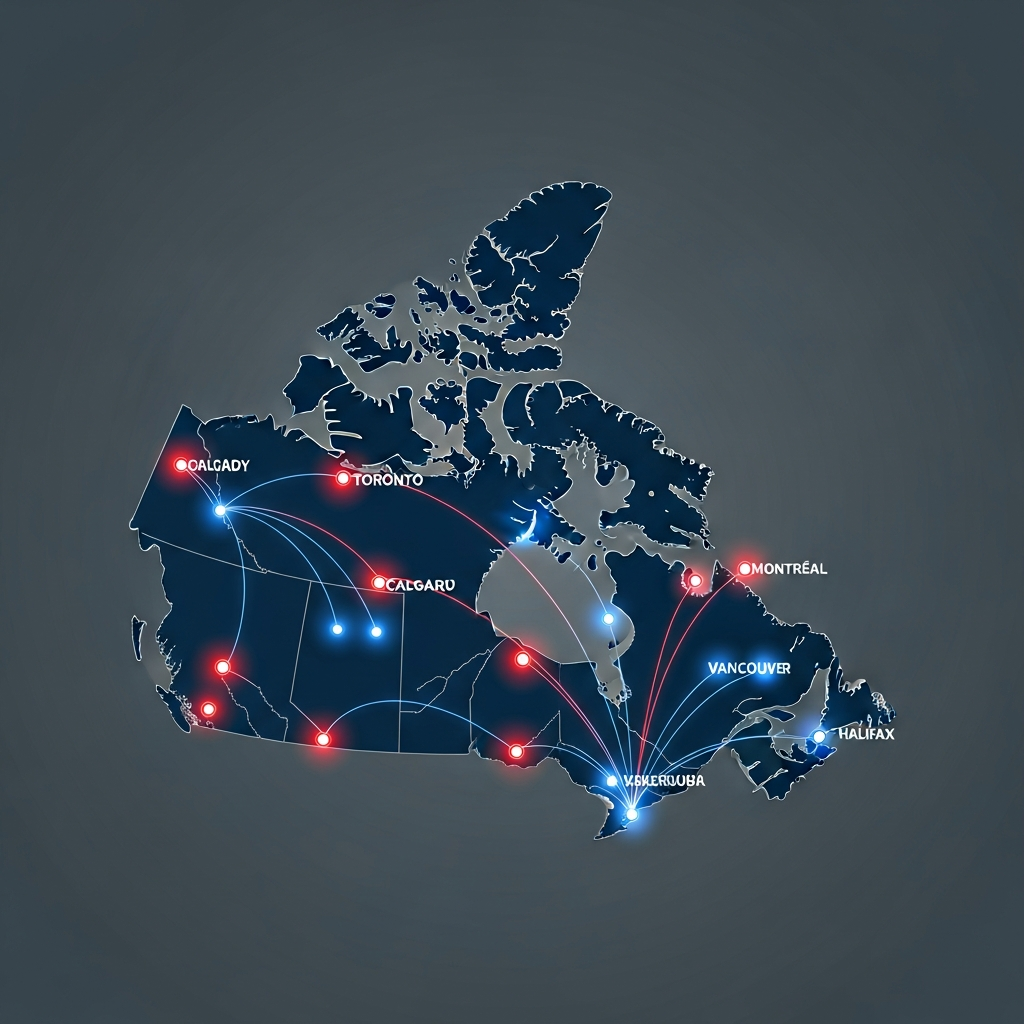 Distributing inventory across regions shortens shipping zones and cuts blended parcel cost for heavy supplements.
Subscriptions, bundles, and the retention engine
Creatine is a subscription dream product. It is consumed daily, runs out on a predictable cadence, and rewards habit — which is why so many sports nutrition brands build their economics around recurring orders. But subscriptions raise the operational bar. Renewal orders cluster on billing dates, so the warehouse must absorb predictable spikes without slipping SLAs. Kitting logic has to assemble multi-item boxes reliably, flavour or variant swaps between cycles must be handled cleanly, and failed payments or skipped months need to sync accurately with the fulfillment queue so nothing ships that shouldn't. A 3PL that integrates directly with your Shopify subscription app or platform — pulling orders automatically and pushing tracking back — removes the manual reconciliation that quietly breaks at scale. Get this right and fulfillment becomes a retention asset: on-time, well-packed, correctly-kitted boxes are one of the strongest (and most underrated) drivers of subscriber lifetime value.
What to demand from a creatine 3PL in Canada
Not every fulfillment provider is equipped for regulated, moisture-sensitive, heavy inventory. Use a category-specific checklist rather than generic capability claims. The right partner should be able to show you, in operational detail, how they protect potency, stay compliant, and control cost — with references from supplement brands they already serve. The essentials:
- Climate- and humidity-controlled storage with documented conditions.
- FIFO pick logic driven by lot and expiry, not just SKU.
- NPN verification at SKU receipt and lot capture at receiving.
- Sub-hour lot-to-customer ship history for recall response.
- Bilingual packing slips and returns docs for Quebec compliance.
- Right-sized packaging and multi-carrier rate shopping.
- Direct integration with Shopify, Amazon, and subscription platforms.
- Multi-region footprint to shorten shipping zones nationwide.
- Transparent per-order pricing with no surprise storage or handling fees.
How ByExpress fulfills sports nutrition brands
ByExpress runs supplement and sports nutrition fulfillment as a specialized practice, not a side line. That means climate-controlled storage that protects hygroscopic powders like creatine, FIFO rotation by lot and expiry, NPN verification and lot capture at receiving, and lot-to-customer traceability built for fast recall response. Our pick-and-pack is tuned for heavy powder SKUs — right-sized cartons, protective dunnage, tamper-evident sealing, and scan-verified accuracy — and our kitting handles bundles and subscription boxes as single sellable units. With fulfillment centres across Canada, direct integrations to Shopify, Amazon, and the major subscription platforms, and multi-carrier rate shopping on every order, we help sports nutrition brands cut blended shipping cost while getting product to customers faster. If you sell creatine, protein, or any regulated supplement in Canada, we'll walk your SKUs and show you exactly how we'd run your fulfillment.
Frequently Asked Questions
How should creatine be stored in a warehouse?
Creatine monohydrate is hygroscopic, so it must be stored in a cool, humidity-controlled environment in sealed packaging, kept off the floor and wrapped on pallets, and rotated FIFO by lot and expiry. Uncontrolled humidity causes clumping and accelerates degradation of creatine into creatinine, reducing potency and shelf life.
Do I need a Health Canada NPN to sell creatine in Canada?
Yes. Creatine and most sports supplements are regulated as Natural Health Products, which generally require a Natural Product Number (NPN) from Health Canada printed on bilingual (English/French) labelling. Your fulfillment partner should verify NPN status at SKU receipt and never ship a regulated NHP without one.
Why is shipping creatine so expensive?
Creatine and protein powders are dense and heavy for their size, and carriers bill on dimensional weight. Oversized boxes and excess void fill inflate cost on every order. Right-sized packaging, distributed inventory to shorten shipping zones, and multi-carrier rate shopping are the main levers to bring blended shipping cost down.
Can a 3PL handle creatine subscription boxes?
A capable supplement 3PL integrates with your Shopify subscription app or platform, absorbs the order spikes that cluster on billing dates, and kits multi-item or variant boxes reliably. Accurate sync of skipped months and failed payments to the fulfillment queue is essential so nothing ships incorrectly.
What makes supplement fulfillment different from regular e-commerce?
Supplements combine four demands most products don't share at once: moisture- and heat-sensitive storage, Health Canada NPN compliance and bilingual labelling, lot and expiry traceability for recalls, and heavy, dimensional-weight-sensitive shipping. A generalist 3PL that ignores any one of these creates cost, compliance, or quality risk for the brand.
How fast can ByExpress onboard a sports nutrition brand?
Onboarding depends on SKU count, integrations, and inventory transfer, but a typical Shopify-based creatine or supplement brand can be receiving inventory and shipping through ByExpress within a couple of weeks. Book a call and we'll map your SKUs, integrations, and storage requirements into a concrete plan.
Related ByExpress resources