Guide · · 11 min read
Subscription Box Fulfillment in Canada: The Operator's Guide
Subscription boxes look simple from the outside and break in surprising ways at scale. Here's the operational playbook for running subscription fulfillment in Canada — kitting models, batch timing, churn-resilient ops, and what your 3PL must do well.
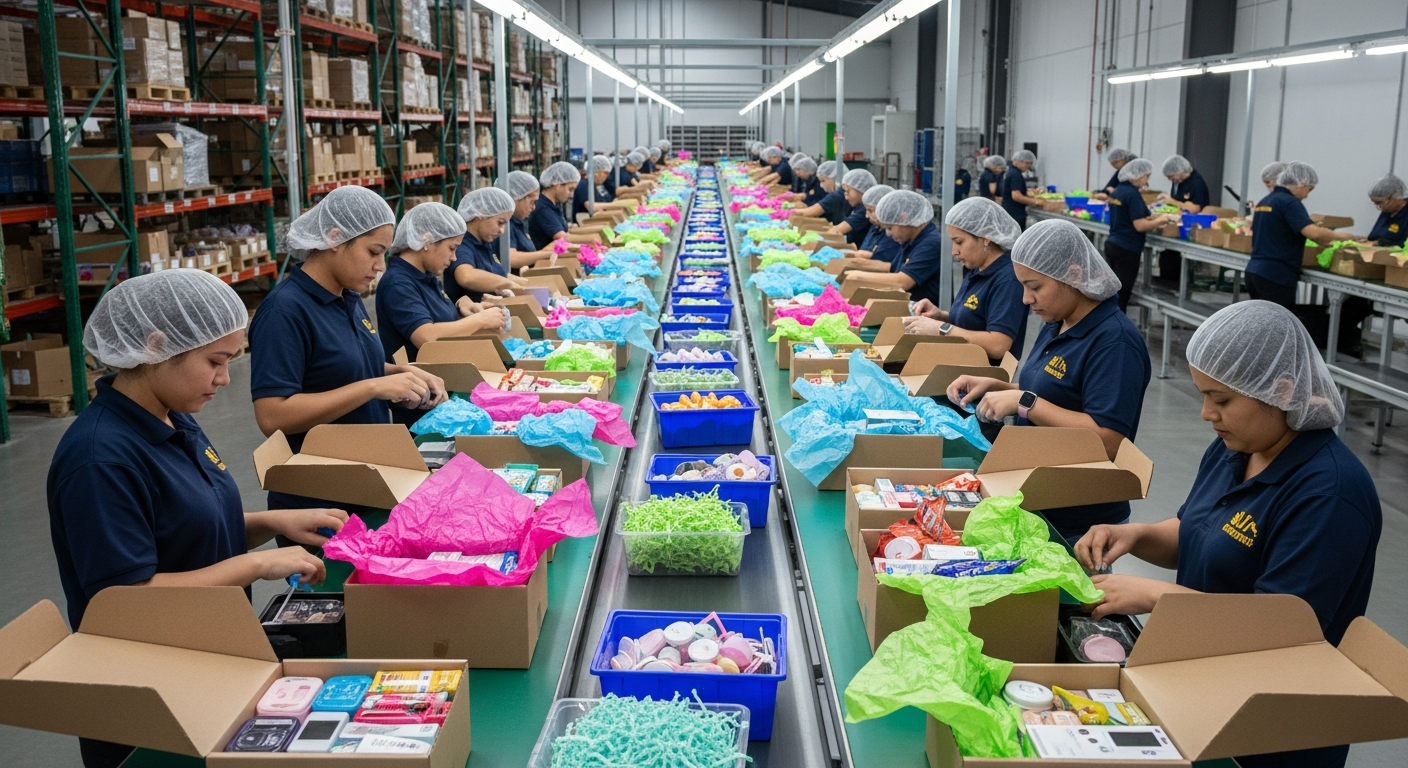
Subscription box brands have a deceptively simple operational picture: ship the same box to a known list of subscribers on a known cadence. In practice, subscription fulfillment is one of the hardest operational models in e-commerce — because it combines kitting, predictable peak waves, churn volatility, gift / one-off SKUs, and customer service ticket volume that scales nonlinearly with subscriber count. This guide is for Canadian subscription brands operating beyond the founder-fulfillment-from-the-garage stage and deciding how to scale fulfillment with a 3PL partner. It covers the two main kitting models, batch timing, the operational red flags that signal you've outgrown your current setup, and what to look for in a Canadian subscription 3PL.
Two kitting models: pre-kit batch versus pick-on-demand
Every subscription box operation runs on one of two kitting models, and the right choice has more impact on cost than any other operational decision. Pre-kit batch: the entire month's box is assembled once, in bulk, before the shipping window opens. Boxes sit fully-built in the warehouse until subscriber addresses are picked and shipped. Cost per box is lowest because kitting happens at scale on a single line over a few days. Trade-off: you commit inventory to a specific box configuration before knowing your final subscriber count, so churn-driven over-build wastes inventory and growth-driven under-build forces emergency re-kit. Pick-on-demand: each subscriber's box is assembled at pick time, by combining individually-stored components per the box month's recipe. Cost per box is higher (each pick is a multi-component pick), but inventory commitment is flexible — you don't waste pre-built boxes if subscribers churn, and you can flex up easily. Pre-kit batch fits brands with stable subscriber counts and uniform boxes; pick-on-demand fits brands with high churn, variant boxes, or small-batch limited-edition cycles.
 Two kitting models: pre-kit batch versus pick-on-demand
The shipping window: peak compression is the real challenge
Subscription boxes don't ship continuously — they ship in waves. A typical monthly box brand ships 70–85% of all monthly orders within a 5-to-8-day window after the billing date. For a 5,000-subscriber brand, this means roughly 4,000 orders compressed into one week — a peak intensity that exceeds Black Friday for a comparable-revenue DTC brand. Your 3PL needs to staff and stage for this compression every single month, not just at Q4 peak. The most common operational failure for growing subscription brands is a 3PL that handles steady-state DTC well but cannot absorb the monthly compression — boxes start shipping 2–3 days late, customer service tickets spike, and churn ticks up. Ask any prospective subscription 3PL specifically: how do you handle the 5-day shipping wave? What's your throughput per shift, and how does it staff up?
If a 3PL is reluctant to commit to specific shipping-wave SLAs (e.g., '95% of monthly boxes shipped within 4 business days of bill date'), they probably can't deliver them.
Component sourcing, receiving, and storage choreography
Subscription boxes typically combine 4–12 components per box, sourced from multiple vendors with different lead times. Receiving choreography matters: if any one component arrives late, the whole box waits. The best subscription 3PLs run a component-aware inbound dashboard that tracks all expected components per box-month, flags missing inbounds against your shipping window, and proactively surfaces risk 2–3 weeks before the wave. Without this, you find out about a missing 200 units of December's hero component the day before you intended to start kitting — and your options collapse to either delaying the wave or kitting incomplete boxes. Component storage requirements also vary: some need climate control, some are fragile, some have expiry dates that require FEFO rotation. A subscription-aware 3PL handles all of this without you having to micro-manage.
Designing operations for churn volatility
Subscription churn is operational, not just financial. A brand growing from 4,000 to 5,500 subscribers month-over-month with 8% monthly churn ships 5,500 boxes this month — but built inventory for 5,500 net-new based on growth assumptions, while losing 440 to churn. Net inventory commitment volatility runs 15–25% month-over-month for typical subscription brands. Three operational designs reduce churn-driven cost: shorter pre-kit windows (kit closer to ship date so you have a more accurate subscriber count), modular box design (some components are universal across box variants, reducing component-specific over-build), and an explicit 'one-off' SKU strategy for excess pre-kit inventory (sell over-build via your DTC store as one-off boxes rather than disposing). A 3PL with subscription experience will have opinions on all three.
Carrier and postage strategy for subscription
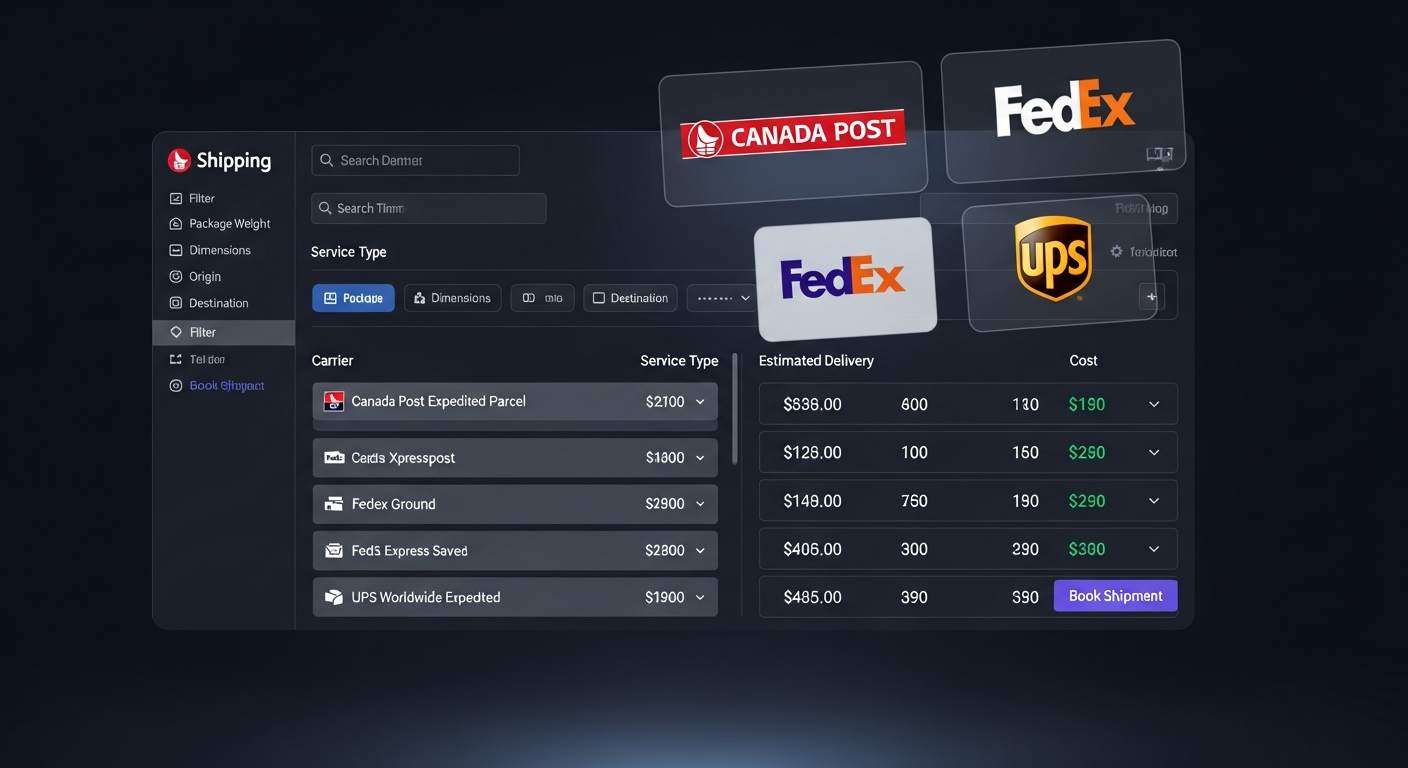
Subscription parcels have a different carrier mix from typical DTC ecommerce. Three structural realities drive the difference. First, predictable cadence allows zone-skip injection — bulk-trucking outbound parcels to a regional injection point and dropping them at a regional postal facility — which works well because you have known volume per region per month. This often saves 12–22% on postage. Second, subscription boxes are often in the 1–4 lb range and can ride USPS-class services or Canada Post Lettermail/Light Packet equivalents that are dramatically cheaper than parcel services. Third, subscriber addresses concentrate in known patterns (mostly urban, repeat addresses month-over-month), which lets some carriers (Intelcom, Gophr, ICS) offer subscription-specific routing discounts. A subscription-aware 3PL should rate-shop with all of this in mind rather than just defaulting to a single parcel carrier.
 Carrier and postage strategy for subscription
Tech stack and data flow
Subscription box brands typically run on Recharge, Bold Subscriptions, Loop, or Stay AI for subscription management on top of Shopify, Klaviyo for lifecycle email, and a custom recipe / box-builder tool for box-month planning. Your 3PL needs to integrate with this stack — pulling subscriber lists for the wave, pulling per-box recipes (what components go in which subscribers' boxes), pushing back tracking and delivery status for subscriber communications. Webhook-based real-time integration is preferable to scheduled batch sync, because subscriber address changes and last-minute pause requests need to flow to the 3PL within minutes, not hours. Ask any prospective subscription 3PL: does your WMS integrate natively with Recharge and Bold? Do you support subscriber-level pause and skip mid-wave? Do you publish webhooks back into Shopify on each box ship?
Subscription categories with specific operational requirements
Beauty subscription boxes need climate-controlled component storage and premium kitting (tissue, custom inserts, branded packaging — the unboxing IS the product). Supplement subscription boxes need FEFO rotation, lot tracking, expiry-date awareness, and Health Canada-compliant storage. Food and snack boxes need conditioned storage, BBD compliance, allergen segregation, and (sometimes) cold-chain. Pet subscription boxes need oversized SKU handling and cost-optimized ground shipping (heavier boxes destroy unit economics on premium carriers). Children's product boxes (toys, books) need additional inspection and choking-hazard compliance. A generalist 3PL handles none of these well at scale; a category-specialist subscription 3PL handles your specific category natively.
Frequently Asked Questions
Should I pre-kit my subscription boxes or pick on demand?
Pre-kit batch if your subscriber count is stable, your box is uniform across all subscribers, and your monthly shipping wave is concentrated in a tight window. Pick-on-demand if you have high churn, variant boxes (different products by tier or preference), or small-batch limited-edition box cycles where pre-committing inventory is risky. Many growing brands use a hybrid: pre-kit the universal components, pick-on-demand the personalized ones.
How much does subscription kitting cost in Canada?
Per-kit assembly typically runs $0.85–$2.50 per box in Canada depending on component count, complexity, and packaging. Pre-kit batch is at the lower end of that band; pick-on-demand multi-component picks run higher because each kit is a multi-pick operation. Add component storage, receiving, and outbound shipping to model fully-loaded cost per box.
How do I handle the monthly shipping wave operationally?
Plan for 70–85% of your monthly boxes to ship within a 5-to-8-day window after billing. Your 3PL needs to staff up that week (typically 2–3× normal staffing), stage all components and packaging on the kit line, and commit to specific wave SLAs. Ship in regional waves rather than alphabetical/random — ship farthest-zone subscribers first so they arrive on the same day as nearer-zone subscribers, smoothing the customer experience.
What carriers work best for subscription box shipping in Canada?
It depends on weight and destination. For 1–4 lb boxes shipping nationally, a multi-carrier rate-shop typically picks Canada Post for rural and remote, Purolator for southern Ontario/Quebec, Intelcom for urban Quebec, and a mix of FedEx/UPS for time-sensitive or high-AOV. Zone-skip injection — bulk-trucking parcels to regional injection points — saves 12–22% versus single-carrier outbound at scale.
How do I prevent stock-outs of subscription components?
Use a 3PL that runs component-aware inbound tracking — every expected component for every box-month tracked against the planned shipping window, with proactive risk surfacing 2–3 weeks before the wave. Combined with safety-stock policies on critical components and modular box design (where some components are universal across variants), this prevents the late-component crisis that sinks most subscription operations.
Can my 3PL handle subscriber pauses, skips, and address changes mid-wave?
A modern subscription 3PL can — but only if their WMS integrates with your subscription platform (Recharge, Bold, Loop, Stay AI) via webhooks rather than scheduled batch sync. Webhook integration lets a subscriber pause request flow to the 3PL within minutes, before the box is picked. Batch sync (every 4 hours, for example) creates windows where pauses arrive after picking, leading to expensive recall or last-minute swap operations.
Related ByExpress resources