Blog · · 9 min read
The Future of Logistics in Ottawa
Ottawa's logistics market is at an inflection point. Capital region real estate, federal supply chain investment, cross-border lane growth, and automation are reshaping what fulfillment looks like in 2026 and beyond.
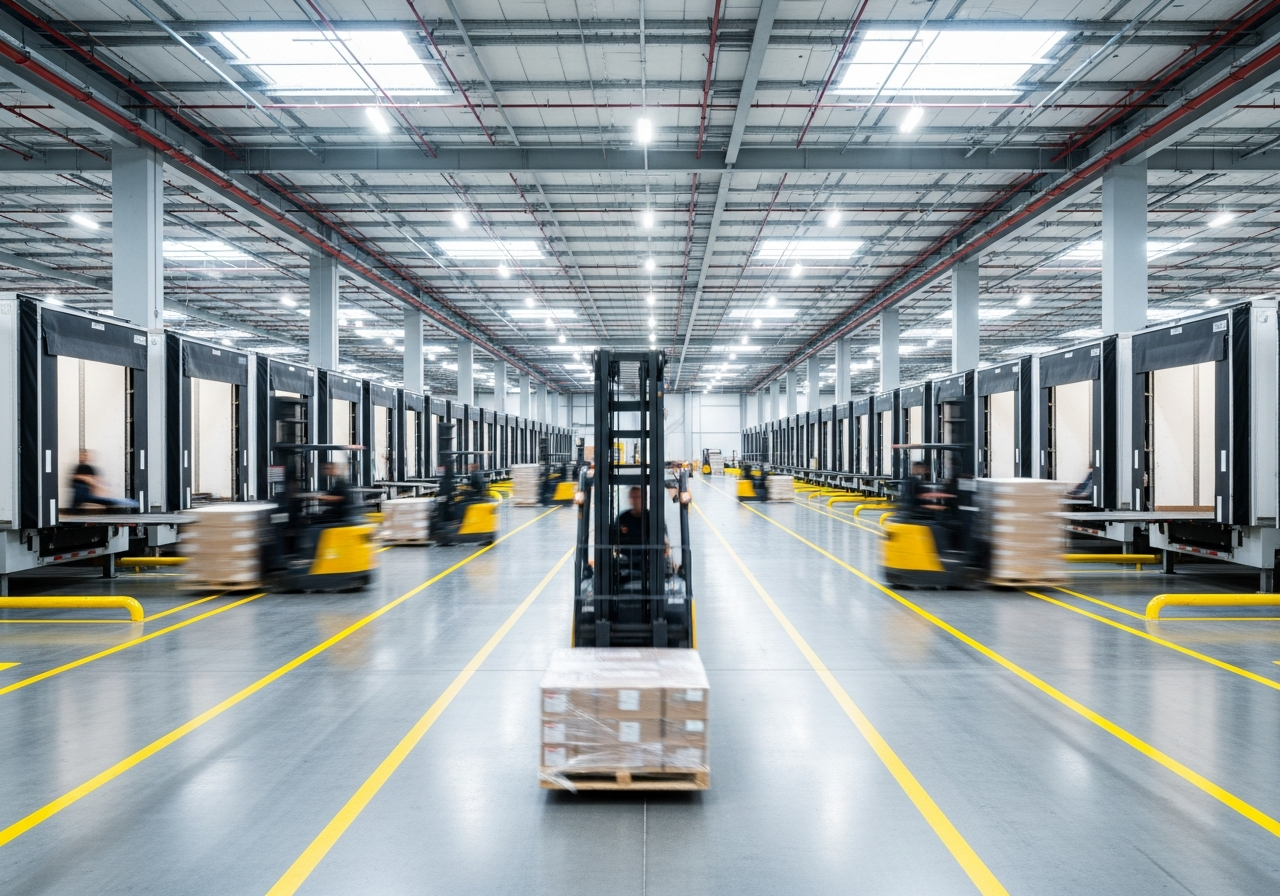
Ottawa's logistics market has quietly transformed in the past five years — from a government-town afterthought into one of Canada's most strategically positioned 3PL hubs. The trajectory points to continued growth driven by structural advantages: central geographic position between Toronto and Montreal, cross-border line-haul access to US Northeast, lower real estate cost than the GTA, and increasingly competitive labour conditions. This outlook explores where Ottawa logistics is headed and what it means for brands choosing fulfillment infrastructure.
The structural shift already in progress
Five years ago, default Canadian 3PL conversation centered on Toronto or Vancouver. Today, Ottawa is consistently included in evaluation shortlists. The drivers are economic: GTA industrial vacancy below 1.5% pushing rates above $20/sq ft net; Ottawa industrial rates at $12-14; comparable carrier coverage with FedEx, UPS, Purolator, Canada Post; faster average national delivery from central position. These are not transient — they are structural and getting more pronounced.
Automation adoption accelerating
Ottawa 3PLs are adopting automation — AMRs, computer vision QC, AI demand forecasting — faster than the Canadian average because labour cost premium in Ottawa makes automation ROI more attractive than in lower-cost prairie or maritime markets. Expect continued investment through 2027 with most mid-market Ottawa 3PLs operating partial AMR fleets and computer vision receiving by end of 2027.
Cross-border US Northeast growth
Ottawa's structural advantage on the US Northeast lane — direct line-haul to Boston, NYC, Albany, Syracuse via Champlain/Lacolle, Highgate, or Ogdensburg crossings — is increasingly important as Canadian DTC brands scale into US markets. Expect Ottawa-anchored cross-border fulfillment to capture growing share of Canada-to-US-Northeast freight through 2028. Section 321 outbound continues to be the dominant economic option for parcel-level shipments under $800 USD.
- Industrial vacancy gap (Ottawa vs GTA) widens through 2027
- AMR adoption reaches 60%+ of mid-market Ottawa 3PLs by 2027
- US Northeast cross-border share grows 25%+ annually
- Multi-tenant 3PL displaces single-tenant lease as default
What it means for brands choosing fulfillment
For mid-market Canadian brands, the Ottawa option deserves serious evaluation. The economics consistently favor Ottawa for brands serving national customers from a single node, brands with significant US Northeast demand, and brands sensitive to per-unit fulfillment cost. The historical objection — limited 3PL options — is no longer accurate. Ottawa now has multiple credible 3PL providers operating modern WMS, comprehensive carrier integrations, and proven cross-border capability.
By 2028, Ottawa-anchored fulfillment will be a default option in Canadian 3PL evaluations — not an alternative to Toronto/Vancouver but a peer.
Frequently Asked Questions
How does Ottawa compare to Toronto for 3PL economics in 2026?
Ottawa typically runs 8-15% lower on per-unit fulfillment cost driven by lower industrial real estate and competitive labour rates. Carrier coverage and transit times are equivalent to GTA-origin for most national destinations.
Is Ottawa viable as a primary national fulfillment node?
Yes — for many brands it's optimal as a single-node primary serving Quebec-Windsor corridor (60% of Canadian ecommerce demand) within 1-2 day ground while keeping per-unit costs meaningfully lower than GTA equivalents.
What about cross-border to the US?
Ottawa has structural advantage for US Northeast cross-border via Champlain/Lacolle and Ogdensburg crossings. Ottawa-origin parcels into Boston, NYC, Albany are 1-2 day ground at meaningfully lower cost than Toronto-Buffalo for many destinations.