Guide · · 12 min read
Ottawa-Gatineau Warehousing: A Practical Guide to NCR Logistics
Why the Ottawa-Gatineau region is uniquely positioned for bilingual fulfillment — and how brands can use the inter-provincial advantage to balance Ontario and Quebec demand from a single operations footprint.
The National Capital Region — encompassing Ottawa on the Ontario side and Gatineau on the Quebec side of the Ottawa River — is the only major Canadian fulfillment market that straddles a provincial border. That single geographic fact creates a set of operational, tax, and regulatory considerations no other Canadian region has, and it is the reason the NCR has become disproportionately attractive to brands that need bilingual operations, want to optimize for inter-provincial labour markets, or are exploring tax-efficient inventory positioning. This guide explains how the Ottawa-Gatineau region works as a fulfillment market, what the practical differences are between locating on the Ontario and Quebec sides of the river, and how to think about bilingual operations from an NCR base.
Why the National Capital Region is structurally unique
Most discussion of Canadian 3PL geography treats Ottawa as a single market, but the NCR is functionally two markets sharing a labour pool, transit network, and customer base across a political border. The Ottawa side (Ontario) hosts the larger industrial base, with the Hawthorne, Carleton, and South Keys industrial corridors anchoring most of the region's modern warehousing footprint. The Gatineau side (Quebec) has a smaller but growing industrial base, with newer high-clear buildings going up in the Gatineau and Aylmer corridors. Crucially, the two sides share a deeply bilingual labour pool — likely the deepest natural French/English bilingual workforce in Canada — and a transit network that lets goods flow between Ontario and Quebec across five bridges within a 20-kilometre stretch of the Ottawa River.
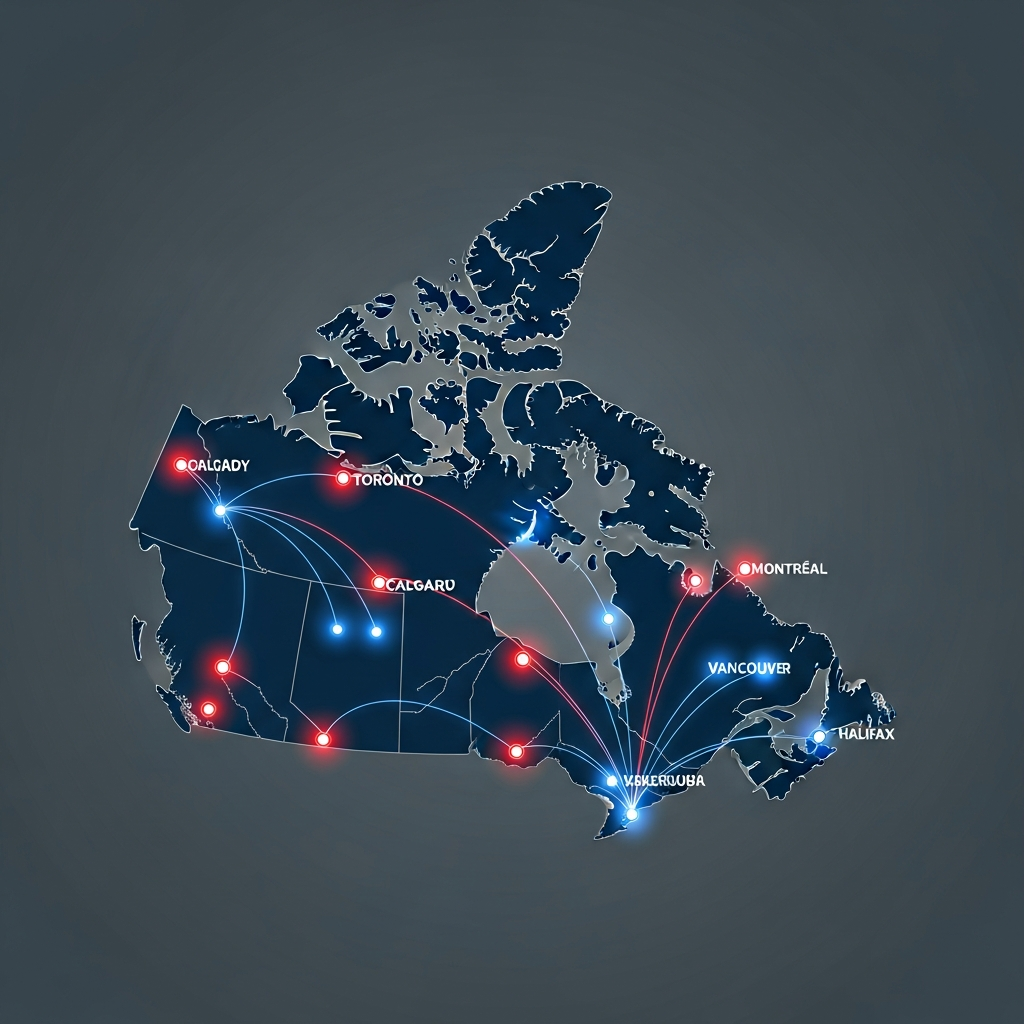
The Ottawa-Gatineau region sits at the centre of the Quebec-Windsor corridor with bridges spanning two provinces.
Ontario side vs Quebec side: the practical differences
The choice between locating fulfillment on the Ottawa or Gatineau side of the river comes down to four practical considerations: tax treatment, regulatory environment, labour market, and lease cost. Ontario's HST (13%) and Quebec's GST+QST (combined ~14.975%) have different reporting requirements but the difference rarely matters at the warehouse level since you are typically registered in both provinces anyway. More important: Quebec's labour code, occupational health and safety rules (CNESST), and Bill 96 language requirements apply to any operation physically located in Gatineau — including French-language workplace requirements above 50 employees. Lease cost is generally 5–12% lower on the Gatineau side, and labour costs are slightly lower (Quebec has lower minimum wage than Ontario as of 2026), but the regulatory complexity of operating in Quebec offsets some of those savings for brands without existing Quebec operational infrastructure.
| Factor | Ottawa Side (ON) | Gatineau Side (QC) |
|---|
| Industrial lease (avg $/sq ft) | $13 – $17 | $11 – $15 |
| Minimum wage (2026) | Ontario standard | Slightly lower |
| Sales tax | HST 13% | GST 5% + QST 9.975% |
| Language requirements | Standard | Bill 96 applies (50+ employees) |
| Workplace safety | Ontario WSIB | Quebec CNESST |
| EI and CPP | Federal (same) | Federal + Quebec QPIP |
| Bilingual labour pool | Deep | Deep (slightly more French-dominant) |
Bilingual operations: the NCR's structural advantage
For brands serving both Ontario and Quebec — which means essentially every nationally distributed Canadian DTC and B2B brand — bilingual operations are no longer optional. Quebec's Bill 96 mandates French-language transactional documentation (packing slips, invoices, return instructions, customer service) for any consumer with a Quebec ship-to address. Most national 3PLs retrofit bilingual capability awkwardly: outsourced translation for packing slips, English-only customer service with a 'press 2 for French' option that routes to a single bilingual rep. The NCR is the only Canadian fulfillment region where bilingual capability is genuinely native to the labour market — your warehouse supervisor, customer service team, and operations manager are likely all natively bilingual, and your French packing slips and customer service responses are not translation-dependent.
If your brand sells more than ~$500K/year into Quebec, the difference between authentic bilingual operations and retrofitted bilingual operations shows up in customer reviews, repeat purchase rates, and the speed at which Quebec-specific issues get resolved. The NCR is structurally positioned to deliver authentic bilingual capability in a way no other Canadian fulfillment market is.
NCR fulfillment pricing benchmarks for 2026
Ottawa-Gatineau fulfillment is among the most cost-competitive in Canada, generally 8–12% below GTA pricing and 6–10% below Montreal pricing. Ottawa-side pricing typically runs slightly higher than Gatineau-side because of higher Ontario lease costs, but a 3PL operating across both sides of the river can blend the differences. The bands below reflect mid-2026 quotes from credible multi-tenant 3PLs operating in the broader Ottawa-Gatineau industrial market.
| Service | Typical Range (NCR) | Notes |
|---|
| Pick & pack (first item) | $2.40 – $3.20 | Includes basic pack, label, dunnage |
| Pick & pack (each add'l item) | $0.30 – $0.55 | Per additional SKU on the same order |
| Receiving (per pallet) | $28 – $45 | Inbound count, putaway, ASN reconciliation |
| Storage (pallet/month) | $22 – $32 | Ambient, rack-stored |
| Storage (bin/month) | $0.85 – $1.40 | Small-SKU shelf storage |
| Bilingual customer service | Should be standard | If priced as add-on, walk away |
| Returns processing | $3.50 – $6.00 | Inspect, photograph, restock or grade |
 NCR fulfillment pricing benchmarks for 2026
Transit profile and carrier coverage from the NCR
From an Ottawa-Gatineau fulfillment node, the standard transit profile is genuinely best-in-class for central-Canada distribution. Toronto and the GTA are next-day ground via every major national carrier. Montreal is same-day or next-day depending on cutoff. Quebec City is next-day. The U.S. Northeast (Boston, NYC metro, upstate New York, Vermont, New Hampshire) is one to two days via cross-border ground through the Ogdensburg or Cornwall–Massena crossings. All major carriers operate aggressive Ottawa pickup networks (Canada Post is headquartered in Ottawa), and Quebec-specialist carriers Intelcom and Nationex have meaningful coverage on both sides of the river. A serious NCR 3PL rate-shops across this full mix per parcel.
What to look for in an NCR 3PL
Beyond the standard fulfillment due diligence (KPI transparency, integrations, multi-carrier rate shopping, named onboarding lead, SOC 2 or equivalent), NCR-specific considerations include: confirmed bilingual operations with French-speaking warehouse and customer service staff (not just an outsourced translation pipeline); experience with Bill 96 transactional documentation requirements; capability to generate French packing slips, return instructions, and invoices by default for Quebec ship-to addresses; familiarity with both Ontario WSIB and Quebec CNESST workplace requirements if you have employees on-site; and (for B2B brands) experience with both Ontario retail (Loblaw, Sobeys, Indigo, Costco) and Quebec retail (Métro, IGA, Costco Quebec) EDI compliance.
Industries that win with NCR fulfillment
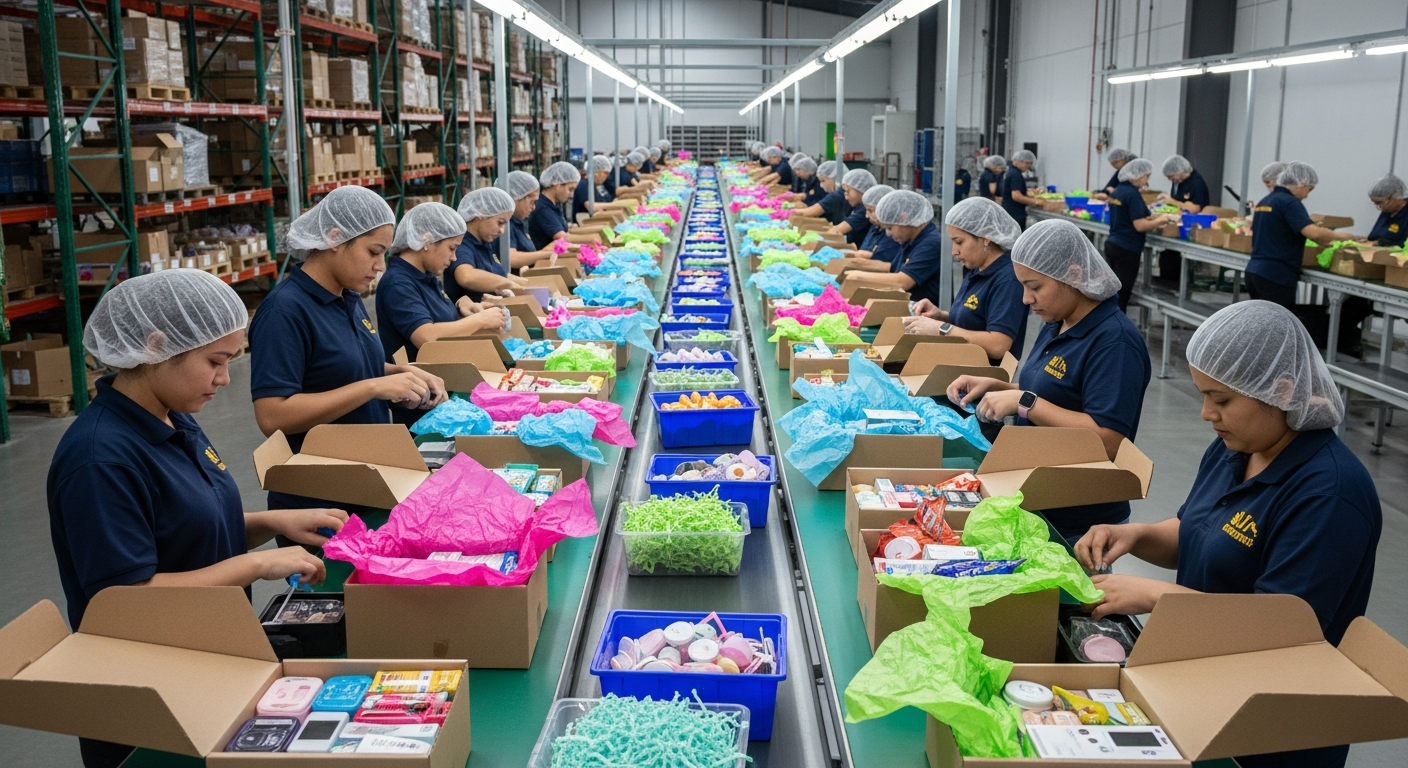
The NCR is particularly strong for: brands with bilingual customer service requirements; subscription boxes (the bilingual labour pool supports French-first kitting at scale); beauty and personal care; supplements and natural health products (Ottawa has a deep Health Canada compliance contractor base); B2B brands selling into both Ontario and Quebec retail; cross-border DTC into the U.S. Northeast; and brands prioritizing operational stability over bleeding-edge facility infrastructure (NCR labour markets are dramatically more stable than the GTA, with lower turnover and longer average tenure for warehouse staff).
 Industries that win with NCR fulfillment
ByExpress in the NCR
ByExpress is headquartered in Ottawa with our flagship fulfillment facility at 2411 Holly Ln. Bilingual operations and bilingual customer service are baked into the standard service model — French packing slips, French return instructions, and French-language customer support are included by default for any brand with Quebec demand. The Ottawa headquarters anchors our five-city Canadian network, with brands using the NCR location as a primary single-node fulfillment for bilingual operational simplicity, or as part of a multi-node setup with Toronto, Montreal, Vancouver, and Calgary for forward-positioned regional inventory.
Frequently Asked Questions
Is it better to locate fulfillment in Ottawa or Gatineau?
It depends on your operational priorities. Ottawa-side has slightly higher lease costs but operates under Ontario labour law and HST. Gatineau-side has lower lease and labour costs but adds Quebec regulatory complexity (CNESST, Bill 96, QST). For most brands, the Ontario side is operationally simpler unless you already have Quebec operational infrastructure or are deliberately optimizing for Quebec-side tax treatment. A 3PL operating across both sides can give you the benefits of both.
Do I need to register for Quebec sales tax if my 3PL is in Gatineau?
If you have a permanent establishment in Quebec (which a Gatineau warehouse typically constitutes), yes — you generally need to register for QST. If your 3PL is on the Ottawa side, your Quebec tax exposure depends on your sales activity and inventory positioning. Always consult a Canadian sales tax specialist for your specific structure.
How does NCR fulfillment compare to Toronto for cost?
NCR pricing typically runs 8–12% below GTA pricing on pick-and-pack and storage, primarily because of lower lease costs and a more stable labour market. Carrier pickup density is slightly lower than the GTA but on-time performance is comparable. For brands serving central Canada with bilingual requirements, NCR consistently wins on landed cost.
Is bilingual customer service really a must-have?
Yes, for any brand selling into Quebec at meaningful volume. Bill 96 protects the consumer's right to be served in French, and brands with English-only customer service consistently see worse review scores, higher refund rates, and lower repeat purchase rates from Quebec customers. Authentic bilingual operations from an NCR base are dramatically more cost-efficient than retrofitting bilingual capability onto a Toronto or Vancouver operation.
Can NCR fulfillment serve the U.S. Northeast?
Yes, and well. The Ogdensburg–Prescott and Cornwall–Massena crossings are 60–90 minutes from the NCR and route directly into Syracuse, Albany, and Burlington injection partners. From there, parcels move on USPS or UPS Ground Saver into the U.S. Northeast in one to two days. For DTC brands with U.S. Northeast demand, NCR fulfillment often eliminates the need for a separate U.S. warehouse.
What is the labour market like for warehouse staffing in the NCR?
Stable and natively bilingual. Warehouse turnover in the NCR runs roughly half of GTA turnover, peak-season hiring is more predictable, and the labour pool supports both French and English communication without translation overhead. For any operation requiring consistent operational quality, the NCR labour market is one of the strongest in Canada.
Related ByExpress resources