Guide · · 11 min read
Hamilton Warehouse & Distribution (2026)
Why Hamilton pairs Great Lakes port access, a major air-cargo airport, and lower rates than the GTA core — industrial profile, best-fit brands, and how to choose.

Hamilton, at the western tip of Lake Ontario, has long been Canada's steel city — and that heavy-industry heritage shapes a logistics market built for bulk, weight, and value. Hamilton offers three structural assets the GTA core can't match on price: the Port of Hamilton, the largest Canadian port on the Great Lakes by tonnage; John C. Munro Hamilton International Airport, a major dedicated cargo hub; and materially lower industrial lease rates than Toronto and the inner 905. With the QEW, the Lincoln Alexander and Red Hill Valley parkways, and the 403/407 nearby, Hamilton is increasingly a serious distribution alternative. This 2026 guide covers its profile, access, best-fit brands, rates, and how ByExpress serves it.
Hamilton's industrial and logistics profile
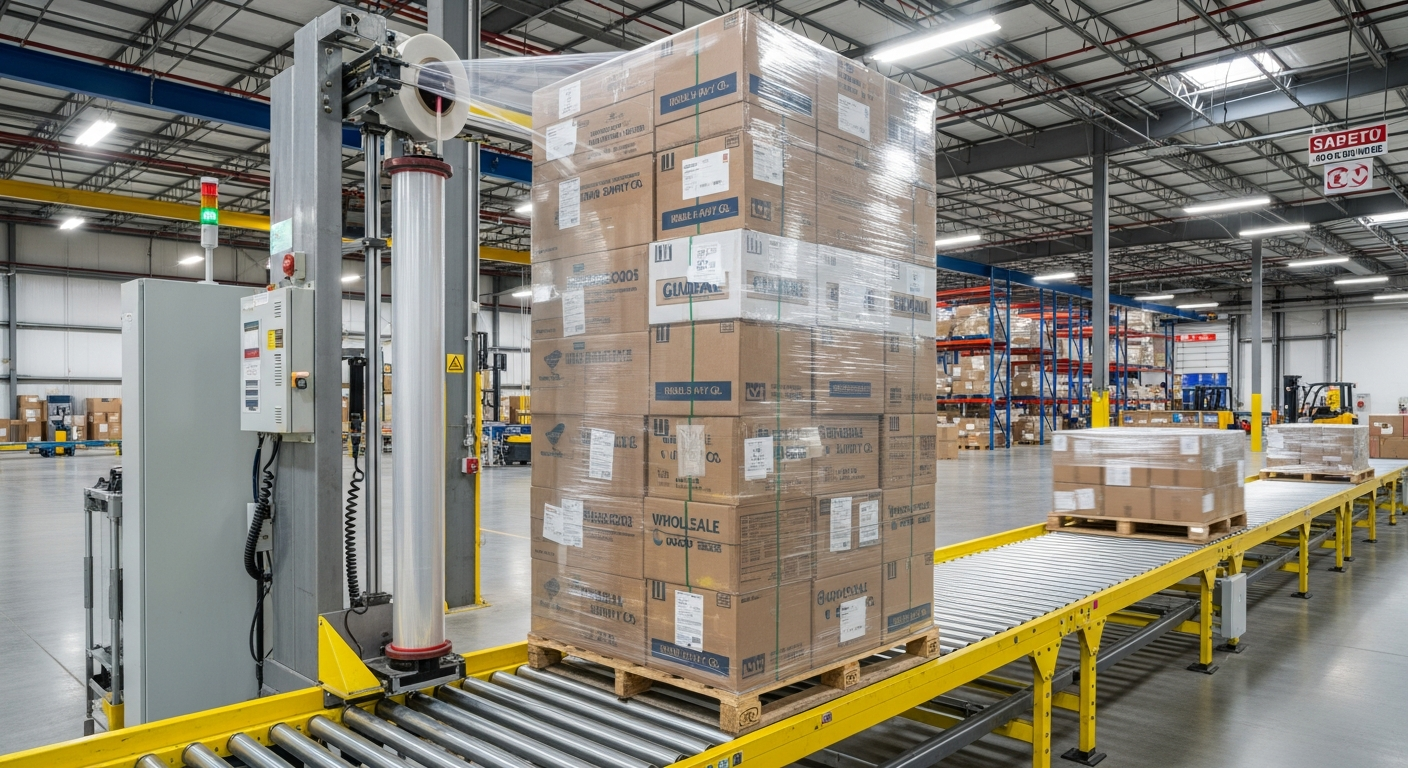
Hamilton's industrial base is anchored by heavy industry — steelmaking (ArcelorMittal Dofasco and Stelco), metals, and building products — alongside a growing general-distribution and food-processing sector. The north-end bayfront holds the port-related heavy industrial lands, while newer distribution development has spread toward the airport and the Highway 6 / 403 / Glanbrook (Hamilton Airport Employment Growth District) corridors. Hamilton typically offers lower lease rates and more available large-format land than the GTA core, which has drawn distribution demand pushing west out of Toronto.
 Hamilton's industrial and logistics profile
Port of Hamilton: Great Lakes gateway
The Port of Hamilton, operated by the Hamilton-Oshawa Port Authority, is the busiest Canadian port on the Great Lakes by cargo tonnage, handling steel, agricultural products, and other bulk and project cargo. For brands moving heavy, bulk, or project freight — or agricultural and food inputs — port-adjacent warehousing in Hamilton can shorten the link between vessel and rack. While the port is bulk-and-industrial oriented rather than a containerized-DTC gateway, its presence underpins Hamilton's strength in weight-heavy and industrial distribution.
 Port of Hamilton: Great Lakes gateway
Hamilton airport air cargo
John C. Munro Hamilton International Airport is one of Canada's most important dedicated air-cargo airports, serving as a major hub for overnight cargo and e-commerce parcel operations. Its 24-hour operating profile and cargo focus make it attractive for time-critical and high-volume parcel flows that benefit from being outside the congestion of larger passenger airports. For distribution operations in the airport employment district, this adds genuine air-cargo capability to Hamilton's port-and-highway mix.
QEW and parkway access
Hamilton's road network connects it efficiently to both the GTA and the US border. The QEW runs along the lakeshore, linking Hamilton northeast to Burlington, Oakville, and Toronto and southwest toward Niagara and the US crossings at Fort Erie and Niagara Falls. The Lincoln Alexander Parkway and Red Hill Valley Parkway move freight across the city and up the escarpment, while Highway 403 and nearby Highway 6 connect to the 401 and 407. This gives Hamilton strong reach into the GTA, southwestern Ontario, and US-bound lanes.
Lower rates than the GTA core
Hamilton's cost advantage is real and is the main reason brands shortlist it. Industrial lease and labour costs generally run below Toronto and the inner 905, while still keeping QEW-fast access to GTA consumers. The table below frames Hamilton's relative positioning against GTA submarkets (directional ranges — confirm current quotes, which depend on volume and profile).
Real pricing depends on your volume, SKU profile, and service mix. Use these as directional context, then request a tailored quote via a free fulfillment audit.
| Factor | Hamilton | GTA core (Toronto/inner 905) |
|---|
| Industrial lease cost | Lower | Highest in Canada |
| Large-format land availability | More | Very scarce |
| Reach to GTA consumers | QEW-fast | Immediate |
| Heavy/bulk & port goods | Strong (port + steel base) | Limited |
| Air-cargo focus | Dedicated cargo airport | Passenger-airport (Pearson) |
Why a brand would fulfill in Hamilton
Hamilton fits these profiles: brands needing lower-cost large-format space within QEW reach of the GTA; heavy, bulky, or building-products distributors who benefit from the industrial and port base; food and agricultural processors; high-volume parcel operations that value the dedicated cargo airport; and cross-border brands using the QEW toward Niagara-area US crossings. Hamilton is less of a fit for brands that specifically need Pearson air-cargo proximity or an in-Toronto address for same-day urban delivery.
How ByExpress serves the Hamilton / west-GTA submarket
ByExpress supports Hamilton-area and west-GTA brands from its Toronto-region node within a five-city Canadian network. For Hamilton-profile clients — value-conscious, heavy-goods, and high-volume operations — we combine cost-efficient handling, multi-carrier rate-shopping across QEW-corridor carriers, and accurate WMS-tracked fulfillment, with the option to anchor inventory in the GTA and forward-position to our Ottawa, Montreal, Vancouver, and Calgary locations.
Frequently Asked Questions
Why warehouse in Hamilton instead of the GTA?
Hamilton offers materially lower industrial lease and labour costs than Toronto and the inner 905, more large-format land, and QEW-fast access to GTA consumers — plus the Port of Hamilton and a dedicated cargo airport. It's especially strong for heavy, bulky, and high-volume operations.
What is the Port of Hamilton used for?
Operated by the Hamilton-Oshawa Port Authority, it's the busiest Canadian port on the Great Lakes by tonnage, handling steel, agricultural products, and bulk and project cargo. It underpins Hamilton's strength in weight-heavy and industrial distribution rather than containerized DTC.
Does Hamilton have air cargo capability?
Yes. John C. Munro Hamilton International Airport is a major dedicated air-cargo hub with a 24-hour cargo focus, making it attractive for time-critical and high-volume parcel operations that benefit from being outside busier passenger airports.
What highways connect Hamilton to the GTA and US?
The QEW links Hamilton to Burlington, Oakville, and Toronto, and southwest to the Niagara-area US crossings. The Lincoln Alexander and Red Hill Valley parkways move freight across the city, and Highway 403/6 connect to the 401 and 407.
Is Hamilton good for cross-border shipping?
Yes for QEW-corridor flows — Hamilton has direct QEW access toward the US crossings at Fort Erie and Niagara Falls, making it convenient for Ontario-origin cross-border freight heading into the US Northeast and Midwest.
Related ByExpress resources