Guide · · 12 min read
Pallet Fulfillment for Canadian Ecommerce: When to Ship Cases, Pallets or Parcels
As an ecommerce brand adds wholesale and retail channels, the right handling unit changes by order. This guide explains how to design case packs, pallet builds, freight comparisons and split inventory without weakening DTC availability.
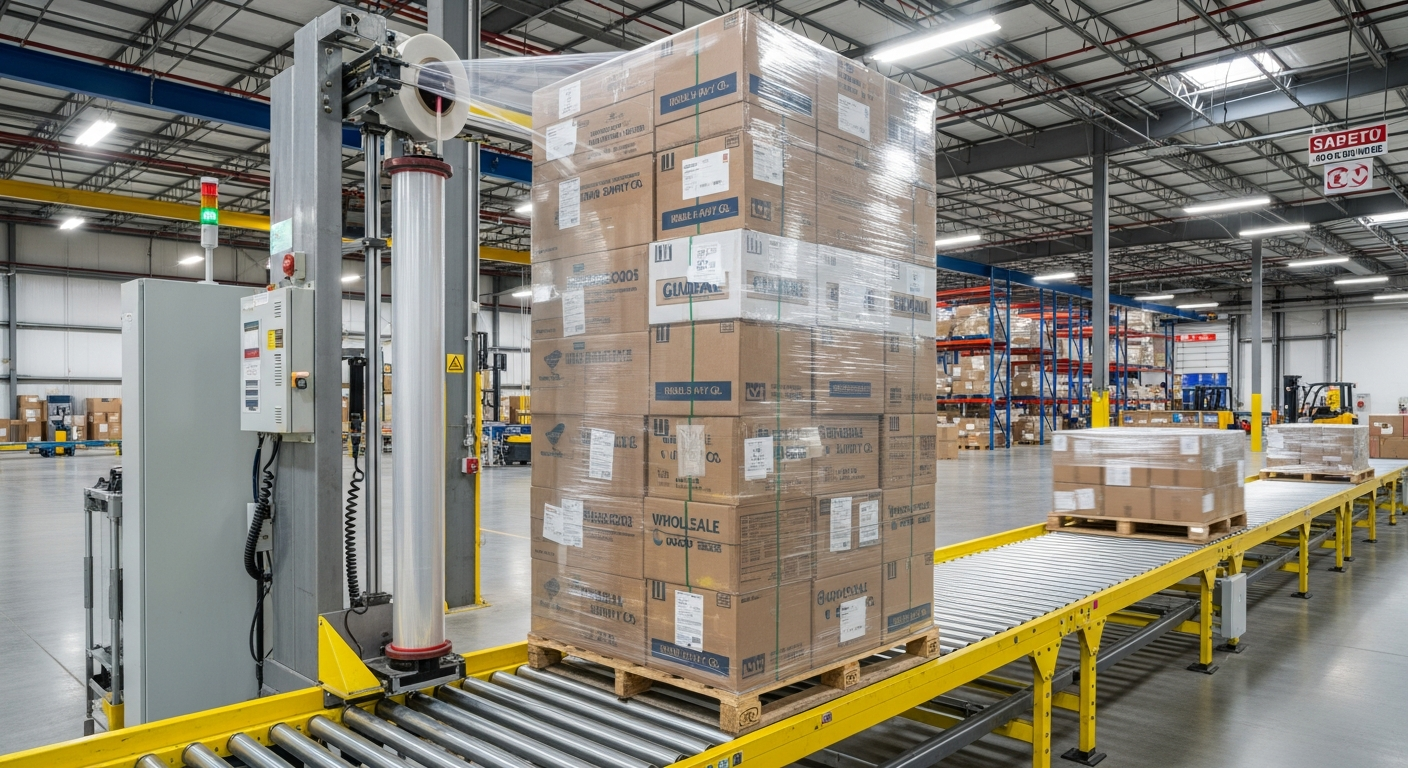
Growth changes the unit of work in a fulfillment operation. A brand that once shipped one item per parcel may begin sending inner packs to boutiques, full cases to distributors and mixed pallets to retail distribution centres—all from the same inventory. Pallet fulfillment in Canada is therefore less about wrapping boxes on wood and more about choosing the right handling unit for each order. Parcel, case and less-than-truckload freight each have different cost drivers, preparation rules, visibility and receiving expectations. The correct breakpoint cannot be reduced to a universal carton count because product density, lane, destination access, damage exposure and retailer requirements all matter. This guide shows how to structure product masters, compare modes, replenish retailers and reserve stock across DTC and B2B channels. It is operational guidance; carrier and retailer requirements should be confirmed for each account and shipment.
Create a clean each, inner, case and pallet hierarchy
Reliable multichannel fulfillment starts with a product master that describes how inventory is bought, stored, sold and shipped. Define the each, any inner pack, the master case and standard pallet configuration for every SKU. Give each scannable level the correct identifier in your systems and avoid using one barcode ambiguously across levels. Record units per inner, inners per case, cases per layer and layers per pallet, as well as dimensions and weights at each level. The warehouse management system should know whether an order for “6” means six eaches or six cases. Retail customer records should specify permitted case configurations and whether mixed-SKU cartons or pallets are accepted. This hierarchy supports accurate allocation and makes it possible to pick a sealed case without opening it unnecessarily. It also makes receiving discrepancies easier to diagnose when a supplier's actual pack differs from the expected master data.
- Define and measure each, inner pack, master case and pallet configurations
- Use unambiguous identifiers and units of measure in every connected system
- Record case orientation, stackability and pallet pattern where relevant
- Maintain retailer-specific pack and mixed-load permissions
- Control product-master changes before new packaging reaches the warehouse
Choose the handling unit that matches the order
DTC orders typically require each-picking and parcel packaging, whereas a wholesale order may move more efficiently as sealed cases. Larger replenishment orders can justify pallet building and freight. Yet order size alone does not settle the decision. A dense shipment of compact goods may remain competitive as multiple parcels, while fragile or crush-sensitive cases may benefit from palletization earlier. Consider whether the consignee has a dock, whether an appointment is required, how many labels and tracking numbers customer service can manage, and whether cartons need to remain together. Some retail orders prescribe the mode and carrier in a routing guide, removing discretion. Establish routing logic in an order profile, but allow an exception review when the destination, product or service falls outside normal parameters.
| Handling unit | Often suited to | Key trade-offs |
|---|
| Each / parcel | DTC and small wholesale orders | Flexible delivery; more individual handling and labels |
| Sealed case | Repeat wholesale or store replenishment | Efficient picks; depends on accurate case packs |
| Multiple loose cases | Moderate commercial orders | No pallet handling; cartons may separate in transit |
| Single or mixed pallet | Larger B2B and retailer orders | Unitized load; requires build rules and suitable receiving |
| Multi-pallet LTL or truckload | Large replenishment waves | Consolidation efficiency; appointments and freight coordination |
Calculate parcel and LTL breakpoints shipment by shipment
A meaningful mode comparison uses total landed shipment cost and service, not an assumed rule such as “six cartons means a pallet.” For parcel, model billed weight, zone, residential or remote-area treatment, extra handling, declared-value options and the operational cost of separate labels. For LTL, include pallet preparation, linehaul, fuel and likely accessorials such as appointments, limited-access service, liftgate or inside delivery where applicable. Rates and classification practices are provider- and product-specific, so validate the shipment description and current terms with the carrier or broker. Then compare transit expectations, damage exposure, tracking granularity and receiving capability. Build a routing engine or decision worksheet from live contracted rates, and audit the actual invoice afterward. The breakpoint may change by lane and season; Toronto-to-Montreal is not the same problem as southern Ontario to a remote western destination.
There is no dependable universal carton-count breakpoint between parcel and LTL. Use packaged shipment data, destination requirements and current contracted rates.
Build stable, traceable pallets
A pallet should behave as one handling unit throughout the planned journey. Select a pallet type and footprint accepted by the consignee and appropriate for the load. Cases should fit the footprint without overhang, with heavier and stronger cartons supporting lighter ones. Interlocking patterns can add stability for some cases but may reduce compression strength for others, so the product and packaging design matter. Use corner or edge protection, stretch wrap, straps or top caps when appropriate to the validated load design. Labels need to remain visible and correspond to the electronic and paper records. For mixed-SKU pallets, define grouping and layer rules that make receiving practical rather than simply filling space. Record the pallet ID and its case or item contents in the WMS, then verify weight and dimensions before tender. Facility specialists should approve equipment, stacking and securement practices for the actual goods.
 Build stable, traceable pallets
Treat retailer replenishment as a controlled order profile
Retail replenishment orders may carry customer-specific instructions for case quantities, purchase-order references, ship windows, carrier routing, carton and pallet labels, packing lists, advance shipment notices and delivery appointments. Capture these requirements as a version-controlled customer profile linked to order release. Do not rely on a general note or one employee's memory. Validate that ordered quantities align with authorized packs, and define what happens when inventory can fill only part of a purchase order. The profile should identify the authoritative routing-guide source, contacts for clarification and the time needed to request an appointment or routing. After shipping, retain relevant execution evidence and reconcile acknowledgements or receiving discrepancies. This discipline reduces avoidable non-compliance costs while giving account teams a factual basis for conversations with retail partners.
Protect DTC and B2B demand with deliberate inventory rules
Shared inventory increases flexibility, but it can also let one large retailer order consume stock promised to DTC customers. Decide whether channels share one available pool, use virtual reservations or hold physically separate quantities. The best method depends on forecast quality, contractual commitments, replenishment lead time and the cost of stranded stock. Establish channel safety stock or allocation limits by SKU, with an approval path for overrides. Available-to-promise calculations should account for open orders, held stock, inbound inventory that is genuinely usable, and case-pack constraints. For example, breaking the last sealed case to satisfy DTC demand may make the remaining units unsuitable for an imminent retailer order. Review reservations frequently during promotions and launches. The objective is not to maximize one channel in isolation, but to allocate scarce inventory according to an agreed commercial priority.
- Set channel allocation and override ownership before constrained periods
- Distinguish on-hand, allocated, held, damaged and available inventory
- Model case-pack constraints in available-to-promise logic
- Reserve against confirmed demand without treating uncertain inbound as ready stock
- Review aged reservations so inventory does not remain trapped unnecessarily
Receive and store inventory without losing pack integrity
Inbound receiving should verify both quantity and packaging level. Purchase orders need to state whether quantities represent eaches, cases or pallets, while advance information should list lot or expiry data when relevant to the product. The receiving team checks pallet and carton condition, confirms identifiers, records discrepancies and quarantines unresolved units. Where sealed cases support B2B demand, preserving them can reduce future labour and errors; DTC reserve can be replenished into each-pick locations as needed. Slotting should put full-pallet reserve, case-pick faces and each-pick locations in logical relationships without confusing their units of measure. Cycle counts must likewise specify the counted level. A count of “12” is meaningless if one system interprets cases and another interprets eaches.
Run the operation with a practical planning cadence
Coordinate DTC and pallet work across daily, weekly and seasonal horizons. Daily control covers urgent orders, carrier cut-offs, appointment status and exceptions. A weekly review examines retailer demand, inbound purchase orders, case-pick replenishment, pallet capacity and inventory at risk. Ahead of major promotions or retail resets, share forecasts and purchase-order scenarios early enough to plan labour, staging and transportation. Measure outcomes by channel: order completeness, ship-window adherence, inventory discrepancies, damage, accessorials and retailer deductions should not be blended into one average. Use root-cause categories that distinguish bad master data, late inventory, warehouse execution, transportation and customer receiving issues. This evidence tells the brand whether to alter case packs, routing logic, reservation policy or forecast inputs.
Frequently Asked Questions
What is pallet fulfillment in Canada?
It is the storage, picking, pallet building, documentation and transportation coordination used to fulfil larger commercial or replenishment orders. A strong program also connects pallet work with case and each inventory so B2B and DTC channels remain accurate.
When should an ecommerce order move from parcel to LTL?
There is no fixed carton count. Compare current parcel and LTL landed costs using packaged dimensions, weights, lane, accessorials, handling and destination requirements. Also weigh damage exposure, transit needs, shipment visibility and whether the receiver can accept freight.
What is a case pack?
A case pack is a defined quantity of one or more sellable units packed in a case. Product masters should distinguish eaches, inner packs and master cases so an order quantity cannot be interpreted at the wrong level.
Can one inventory pool serve DTC and retailer orders?
Yes, but it needs allocation logic. Virtual reservations, channel safety stock and approval controls can prevent a large order from consuming inventory needed elsewhere. Case integrity and confirmed inbound supply should be reflected in available-to-promise calculations.
What information does a 3PL need to build pallets?
Provide case dimensions and weights, product and case identifiers, stackability, approved pallet pattern where applicable, destination requirements, purchase-order data and label instructions. Mixed-SKU rules and any lot or expiry allocation requirements should also be explicit.
How should retailer routing requirements be managed?
Maintain a version-controlled profile for each customer, sourced from its current routing guide. Link requirements to order release, validate labels and documents, retain execution evidence, and escalate ambiguities to the retailer rather than guessing.
Related ByExpress resources