Guide · · 11 min read
3PL Pricing Guide Canada (2026): How Fulfillment Is Actually Priced
A plain-language guide to how Canadian 3PLs build a quote in 2026 — every line item, every pricing model, and how to compare apples to apples.

Most 3PL quotes in Canada look simple on the cover page — a pick rate, a storage rate, a receiving fee — and then the first invoice tells a different story. The gap is rarely dishonesty; it's that fulfillment is genuinely a multi-line service and brands fixate on the one number marketing leads with. This 2026 guide walks through every component of a Canadian 3PL rate card, explains the three main pricing models and when each makes sense, and gives you a framework to compare quotes on a fully-loaded cost-per-order basis instead of headline pick rates.
The line items in every Canadian 3PL quote
Whatever a 3PL calls its model, a Canadian fulfillment invoice resolves to a handful of categories: inbound receiving (unload, count, putaway), storage (per pallet or per bin, per month), pick-and-pack (first pick plus additional picks), value-added services (kitting, labelling, returns, special handling), shipping (carrier postage plus any processing fee or markup), and account-level charges (monthly minimums, account management, integration, onboarding). The skill isn't memorizing rates — it's knowing which lines will dominate your specific profile. A slow-moving, high-SKU catalogue is storage-heavy; a fast DTC brand with frequent inbounds is receiving- and pick-heavy.
 The line items in every Canadian 3PL quote
2026 Canadian benchmark ranges by line item
Typical mid-market ranges across major Canadian markets in 2026. Treat these as a sanity-check band, not a quote — Ottawa, Calgary and Hamilton tend to sit at the low end, while Mississauga and Vancouver sit at the high end.
Every number here is a typical 2026 Canadian range, not a quote. Your real rate depends on volume, SKU profile, seasonality, and service mix — get an itemized quote from a free fulfillment audit before you budget.
| Line item | Typical 2026 range | Billed |
|---|
| Receiving | $28–$50 / pallet | Per pallet (or per unit if loose) |
| Pallet storage (ambient) | $22–$38 / pallet / mo | Monthly |
| Bin storage | $0.85–$1.65 / bin / mo | Monthly |
| Pick — first item | $2.40–$3.75 | Per order |
| Pick — additional item | $0.30–$0.65 | Per item |
| Standard pack | $0.50–$1.25 | Per order |
| Returns processing | $3.50–$7.00 | Per return |
| Account / minimum | $150–$500 + min | Monthly |
The three pricing models, compared
Canadian 3PLs use one of three structures. Knowing which you're being offered is half the battle:
- Transactional (per-pick) — you pay for each receiving, storage and pick event. Industry standard; scales linearly with your business and is the right fit for almost every brand.
- Blended cost-per-order — the 3PL quotes a single all-in number per order based on your profile. Easy to budget, but only fair if your order mix stays stable; spikes in returns or oversize items break the math.
- Flat monthly / dedicated — you pay for reserved space and labour regardless of usage. Only economical at very high, very predictable volume where you'd otherwise pay transactional rates on capacity you fully use.
How shipping is priced: pass-through vs markup
Postage is the single largest variable cost for most DTC brands, and how a 3PL treats it matters more than the pick rate. Pass-through means you're billed the 3PL's actual negotiated carrier rate plus a transparent per-label processing fee (typically $0.15–$0.40) or small percentage. Marked-up means the 3PL bills a 'shipping rate' 12–25% above their carrier cost and keeps the spread, with the underlying rate hidden. Pass-through aligns incentives — the 3PL has no reason to pick a pricier carrier — and lets you see and control your own postage. Always ask which model applies and request a sample invoice that shows the carrier line.
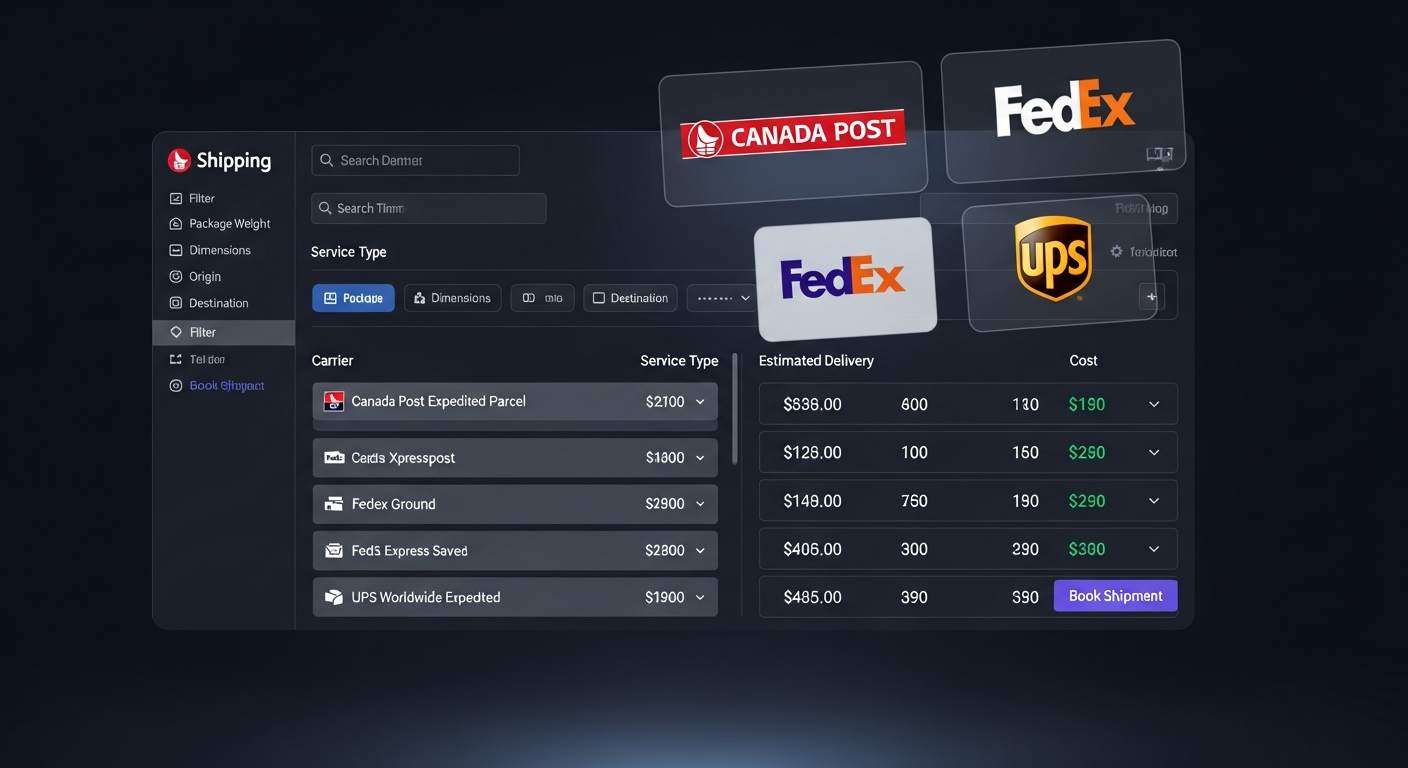 How shipping is priced: pass-through vs markup
Comparing quotes on fully-loaded cost-per-order
The only number that lets you compare two Canadian 3PLs fairly is fully-loaded cost per outbound order: (monthly receiving + storage + pick-pack + VAS + surcharges + account/minimum fees) ÷ monthly outbound orders. Ask every shortlisted provider to price your real 30-day order extract and SKU file, not a hypothetical. Most Canadian DTC brands shipping 500–5,000 orders/month land between $4.50 and $8.50 fully-loaded per order depending on SKU complexity, AOV and service mix. A teaser pick rate that ignores receiving and storage will always look cheaper on the cover page and cost more in production.
Where there's real room to negotiate
Not every line is negotiable, but several are. Onboarding/implementation fees can often be reduced or amortized for a committed term. Storage minimums can frequently be waived or stepped during a ramp period. Per-label processing fees soften with volume. Receiving costs drop materially when you send pre-palletized, ASN-noticed, properly labelled inbounds — that's an operational lever you control rather than a negotiation. What rarely moves: carrier postage (it's a real third-party cost) and SLA-backed accuracy guarantees. Focus negotiation energy on the lines that scale with your volume.
Frequently Asked Questions
How is 3PL pricing structured in Canada?
Most Canadian 3PLs use transactional (per-pick) pricing: separate line items for receiving, storage, pick-and-pack, value-added services, shipping, and account-level fees. Some offer a blended cost-per-order or a flat dedicated model, but per-pick is the standard and scales with your business.
What's a typical fully-loaded cost per order?
Most Canadian DTC brands shipping 500–5,000 orders per month land between $4.50 and $8.50 per outbound order fully-loaded, including receiving, storage, pick-pack, VAS, surcharges and account fees. Simple SKUs and high volume push lower; complex kitting and high returns push higher.
Should I choose per-pick or flat monthly pricing?
Per-pick (transactional) pricing suits almost every brand because cost scales with orders. Flat monthly or dedicated pricing only wins at very high, very predictable volume where you'd fully use the reserved capacity — otherwise you pay for space and labour you don't use.
What's the difference between pass-through and marked-up shipping?
Pass-through bills you the 3PL's actual carrier rate plus a small disclosed processing fee, so you see the postage. Marked-up bundles a hidden 12–25% margin into the shipping rate. Pass-through aligns incentives and is more brand-friendly; always ask which model a quote uses.
Which 3PL fees are negotiable?
Onboarding fees, storage minimums during ramp, and per-label processing fees often have room. Receiving costs drop when you ship pre-palletized, ASN-noticed inbounds. Carrier postage and SLA-backed accuracy guarantees rarely move because they reflect real costs.
Related ByExpress resources