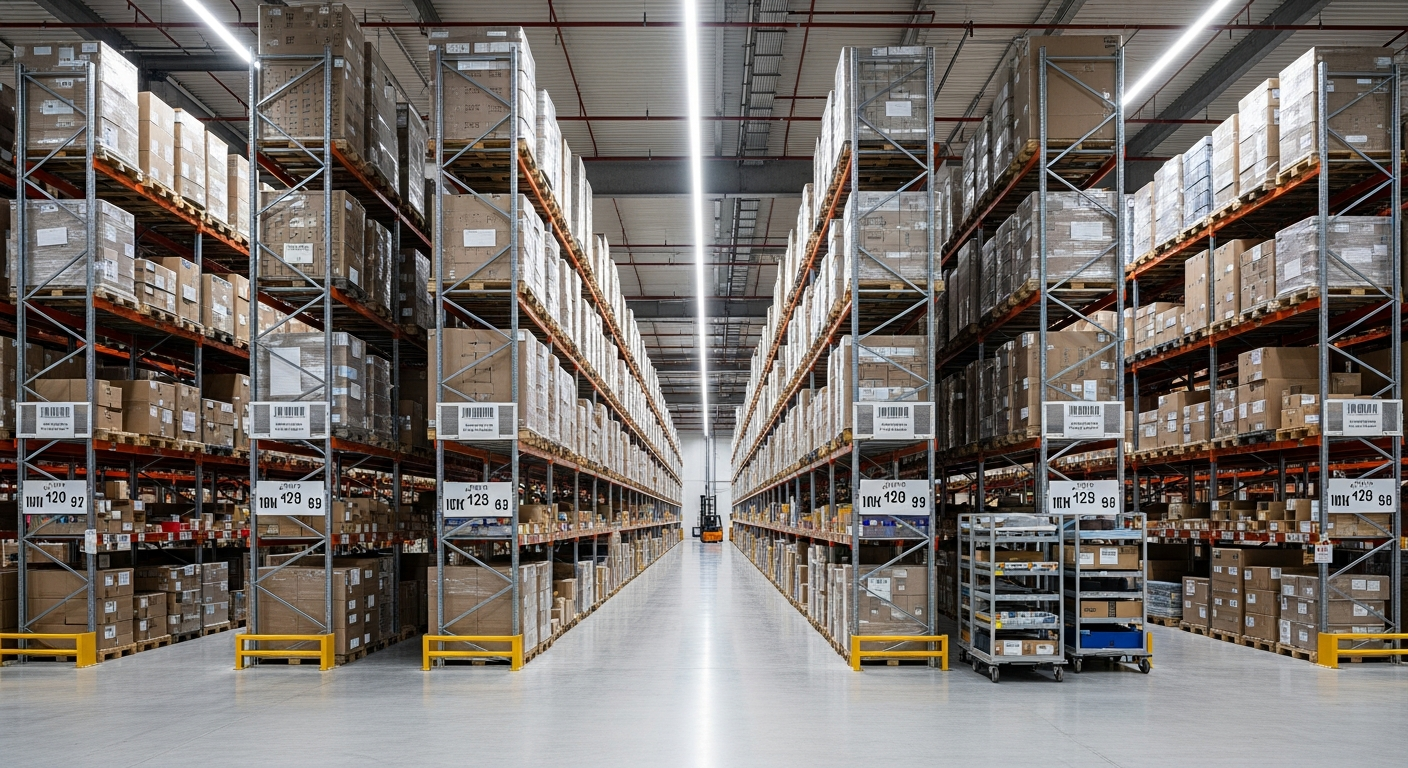
Storage is the most under-modeled line on a Canadian 3PL invoice because brands fixate on pick rates — but for high-SKU or slow-turning catalogues, storage can equal or exceed pick-and-pack. The headline question 'what does a pallet cost per month?' has a real answer band in 2026, but it varies meaningfully by city, by ambient vs climate-controlled, and by how a 3PL defines a pallet position. This guide gives city-by-city ranges for both per-pallet storage and the underlying industrial rent that drives it, then explains the drivers so you can read a storage quote critically.
Why the GTA and Vancouver cost more
Storage rates track industrial real estate, and Canada's two priciest markets are the GTA and Metro Vancouver, both of which have spent recent years among the tightest industrial markets in North America with very low availability. Land scarcity, port and airport proximity, and population density all push net rents — and therefore storage rates — higher. Ottawa, Calgary and Hamilton offer more available space and lower land cost, which is why brands serving national customers often pair a central-Canada node with a Western node rather than concentrating everything in Toronto. The trade-off is transit time and proximity to import gateways.
Frequently Asked Questions
How much does pallet storage cost in Canada in 2026?
Ambient pallet storage typically runs $22–$42 per pallet per month depending on city — roughly $22–$32 in Ottawa, Calgary and Montreal, and $30–$42 in the GTA and Vancouver. Climate-controlled adds about 15–25%, and freezer/refrigerated storage is a higher tier.
Why is warehousing more expensive in Toronto and Vancouver?
Both markets have very tight industrial vacancy and high land cost, plus proximity to ports and air cargo. That pushes net rents — and storage rates — above markets like Ottawa, Calgary and Hamilton, which have more available space.
What counts as one pallet position for billing?
Usually a standard 48×40 footprint including height. Double-stacked loads occupying 1.5 vertical positions bill as 1.5 pallets, and oversized items that can't double-stack may bill a full position even when half-used. Always confirm the definition before signing.
How can I lower my storage costs?
Improve inventory turns, send right-sized inbounds, retire dead SKUs, use bin storage for small fast-movers, and avoid long-term-storage surcharges. A multi-node network can also reduce storage concentration while cutting outbound transit.