Guide · · 12 min read
B2B Retail vs DTC Fulfillment in Canada: Running Both Channels
Selling to retailers and selling to consumers look similar but operate on opposite rules. Here's how to run both from one 3PL without chargebacks eating your margin.

Many growing Canadian brands eventually sell through two very different channels: direct-to-consumer (DTC), where they ship single parcels to shoppers, and business-to-business (B2B) retail/wholesale, where they ship pallets to retailers' distribution centres. These look like the same activity — moving product out the door — but they run on opposite rules. DTC rewards speed and individual-order experience; B2B rewards precise compliance with each retailer's routing guide, where a small error triggers a chargeback. This guide explains the real differences, the compliance traps in Canadian retail, and how to run both channels efficiently from a single inventory pool.
The core operational differences
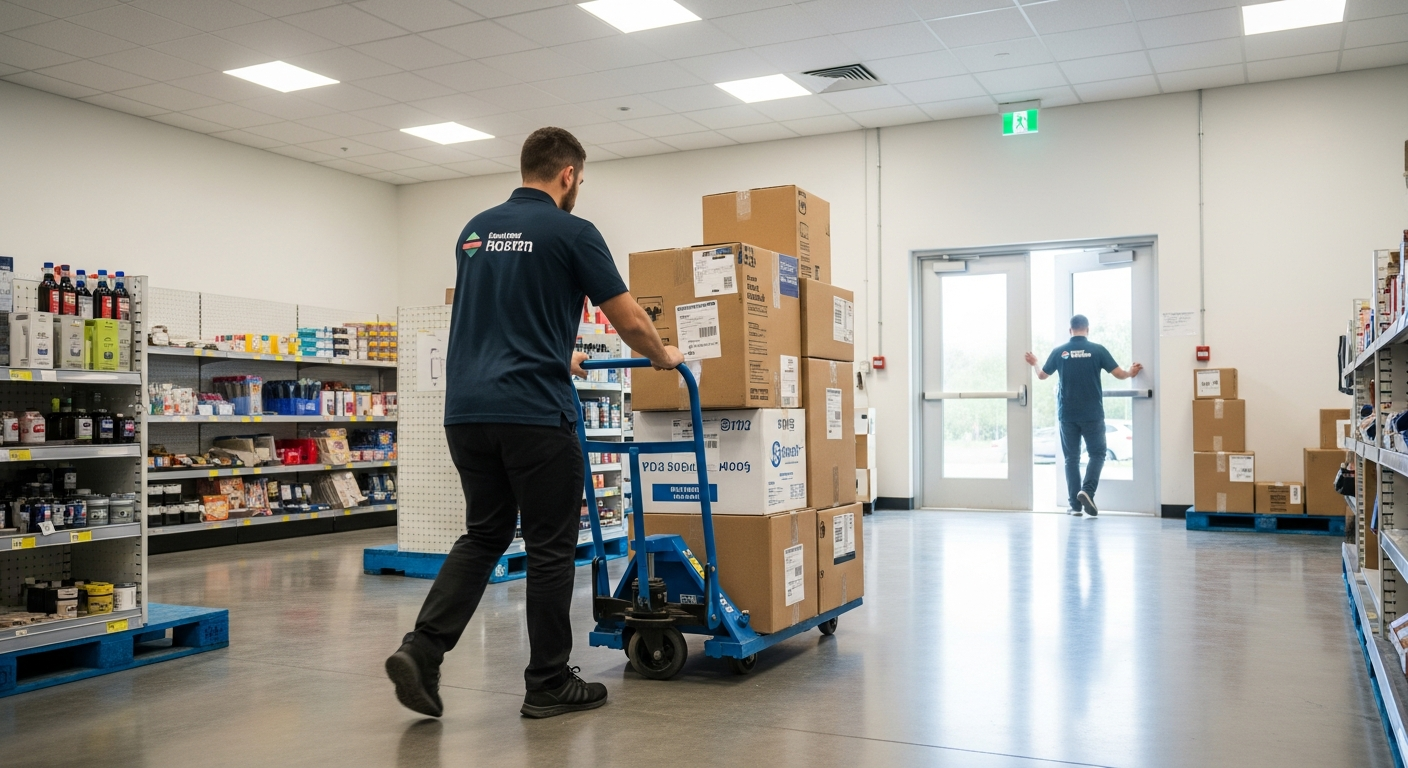
DTC fulfillment is high-volume, low-units-per-order, and optimized for cost-per-parcel and delivery experience: pick one or a few items, pack attractively, rate-shop a carrier, ship today. B2B retail fulfillment is lower-volume, high-units-per-order, and optimized for compliance: build pallets to a retailer's exact specification, label cartons and pallets to their standard, ship on a booked appointment via the right carrier, and transmit the right electronic documents. The mindset flips. In DTC, the customer forgives a quirky box. In B2B, the retailer fines you for one.
 The core operational differences
Routing guides and retailer compliance
Every major retailer publishes a routing guide (or vendor/supplier manual) that dictates exactly how shipments must arrive: carton dimensions and weights, labeling (often GS1 standards), pallet configuration, carrier selection, advance shipping notices, appointment scheduling, and packing-slip formats. These documents are detailed and strictly enforced. The reason they exist is that retailer DCs run on automation that breaks when an inbound shipment deviates from spec. Compliance isn't bureaucracy for its own sake — it's the price of shelf space, and it's measured down to the carton.
A retailer's routing guide is a contract in disguise. Every line in it maps to a potential chargeback. Reading it once isn't enough — your 3PL has to operationalize it for every shipment.
Chargebacks: how retail compliance failures cost money
When a shipment violates the routing guide — wrong label, missing ASN, late or early delivery, incorrect carton count, non-compliant pallet — the retailer issues a chargeback (a deduction from your invoice) plus sometimes the cost of their handling the exception. These add up fast and quietly erode wholesale margin, which is already thinner than DTC. The painful part is that chargebacks are often for trivial, avoidable formatting issues. Preventing them is a process discipline: an operation that knows each retailer's rules, applies the right labels and documents automatically, and ships on time and on spec.
- Label/barcode errors — wrong GS1 label or placement
- Missing or late ASN (advance shipping notice / EDI 856)
- Carton or pallet non-compliance — wrong config, overweight, count mismatch
- Delivery window violations — early or late against the appointment
- Incorrect packing slips or documentation
EDI and the documents retailers expect
Large retailers transact through EDI (Electronic Data Interchange) — standardized electronic documents like purchase orders (850), advance shipping notices (856), and invoices (810). Your fulfillment operation has to receive POs, ship to them accurately, and transmit a correct ASN tied to the physical shipment (often with GS1 SSCC labels linking cartons to the ASN). Getting EDI right is non-negotiable for selling into major Canadian retail; getting it wrong is a direct chargeback generator. A 3PL serving retail must speak EDI fluently and connect it to the physical pack-and-ship process, not treat it as a separate IT task.
 EDI and the documents retailers expect
Running both channels from one inventory pool
The strategic prize is serving DTC and B2B from a single, shared inventory pool rather than siloing stock by channel. Shared inventory means you don't strand units in the wrong channel, you can flex stock to wherever demand appears, and you carry less total safety stock. The challenge is that the two channels have different pick logic, packaging, labeling, and shipping rules — so the warehouse must apply the right workflow per order type while drawing from the same shelves. When done well, this gives a brand true omnichannel agility: sell a unit to a consumer or a retailer interchangeably, from the same pool, without double-buying inventory.
How ByExpress runs omnichannel fulfillment
ByExpress fulfills DTC parcels and B2B retail freight from shared inventory, applying each channel's correct workflow: rate-shopped single-parcel shipping for DTC, and routing-guide-compliant pallet building, GS1 labeling, EDI/ASN transmission, and appointment scheduling for retail. We operationalize each retailer's vendor manual so compliance is built into the process, not left to chance — which keeps chargebacks down and protects the thinner margins of wholesale. For brands scaling from DTC into retail, this removes the operational wall between the two channels.
Frequently Asked Questions
What's the difference between B2B and DTC fulfillment?
DTC fulfillment ships single, small parcels to consumers and optimizes for cost-per-parcel and delivery experience. B2B retail fulfillment ships pallets to retailer distribution centres and optimizes for strict compliance with each retailer's routing guide — labeling, pallet config, EDI documents, and delivery appointments — where errors trigger chargebacks.
What is a retailer routing guide?
A routing guide (or vendor/supplier manual) is the retailer's detailed specification for how shipments must arrive: carton sizes, GS1 labeling, pallet configuration, carrier selection, advance shipping notices, and delivery appointments. It's strictly enforced because retailer DCs run on automation that breaks when inbound shipments deviate from spec.
What are retail chargebacks?
Chargebacks are deductions a retailer takes from your invoice when a shipment violates their routing guide — wrong labels, missing ASN, non-compliant pallets, or delivery-window violations. They add up quickly and erode wholesale margin. Most are for avoidable formatting issues, so disciplined, retailer-specific processes prevent them.
Do I need EDI to sell to major retailers?
Almost always yes. Large retailers transact via EDI documents like purchase orders (850), advance shipping notices (856), and invoices (810), often paired with GS1 SSCC labels. Your fulfillment must receive POs, ship accurately, and transmit compliant ASNs tied to the physical shipment, or face chargebacks.
Can one 3PL handle both my DTC and wholesale orders?
Yes, and ideally from one shared inventory pool. A capable 3PL applies DTC pick-and-pack-and-ship logic for consumer orders and routing-guide-compliant pallet building, labeling, and EDI for retail — drawing both from the same shelves. This avoids stranding stock by channel and gives true omnichannel flexibility.
Related ByExpress resources