Guide · · 11 min read
Kitting, Bundling & Assembly Services in Canada: A 3PL Guide
Kitting turns loose components into sellable units — but done wrong it traps inventory and inflates cost. Here's how to do it right in a Canadian fulfillment operation.
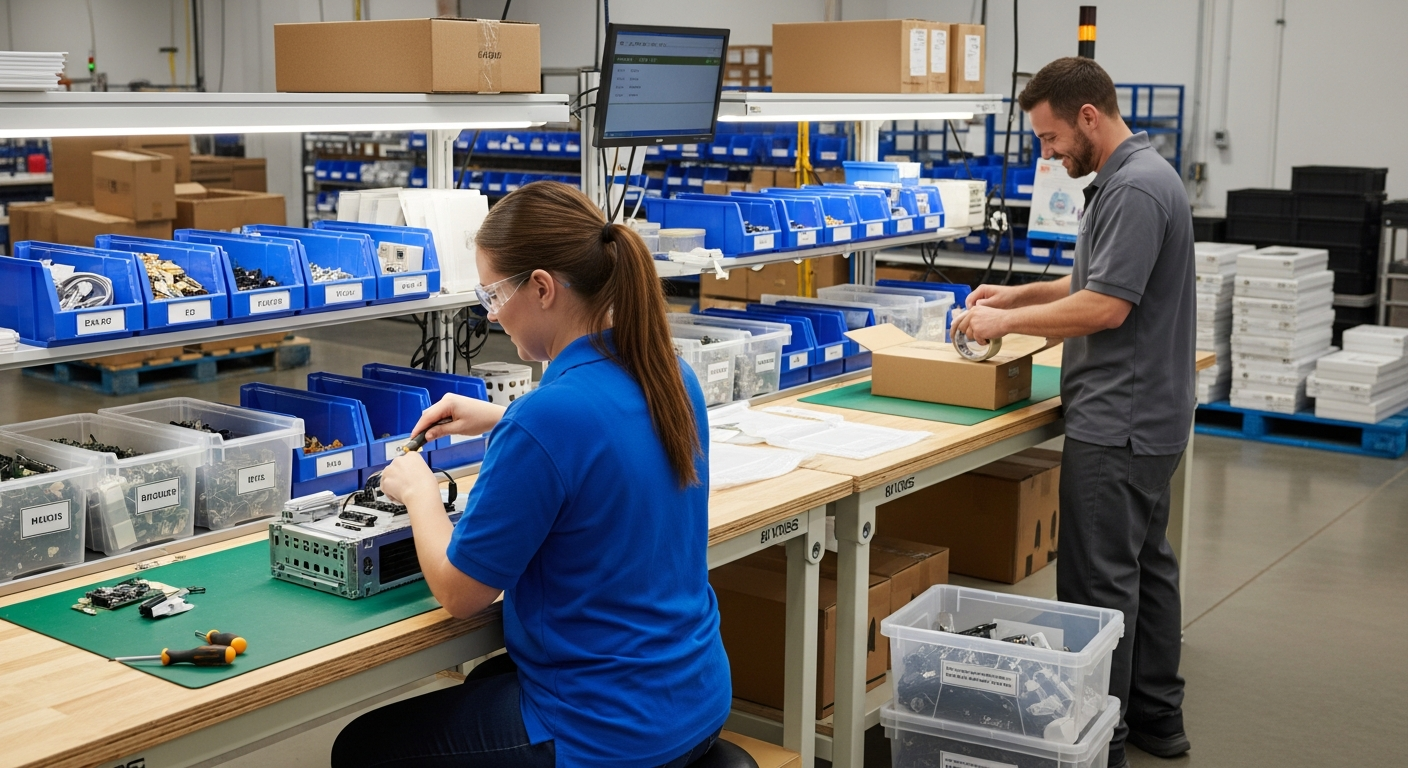
Kitting is the process of combining multiple separate items into a single, ready-to-ship unit with its own SKU — think a gift set, a starter bundle, a subscription box, a retail display pack, or a multi-part product assembled from components. It sits at the intersection of warehousing and light manufacturing, and it's one of the highest-value services a 3PL can offer because it directly shapes margin, pick speed, and customer experience. But kitting also introduces inventory and forecasting complexity, and choosing the wrong kitting strategy can trap capital in pre-built kits you can't sell. This guide covers the models, the trade-offs, and how to decide.
Kitting, bundling, and assembly: the distinctions
These terms overlap but aren't identical. Bundling groups finished products together (buy three, get a bundle price) and may be as simple as picking several SKUs to one order. Kitting goes further: it creates a new master SKU from components, often with its own packaging, so the kit is received and shipped as one unit. Light assembly adds a manufacturing-style step — inserting batteries, attaching parts, folding inserts, applying labels — to produce a finished sellable item. The more a process resembles assembly, the more it depends on an accurate bill of materials (BOM) and disciplined component inventory.
 Kitting, bundling, and assembly: the distinctions
Pre-kitting vs on-demand kitting
The central strategic choice is when to build the kit. Pre-kitting assembles kits in advance and stores them as finished units — fast to pick and ship, but it commits component inventory to a specific configuration and risks dead stock if demand shifts. On-demand kitting assembles at the moment of order, keeping components flexible and avoiding trapped inventory, but adding labour and time to each order. The right answer depends on volume and predictability: high-volume, stable kits favour pre-kitting for pick speed; variable or promotional kits favour on-demand to preserve flexibility. Many operations blend both — pre-kit the bestsellers, build the long tail on demand.
| Approach | Pros | Cons | Best for |
|---|
| Pre-kitting | Fast pick/ship, predictable labour | Commits components, dead-stock risk | High-volume, stable kits |
| On-demand | Flexible components, no trapped stock | Slower, more labour per order | Variable / promotional kits |
| Hybrid | Speed where it pays, flexibility elsewhere | More complex rules | Mixed catalogs |
The bill of materials is everything
Every kit needs an accurate bill of materials: exactly which components, in what quantities, with what packaging, in what sequence. The BOM drives component purchasing, inventory allocation, labour estimation, and quality control. Errors here cascade — a missing insert or a wrong-quantity component multiplies across every kit built. Good kitting operations treat the BOM as a controlled document, validate the first article before a run, and reconcile component consumption against finished kits to catch shrinkage and miscounts early.
A kit is only as reliable as its bill of materials. Validate a first-article build before any kitting run, and reconcile components consumed against kits produced — small BOM errors scale fast.
Where kitting drives real value
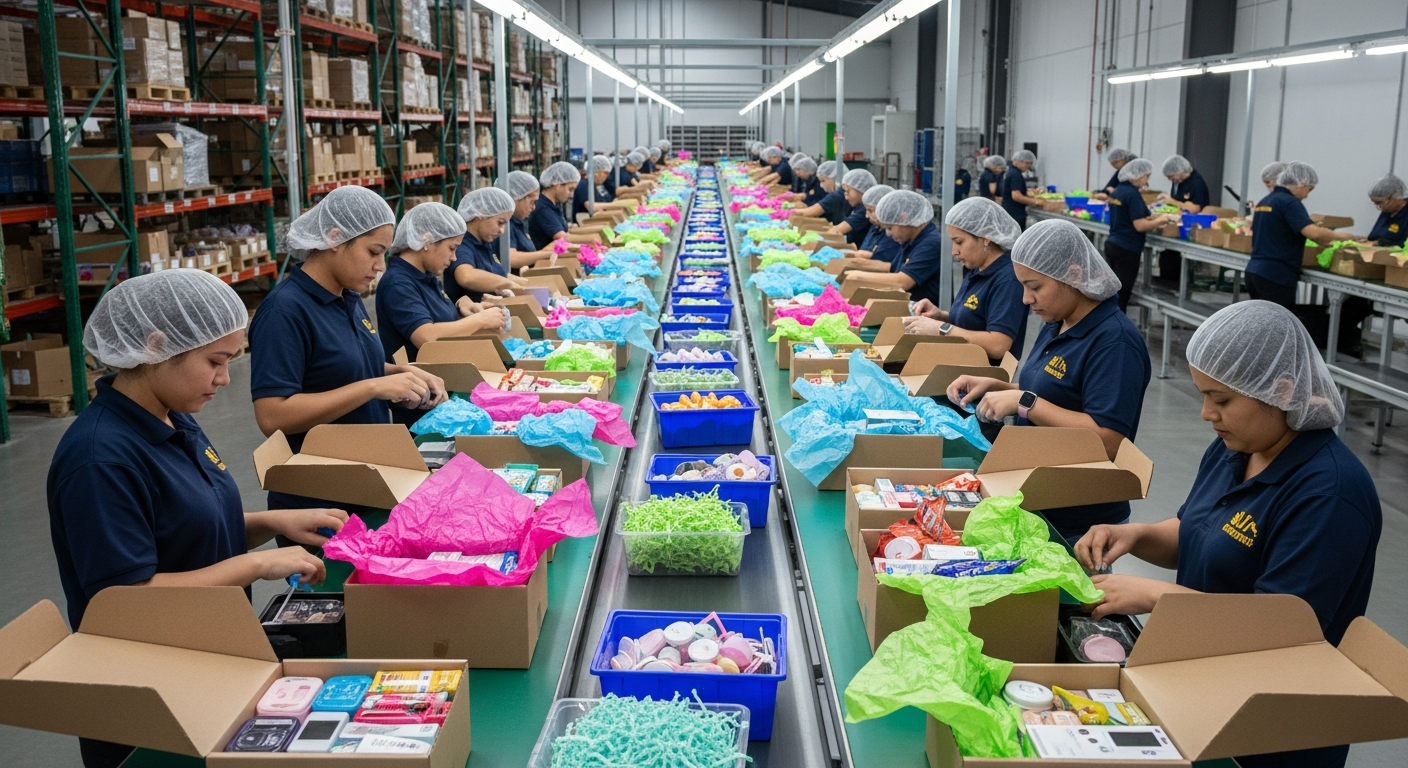
Kitting earns its keep in several common scenarios. Subscription boxes are kitting at scale, often combining pre-kitting of the core box with on-demand personalization. Retail and big-box programs frequently require display-ready 'club packs' or multi-unit retail packs assembled to the retailer's spec. Promotional bundles and gift sets lift average order value. Product configuration — bundling a device with accessories — turns components into a higher-margin finished good. In each case, kitting moves work upstream into the warehouse, where it's cheaper and more controlled than doing it at the point of sale or asking the customer to assemble.
- Subscription boxes — recurring, high-volume kitting
- Retail / club packs — multi-unit, display-ready assembly to spec
- Promotional bundles & gift sets — AOV and seasonal lifts
- Device + accessory configuration — higher-margin finished goods
- Marketing inserts & sample programs — added at pack time
How ByExpress handles kitting and assembly
ByExpress runs both pre-kitting and on-demand kitting, manages component inventory against controlled BOMs, and performs light assembly and value-added services such as labeling, inserts, and retail-pack preparation. We help brands decide which kits to pre-build versus assemble on demand based on their actual volume and variability, and we reconcile component usage so kitting stays accurate and shrinkage stays visible. For subscription and retail programs, this turns a complex, error-prone process into a repeatable operation.
Frequently Asked Questions
What's the difference between kitting and bundling?
Bundling groups finished products together, often just as a multi-SKU pick at a bundle price. Kitting creates a new master SKU from components — typically with its own packaging — so the kit is received, stored, and shipped as a single unit. Kitting usually involves more setup, a bill of materials, and sometimes light assembly.
Should I pre-build kits or assemble them on demand?
Pre-kit high-volume, stable kits for faster picking and predictable labour; assemble variable or promotional kits on demand to keep components flexible and avoid trapped inventory. Many brands use a hybrid: pre-kit the bestsellers and build the long tail on demand.
What is a bill of materials (BOM) in kitting?
A BOM specifies exactly which components, quantities, packaging, and assembly steps make up a kit. It drives purchasing, inventory allocation, labour, and quality control. Accurate BOMs are essential because errors multiply across every kit produced, so they should be treated as controlled documents.
Does kitting save money?
It can, by moving assembly upstream into the warehouse (cheaper and more controlled than at point of sale), speeding picking for finished kits, and lifting average order value. But pre-kitting the wrong configurations can trap component inventory, so the savings depend on choosing the right kitting strategy for each product's demand profile.
Can a 3PL handle subscription boxes?
Yes — subscription boxes are essentially kitting at scale. A capable 3PL pre-kits the core box, handles on-demand personalization or add-ons, manages component inventory against the BOM, and ships on the subscription cadence. ByExpress runs recurring subscription kitting as a standard service.
Related ByExpress resources