Guide · · 12 min read
NetSuite 3PL Integration: A Practical 2026 Architecture Guide
NetSuite-3PL integration is one of the most under-discussed and under-evaluated parts of Canadian fulfillment. Here's a practical guide to the integration architecture, item fulfillment workflows, and what separates a NetSuite-ready 3PL from a generic 'we can connect' claim.

NetSuite is the most common cloud ERP for mid-market Canadian DTC and B2B brands above roughly $5M in annual revenue, and the integration between NetSuite and a fulfillment 3PL is one of the most under-discussed and under-evaluated parts of the Canadian fulfillment conversation. Done well, NetSuite-3PL integration provides clean financial reconciliation, accurate inventory valuation, and seamless order-to-cash workflow. Done poorly, it creates phantom inventory, financial mis-statement risk, and constant operational friction between accounting and operations teams. This guide explains what NetSuite-3PL integration actually involves, the most common architecture patterns for Canadian deployments, and what to demand from a 3PL that claims NetSuite-readiness.
Where NetSuite fits in the Canadian e-commerce stack
NetSuite typically takes over from QuickBooks or Xero as a Canadian brand crosses roughly $3–$5M in annual revenue, particularly when complexity drivers compound: multi-currency operations (Canadian and US sales), multi-channel commerce (DTC plus B2B plus retail), inventory complexity (multi-location, multi-SKU, kits and bundles), or financial close acceleration needs. NetSuite's strength is integrated financials, inventory, and order management in a single system — which means the 3PL integration has to respect NetSuite's data model rather than treating it as just another data store. The most consequential NetSuite object for 3PL integration is the Item Fulfillment record, which represents the act of physically shipping items against a Sales Order and triggers inventory deductions and revenue recognition.
The two main NetSuite-3PL integration architectures
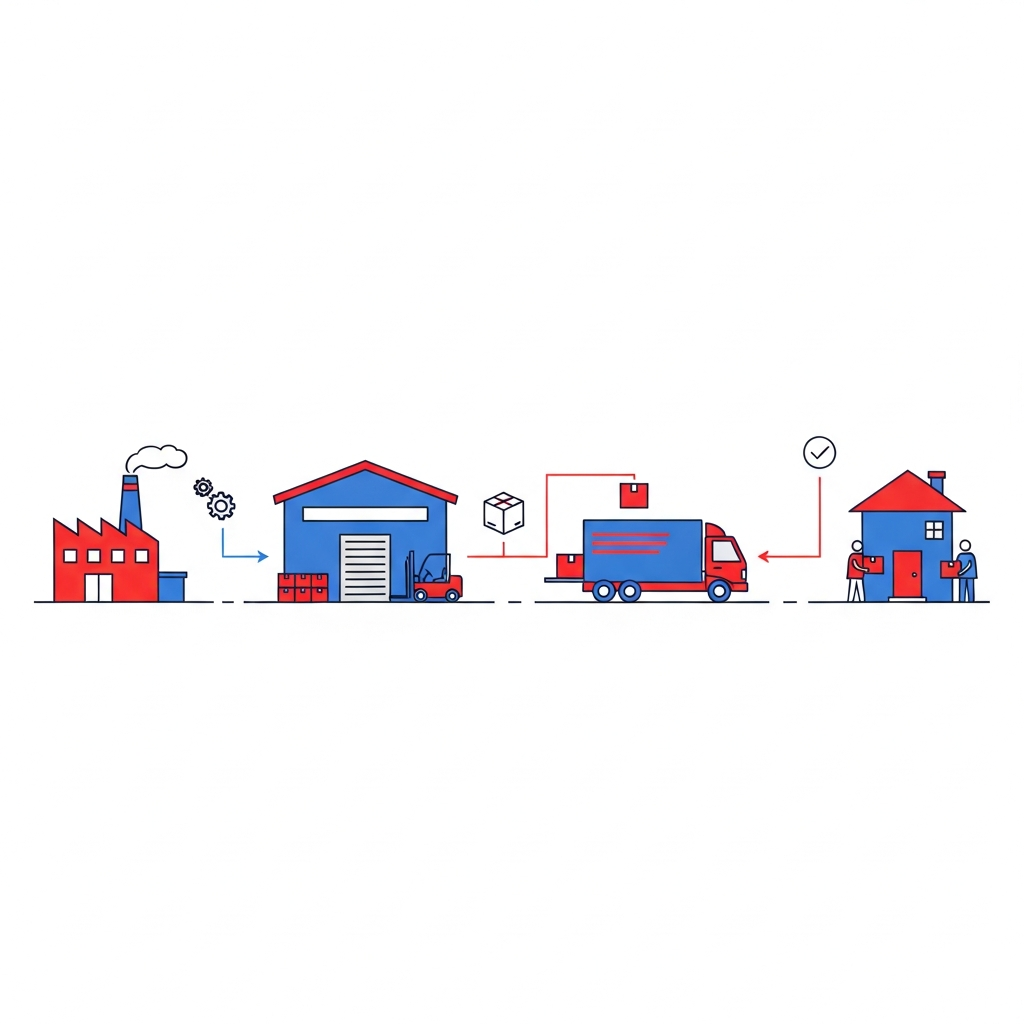
Architecture #1: Sales Order → 3PL → Item Fulfillment. NetSuite owns the Sales Order; the order is sent to the 3PL via integration; the 3PL ships and reports back; the integration creates an Item Fulfillment record in NetSuite, which deducts inventory and (depending on revenue recognition rules) recognizes revenue. This is the most common pattern for DTC and B2B brands and works cleanly when the integration handles edge cases (partial shipments, backorders, returns, cancellations) correctly. Architecture #2: 3PL as inventory management with NetSuite reconciliation. The 3PL's WMS owns inventory state; NetSuite is reconciled periodically (daily, hourly) to maintain accurate financial inventory positions. This pattern is more common for B2B operations and brands with complex multi-warehouse setups, but it creates risk if reconciliation falls behind or breaks. Most modern Canadian deployments use a hybrid: real-time bidirectional sync with NetSuite as the financial source of truth and the 3PL's WMS as the operational source of truth.
 The two main NetSuite-3PL integration architectures
The Item Fulfillment workflow in detail
Item Fulfillment is where most NetSuite-3PL integrations succeed or fail. The clean flow: NetSuite Sales Order is generated (from e-commerce platform, B2B portal, EDI, or manual entry). The order is approved (manual or automated). The integration sends the approved Sales Order to the 3PL via API or middleware. The 3PL picks, packs, and ships. The 3PL reports the shipment back to the integration with carrier, tracking number, and actual shipped quantities. The integration creates an Item Fulfillment record in NetSuite linked to the Sales Order. Inventory is deducted from the appropriate warehouse location in NetSuite. Depending on revenue recognition rules (typically: at shipment for most goods), revenue is recognized. The customer is notified with tracking. Where it fails: partial shipments not handled, backorders not tracked, returns not creating Item Receipt records that re-add inventory, cancellations not unwinding cleanly, or warehouse locations in NetSuite not matching the 3PL's actual warehouse locations.
Inventory sync and the 'source of truth' question
The most consequential NetSuite-3PL architectural decision is which system owns inventory truth. NetSuite as source of truth: the WMS reflects what NetSuite says inventory should be, and any discrepancy is reconciled to NetSuite's count. This works for accounting clarity but creates operational friction when physical inventory differs from NetSuite. WMS as source of truth: the 3PL's WMS reflects what's physically in the warehouse, and NetSuite is updated to match. This works operationally but can create accounting reconciliation work. The right answer is usually a hybrid: WMS owns physical inventory truth (because it's based on physical counts and scan events), NetSuite owns financial inventory truth (valuation, COGS), and reconciliation happens daily or hourly with documented variance procedures. A NetSuite-ready 3PL has clear ownership rules and reconciliation processes, not vague 'we sync inventory' claims.
The most common NetSuite-3PL inventory bug is location-level mismatch. NetSuite has Location records; the 3PL has warehouse locations. If those don't map cleanly (and bidirectionally), inventory updates land in the wrong NetSuite Location, creating phantom positive inventory in one location and phantom negative in another. Validate location mapping explicitly during integration testing.
When to use SuiteScript and CSV vs API integration
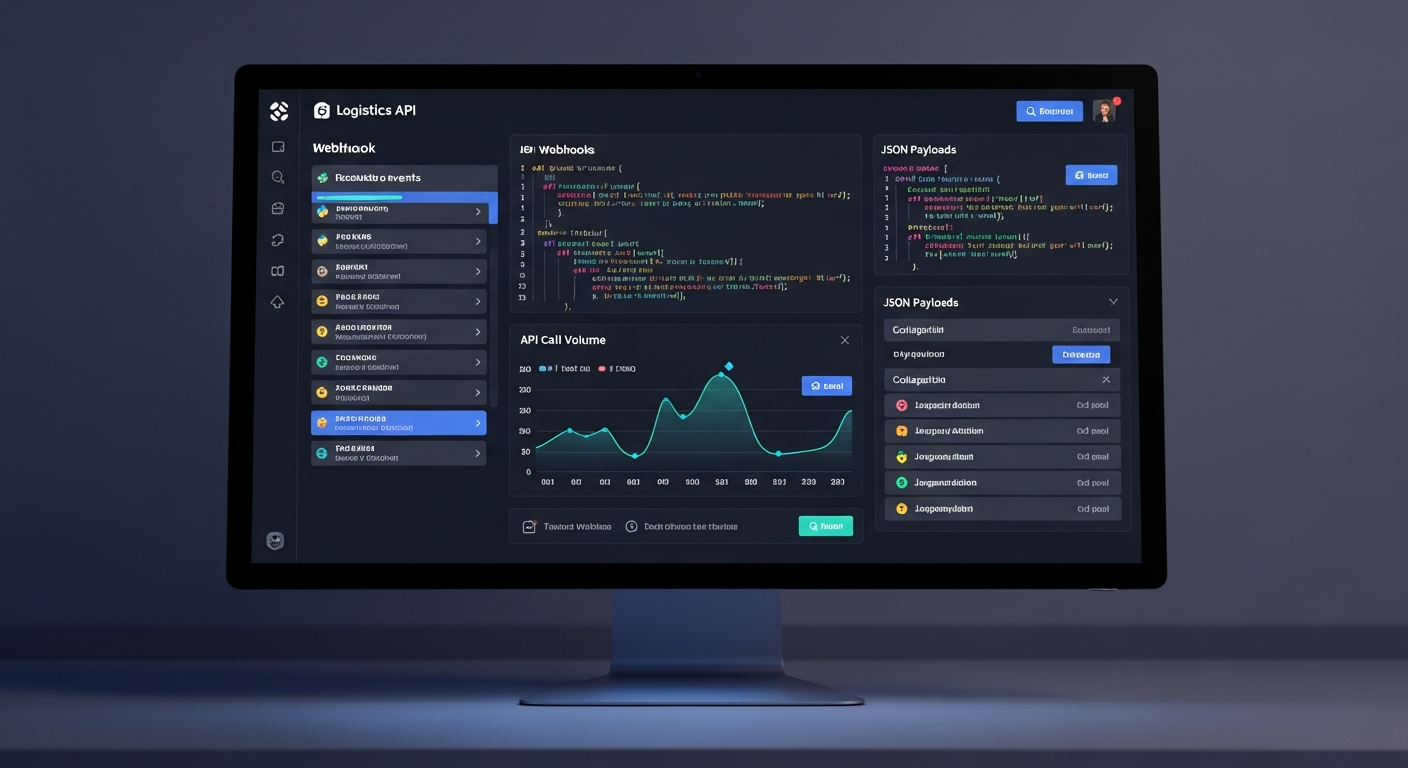
Three common technical patterns for NetSuite-3PL integration. SuiteScript with custom records: the 3PL builds custom NetSuite scripts that integrate with their WMS via REST. This is the most powerful pattern but requires NetSuite developer expertise on the 3PL side and is most expensive to maintain. CSV exchange via SFTP: NetSuite generates CSV files of orders to ship and consumes CSV files of shipment results, often via NetSuite's File Cabinet and SuiteScript scheduled scripts. This is the cheapest and oldest pattern, still used by some legacy deployments — but creates inherent latency (orders ship 4–24 hours after they should) and is increasingly inappropriate for modern DTC velocity. REST API integration via middleware (Celigo, Boomi, Mulesoft, FarApp/Cloud Commerce Pro, Pacejet): a middleware platform mediates between NetSuite and the 3PL, providing pre-built connectors and handling retries and error queuing. This is the most common modern pattern for mid-market deployments.
| Pattern | Best For | Latency | Cost |
|---|
| SuiteScript + REST | Custom enterprise needs, large IT teams | Real-time | High setup, high maintenance |
| CSV via SFTP | Legacy or low-velocity B2B | 4–24 hours | Low setup, fragile |
| Middleware (Celigo, Boomi) | Standard mid-market | Real-time / sub-5-min | Moderate setup, subscription cost |
| 3PL native NetSuite integration | 3PLs with NetSuite expertise | Real-time | Bundled with 3PL pricing |
Common NetSuite-3PL integration pitfalls
Five pitfalls that recur across Canadian deployments. Location mismatch: NetSuite Locations don't map cleanly to 3PL warehouse locations, causing inventory to land in the wrong place. Item Fulfillment timing: shipments are recorded in NetSuite hours or days after they physically ship, distorting financials and revenue recognition. Returns workflow gaps: physical returns are processed by the 3PL but the Item Receipt record never gets created in NetSuite, leaving phantom missing inventory and customer credit issues. Multi-warehouse allocation: orders flow to NetSuite without specifying which warehouse should ship them, requiring manual assignment that doesn't scale. Currency and tax handling: Canadian and US currency conversions, GST/HST/QST, and US sales tax all need to flow correctly between NetSuite and the 3PL. Each of these is preventable with proper integration design and testing — but each appears regularly in deployments where the 3PL claims NetSuite capability without genuine NetSuite expertise.
What to look for in a NetSuite-ready Canadian 3PL
Hard checks: documented current NetSuite integrations (named brand customers running on NetSuite, not just 'we can integrate'); NetSuite Suiteapp or middleware connector experience (Celigo, Boomi, FarApp, Pacejet); explicit Location mapping and reconciliation procedures; documented Item Fulfillment timing SLA (target: real-time, not batched); returns workflow that creates Item Receipt records correctly; multi-warehouse routing logic that handles location assignment automatically; GST/HST/QST and US sales tax handling that flows through correctly; and at least one customer reference willing to talk about their NetSuite-3PL integration honestly, including what broke during onboarding and how it was fixed. Avoid 3PLs whose only NetSuite experience is 'we exchange CSVs nightly with a NetSuite client' — that's not modern integration.
 What to look for in a NetSuite-ready Canadian 3PL
NetSuite operations at ByExpress
ByExpress operates NetSuite integration via Celigo and direct middleware connectors with real-time bidirectional sync, validated Location mapping, automated Item Fulfillment record creation, and clean returns workflow generating Item Receipt records on physical return processing. Multi-warehouse routing is handled automatically based on order ship-to and inventory positioning across our five Canadian fulfillment locations. GST/HST/QST handling is validated against Canadian tax rules and US sales tax handling supports brands with cross-border operations. Onboarding includes explicit Location mapping testing, end-to-end Item Fulfillment workflow validation, and parallel-operations period before cutover.
Frequently Asked Questions
Why does NetSuite-3PL integration matter so much?
NetSuite is the financial source of truth for many mid-market Canadian brands. If the 3PL integration doesn't update NetSuite cleanly (Item Fulfillment records, inventory deductions, returns processing), you get phantom inventory, financial mis-statement risk, and constant friction between operations and accounting. Done well, it provides clean order-to-cash flow; done poorly, it creates ongoing reconciliation work and audit issues.
What is an Item Fulfillment record in NetSuite?
Item Fulfillment is the NetSuite record representing the act of physically shipping items against a Sales Order. Creating an Item Fulfillment deducts inventory from the source Location and (depending on revenue recognition rules) recognizes revenue. The 3PL integration's job is to create these records accurately and in real time when physical shipments happen.
Should NetSuite or my 3PL's WMS be the source of truth for inventory?
Hybrid is usually the right answer. WMS owns physical inventory truth (based on physical counts and scan events). NetSuite owns financial inventory truth (valuation, COGS). Reconciliation happens daily or hourly with documented variance procedures. Pure 'NetSuite as source of truth' creates operational friction; pure 'WMS as source of truth' creates accounting reconciliation burden.
What middleware should I use for NetSuite-3PL integration?
Celigo (formerly integrator.io) is the most common in Canadian mid-market NetSuite deployments and has well-built 3PL connectors. Boomi works for larger enterprise deployments. FarApp (now part of Cloud Commerce Pro) is strong for retail and channel integration. Pacejet specializes in shipping integration. The right choice depends on what else you need to integrate (e-commerce platforms, marketplaces, retail accounts) beyond just the 3PL.
Can I integrate NetSuite with my 3PL via CSV exchange?
Technically yes, but not recommended for modern DTC operations. CSV-based integration creates inherent latency (orders ship 4–24 hours after they should) and is fragile to file format changes or transmission failures. For B2B with low velocity it's still acceptable; for any DTC operation it's below the standard you should accept.
How long does NetSuite-3PL integration take to implement?
Standard mid-market deployments using middleware (Celigo, etc.) typically run 6–12 weeks from kick-off to go-live, including Location mapping, end-to-end testing, and parallel operations. Custom SuiteScript integrations can run 12–24 weeks depending on complexity. Brands with complex multi-warehouse, multi-currency, or multi-entity setups should budget the longer end of these ranges.
Related ByExpress resources