Guide · · 11 min read
Pallet, Case & Each Picking for Ottawa Distributors (2026)
A practical look at how B2B orders get picked for Ottawa distributors — the cost difference between pallet, case, and each picking, the slotting and pick methods that control it, and the accuracy standards that matter.
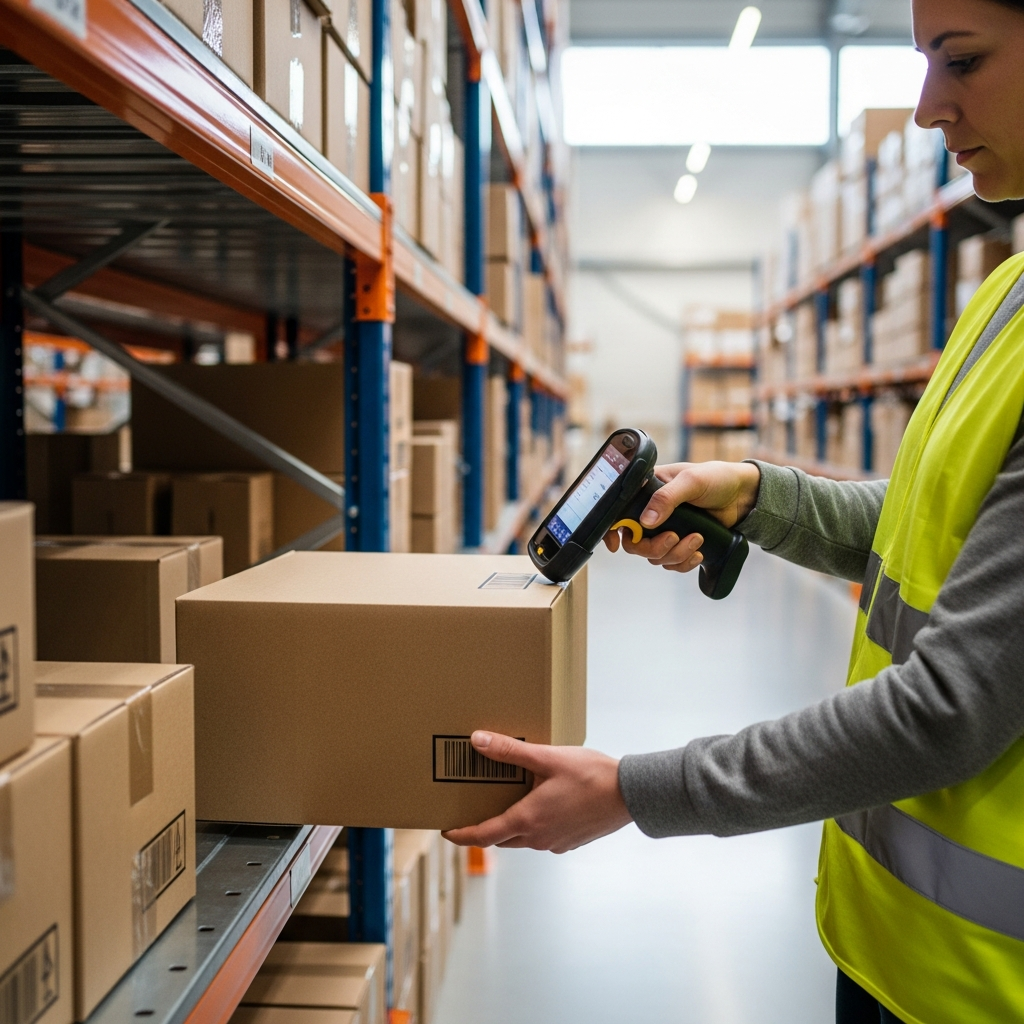
For a distributor, order picking is where 3PL cost is either controlled or quietly lost. The same SKU costs very different amounts to ship depending on whether it goes out as a full pallet, a case, or a single each — and most Ottawa wholesalers run a blend of all three across foodservice, industrial/MRO, building-products, jan-san, and healthcare-consumable accounts. This guide breaks down how pallet, case, and each picking actually work in a National Capital Region warehouse, the slotting and pick methods that keep labour cost down, how mixed orders are handled, and the accuracy and cutoff SLAs that separate a reliable B2B fulfillment partner from a slow one.
The three pick profiles and why they cost differently
Every B2B order resolves into one or more of three pick types, and the labour intensity rises sharply as the unit gets smaller. Understanding this is the key to reading a 3PL quote and to designing your own catalogue and minimums.
- Pallet picking — full pallets pulled from reserve by forklift; fewest touches, lowest cost per unit shipped
- Case picking — individual cases pulled from pick faces or case-flow racking; moderate cost, the workhorse of foodservice and retail replenishment
- Each / split-case picking — individual units pulled from bins or open cases; the most touches and the highest cost per unit, used for small accounts and spec orders
If your customers order eaches but you only think about pallet economics, your fulfillment cost will surprise you. Profile your real order mix before negotiating handling rates.
Slotting: putting the right SKU in the right place
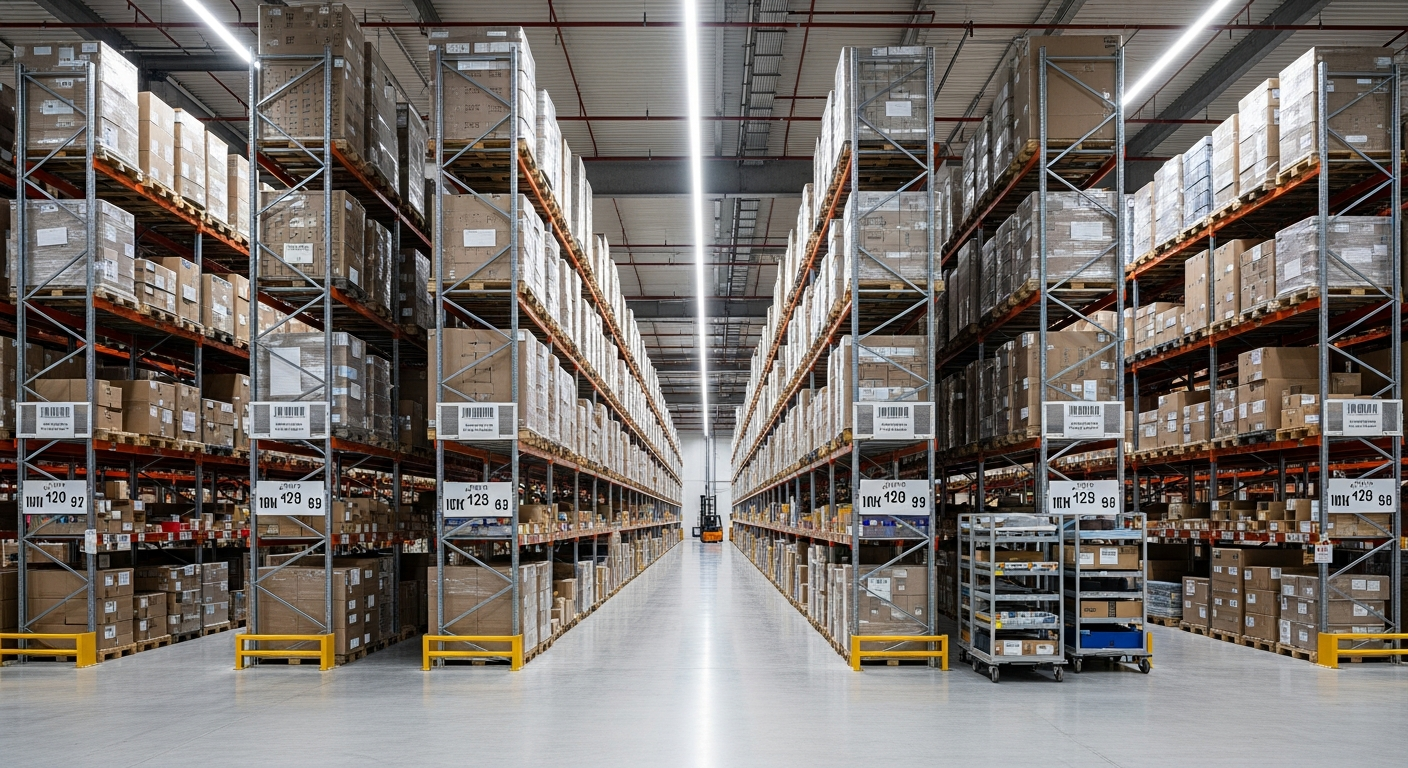
Slotting is the discipline of placing SKUs in the warehouse based on how they're picked and how fast they move. Fast-moving case-pick SKUs go in case-flow racking or accessible ground-level pick faces near the pack-out and shipping area; slow movers go deeper or higher. Each-pick SKUs go into bin shelving or carton-flow sized to their cube. Full-pallet SKUs sit in reserve racking replenished into pick faces as needed. Good slotting cuts travel time — which is the single largest component of pick labour — and is re-reviewed as SKU velocities shift seasonally.
 Slotting: putting the right SKU in the right place
Pick methods: discrete, batch, zone, and wave
How orders are released to pickers matters as much as where the SKUs sit. Discrete picking (one order at a time) is simple and good for large pallet orders. Batch picking groups multiple orders so a picker collects the same SKU for several orders in one pass — efficient for high-volume each and case picking. Zone picking assigns pickers to areas and passes orders between zones, useful in larger facilities. Wave picking releases groups of orders timed to outbound truck schedules and carrier cutoffs. A capable Ottawa 3PL chooses the method per order profile and uses RF scanning or pick-to-light to enforce accuracy at every pick.
| Pick method | Best for | Trade-off |
|---|
| Discrete | Large pallet / single-line orders | Simple but more travel per order |
| Batch | High-volume case & each picking | Needs downstream sortation |
| Zone | Large facilities, many SKUs | Requires order consolidation |
| Wave | Carrier-cutoff-driven shipping | Needs planning discipline |
Handling mixed pallet + case + each orders
Most real B2B orders aren't pure — a restaurant-supply order might be two full pallets of a staple, fifteen mixed cases, and a handful of eaches for a new menu item. These mixed orders are picked in waves or zones and then consolidated at a staging or pack-out lane, where the pallet portion is staged, the case portion is built onto it or wrapped separately, and eaches are boxed and labelled. The consolidation step is where accuracy and presentation are verified before the order is wrapped, weighed, and manifested. Doing this cleanly is what keeps your customers from getting short shipments or mis-picks.
Accuracy, cutoffs, and the SLAs that matter
B2B buyers measure their suppliers on fill rate and accuracy, so your 3PL's SLAs become your service to your customers. The standards worth insisting on: order accuracy of 99.5% or better (verified by scan-based picking and pack-out checks), same-day shipment for orders received before a defined cutoff (commonly early-to-mid afternoon to make carrier and linehaul departures), and a documented OS&D and short-ship process. RF or pick-to-light scanning, lot and expiry control where relevant (important for food and healthcare consumables), and cycle counting to keep inventory accuracy high all underpin those numbers.
Picking for Ottawa's B2B customer base
The National Capital Region's order mix is shaped by its customers. Foodservice and institutional accounts (restaurants, federal cafeterias, hospitals, schools) lean heavily on case picking with daily cutoffs. Industrial/MRO and building-products accounts serving the region's construction activity blend pallets and cases with frequent each-level spec orders. Government and institutional buyers often require precise documentation and delivery-window compliance. A 3PL that understands this mix slots, staffs, and schedules around it rather than treating every order the same — and ties into your EDI or portal so the picks flow without manual re-keying.
Frequently Asked Questions
What's the difference between pallet, case, and each picking?
Pallet picking pulls full pallets by forklift (lowest cost per unit). Case picking pulls individual cases from pick faces (moderate cost). Each or split-case picking pulls individual units from bins (highest cost per unit because it takes the most touches).
Why does each-picking cost more than case or pallet picking?
Smaller units mean more individual touches, more travel per unit shipped, and more packing and verification labour. A full pallet is one move; the same volume picked as eaches can be dozens of moves, so the cost per unit is much higher.
How do 3PLs keep B2B order accuracy high?
Through scan-based (RF) or pick-to-light picking that verifies every pick, slotting that reduces errors, pack-out verification, lot/expiry control where needed, and cycle counting. Reliable B2B 3PLs target 99.5% order accuracy or better.
Can one order include pallets, cases, and eaches?
Yes — most real B2B orders are mixed. They're picked by wave or zone and consolidated at a pack-out lane where the pallet, case, and each portions are combined, verified, wrapped, and manifested as one shipment.
What is a same-day shipping cutoff?
A defined time of day (often early-to-mid afternoon) by which an order must be received to ship the same day, set to make carrier pickups and linehaul departures. Orders after the cutoff ship the next business day.
Related ByExpress resources