Guide · · 10 min read
Break-Bulk & Repacking Services in Ottawa (2026)
How break-bulk and repacking work for Ottawa wholesalers and importers — container devanning, cross-dock, case repack, re-labelling, and the economics of converting bulk freight into order-ready inventory.
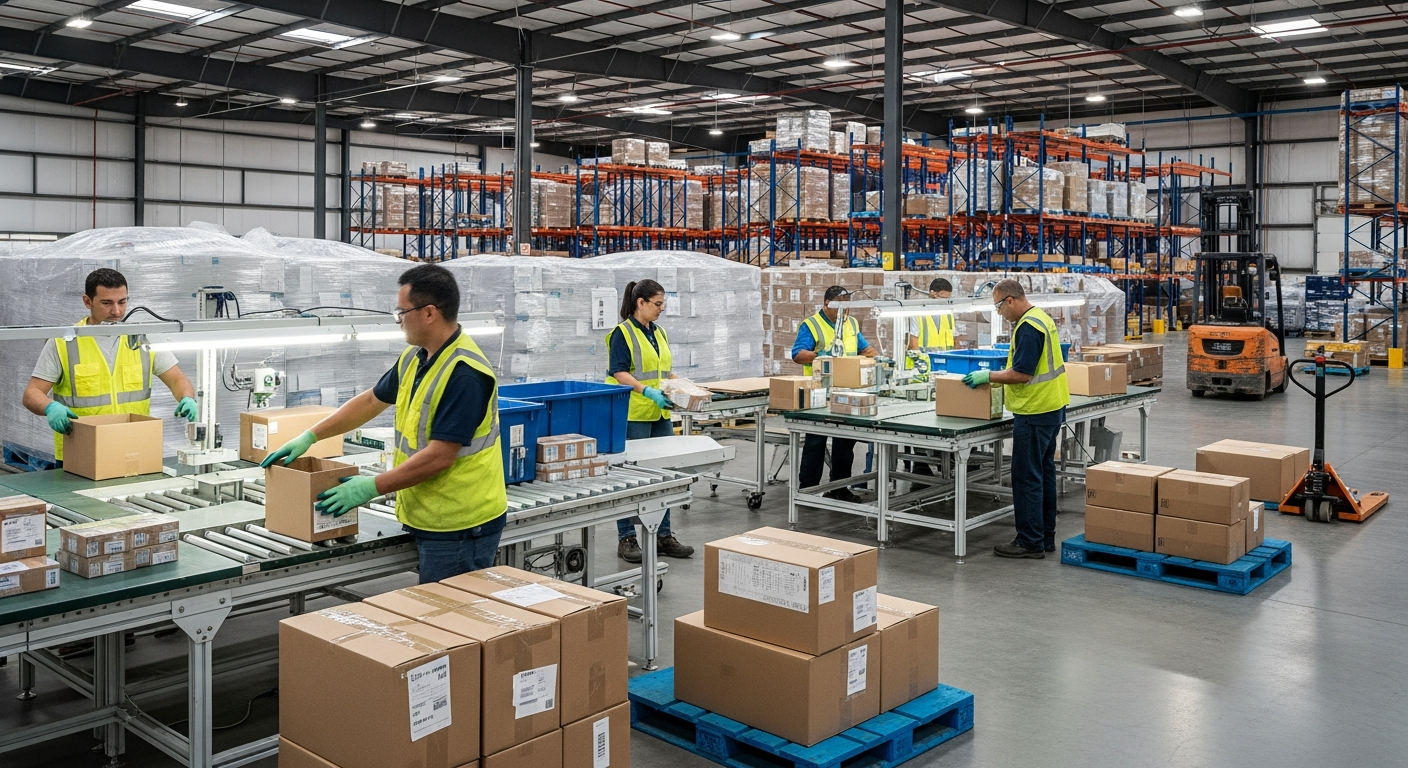
Break-bulk is the unglamorous but high-value work that sits between a wholesaler's cheap inbound freight and the order-ready inventory their customers actually buy. In Ottawa, importers receiving overseas containers via the Port of Montreal and distributors receiving full truckloads from manufacturers both need to break those large units down into cases, inner packs, and eaches — and often add value by re-labelling, re-cartoning, or building mixed cases along the way. This guide explains how break-bulk and repacking are run in a National Capital Region 3PL, when cross-dock makes more sense than putaway, what compliant re-labelling involves, and how to think about the cost per touch versus doing it in your own bay.
What break-bulk and repacking actually mean
The two terms are related but distinct. Break-bulk is the act of receiving a large inbound unit — a 20- or 40-foot container, a floor-loaded trailer, or full pallets — and breaking it into smaller, handleable, pickable configurations. Repacking adds transformation: changing the packaging, the labelling, the case quantity, or the configuration of the goods. A wholesaler typically needs both — break a container down to cases, then repack some of those cases into retail-ready or customer-specific configurations.
- Container devanning / unloading — floor-loaded or palletized container unload and sortation
- Case break-down — converting master cartons into inner packs or eaches
- Re-cartoning — moving product into new boxes for shipping or retail presentation
- Re-labelling — applying bilingual, barcode, retailer, or compliance labels
- Mixed-case / assorted-pack building — combining SKUs into a single sellable case
- Promotional kitting — bundling items for a seasonal or sales promotion
Cross-dock vs. putaway: when to skip storage
Not all break-bulk inventory needs to be stored. Cross-docking moves inbound freight across the dock and back out on outbound trucks within hours — the goods are received, broken down or sorted, and re-staged for shipping without ever going into a racked storage position. This is ideal for fast-moving, pre-sold, or time-sensitive inventory where storage cost and double-handling add no value. Putaway-then-pick is the right model for inventory that will sit and be drawn down over weeks. A capable Ottawa 3PL decides per shipment, often cross-docking the pre-allocated portion of a container while putting the rest into reserve storage.
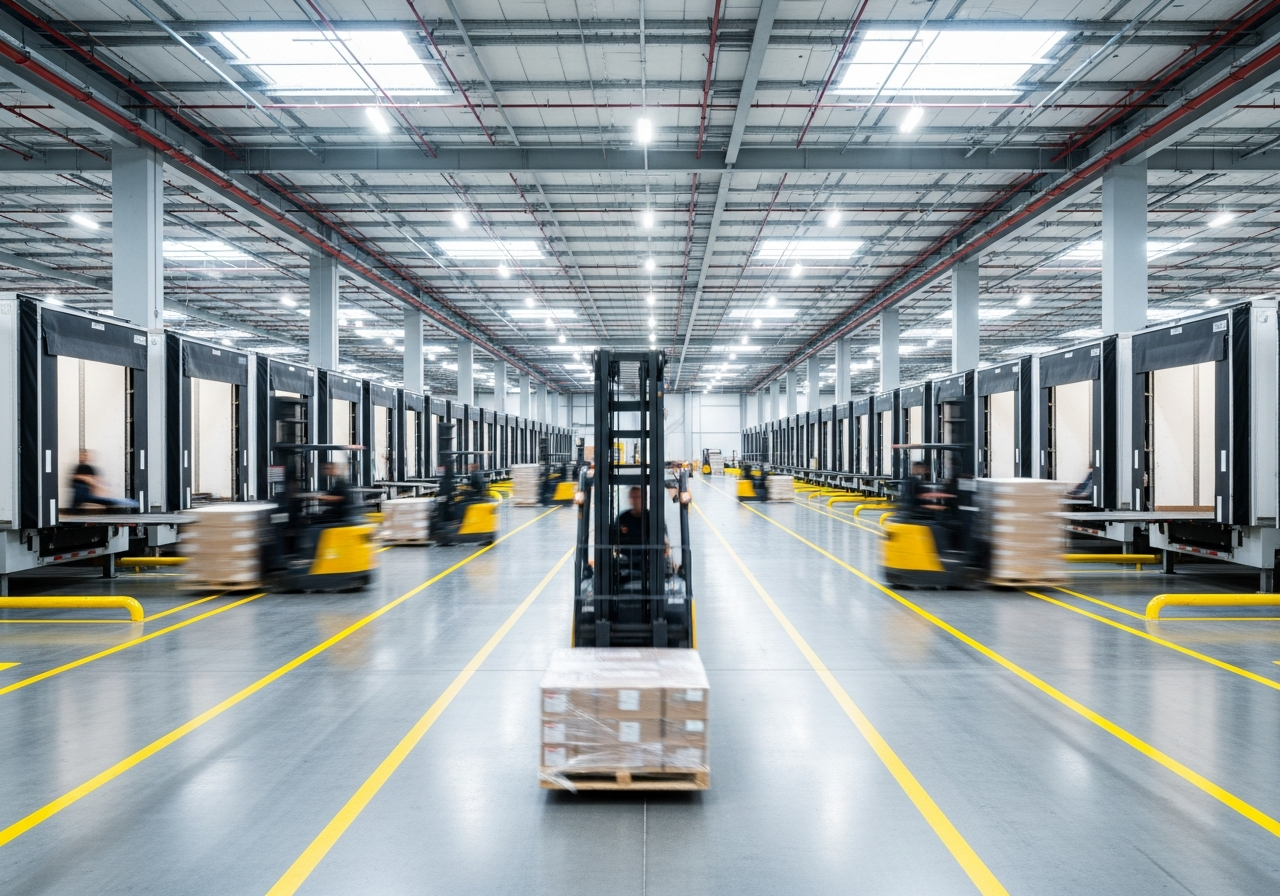 Cross-dock vs. putaway: when to skip storage
Re-labelling and compliance for the Canadian market
Imported goods frequently arrive without the labelling Canadian buyers and regulators require. Repacking is where that gets fixed: bilingual (English/French) product labelling under the Consumer Packaging and Labelling Act, GS1 barcodes and retailer-specific GTIN/SSCC labels for buyers like Walmart Canada and grocery DCs, country-of-origin marking, and category-specific compliance labels. Getting this done at the 3PL — before the goods enter the pick queue — prevents chargebacks, rejected shipments, and the cost of relabelling already-stored inventory under pressure.
A single missing or non-compliant label on a retail PO can trigger chargebacks that exceed the entire margin on the order. Build re-labelling into the inbound break-bulk step, not as an emergency afterthought.
The economics: cost per touch
The case for outsourcing break-bulk is almost always about cost per touch and opportunity cost. Doing it in your own leased bay means paying for the space, the labour, the equipment, and the management overhead — and pulling your team off selling and account management to move boxes. A 3PL spreads dock doors, forklifts, balers, labelling equipment, and trained labour across many clients, so the per-unit cost of devanning a container or repacking a case is typically lower, and it scales up and down with your volume instead of being a fixed cost.
| Activity | Typical billing unit | Notes |
|---|
| Container devanning | Per container or per hour | Floor-loaded costs more than palletized |
| Case break-down | Per case or per unit | Driven by units per case |
| Re-labelling | Per label or per unit | Bilingual / barcode / retailer labels |
| Mixed-case building | Per case built | Depends on number of SKUs per case |
| Cross-dock | Per pallet or per shipment | Avoids storage charges entirely |
A typical Ottawa break-bulk workflow
On a representative inbound day, a container or trailer is booked into a receiving appointment, devanned at the dock, and the contents are counted and inspected against the packing list with discrepancies logged as OS&D. Pre-allocated, pre-sold portions are cross-docked and staged for outbound; the balance is broken down to the agreed configuration, re-labelled where required, and putaway into pick or reserve locations with the WMS updated in real time. The whole flow runs against documented receiving SLAs — typically 24–48 hours from gate to available-to-pick for standard freight, faster for cross-dock.
Which Ottawa businesses need break-bulk
Break-bulk and repacking are most valuable for importers bringing in containers for regional resale, distributors receiving manufacturer truckloads in master cartons, brands that need retailer-compliant labelling before goods can ship, and any wholesaler whose buyers order in smaller units than the inbound freight arrives in. Foodservice, industrial/MRO, building products, jan-san, and healthcare-consumable distributors across the National Capital Region all run some version of this work daily — the only question is whether they pay for it in their own bay or buy it as a service.
Frequently Asked Questions
What is break-bulk in logistics?
Break-bulk is receiving large inbound units — containers, floor-loaded trailers, or full pallets — and breaking them down into smaller, pickable configurations like cases, inner packs, or eaches. It converts cheap bulk freight into order-ready inventory.
What's the difference between break-bulk and repacking?
Break-bulk is the breakdown of large units into smaller ones. Repacking adds transformation — re-cartoning, re-labelling, changing case quantities, or building mixed and promotional cases. Wholesalers often need both in sequence.
What is cross-docking and when should I use it?
Cross-docking moves inbound freight across the dock to outbound trucks within hours, skipping storage entirely. It's ideal for fast-moving, pre-sold, or time-sensitive inventory where storage and double-handling add no value.
Can a 3PL re-label imported goods for the Canadian market?
Yes. Repacking includes bilingual (English/French) labelling under the Consumer Packaging and Labelling Act, GS1 barcodes, retailer GTIN/SSCC labels, and country-of-origin marking — done before goods enter the pick queue to avoid chargebacks.
How is break-bulk and repacking billed?
Usually per container or per hour for devanning, per case or per unit for break-down and re-labelling, per case built for mixed cases, and per pallet or shipment for cross-dock. It's typically cheaper per touch at a 3PL than doing it in your own bay.
Related ByExpress resources