Guide · · 12 min read
Proof of Delivery for Canadian Fulfillment: Evidence, Disputes and Privacy
A useful proof-of-delivery process connects scan events, recipient details, photos and exception chronology without collecting more personal data than the resolution requires.
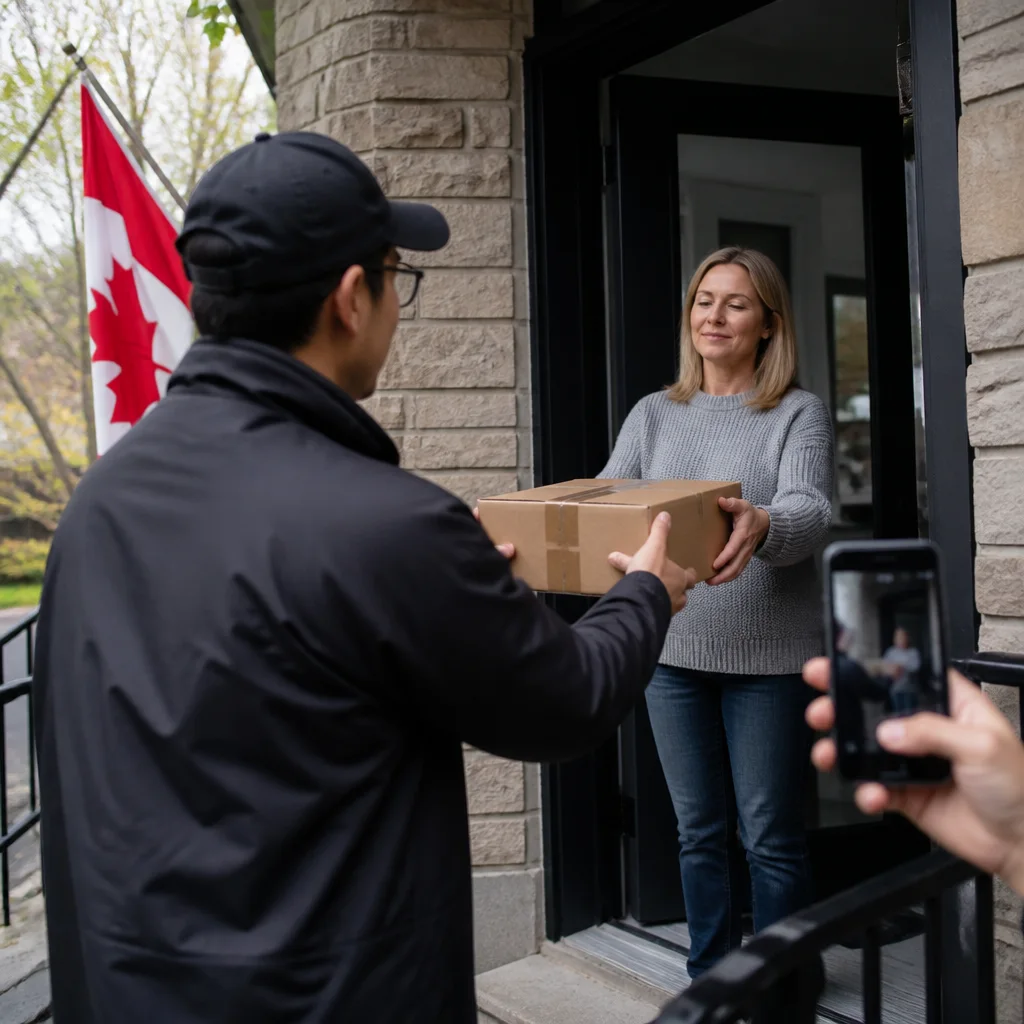
Proof of delivery (POD) is the evidence that connects a shipment to a delivery event, recipient or receiving process; it is not automatically proof that every item arrived undamaged or that a dispute is resolved. For Canadian parcel, LTL and B2B fulfillment, the strongest process preserves the order and package identity, time-stamped scans, delivery location, recipient or receiver details where appropriate, photographs when justified, and a chronology of exceptions. ByExpress Logistics presents this practical framework without treating any carrier record as infallible. Contract terms, privacy obligations, evidentiary questions and claim deadlines vary, so verify the governing carrier agreement and obtain qualified advice for a legal dispute. A clear evidence trail helps support a fair answer without turning uncertainty into an accusation.
POD dispute evidence chain
Preserve evidence in this order so each record answers a distinct question.
- Identify: Match order, shipment, package, service and destination.
- Capture: Retain scans, signatures, photos, documents and receiver notes from source systems.
- Chronologize: Place events and exceptions on a time-zoned, attributed timeline.
- Minimize: Share only the personal data needed for the stated resolution purpose.
- Resolve: Apply documented paths for investigation, replacement, refund or escalation.
Delivery evidence is strongest when identity, event, condition and privacy controls remain distinct.What does proof of delivery actually prove?
POD proves a defined delivery event to the extent the recorded evidence supports it. Depending on the service, that may mean a carrier scan at a location, a recipient signature, a photo of a parcel’s placement, a dock receipt, a bill-of-lading notation or an electronic receiving record. Each record answers a different question. A GPS-enabled scan can support location evidence without identifying who accepted a shipment; a signature can identify a receiver without proving carton contents.
Write the evidence standard in operational terms before a dispute occurs. Define which event closes delivery, what counts as an exception, when a signature is required, whether photographs are appropriate, and which records are retained. Avoid calling an item “delivered” solely because a label was created or a vehicle was dispatched. Preserve the relationship among order, shipment, handling unit, tracking number, carrier, service and delivery timestamp so a reviewer can reconstruct the event without guessing.
Which parcel delivery evidence should a fulfillment team preserve?
For parcel orders, preserve the carrier tracking history, package identifier, shipment confirmation, delivery scan, stated delivery location or service event, and any available signature or delivery photograph. Record the number of packages expected and delivered; one delivered carton does not close a three-carton order. Where the carrier provides an exception code, retain its description as received and map it to an internal reason without erasing the original wording.
Customer support also needs order context, such as the shipping address supplied at checkout, fulfillment timestamp, package contents and communications about safe placement. Limit access to this information to people who need it for resolution. Do not ask a customer to send identity documents or a photograph of a residence merely because a parcel is disputed unless a documented process and lawful purpose justify the request. Confirm current carrier retention and retrieval capabilities instead of promising that every scan or image remains available indefinitely.
How does POD differ for LTL and B2B receiving?
LTL and B2B delivery often depends on a bill of lading, pallet or handling-unit count, receiver name or initials, dock appointment, delivery timestamp and notation of visible shortage or damage. A signed document may be marked subject to inspection, clean, short or damaged; those terms carry operational significance, but their contractual effect depends on the carrier and shipment documents. Capture the document as issued and link it to each relevant pallet or carton when possible.
Receiving workflows should distinguish arrival, count verification and later unpacking. A consignee may sign for sealed pallets before discovering concealed shortage, while a dock employee may record a visible discrepancy before the freight is moved. Ask the receiving site to follow its documented inspection process and to preserve packaging, photographs and count notes when an exception appears. Do not collapse a freight damage investigation into a generic “delivered” status; delivery evidence and condition evidence answer separate questions.
How should a fulfillment team build an exception chronology?
Create a single timeline with order creation, allocation, pick, pack, manifest, carrier acceptance, transit exceptions, out-for-delivery, delivery, customer contact and internal decisions. Store source timestamps with their time-zone context, especially when a shipment crosses regions. Include who entered a manual note and what source supported it. An unchanged original event should remain visible if a later carrier update corrects or supplements it.
Chronology is useful because disputes often involve a sequence rather than one missing record. Compare the promised service, actual handoffs, address changes, weather or access exceptions, delivery instructions and customer communications. Mark facts, reported statements and unresolved inferences separately. If the data conflicts, say so and request the specific missing record; never invent a delivery location or infer recipient identity from a tracking number alone.
How can POD collection minimize Canadian privacy risk?
Collect the least personal information needed to operate and resolve delivery. A recipient name, signature, phone number, apartment detail, image or GPS coordinate can become sensitive in context, so define purpose, access, retention and deletion rules for each field. Use role-based access, protect exported files, restrict public links and avoid placing unnecessary personal details in carton labels or shared carrier notes. The Office of the Privacy Commissioner of Canada provides privacy guidance, but applicable provincial requirements and organizational roles must be assessed for the specific operation.
Photographs require particular discipline. Set a rule for when a parcel photo is necessary, frame it on the package rather than people or interiors, and provide a route to report an unsafe or inappropriate image. Mask or redact data before sharing evidence externally when the full record is not needed. A privacy review should cover the carrier, 3PL, ecommerce platform, customer support tool and analytics exports. Do not describe these practices as legal compliance without verifying the relevant law, consent basis and contract responsibilities.
What is a fair workflow for resolving a delivery dispute?
Start by acknowledging the specific issue: missing parcel, wrong location, unknown recipient, partial delivery, visible condition problem or delayed scan. Verify order and package identity, review the chronology, contact the carrier or warehouse through the agreed channel, and ask the customer for only the facts needed to distinguish the scenarios. Put a time-stamped status on the case and give the customer a next update time rather than an unsupported promise of outcome.
Use decision rules that separate replacement, refund, reshipment, carrier investigation and claim referral. Preserve evidence before changing the order state, and record why a decision was made. If a customer contests an electronic signature or photo, treat the record as evidence to review, not as an automatic end to the conversation. Escalate suspected fraud, repeated location errors, data exposure or safety concerns through the organization’s defined controls; front-line staff should not make legal conclusions.
Which POD controls make evidence reliable?
Reliable controls begin with identifier integrity. Scan each handling unit, prevent duplicate tracking numbers, synchronize warehouse and carrier status, and make manual overrides require a reason and user identity. Audit clock settings, integration retries and event ordering. Sample delivered orders across services and destinations, then compare system events with carrier records and customer outcomes. A sample can reveal a broken integration, but it cannot prove that unreviewed orders are correct.
Train staff to distinguish observation from conclusion. “Carton 2 of 3 scanned delivered at 14:06” is more useful than “customer received everything.” Maintain document versions for packing slips, labels and receiving forms, and preserve original files when a corrected version is issued. Measure missing evidence, disputed delivery rate, response time, repeat exceptions and resolution outcome by service and carrier. Do not publish a benchmark as a universal target unless its definition, population and period are stated.
How should a Canadian 3PL implement POD governance?
Begin with a service matrix covering parcel, LTL, B2B dock delivery, customer pickup if applicable and returns. For each service, list required evidence, optional evidence, source system, owner, retention decision, customer-facing explanation and escalation path. Test the matrix with realistic disputes, including a multi-carton short delivery, a photo showing an unsafe placement, an unsigned commercial delivery and a carrier event that arrives late.
ByExpress can coordinate fulfillment, shipping and returns workflows when the scope and evidence requirements are agreed with the merchant and carriers. It should not be presented as an independent adjudicator or as guaranteeing a claim result. Review the final process with operations, customer support, information-security and privacy stakeholders; confirm current carrier terms, cross-border data flows and retention periods. Revisit the matrix whenever a carrier, platform, delivery service or provincial operating context changes.
Frequently Asked Questions
Is a tracking page proof that a package was delivered?
A tracking page is one delivery record, not necessarily complete proof that every item reached the intended recipient. Review the package identifier, delivery event, location or signature data, package count and any exception chronology.
Does a signature prove the contents were correct?
No. A signature generally records an acceptance event under the service’s terms; it may not establish the contents, concealed condition or identity authority of the receiver. Preserve separate count, condition and packing evidence.
Should every Canadian delivery have a photo?
No. Photo requirements depend on service, risk, customer expectations, carrier capability and privacy considerations. If photos are used, define the purpose, framing, access and retention rules and avoid unnecessary people or interior details.
How long should proof-of-delivery records be kept?
The correct period depends on contracts, accounting and operational requirements, applicable privacy rules and dispute or claim processes. Set a documented retention schedule after reviewing those requirements; do not assume one universal Canadian period.
What should a customer do when tracking says delivered but the parcel is missing?
Confirm the full package count and delivery details, check the customer’s stated safe-location and building receiving process, then open a documented investigation with the merchant or carrier. The resolution team should preserve the tracking record and provide a clear next-update time.
Is proof of delivery the same as a freight damage claim?
No. Proof of delivery establishes a delivery event; a damage claim concerns condition, packaging, notice and contractual procedures. Keep the evidence streams linked but manage them under the applicable carrier terms.
Related ByExpress resources