Guide · · 12 min read
How Can Canadian Businesses Reduce Shipping Costs?
Shipping is one of the largest and least-controlled line items in Canadian e-commerce. This guide breaks down the highest-leverage levers — multi-carrier rate shopping, packaging and dimensional-weight optimization, zone skipping, negotiated carrier rates, and warehouse location strategy — and how they compound.
For most Canadian e-commerce and B2B businesses, shipping is the second- or third-largest cost after product and labour — yet it is frequently the least actively managed. Rates are accepted rather than negotiated, one carrier is used for every parcel regardless of destination, boxes are oversized, and inventory sits in a single warehouse that forces long, expensive zones to reach half the country. Canada's geography makes all of this worse: a vast, thinly populated landmass, long lanes between population centres, fuel surcharges, and remote-area delivery premiums. The good news is that shipping cost is highly controllable once you treat it as an operational discipline rather than a fixed expense. This guide walks through the highest-leverage levers Canadian businesses can pull in 2026 — multi-carrier rate shopping, packaging and dimensional-weight optimization, zone skipping, negotiated carrier rates, and warehouse location strategy — and shows how they compound when combined.
Start by understanding what actually drives your shipping bill
Before cutting costs you need to know what you're paying for. A Canadian shipping invoice is rarely just a base rate: it layers fuel surcharges, dimensional-weight pricing, residential-delivery fees, remote-area or extended-area surcharges, signature and insurance add-ons, address-correction fees, and fuel-linked accessorials that move with diesel prices. Pull three months of carrier invoices and break spend down by lane (province-to-province), by carrier, by service level, and by surcharge category. Most businesses discover that a small number of destinations, oversized cartons, or accessorial charges account for a disproportionate share of the bill. That diagnosis tells you which lever matters most — there's no point negotiating rates if your real problem is dimensional weight, and no point re-boxing if your real problem is a carrier that penalizes your most common lane.
- Break spend down by lane, carrier, service level, and surcharge type
- Identify your highest-volume and highest-cost destination zones
- Quantify dimensional-weight overage versus actual product weight
- Isolate accessorials: residential, remote-area, address correction, signature
- Flag SKUs or orders that consistently ship in oversized packaging
Multi-carrier rate shopping
Using a single carrier for every parcel is convenient and almost always more expensive than it needs to be. No carrier is cheapest for every weight, zone, and service level: one may win on light parcels to Ontario and Quebec, another on heavier parcels to Western Canada, another on remote-area delivery, and another on ground within a metro. Multi-carrier rate shopping — evaluating your available carrier contracts at the moment each label is generated and selecting the lowest-cost option that meets the delivery promise — routinely trims meaningful percentage points off total shipping spend without changing anything a customer sees. The mechanism matters: rate shopping should happen automatically inside your fulfillment or shipping software against live negotiated rates, applying business rules (e.g., cheapest option that still delivers within the promised window), rather than being a manual judgment call per order. A 3PL typically brings pre-negotiated rates across multiple carriers and rate-shops on every order by default.
Rate shopping only works if it's automated against live negotiated rates with clear business rules. Manual, per-order carrier choice at scale is slow, inconsistent, and quietly leaves savings on the table.
Packaging optimization and dimensional weight
Carriers bill on the greater of actual weight and dimensional weight — a calculation based on the box's volume. Ship a light product in an oversized carton and you pay for air. Packaging optimization is one of the fastest paybacks in shipping because it requires no negotiation: right-size your carton range so each order ships in the smallest box that protects the product, reduce void fill, use mailers or poly bags instead of boxes where products allow, and audit your most common order profiles to design cartons around them. Cutting box dimensions can drop an order below a dimensional-weight threshold or a carrier's size-based surcharge, producing savings on every future shipment of that profile. Lighter, smaller packaging also reduces material cost and warehouse storage of packaging supplies. The discipline is treating your carton lineup as a designed system rather than whatever boxes happen to be on the shelf.
| Lever | Effort | Typical Impact | Notes |
|---|
| Right-sizing cartons | Low–Medium | High per-order | Attacks dimensional weight directly |
| Mailers / poly bags where possible | Low | High per-order | Avoids box-based DIM and surcharges |
| Reducing void fill | Low | Moderate | Lower material + weight |
| Standardized carton lineup | Medium | Compounds over time | Designed around real order profiles |
Zone skipping and injection
Shipping cost rises with distance zones, so moving parcels closer to their destination cheaply — before they enter the carrier's parcel network — can beat paying full parcel rates over long lanes. Zone skipping (sometimes called injection) consolidates many parcels bound for a distant region into a single line-haul truckload, trucks them to a facility near the destination, and injects them into the local carrier's network for final delivery. For a business shipping meaningful volume from, say, Ontario into the West, this replaces many expensive long-zone parcels with one cheap linehaul plus short-zone local delivery. Zone skipping only pays off above a volume threshold — you need enough parcels to a common region to fill consolidated trucks on a regular cadence — which is why it's usually accessed through a 3PL or consolidator that aggregates volume across many shippers. Where volume supports it, the savings on long lanes can be substantial.
Negotiated carrier rates
Published carrier rates are a starting point, not a fixed price. Volume, lane mix, and negotiating leverage all move the number. Businesses shipping consistent volume should negotiate on the levers carriers actually respond to: base-rate discounts by service level, reduced or waived accessorials (residential, address correction, fuel-surcharge caps), and minimum-charge and dimensional-divisor terms — the DIM divisor materially changes how dimensional weight is calculated. Two things weaken most businesses at the table: they negotiate rarely (rates drift while the market moves), and they lack the aggregated volume that unlocks the steepest discounts. This is a structural advantage of a 3PL: it pools the shipping volume of many clients to secure discounted, pre-negotiated rates across multiple carriers that a single mid-market shipper usually cannot reach on its own, then passes rate-shopped pricing through on every order.
- Base-rate discounts negotiated by service level and lane
- Reduced or capped accessorials and fuel surcharges
- Favourable minimum charges and dimensional divisor terms
- Regular re-negotiation as volume and market rates move
- Aggregated volume through a 3PL to reach deeper discount tiers
Warehouse location and distributed inventory
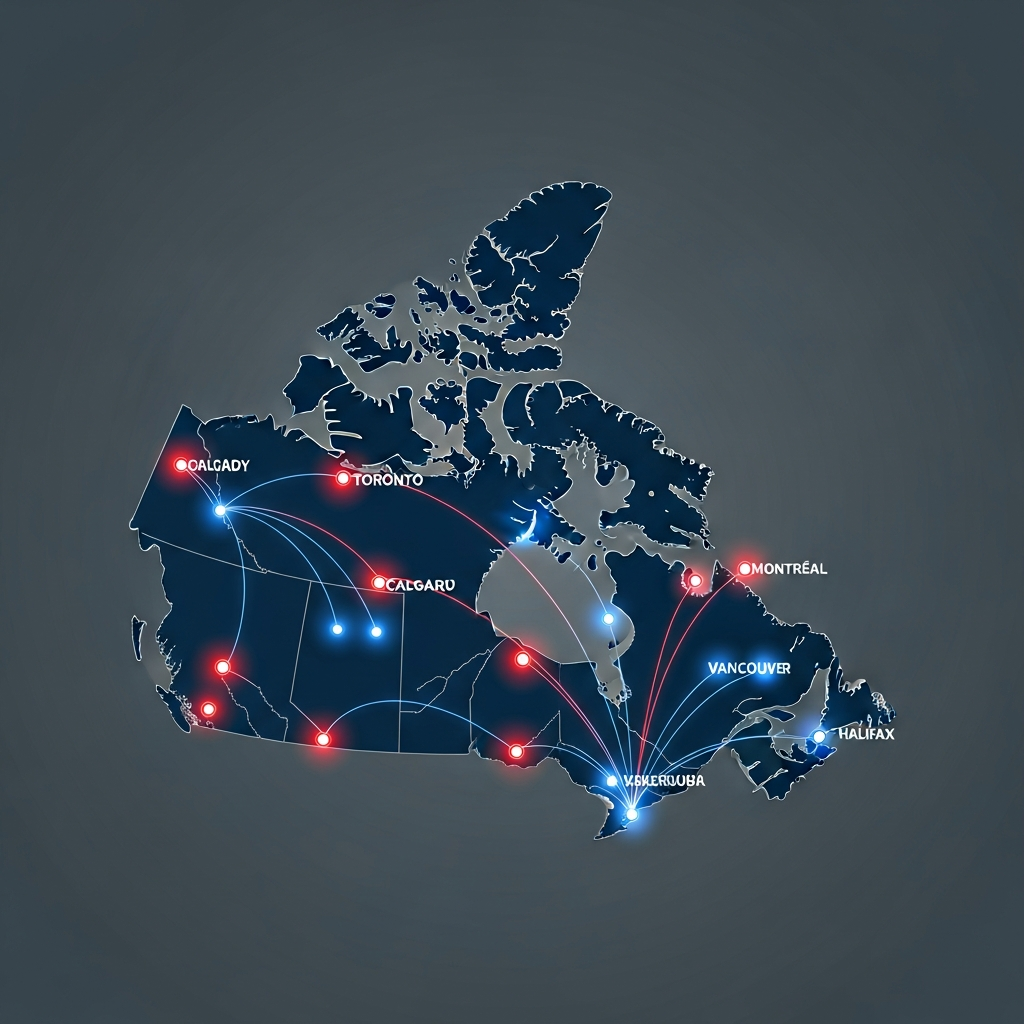
The single most structural shipping-cost lever is where your inventory physically sits relative to your customers. Ship everything from one warehouse and every order to the far side of the country crosses maximum zones at maximum cost. Distribute inventory across two or more nodes — for example a hub in the Greater Toronto Area or Montreal for Central and Eastern Canada plus a Western node in Vancouver or Calgary — and a large share of orders suddenly ship short-zone from the nearest facility. Distributed inventory lowers average zone (and therefore average cost per parcel), shortens transit time so more of the country is reachable by ground within one to two days, and reduces exposure to remote-area surcharges. The trade-off is added inventory holding and coordination across nodes, so distribution pays off once order volume and geographic spread justify splitting stock. A national 3PL network lets you place inventory across Ottawa, Toronto, Montreal, Vancouver, and Calgary without operating multiple leases yourself.
 Warehouse location and distributed inventory
How the levers compound
None of these levers is transformational alone, but they multiply. Right-sizing packaging lowers the billable weight that every rate is applied to; negotiated rates lower the price of that weight; multi-carrier rate shopping picks the cheapest carrier for each lane at that lower rate; distributed inventory shortens the zone that rate is charged across; and zone skipping compresses the long lanes that remain. Applied together, a business that was overpaying on all five fronts can see total shipping spend fall materially — and, just as importantly, become predictable and manageable rather than a line item that drifts upward with every fuel surcharge. The practical path is sequential: diagnose the bill first, fix packaging (fastest payback, no negotiation), turn on automated rate shopping, then pursue negotiated rates and network placement as volume grows.
Sequence matters: diagnose the invoice, fix packaging first (fastest payback), automate multi-carrier rate shopping, then layer in negotiated rates and distributed inventory as volume justifies them.
How a 3PL reduces shipping costs by default
Most of these levers are easier to pull — and pull further — through a 3PL than alone. A 3PL brings pre-negotiated, volume-aggregated rates across multiple carriers and rate-shops every order automatically against live pricing. Its warehouse network lets you distribute inventory across the country without signing multiple leases, cutting average zone. It runs packaging as a designed system with a right-sized carton range, and where volume supports it, it can consolidate parcels for zone skipping across many clients. Rather than a business separately negotiating contracts, buying shipping software, leasing warehouses, and standardizing packaging, a 3PL delivers these as an operating default. For most Canadian mid-market brands, that combination is the practical route to lower and more predictable shipping costs without building the capability in-house.
Frequently Asked Questions
What is the fastest way to reduce shipping costs in Canada?
Packaging optimization is usually the fastest payback because it requires no negotiation. Right-sizing your cartons, using mailers or poly bags where products allow, and reducing void fill lowers dimensional weight — which carriers bill on — and can drop orders below size-based surcharges. Pair that with automated multi-carrier rate shopping for immediate, ongoing savings.
What is multi-carrier rate shopping?
It's the practice of evaluating your available carrier contracts at the moment each label is generated and automatically selecting the lowest-cost option that still meets the delivery promise. No single carrier is cheapest for every weight, zone, and service level, so rate shopping against live negotiated rates routinely trims total shipping spend without changing the customer experience.
What is zone skipping and does it work in Canada?
Zone skipping consolidates many parcels bound for a distant region into one line-haul truck, moves them close to the destination, and injects them into the local carrier network for final delivery — replacing expensive long-zone parcels with a cheap linehaul plus short-zone local delivery. It works well in Canada above a volume threshold, which is why it's usually accessed through a 3PL or consolidator that aggregates volume.
How does warehouse location affect shipping cost?
Shipping cost rises with distance zones, so where inventory sits relative to customers is the most structural lever. Distributing stock across nodes — for example a Central/Eastern hub in the GTA or Montreal plus a Western node in Vancouver or Calgary — means more orders ship short-zone from the nearest facility, lowering average cost per parcel and shortening transit time.
Can small businesses negotiate carrier rates?
Yes, though leverage grows with volume. Focus on base-rate discounts by service level, reduced or capped accessorials and fuel surcharges, and favourable minimum-charge and dimensional-divisor terms, and re-negotiate as volume and market rates move. Businesses without the volume to reach deep discounts often access aggregated, pre-negotiated rates through a 3PL that pools many clients' shipments.
How much can these strategies save?
Savings vary by baseline, product profile, and geography, so we avoid quoting a single figure. The important point is that the levers compound — right-sized packaging lowers billable weight, negotiated rates lower the price of that weight, rate shopping picks the cheapest carrier, and distributed inventory shortens the zone charged — so combining them typically produces materially lower and more predictable shipping spend than any single change.
Related ByExpress resources