Guide · · 11 min read
Warehouse Slotting in Canada: A 3PL Playbook for Faster Picking and Lower Travel
Warehouse slotting turns order and product data into better pick faces, safer handling and shorter travel. This playbook shows how to redesign and sustain it.
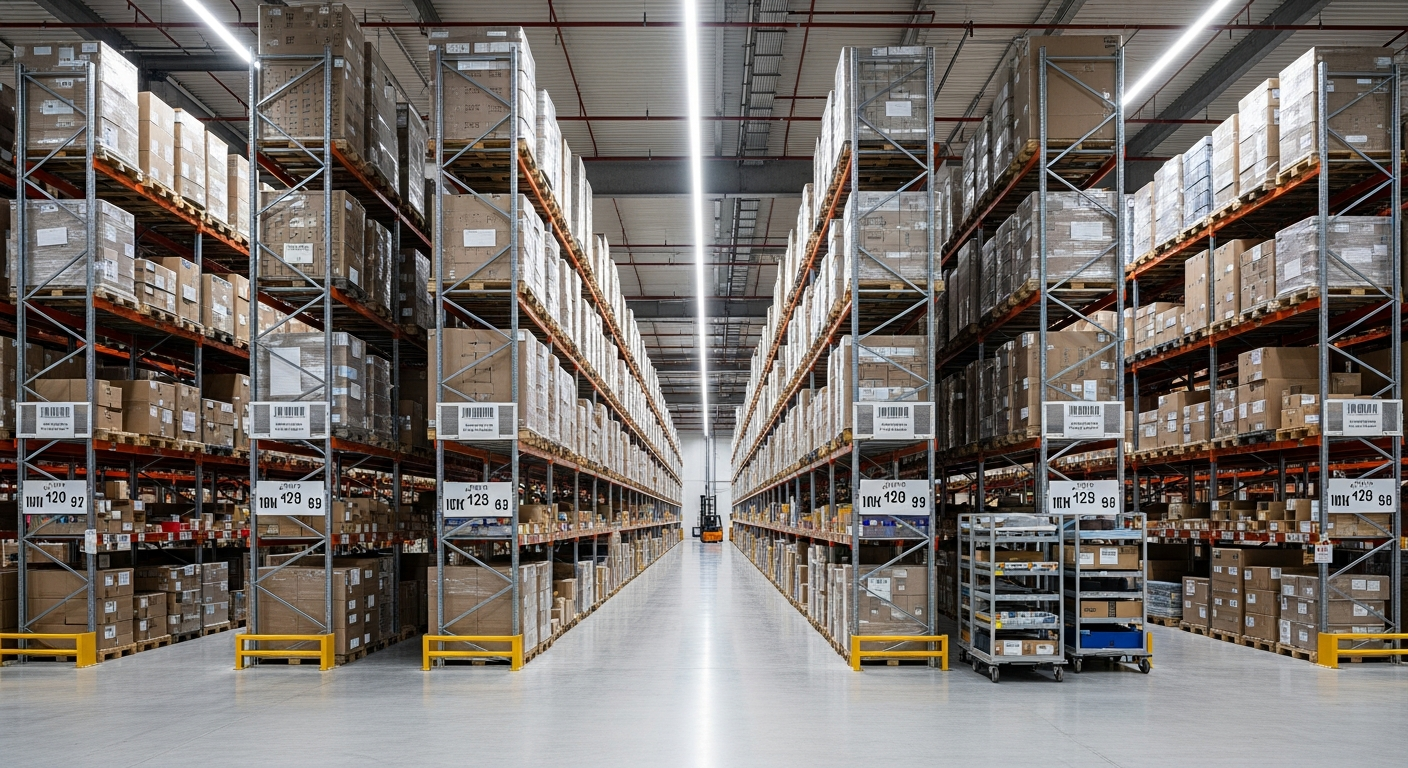
A warehouse can have accurate inventory, capable people and a modern WMS yet still waste hours because products live in the wrong places. Slotting is the discipline of assigning each SKU to a location that fits how often it is ordered, how it is handled, what it is ordered with and how its reserve stock is replenished. In a Canadian 3PL, the problem is dynamic: client assortments overlap, seasonal demand swings sharply, case dimensions vary and new promotions can change velocity overnight. Good slotting therefore is not a one-time warehouse tidy-up. It is a measured cycle of analysis, controlled moves and review. This playbook covers the practical decisions—from ABC velocity and cube to ergonomics, affinity, replenishment paths and KPIs—that turn slotting into an enduring operating advantage without making unsupported promises about exact savings.
Define the operating objective before moving a SKU
Slotting can target less picker travel, fewer touches, safer lifts, denser storage, smoother replenishment or a combination. These aims sometimes conflict. Placing every fast mover closest to packing may create replenishment congestion; maximizing storage density may slow access; isolating each client may simplify billing but lengthen routes. Start with the warehouse's order profile and constraints: discrete versus batch picking, trolley versus equipment travel, ambient or controlled zones, item security, and cut-off schedule. Map the current path from reserve storage through picking, consolidation and packing. Observe the floor as well as the data, because location scans do not reveal blocked aisles, awkward reaches or two processes competing for the same space. Write measurable objectives and guardrails before designing moves.
A slot is successful only when the whole flow improves. Moving picks closer while creating constant reserve replenishment can shift work rather than remove it.
Classify velocity with ABC analysis—and look beyond units
ABC analysis usually places a small group of high-activity SKUs in class A, a middle group in B and the long tail in C. The percentages should emerge from the operation rather than a copied rule. Rank by pick lines or location visits when reducing travel is the aim; units alone can overstate products commonly picked in multiples. Review order frequency, quantity per line and daily variability together. A subscription item with predictable case quantities may belong in a different location from a flash-sale item with the same monthly units. Calculate velocity within each relevant client, temperature, security or handling zone. Reclassify on a schedule and when promotions or assortment changes occur. New SKUs need provisional slots based on analogues, followed by an early review once real demand appears.
- Use pick-line frequency for visit reduction and unit volume for capacity sizing.
- Separate steady velocity from a brief promotion-driven spike.
- Identify intermittent items whose average conceals long periods with no demand.
- Flag new, launch, clearance and end-of-life status alongside the ABC class.
- Analyse co-picks so frequently paired items can share a sensible route.
Match cube, weight and handling characteristics to the slot
Velocity says how often a picker visits; physical data determines whether the location works. Maintain verified item dimensions and weight at each packaging level. Size the forward pick face to hold enough stock between planned replenishments without leaving excessive empty space. Heavy or dense products generally need positions that avoid unnecessary lifting and unstable stacks, while fragile, leak-prone or high-value items may require dedicated controls. Oversized products can block travel if placed on a busy pedestrian route. Consider orientation, opening clearance, label visibility and whether the picker can remove one unit without disturbing others. Validate proposed locations using representative products before executing a large move. Incorrect dimensional master data quickly undermines otherwise sophisticated slotting.
| Factor | Slotting response | Operational check |
|---|
| High pick-line velocity | Short, low-conflict path to downstream process | Travel and congestion by time of day |
| Large cube | Adequate face and extraction clearance | Replenishment frequency and aisle obstruction |
| Heavy item | Stable handling height and suitable equipment access | Documented safe-work assessment |
| Fragile or high value | Protected or controlled location | Damage and access records |
| Frequent co-pick | Sequence or locate for a common route | Order-pair affinity data |
Build ergonomics and safe handling into the design
Slotting should reduce avoidable bending, reaching, twisting and carrying, especially for products handled repeatedly. Put the highest-frequency work in accessible zones where feasible and reserve awkward positions for lighter, less frequently handled items. Weight, grip, package stability and extraction force all matter; a modest carton can still be difficult to handle if it has no handholds or binds in the location. Keep powered-equipment replenishment and pedestrian picking from creating preventable conflict through zoning and scheduling. Involve warehouse associates and the workplace health and safety function in trials because local conditions and task design matter. Applicable obligations and guidance depend on the province, equipment and workplace; this operational overview is not occupational health and safety advice.
Use seasonal and campaign slotting without creating chaos
Holiday volume, winter products, summer categories, launches and influencer campaigns can temporarily overturn the normal ABC ranking. Create a forward calendar from merchant forecasts and promotion plans, then identify which items merit temporary prime space. Use start and end dates, move tickets and system-directed location changes so temporary becomes reversible. Pre-build campaign pick faces only after inbound quantities and the order profile are sufficiently clear. A dedicated fast-pick or campaign zone may suit concentrated demand, but it needs packing capacity and replenishment access. After the event, remove residual inventory promptly or deliberately reclassify it. Otherwise prime space accumulates yesterday's winners while current A items travel farther.
Design pick faces and replenishment paths together
A forward location should hold enough units to bridge the interval between replenishment opportunities plus a practical buffer, subject to space. Calculate expected picks during that interval, then compare the labour and congestion cost of a larger face with the storage cost. Establish minimum and maximum quantities in the WMS and generate tasks before the face empties—not after a picker discovers it. Sequence replenishment around order waves and carrier cut-offs where possible. Reserve stock should be positioned so replenishment travel does not repeatedly cross the busiest pick path. Case-pack integrity, lot controls and expiry rotation may constrain which reserve pallet can feed the face. Measure emergency replenishments separately because they reveal undersized faces, delayed tasks or unexpected demand.
- Set min/max quantities using demand during the replenishment interval.
- Provide reserve capacity and equipment access for each forward face.
- Schedule routine tasks away from the most congested pick windows.
- Track empty-face events and replenishment tasks that miss their due time.
- Recalculate after pack-size, supplier-case or campaign changes.
Execute re-slotting as a controlled inventory change
Large batches of ad hoc moves create inventory discrepancies and disrupt active pickers. Build a move plan with source, destination, quantity, dependency and owner. Confirm destination capacity and location compatibility first. Freeze or sequence affected work, scan every movement, verify residual stock and release the destination only when system and physical inventory agree. Pilot one aisle, client or SKU family before wider implementation. Coordinate signage, pick-path logic, replenishment parameters and staff communication with the physical move; changing only the bin address leaves half the process behind. For a shared 3PL facility, protect each client's inventory and reporting through clear location ownership and transaction reason codes.
Measure the outcome and keep slotting current
Measure a baseline before changes, then compare like periods while noting volume and mix. Useful indicators include travel distance or time per pick line, pick lines per paid hour, replenishment touches, empty-face events, location utilization, picking errors and handling-related damage. No single KPI proves success: faster picking paired with more urgent replenishments is not a clean win. Review A items frequently, all classes on a planned cycle, and exceptions whenever velocity or dimensions change materially. Maintain a backlog of candidate moves ranked by expected benefit and effort. A 3PL and merchant should also exchange promotion and assortment information early; warehouse history cannot anticipate a campaign the operator has not been told about.
Frequently Asked Questions
What is warehouse slotting?
Warehouse slotting is the systematic assignment of SKUs to storage and pick locations based on demand, dimensions, weight, handling needs, affinity and replenishment flow.
How often should a 3PL re-slot inventory?
There is no universal interval. Review fast movers and material exceptions frequently, conduct broader scheduled reviews, and trigger analysis for promotions, new assortments, dimension changes or sustained velocity shifts.
Should every A item be closest to packing?
No. Space, congestion, replenishment access, security, product compatibility and handling requirements can outweigh pure proximity. Optimize the total flow rather than one travel segment.
Which metric is best for ABC slotting?
Pick-line or location-visit frequency is often most relevant to travel, while units and cube help size the face. Use several measures because each answers a different operating question.
How does slotting affect replenishment?
Face size and location determine how often reserve stock must move and whether replenishment conflicts with picking. Min/max rules, accessible reserve and scheduled tasks should be designed with the pick slot.
Can warehouse slotting reduce picking errors?
It can support accuracy by improving label visibility, separating similar items and reducing congestion, but scanning, location control, training and verification remain essential.
Related ByExpress resources