Guide · · 13 min read
3PL Montreal: The Complete Guide to Fulfillment in Quebec
Why Montreal is one of the most underrated 3PL markets in Canada — and how to evaluate bilingual fulfillment providers without overpaying for the wrong network or running into Bill 96 surprises.
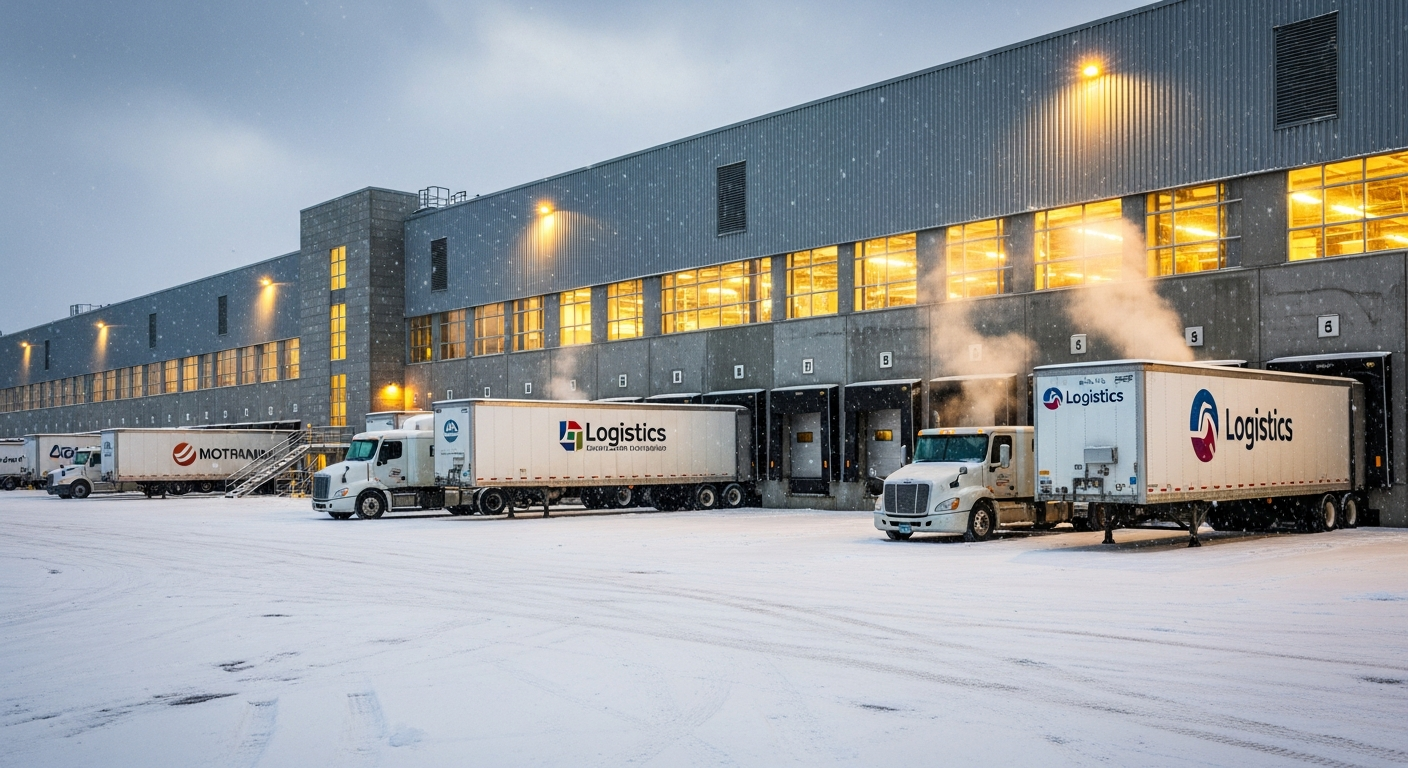
Montreal is the second-largest e-commerce market in Canada, the country's busiest container port outside Vancouver, and the only major Canadian fulfillment hub where bilingual operations are not optional. For brands selling into Quebec — or treating Quebec as a serious revenue line rather than an afterthought tacked onto their Toronto operation — Montreal is the most cost-efficient and operationally sound place to anchor inventory. This guide explains why, what bilingual fulfillment actually means under Bill 96, what real Montreal 3PL pricing looks like, and how to evaluate providers without ending up at a converted warehouse with no integrations and no French-speaking customer service.
Why Montreal matters more than most operators realize
Quebec accounts for roughly 22% of Canada's online consumer spending, but most national DTC brands fulfill the entire province from a single Toronto warehouse — eating one to two extra transit days, an inter-provincial zone surcharge on every parcel, and a customer service experience that breaks down whenever a French-speaking customer calls in. The economics of running Quebec demand from outside Quebec stopped making sense around 2022, when carrier rate increases on cross-Quebec lanes outpaced the cost of opening a Montreal node. From a centrally located Montreal warehouse, an order picked by 1:00 PM ET reaches almost any Quebec address the next business day, Ottawa same-day or next-day, Toronto next-day, and the U.S. Northeast (Vermont, New Hampshire, Maine, upstate New York, Boston) within one to two days via the Lacolle or Stanstead border crossings.
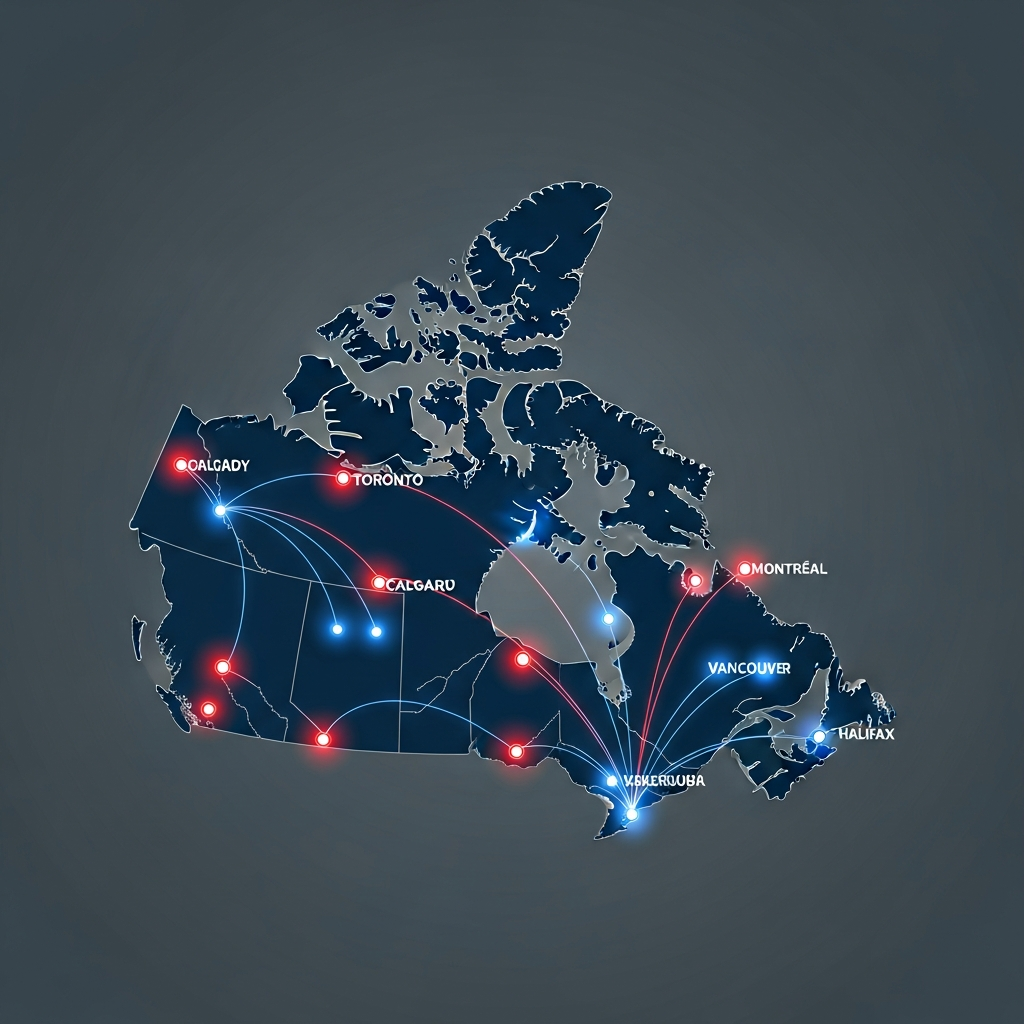 Montreal is within one business day of 95% of Quebec, all of Ottawa and the GTA, and most of the U.S. Northeast.
Bilingual fulfillment and what Bill 96 actually requires
Bill 96 (the Act respecting French, the official and common language of Québec) imposes meaningful operational requirements on businesses serving Quebec consumers. Packing slips, return instructions, customer-facing emails, invoices, and product documentation must be available in French — and in many cases, French must be 'predominant' on the printed material. A 3PL that cannot generate bilingual or French-first packing slips, that has no French-speaking customer service representatives, and that does not understand the difference between marketing material and transactional documentation under the Act will create real legal exposure for your brand. When evaluating Montreal 3PLs, ask specifically: do you generate French packing slips by default for Quebec ship-to addresses? Do you support bilingual return labels? Are your customer service representatives certified in both languages, or is bilingual coverage limited to business hours?
Bill 96 enforcement ramped up in 2024–2026. Brands shipping into Quebec without bilingual transactional documentation have faced complaints to the Office québécois de la langue française. A serious Montreal 3PL bakes French-first documentation into the WMS by default — not as a per-order add-on.
Montreal 3PL pricing benchmarks for 2026
Montreal pricing sits between Ottawa and the GTA — generally 4–8% higher than Ottawa because of higher unionized labour rates and slightly higher industrial lease costs, but still 6–10% below comparable GTA pricing. The bands below reflect what credible multi-tenant 3PLs in the Greater Montreal Area are quoting in mid-2026. As always, beware of operators quoting dramatically below these ranges; the most common pattern is a low pick-and-pack rate offset by inflated receiving fees, surprise storage minimums, or per-account 'platform' fees.
| Service | Typical Range (Montreal) | Notes |
|---|
| Pick & pack (first item) | $2.55 – $3.40 | Includes basic pack, label, dunnage |
| Pick & pack (each add'l item) | $0.35 – $0.60 | Per additional SKU on the same order |
| Receiving | $30 – $48 per pallet | Inbound count, putaway, ASN reconciliation |
| Storage (pallet/month) | $24 – $34 | Standard ambient, rack-stored |
| Storage (bin/month) | $0.95 – $1.55 | Small-SKU shelf storage |
| Bilingual packing slip generation | Should be $0 | If priced per order, walk away |
| Returns processing | $3.75 – $6.50 | Inspect, photograph, restock or grade |
 Montreal 3PL pricing benchmarks for 2026
Port of Montreal: a quiet advantage for importers
Most discussion of Canadian import logistics focuses on Vancouver because of Pacific volume from Asia. But for brands importing from Europe, North Africa, or the U.S. East Coast, the Port of Montreal is structurally faster and significantly less congested. Montreal handles roughly 1.7 million TEUs annually, with direct calls from Antwerp, Liverpool, Hamburg, Genoa, and Algeciras. Transatlantic transit times from Northern European ports to Montreal run 7–10 days versus 21–28 days routed via Vancouver. For a brand importing premium European product — beauty, supplements, food, apparel, technical goods — anchoring inventory in Montreal cuts not just inbound transit but inland drayage and demurrage costs that frequently get hidden inside Vancouver-routed supply chains.
What to look for in a Montreal 3PL
Beyond bilingual operations, the same disciplines apply that you would demand of any serious 3PL — but the bar is higher in Quebec because of the regulatory environment and because the labour market is tighter. Key questions: Is the WMS bilingual at the user level (so your French-speaking inventory or operations contact can navigate the portal in French)? Does the 3PL hold required Quebec retail compliance certifications for the categories you sell into (notably food and supplements)? Is bilingual customer service staffed in-house, or outsourced to an external call centre that may not understand your brand? What is the operator's track record with Quebec retail accounts (Métro, Couche-Tard, Jean Coutu, Familiprix, Brunet, IGA), all of which have specific receiving and EDI compliance requirements?
- Bilingual WMS portal and bilingual API documentation
- French packing slips, return instructions, and invoices generated by default
- In-house bilingual customer service (not outsourced)
- Quebec retail EDI compliance: Métro, IGA, Costco Quebec
- Bonded warehouse capability if importing from Europe
- Documented compliance with Bill 96 transactional documentation requirements
- Cross-border shipping experience via Lacolle and Stanstead
- Multi-carrier rate shopping including Intelcom and Nationex (strong Quebec last-mile)
Carrier mix and last-mile in Quebec
Quebec's last-mile carrier landscape is meaningfully different from English Canada. Intelcom (now part of Dragonfly) has built dominant urban-density coverage in Montreal, Laval, Longueuil, and Quebec City — often beating Canada Post and Purolator on price for residential delivery within the Greater Montreal Area by 18–25%. Nationex is a Quebec-headquartered B2B and DTC carrier with strong rural Quebec coverage that the national carriers price aggressively. A serious Montreal 3PL runs all of these in their rate-shop engine alongside the standard mix (Canada Post, Purolator, FedEx, UPS, DHL eCommerce). If your prospective 3PL prints everything Canada Post or everything Purolator regardless of zone, you are leaving 12–20% of your shipping budget on the table.
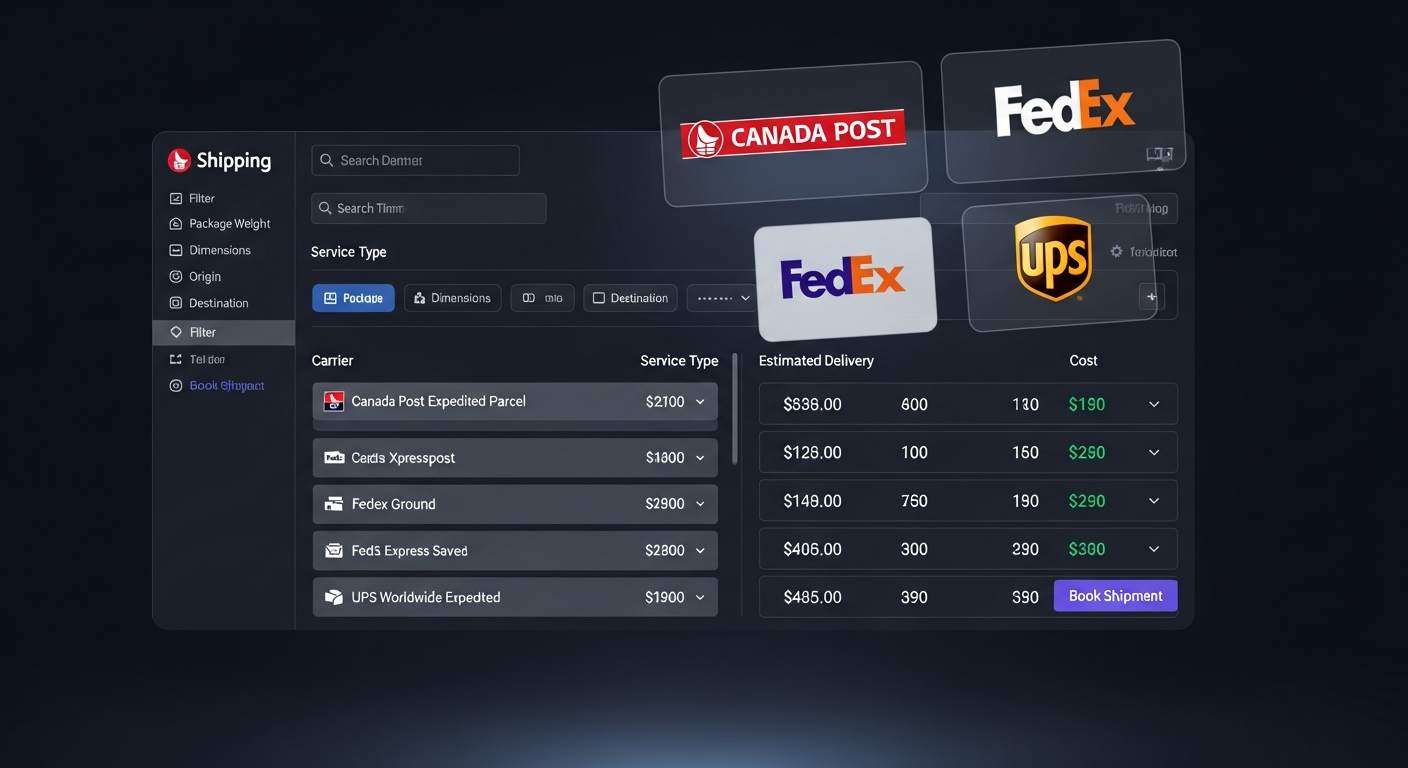 Carrier mix and last-mile in Quebec
Industries that win with a Montreal 3PL
Beauty and personal care — Montreal is a North American beauty manufacturing hub and the natural fulfillment node for Quebec-headquartered or Quebec-licensed cosmetics brands. Premium food and beverage — bilingual labelling, refrigerated zone capability, and proximity to the Port of Montreal make it natural for European specialty importers. Subscription boxes — Quebec subscription penetration is among the highest in Canada and bilingual French-first kitting is a brand-defining detail. Apparel — the Quebec garment district remains operational and many brands prefer same-province fulfillment. Health Canada-regulated supplements (NHPs) — Montreal has a deep compliance contractor base familiar with NPN and DIN labelling requirements.
ByExpress in Montreal
ByExpress operates a Montreal fulfillment node as part of our five-city Canadian network. Bilingual operations and customer service are baked into the standard service model — French packing slips, French return instructions, and French-language customer support are not premium add-ons. The Montreal facility integrates with the same in-house WMS and rate-shopping platform as our Ottawa headquarters and Toronto, Vancouver, and Calgary nodes, so brands fulfilling from multiple locations operate from a single inventory and order view. For brands serving both Quebec and the U.S. Northeast, anchoring inventory in Montreal often eliminates the need for either a second Canadian node or a U.S. warehouse footprint.
Frequently Asked Questions
Is a Montreal 3PL legally required for selling into Quebec?
No. You can fulfill Quebec orders from anywhere in Canada. But Bill 96 still applies regardless of where you ship from — your packing slips, customer service, and transactional documentation must comply with French language requirements. A Montreal-based 3PL with bilingual operations makes that compliance dramatically easier, faster, and cheaper than retrofitting a Toronto operation.
How much does 3PL fulfillment cost in Montreal?
Pick-and-pack typically runs $2.55–$3.40 for the first item and $0.35–$0.60 per additional item. Pallet storage runs $24–$34 per month and receiving runs $30–$48 per pallet. Montreal pricing sits between Ottawa (cheapest of the major Canadian hubs) and the GTA (most expensive).
What carriers should a Montreal 3PL support?
At minimum: Canada Post, Purolator, FedEx, UPS, DHL eCommerce, and at least one Quebec-specialist carrier (Intelcom and Nationex are the obvious candidates, often beating national carriers on Quebec-internal lanes by double-digit percentages).
Can a Montreal 3PL ship cross-border to the U.S. Northeast?
Yes, and well. The Lacolle (Highway 15) and Stanstead (Highway 55) crossings put Montreal within 90 minutes of U.S. injection partners in Vermont, New Hampshire, and upstate New York. From there, parcels move on USPS or UPS Ground Saver into the U.S. Northeast in one to two days. For DTC brands with U.S. Northeast demand, Montreal often replaces the need for a separate U.S. warehouse.
Is bilingual French/English customer service really required?
Practically, yes. Bill 96 explicitly protects the consumer's right to be served in French. Beyond compliance, brands with French-only customer service options (or no French at all) consistently see worse review scores and higher refund rates from Quebec customers. Bilingual support is now table-stakes for any brand treating Quebec as a serious market.
How long does it take to onboard with a Montreal 3PL?
Standard onboarding runs 6–10 weeks: contracting, integration build-out, inventory transfer, parallel operations, and full cutover. Quebec retail EDI compliance (if applicable) can extend that by another 2–4 weeks for testing with chains like Métro and IGA.
Related ByExpress resources