Guide · · 12 min read
3PL Toronto (2026): The Complete Guide to GTA Fulfillment
Toronto is Canada's logistics centre of gravity. Here's how the GTA 3PL market works in 2026 — the geography, the cost structure, the operators, and how to choose well.
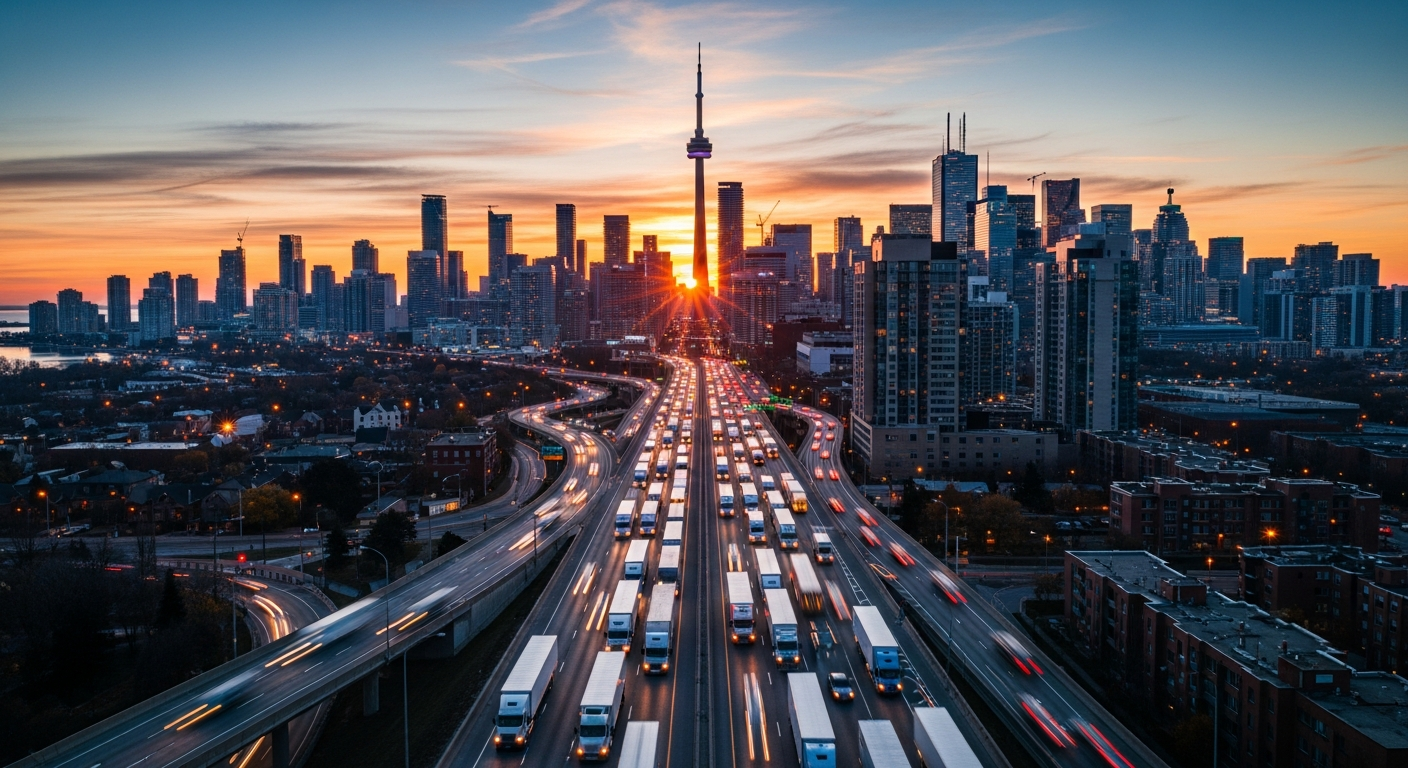
The Greater Toronto Area is the single most important logistics market in Canada. A very large share of the country's imported goods, e-commerce orders, and retail replenishment moves through the GTA's industrial corridor — a band of warehousing stretching from Mississauga and Oakville in the west, through Brampton, Vaughan and Markham in the north, into Scarborough and Durham in the east. For most Canadian brands, having fulfillment capacity in or near Toronto is close to non-negotiable, because the GTA puts roughly a third of the national population within one-day ground transit. This 2026 guide explains why Toronto became Canada's logistics hub, what the third-party logistics (3PL) market actually offers, realistic cost and SLA expectations, and how to choose the right partner.
Why Toronto is Canada's logistics hub
Toronto's dominance is structural, not accidental. The GTA sits at the intersection of Highway 401 (North America's busiest highway), the 407 ETR express toll route, the QEW toward Hamilton and Niagara, and the 400-series network feeding north and west. Toronto Pearson (YYZ) is Canada's largest airport for both passengers and air cargo, and the region is served by CN (Brampton) and CPKC (Vaughan) intermodal terminals that connect to Vancouver, Montreal, and the US rail network. Add the Port of Hamilton nearby and proximity to the US border crossings at Windsor, Sarnia, Fort Erie and Niagara, and you get a market where almost any mode — truck, rail, air, ocean-via-port — is available within the region.
 Why Toronto is Canada's logistics hub
What a Toronto 3PL actually does
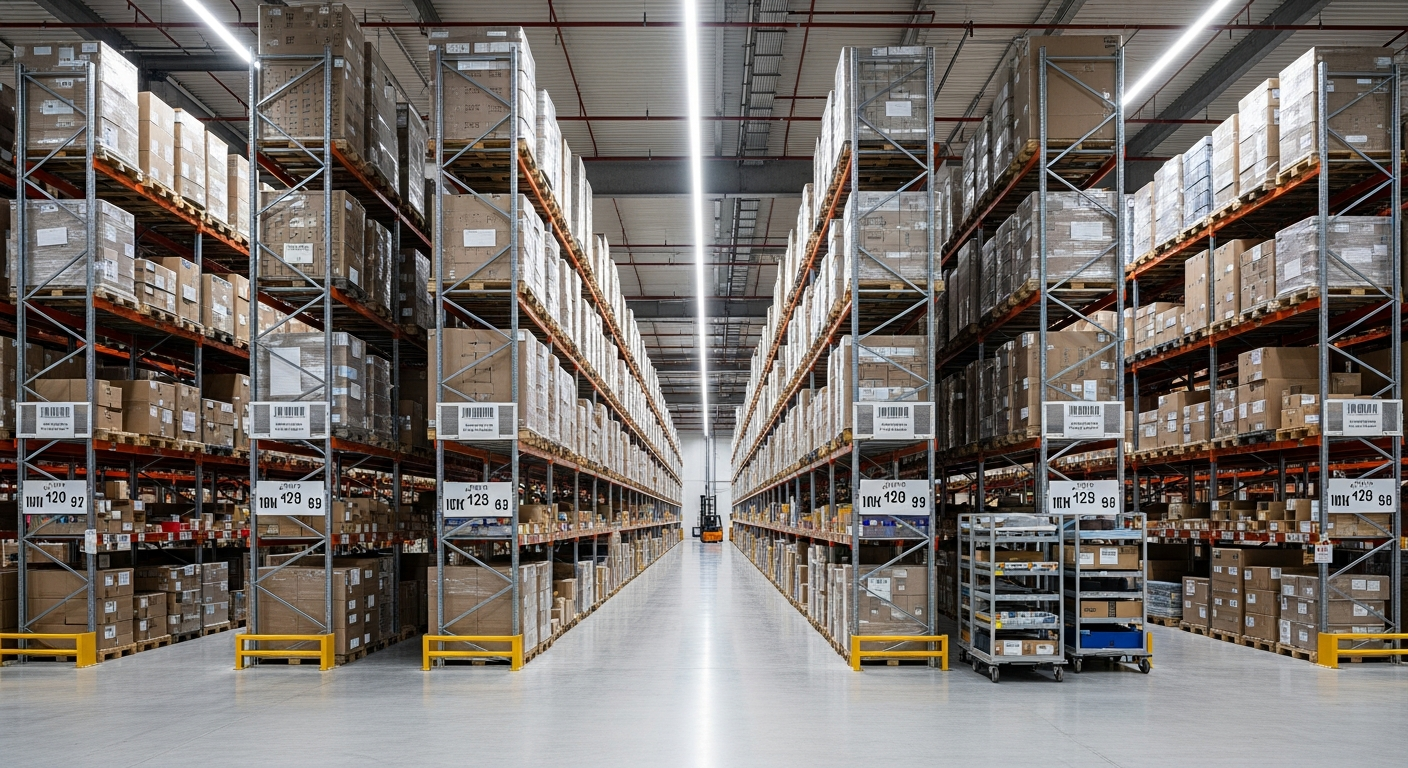
A full-service GTA 3PL operates the entire post-purchase supply chain so a brand doesn't have to lease, staff, and run a warehouse. The functional layers:
- Inbound receiving with appointment scheduling, container devanning, and OS&D documentation
- Putaway and inventory management with cycle counting and lot/serial tracking
- Order processing across DTC, B2B wholesale, and retail/marketplace channels
- Pick-pack using batch, wave, zone, or discrete methods depending on order profile
- Value-added services: kitting, bundling, labelling, subscription assembly
- Multi-carrier outbound with rate-shopping at the order level
- Returns processing with WMS-driven disposition (restock, refurbish, scrap)
- Technology integration via API and EDI to all major sales channels
What to expect on GTA 3PL cost in 2026
Toronto is Canada's most expensive fulfillment market, driven by the tightest industrial real estate in the country (vacancy has run near record lows through the mid-2020s). Below are typical mid-market 2026 GTA benchmark ranges. Real quotes always depend on your volume, SKU profile, and seasonality.
These are typical ranges, not a quote. Real GTA pricing depends on your order volume, unit dimensions, storage profile, and peak seasonality — request a tailored audit before budgeting.
| Service | GTA 2026 benchmark (CAD) |
|---|
| Pallet storage per month | $28–$40 |
| Inbound receiving per pallet | $32–$48 |
| Pick first item | $2.50–$3.50 |
| Pick additional item | $0.45–$0.85 |
| Standard pack | $0.50–$1.50 |
| Industrial net rent per sq ft / yr | $16–$22 |
| Account/setup fee (one-time) | $500–$2,500 |
SLAs and performance benchmarks
The numbers that actually separate a strong Toronto 3PL from a weak one are written service-level agreements with recent actual performance. Modern GTA benchmarks in 2026: pick-pack accuracy of 99.7%+, inbound receiving turnaround under 48 hours, and a same-day shipping cutoff (commonly 1–2 PM for same-day carrier handoff). Because the GTA has so many carrier options, a good operator rate-shops every order rather than committing all volume to a single carrier. Ask any prospective partner for their published SLA and last-quarter actuals in writing — marketing language is a red flag.
The GTA 3PL operator landscape
The Toronto market spans national multi-tenant 3PLs, regional mid-market operators (like ByExpress), e-commerce-specialty fulfillment houses, retail-compliance specialists with deep EDI experience, and cold-chain or pharma specialists. There is no single 'best' provider — the right choice is a scope-matching exercise. A high-volume DTC brand needs native channel integrations and a tight same-day cutoff; a wholesaler shipping to Canadian retailers needs documented EDI 850/856/810 compliance and chargeback avoidance; a frozen-food brand needs a temperature-controlled specialist.
How ByExpress serves the GTA
ByExpress provides full-service fulfillment for brands selling into and shipping out of the Greater Toronto Area: cloud-WMS order management with native integrations to Shopify, Amazon, and major marketplaces; multi-carrier rate-shopping across Canada Post, Purolator, FedEx, UPS, and regional couriers; pick-pack with published accuracy SLAs; kitting and subscription assembly; and returns processing. For brands that need both Eastern Canadian reach and the GTA's import density, ByExpress can pair Toronto-area fulfillment with its Ottawa operations to balance cost and transit.
Frequently Asked Questions
What does a 3PL in Toronto cost in 2026?
Typical GTA benchmarks: pallet storage $28–$40/month, receiving $32–$48/pallet, first-item pick $2.50–$3.50, additional items $0.45–$0.85. These are ranges — your real quote depends on volume, SKU dimensions, and seasonality.
Why is Toronto considered Canada's logistics hub?
The GTA sits at the junction of Highway 401/407/QEW and the 400-series network, hosts Canada's largest air-cargo airport (Pearson/YYZ), has CN (Brampton) and CPKC (Vaughan) intermodal terminals, and is close to major US border crossings — putting roughly a third of Canada's population within one-day ground transit.
What SLAs should a Toronto 3PL commit to?
Look for pick-pack accuracy of 99.7%+, inbound receiving under 48 hours, and a written same-day cutoff (commonly 1–2 PM). Always ask for last-quarter actual performance, not just the target.
How do I choose the right GTA 3PL?
Match the provider to your scope. DTC brands need channel integrations and tight cutoffs; wholesalers need EDI retail-compliance experience; temperature-sensitive brands need a cold-chain specialist. Shortlist three, price your real order data, and check references.
Is Toronto more expensive than other Canadian fulfillment markets?
Yes. The GTA has the tightest industrial real estate in Canada, so storage and rent run higher than Ottawa, Montreal, or Calgary. Many brands offset this by pairing a GTA node with a lower-cost Eastern or Western node.
Related ByExpress resources