Guide · · 13 min read
Mississauga Warehouse & 3PL: Inside the GTA's Logistics Engine
Why Mississauga has the highest 3PL density in Canada — and how to navigate Pearson-adjacent pricing, sub-1% vacancy, and the Mississauga vs Brampton vs Vaughan decision when anchoring your GTA fulfillment.

Mississauga has more square footage of leased industrial space than any other municipality in Canada. The reason is geography — Mississauga sits directly adjacent to Toronto Pearson International Airport, the country's largest air-cargo hub, with direct access to Highways 401, 403, 410, 407, and 427, and a dense web of CN and CP intermodal terminals. For brands serving the Greater Toronto Area or Ontario broadly, Mississauga is the highest-utility fulfillment submarket in the country. It is also one of the most expensive, with industrial vacancy below 1% for nearly five years and lease rates that broke $20/sq ft net in 2024. This guide explains how to think about Mississauga as a 3PL anchor, what real pricing looks like, and how to weigh Mississauga against neighbouring Brampton, Vaughan, and Etobicoke before signing.
Why Mississauga dominates GTA fulfillment
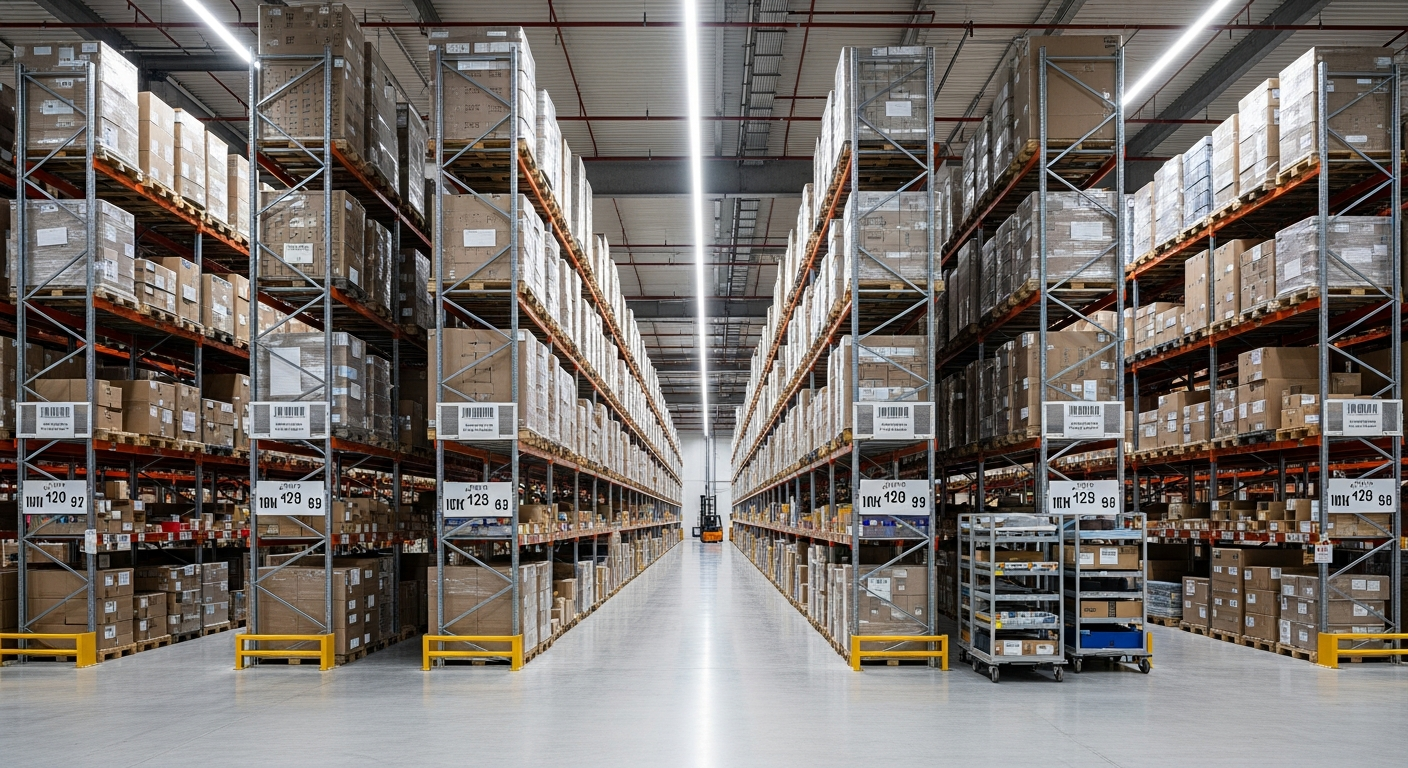
Mississauga's industrial base is the result of three structural advantages no other Canadian municipality can fully replicate. First, Pearson Airport — Mississauga is the only GTA municipality with direct airport-perimeter industrial land, making it the natural home for any time-sensitive air-cargo operation, including international DTC inbound and outbound. Second, the Highway 401 / 407 / 427 / 403 / 410 confluence puts Mississauga at the centre of every major OTR (over-the-road) lane in central Canada. Third, deep CN and CP intermodal access — both railroads operate major terminals in Mississauga and Brampton, making inland container moves from the Port of Vancouver and the Port of Halifax structurally cheaper than fulfilling from Toronto proper. Combined, these advantages produced a flywheel: more 3PL operators in Mississauga means more carrier pickup density, which means lower per-parcel rates, which attracts more 3PLs.
 Why Mississauga dominates GTA fulfillment
Mississauga vs Brampton vs Vaughan: the GTA submarket decision
Most brands evaluating a GTA fulfillment node default to 'Mississauga' as a generic term, but the GTA industrial market is actually four distinct submarkets with materially different cost structures and operational profiles. Mississauga is the densest and most expensive, justified primarily by Pearson proximity and the highest carrier pickup density in the country. Brampton is meaningfully cheaper (typically 8–14% less per square foot), with newer and larger high-clear buildings, better suited for operations needing more than 75,000 sq ft. Vaughan and Concord (north of Toronto) offer a middle option with strong proximity to the 400-series highway network but less Pearson airport advantage. Etobicoke is the urban-density choice for operations requiring last-mile-fast delivery into downtown Toronto. Each submarket has a different best-fit operating profile.
| Submarket | Typical Lease ($/sq ft) | Best For |
|---|
| Mississauga (Pearson-adjacent) | $19 – $25 | Air cargo, international DTC, time-sensitive flows |
| Mississauga (Meadowvale, Streetsville) | $17 – $22 | General DTC fulfillment, mid-size operations |
| Brampton | $15 – $19 | Larger footprints (75k+ sq ft), value-conscious DTC |
| Vaughan / Concord | $17 – $22 | North GTA distribution, 400-series proximity |
| Etobicoke | $20 – $26 | Urban same-day, downtown Toronto density |
| Milton / Halton | $16 – $20 | Newer high-clear buildings, larger footprints |
Pearson Airport: Mississauga's structural moat
Toronto Pearson is Canada's largest air-cargo airport and one of the top 25 cargo airports in North America by volume. For fulfillment operations, that matters in three ways. First, brands selling internationally — particularly into the U.S., Europe, or Asia for high-value lightweight goods — get meaningful air-freight cost advantages from Pearson-adjacent fulfillment. Second, time-sensitive inbound (urgent inventory, sample shipments, manufacturer-direct air freight) can clear Pearson and arrive at a Mississauga 3PL within hours rather than days. Third, premium service levels (FedEx Priority Overnight, UPS Express Saver, Purolator Express) get later cutoffs and better on-time performance from Mississauga than from any other GTA submarket. For a DTC brand promising same-day shipping, Mississauga's Pearson proximity buys you an extra two to three hours of order-cut time per day versus a Brampton or Vaughan node.
Mississauga 3PL pricing benchmarks for 2026
Mississauga sits at the top of the Canadian 3PL pricing range — generally 8–14% above Ottawa and 6–12% above Calgary, driven by the highest GTA-specific labour costs (Mississauga warehouse wages are pulled up by airport-adjacent industries) and the highest lease rates outside Vancouver. The bands below reflect mid-2026 quotes from credible multi-tenant 3PLs operating across the Mississauga industrial submarkets. Brands quoting smaller Mississauga operators below these ranges should scrutinize the line-item structure carefully — it is common for sub-scale operators to subsidize low pick-and-pack rates with hidden minimums or storage premiums.
| Service | Typical Range (Mississauga) | Notes |
|---|
| Pick & pack (first item) | $2.75 – $3.65 | Includes basic pack, label, dunnage |
| Pick & pack (each add'l item) | $0.38 – $0.62 | Per additional SKU on the same order |
| Receiving (per pallet) | $32 – $50 | Inbound count, putaway, ASN reconciliation |
| Storage (pallet/month) | $26 – $36 | Ambient, rack-stored |
| Storage (bin/month) | $0.95 – $1.55 | Small-SKU shelf storage |
| Air-freight inbound handling | $45 – $85 per shipment | Pearson clearance and devanning |
| Returns processing | $3.75 – $6.50 | Inspect, photograph, restock or grade |
 Mississauga 3PL pricing benchmarks for 2026
What to demand from a Mississauga 3PL
Mississauga has more 3PL options than any other Canadian submarket, which is both an advantage and a trap. The bar to set up a 3PL is low — anyone with a forklift, a warehouse lease, and a basic WMS can hang a shingle — and the GTA market is full of sub-scale operators who look credible until you stress-test them at peak. Hard checks: ask for an SOC 2 Type II report or equivalent security audit (you are giving them access to your customer PII); ask for shipped-on-time and order-accuracy KPIs in writing for the most recent six months; ask for the named onboarding lead and the project plan, not generic capability decks; tour the actual facility, not the showroom; and ask to speak directly to two existing brand customers in your category and order-volume range, not curated reference accounts.
Pearson-adjacent rent is real money. If a 3PL is quoting Mississauga pricing but their facility is actually in Caledon, Bolton, or rural Halton, the carrier pickup economics they're promising won't hold. Confirm the actual address before signing.
Carrier coverage in Mississauga
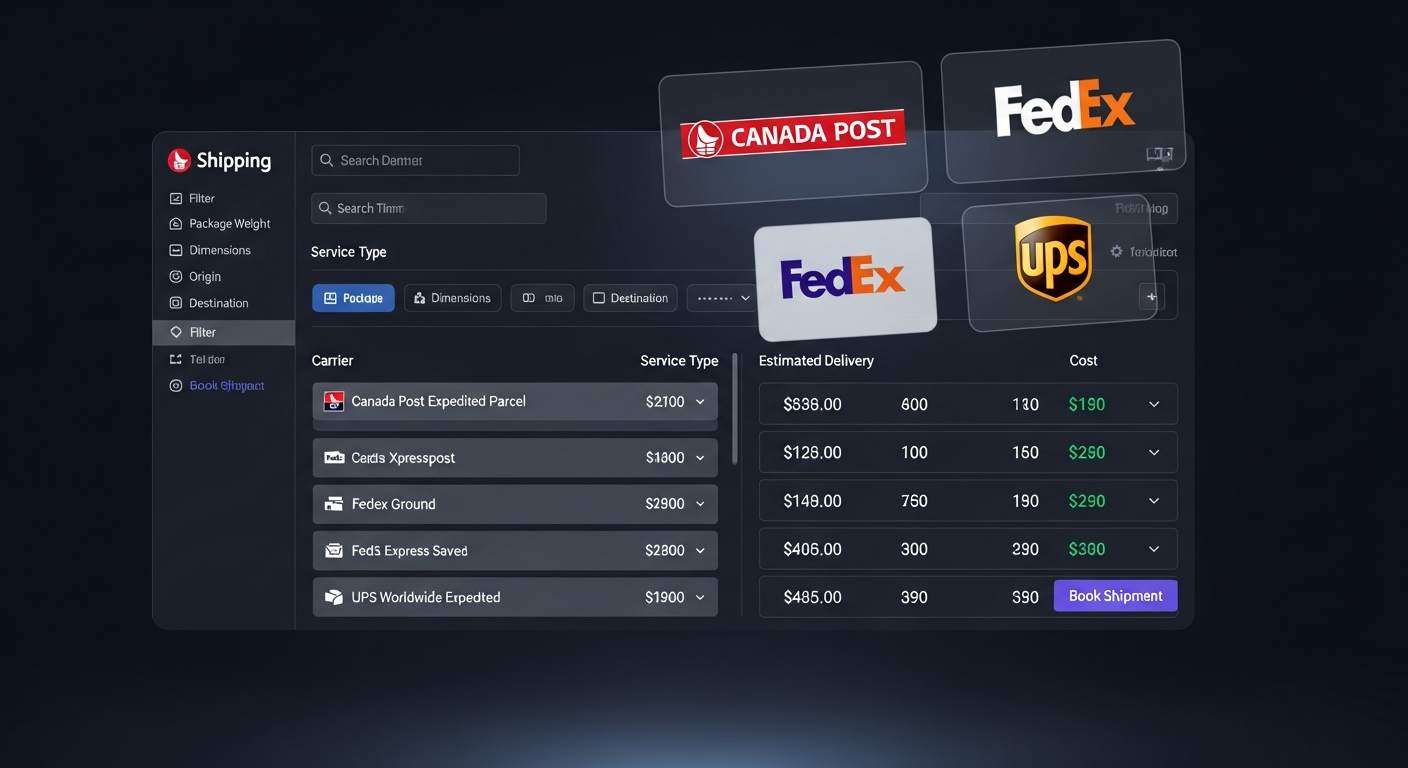
Mississauga is the densest carrier-pickup submarket in Canada. Every major national carrier (Canada Post, Purolator, FedEx, UPS, DHL eCommerce) operates major hubs in or adjacent to Mississauga. Pickup cutoffs are later, on-time performance is higher, and rate negotiations with carriers tend to be more favourable for Mississauga-based shippers because of consolidated volume. On urban DTC, Intelcom, FlashBox, and ICS Courier all operate aggressive Toronto-region last-mile networks at price points the national carriers struggle to match. A serious Mississauga 3PL rate-shops across all of these per parcel — and brands moving more than roughly 10,000 orders/month should expect their 3PL to negotiate brand-specific carrier rate cards on top of the 3PL's published rates.
 Carrier coverage in Mississauga
Industries that anchor in Mississauga
Apparel and footwear (the GTA is the largest fashion DTC market in Canada and Pearson-adjacent fulfillment supports international shipping); beauty and personal care; consumer electronics; subscription boxes (the highest concentration of subscription brands in Canada is Toronto-based); high-velocity Amazon FBA prep operations (Pearson proximity and FBA inbound dock density); B2B distribution into Ontario retail (Loblaw, Shoppers, Indigo, Costco, Walmart, Canadian Tire); pharmaceutical and regulated health products; food and beverage with national distribution. Mississauga is rarely the right primary node for: brands with disproportionate Western Canadian or Quebec demand; brands importing primarily from Asia (Vancouver wins); or brands serving primarily the U.S. Northeast (Ottawa or Montreal can be more efficient).
ByExpress in the Mississauga / GTA region
ByExpress operates Toronto-area fulfillment as part of our five-city Canadian network. The GTA node is positioned to support both standalone Ontario-market fulfillment and act as a national distribution hub for brands using a single primary inventory pool. Pearson-adjacent operations enable late-cutoff air-cargo flows for premium service levels and international DTC. The GTA facility integrates with the same in-house WMS, rate-shopping platform, and consolidated reporting as our Ottawa, Montreal, Vancouver, and Calgary nodes — supporting brands that anchor primary inventory in Toronto and use other locations for forward-positioning, returns, or regional load balancing.
Frequently Asked Questions
How much does Mississauga warehousing cost?
3PL services in Mississauga run $2.75–$3.65 for the first pick-and-pack item, $0.38–$0.62 per additional item, $26–$36 per pallet per month for ambient storage, and $32–$50 per pallet for receiving. Direct industrial leases run $19–$25 per square foot net in Pearson-adjacent submarkets and $17–$22 in the western and northern Mississauga submarkets.
Should I lease a warehouse in Mississauga or use a 3PL?
For brands shipping fewer than roughly 4,000 orders/month, a 3PL is almost always cheaper than leasing your own warehouse — by the time you account for staffing, equipment, WMS licences, insurance, and operational management, the breakeven is much higher than most brands realize. Even at higher volumes, multi-tenant 3PL economies of scale on labour, carrier rates, and technology often beat owned operations until you cross 30,000+ orders/month at a single node.
What is the difference between Mississauga and Brampton for 3PL?
Mississauga has stronger Pearson Airport proximity, higher carrier pickup density, and modestly faster GTA last-mile, but is 8–14% more expensive in lease cost. Brampton has newer, larger high-clear buildings, more available land, and lower lease costs, making it better suited for operations larger than roughly 75,000 sq ft or for value-conscious DTC. Both share the same essential carrier and intermodal access.
How important is Pearson Airport access for a 3PL?
Critical if you ship internationally (international DTC, U.S. Express Saver / Priority Overnight, sample shipments, time-sensitive inbound) — Pearson-adjacent fulfillment buys late-cutoff air cargo and faster international transit. For pure domestic Canadian DTC, Pearson proximity matters less and you can save meaningful money in a non-airport-adjacent submarket.
What technology should a Mississauga 3PL have?
At minimum: a modern WMS (in-house or one of Manhattan, Mecalux, 3PL Central / Extensiv, SnapFulfil, or DEPOSCO); native Shopify, Amazon, WooCommerce, BigCommerce, and Walmart integrations; a documented REST API and webhook system; multi-carrier rate shopping; real-time inventory sync; SOC 2 compliance or equivalent; and a customer portal with order tracking, inventory visibility, and self-service reporting.
How long does it take to onboard with a Mississauga 3PL?
Standard onboarding runs 4–8 weeks for a Shopify or Amazon-only brand, and 8–12 weeks for brands with custom platforms or EDI requirements. Mississauga 3PLs typically have more onboarding capacity and tighter migration playbooks than smaller markets because of operational maturity.
Related ByExpress resources