Blog · · 12 min read
How Is AI Changing Warehouse Logistics in Canada?
Artificial intelligence is reshaping Canadian warehouse logistics — from forecasting demand and optimizing delivery routes to guiding robots on the warehouse floor. This guide explains what AI actually does in fulfillment today, where it delivers real value, and where the hype outruns reality.
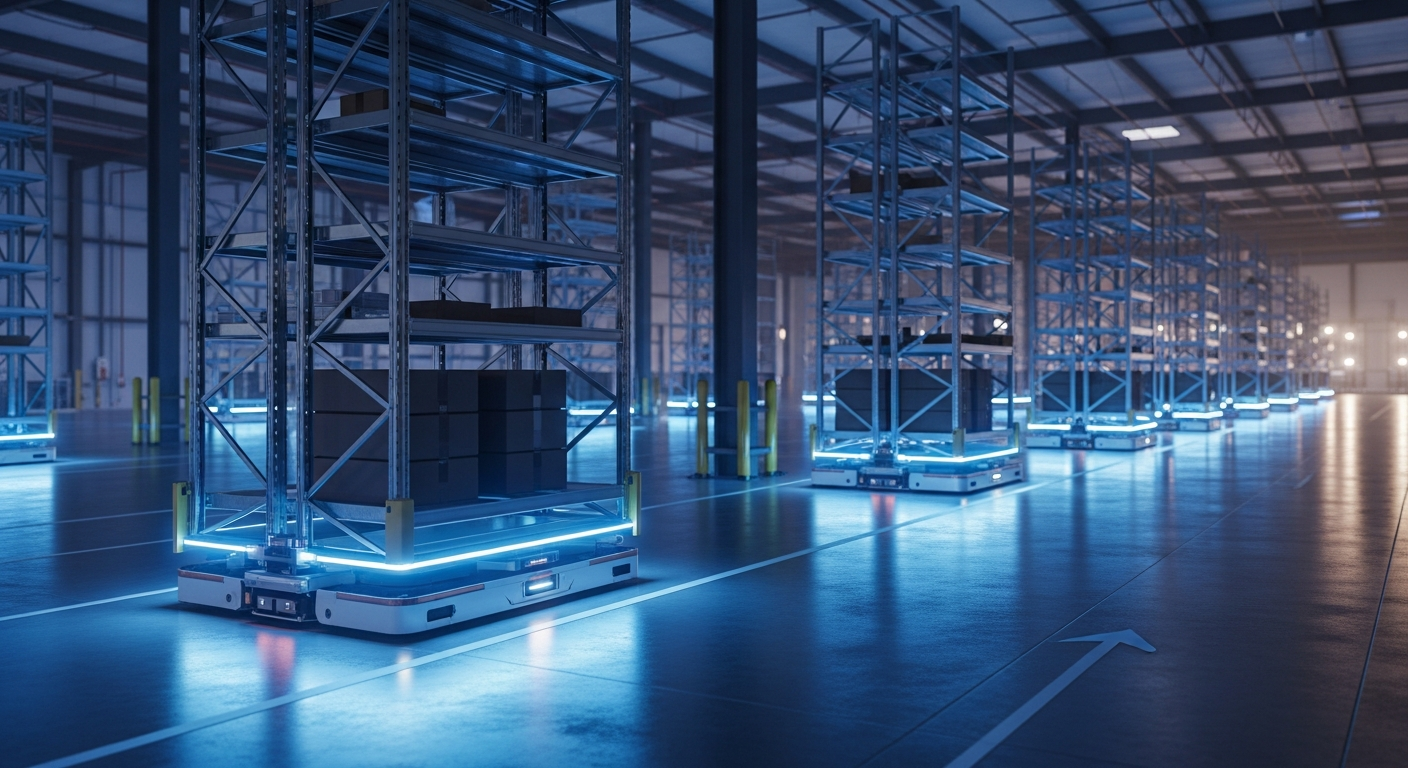
Artificial intelligence has moved from a buzzword to a working layer inside modern Canadian fulfillment operations. It's no longer a distant promise — it's quietly informing how much inventory a warehouse holds, where that inventory sits across a national network, which carrier and route each parcel takes, and how work is sequenced on the warehouse floor. But the reality is more grounded than the headlines suggest. AI in warehouse logistics isn't a single robot that runs the building; it's a set of specific tools applied to specific problems — forecasting demand, optimizing routes, coordinating automation and robotics, and planning inventory before demand arrives. Some of these deliver clear, measurable value today; others are still maturing. This guide explains what AI actually does in Canadian warehouse logistics in 2026, where it's genuinely changing the economics of fulfillment, and how to separate the capabilities that matter from the marketing.
What 'AI in the warehouse' actually means
It helps to be precise, because 'AI' covers very different things in a fulfillment context. In practice, warehouse AI falls into a few distinct categories: predictive models that forecast demand and inventory needs from historical and external data; optimization engines that solve routing, slotting, and carrier-selection problems faster and better than manual rules; computer vision that reads labels, verifies picks, and inspects returns; and the control software that coordinates robotics and automated equipment on the floor. None of these is a general intelligence running the building — each is a focused tool aimed at a specific decision or task. The value comes from applying the right tool to the right bottleneck, and from feeding it clean, real-time data. A warehouse with poor data discipline gets poor AI results, regardless of how advanced the model is.
AI in logistics isn't one system — it's a toolbox. The operators who benefit most apply specific models to specific bottlenecks, and feed them clean data. Bad data in, bad decisions out, no matter how sophisticated the model.
AI demand forecasting and inventory planning
The most mature and valuable application of AI in Canadian fulfillment is demand forecasting. Traditional forecasting leans on simple averages and a planner's judgment; AI models learn from richer signals — historical sales by SKU, seasonality, promotions, price changes, day-of-week patterns, and external factors like weather or holidays — to predict demand at a granular level. Better forecasts translate directly into money: fewer stockouts (lost sales and disappointed customers) and less overstock (capital and storage tied up in inventory that isn't moving). Paired with predictive replenishment, AI can recommend when and how much to reorder, and how to position inventory across a multi-node network so stock sits close to where demand will actually occur. For Canadian brands managing seasonal swings and a geographically dispersed customer base, this is where AI most reliably pays for itself.
- Fewer stockouts on fast-movers by anticipating demand spikes earlier.
- Less overstock and dead inventory tying up capital and storage.
- Smarter multi-node positioning so stock sits near future demand.
- Earlier, data-driven reorder recommendations ahead of peak.
- Better peak-season planning that reduces surge shipping and premiums.
Route optimization and carrier selection
On the outbound side, AI-driven optimization decides how parcels move. At the parcel level, rate-shopping and carrier-selection engines evaluate every order against real-time carrier rates, service levels, and delivery-time predictions to choose the cheapest compliant option — a decision far too complex and high-volume for manual rules once you're shipping thousands of orders across multiple carriers and zones. At the delivery level, route-optimization algorithms sequence stops for local and regional delivery to cut distance, time, and fuel, adjusting for traffic, time windows, and vehicle capacity. Across a Canadian network spanning long distances between major markets, even small percentage improvements in routing and carrier selection compound into meaningful savings and faster, more predictable delivery. The practical effect for a brand is lower shipping cost per order and tighter delivery estimates without any change to how they operate.
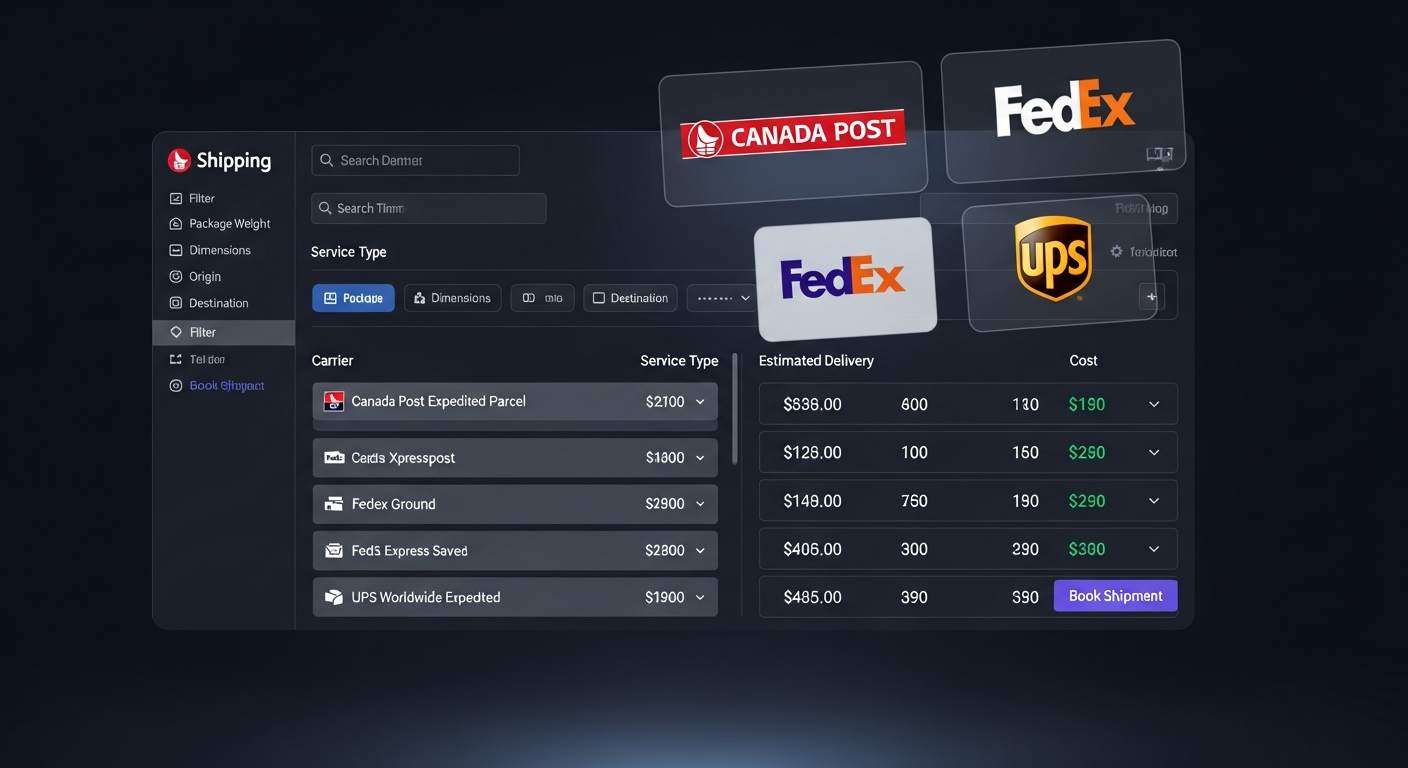 Route optimization and carrier selection
Warehouse automation and robotics
Inside the building, AI increasingly coordinates physical automation. Autonomous mobile robots (AMRs) move inventory to pickers instead of pickers walking to inventory, guided by software that continuously optimizes their paths and task assignments. Automated storage-and-retrieval systems densify storage and speed access. Computer vision verifies that the right item was picked, reads labels and barcodes, and assists in returns inspection. Conveyor and sortation systems route packages automatically. The important nuance for 2026 is that most Canadian warehouses are not fully automated 'lights-out' facilities — they're hybrid operations where automation and robotics augment human workers on the highest-volume, most repetitive tasks while people handle judgment, exceptions, and variety. The economics of full automation favour very high, very stable volumes; for the broad middle of the market, targeted automation applied to specific bottlenecks delivers better returns than wholesale replacement.
| Technology | What it does | Where it pays off |
|---|
| Autonomous mobile robots | Bring inventory to pickers | High-volume, high-travel picking |
| Automated storage/retrieval | Dense storage, fast retrieval | Constrained space, high throughput |
| Computer vision | Verify picks, read labels, inspect returns | Accuracy-critical and returns-heavy ops |
| Sortation & conveyors | Automatic package routing | High parcel volume and many destinations |
| AI task orchestration | Sequence and assign warehouse work | Balancing labour against fluctuating demand |
Predictive demand planning across the network
Where forecasting predicts how much you'll sell, predictive demand planning extends that intelligence across the whole operation and the whole network. It ties forecasts to labour planning (staffing the right number of pickers for tomorrow's expected volume), to inbound scheduling (receiving stock before demand rather than reacting to stockouts), and to inventory positioning (pre-positioning stock in the node nearest where demand is predicted to rise). For a multi-node Canadian network, this is powerful: instead of holding equal buffer stock everywhere, AI can concentrate inventory where and when it's likely to sell, reducing both stockouts and total inventory carried. It also smooths peaks — anticipating a seasonal or promotional surge lets an operation staff up, receive stock, and reposition inventory in advance rather than paying surge premiums and expedited freight to catch up. The result is a supply chain that leans forward instead of reacting after the fact.
Where the hype outruns reality
AI is genuinely changing warehouse logistics, but a clear-eyed view matters. Several limits are worth naming. First, AI is only as good as its data — a warehouse with inaccurate inventory records or messy order history won't get reliable forecasts. Second, full 'lights-out' automation remains uneconomical for most mid-market volumes; the sweet spot is targeted automation, not wholesale robot buildings. Third, forecasting models struggle with genuine novelty — a brand-new product with no history, or a black-swan disruption, defeats models trained on the past. Fourth, integration and change management are the real hurdles: the technology often works, but stitching it into existing systems and workflows is where projects stall. The practical takeaway is that AI amplifies a well-run operation with clean data and clear processes; it does not rescue a disorganized one, and it does not replace operational judgment.
AI amplifies a well-run operation; it doesn't rescue a disorganized one. The prerequisite for useful warehouse AI is clean data and disciplined processes — not the other way around.
What this means for Canadian brands choosing a 3PL
For a brand evaluating fulfillment partners, the point isn't to chase whoever markets 'AI' loudest — it's to look for the outcomes that AI enables, delivered reliably. Does the 3PL forecast demand and recommend replenishment, or just react to stockouts? Does it rate-shop and optimize routing on every order, or apply crude flat rules? Does it position your inventory across nodes based on where your demand actually is? Is its inventory data accurate and real-time enough that any AI on top of it can be trusted? Ask about outcomes and evidence — accuracy, on-time ship, stockout and overstock rates — rather than technology name-drops. The best-run Canadian operations use AI as an invisible layer that makes fulfillment faster, cheaper, and more accurate, not as a talking point.
How ByExpress applies technology in its network
ByExpress runs a data-driven fulfillment operation across Ottawa, Toronto, Montreal, Vancouver, and Calgary, using demand signals to inform inventory positioning so stock sits close to where it will sell, and multi-carrier rate shopping to route every order to the cheapest compliant service across the network. Our approach is pragmatic: apply automation and predictive tools where they measurably improve accuracy, speed, and cost, keep inventory data clean and real-time so those tools can be trusted, and keep human judgment on exceptions and edge cases. We report the outcomes that matter — order accuracy, on-time ship, and inventory health — rather than technology buzzwords, so you can see the results directly. If you want to understand how a modern Canadian 3PL network can lower your shipping cost and improve delivery speed, that's the conversation to have.
Frequently Asked Questions
How is AI actually used in Canadian warehouses?
AI shows up in a few distinct forms: predictive models that forecast demand and recommend replenishment, optimization engines that handle route and carrier selection, computer vision that verifies picks and reads labels, and control software that coordinates robots and automated equipment. It's not one system running the building — it's a toolbox of focused models applied to specific decisions, and it depends heavily on clean, real-time data to work well.
Does AI demand forecasting really reduce costs?
Yes, when the underlying data is good. AI forecasts learn from sales history, seasonality, promotions, and external factors to predict demand at a granular level, which reduces both stockouts (lost sales) and overstock (tied-up capital and storage). Paired with predictive replenishment and multi-node positioning, it helps brands hold the right inventory in the right place — a reliable source of savings, especially for seasonal or geographically dispersed Canadian demand.
Are Canadian warehouses fully automated with robots now?
Most are not. The reality in 2026 is hybrid operations where robotics and automation augment human workers on high-volume, repetitive tasks while people handle judgment, exceptions, and variety. Full 'lights-out' automation makes economic sense only at very high, stable volumes. For the broad middle of the market, targeted automation applied to specific bottlenecks delivers better returns than replacing an entire workforce.
How does AI improve shipping and delivery?
On outbound, AI drives rate shopping and carrier selection — evaluating every order against real-time carrier rates, service levels, and delivery-time predictions to pick the cheapest compliant option — and route optimization that sequences local and regional deliveries to cut distance, time, and fuel. Across Canada's long distances, even small routing and carrier improvements compound into meaningful savings and tighter, more predictable delivery estimates.
What are the limits of AI in warehouse logistics?
AI is only as good as its data, so inaccurate inventory or messy history produces unreliable results. Full automation stays uneconomical for most mid-market volumes. Forecasting struggles with genuine novelty like brand-new products or black-swan disruptions. And integration and change management — not the algorithms — are usually where projects stall. AI amplifies a well-run, well-organized operation; it doesn't fix a disorganized one or replace operational judgment.
How should I evaluate a 3PL's AI or automation claims?
Focus on outcomes, not buzzwords. Ask whether the 3PL forecasts demand and recommends replenishment, rate-shops and optimizes routing on every order, and positions inventory across nodes based on real demand — and whether its inventory data is accurate and real-time enough to trust. Request evidence: order accuracy, on-time ship rate, and stockout and overstock rates. The best operations use AI as an invisible layer that improves results, not as a marketing headline.
Related ByExpress resources