Guide · · 12 min read
When to Switch 3PLs: A Decision Framework for Canadian Brands
Switching 3PLs is one of the most operationally disruptive decisions a brand can make — and one of the most expensive to delay when conditions warrant it. Here's a practical framework for deciding when to migrate, what migration actually costs, and how to do it without breaking your operation.

Switching 3PLs is one of the most operationally disruptive decisions a brand can make. Done badly, it creates inventory chaos, customer experience damage, lost orders, and weeks of operational firefighting that consume founder and operations team attention you can't get back. Done well, it migrates a struggling fulfillment operation to a stronger one with minimal customer-visible disruption and immediate margin or service-quality improvements. The challenge is that brands frequently delay the decision past the point where it's clearly the right call — because switching is hard, painful, and expensive in the short term, even when staying is more expensive in the long term. This guide provides a practical framework for deciding when to switch, what migration actually involves, what it costs, and how to do it without breaking your operation.
The signals that warrant a 3PL switch
Most brands accumulate frustration with their 3PL gradually rather than reaching a clear decision point. The discipline is identifying which frustrations are operational noise (every 3PL has bad days) versus which are structural (problems that won't get better without a change). Structural signals include: KPI degradation that persists despite escalation (order accuracy, on-time ship, returns cycle time trending the wrong way over multiple quarters); inability to support a growth phase (the 3PL can't scale capacity, can't add integrations you need, can't serve new geographies you've expanded into); pricing increases without service improvement (especially if competitive market pricing has stayed flat or decreased); persistent integration issues with platforms or tools you depend on; account management deterioration (responsiveness, proactivity, problem ownership); KPI opacity (the 3PL won't or can't produce the metrics you ask for); or operational practices that put your brand at compliance or regulatory risk.
The single strongest signal that you should switch 3PLs: you've raised the same operational issue more than three times across more than three months, and nothing has structurally changed. That's a pattern, not bad luck.
When NOT to switch 3PLs
Equally important: knowing when frustration with your 3PL is a problem that switching won't fix. Don't switch if: the issue is short-term operational noise that any 3PL would experience (one bad week during a known peak); the issue is integration or technology limitations imposed by your e-commerce platform, not the 3PL (changing 3PLs won't fix a Shopify Plus subscription tier limit); the issue is brand-side data quality (incorrect product dimensions, stale inventory in your platform, broken integration on your end) being blamed on the 3PL; you're switching purely on price without operational issues (the next 3PL will have the same operational realities at lower margin, which often means they cut corners somewhere); or you're switching reactively after a single high-profile incident without root-cause analysis (you may switch into the same problem at a new 3PL).
What switching actually costs
3PL migration costs split across visible and invisible categories. Visible: inventory transfer (typically $4,000–$25,000 in trucking and labour for a single-warehouse migration, more for multi-warehouse), new 3PL setup and onboarding fees ($2,000–$15,000), integration build-out (1–6 weeks of integration time depending on complexity), and parallel operations period (2–4 weeks of running both 3PLs simultaneously to validate the new operation, costing approximately 50–80% of normal monthly fulfillment fees as overhead). Invisible: founder and operations team attention (4–10 hours per week for the duration of migration); risk of order accuracy or shipping delays during transition that cost you customer experience; potential inventory variance discovered during physical transfer (the new 3PL counts what you actually have, which often differs from what your previous 3PL claimed); and the opportunity cost of not investing migration time in growth initiatives.
| Cost Category | Typical Range | Notes |
|---|
| Inventory transfer (single warehouse) | $4,000 – $25,000 | Trucking, labour, scheduling |
| New 3PL setup / onboarding fees | $2,000 – $15,000 | Often partly waived in negotiation |
| Integration build-out time | 2–8 weeks | Depending on platform mix |
| Parallel operations overhead | 50–80% of monthly fees | 2–4 week parallel period |
| Founder / ops team time | 4–10 hours/week | For full migration duration |
| Inventory variance discovered | 0.5% – 4% of inventory value | Common discovery during physical transfer |
A practical 8-week migration playbook
Most well-executed Canadian 3PL migrations run 6–10 weeks from contract signing to old-3PL shutdown. The compressed playbook: Week 1: contract finalization, kickoff meeting with new 3PL onboarding team, named onboarding lead assigned. Week 2-3: integration build-out (Shopify, Amazon, ERP, marketplaces, EDI as applicable), test orders flowing end-to-end. Week 3-4: physical inventory planning, transfer logistics scheduled, communication to suppliers redirecting future inbound. Week 5: physical inventory transfer (typically over a weekend), receiving and putaway at new 3PL, system reconciliation. Week 6-7: parallel operations — both 3PLs are technically live; orders are routed to new 3PL with old 3PL as backup, KPIs tracked closely, any issues caught and resolved. Week 8: full cutover, old 3PL contract closure, final invoice reconciliation. The compressed timeline assumes your new 3PL has experience with this kind of migration; first-time migration partners typically need an additional 2–4 weeks.
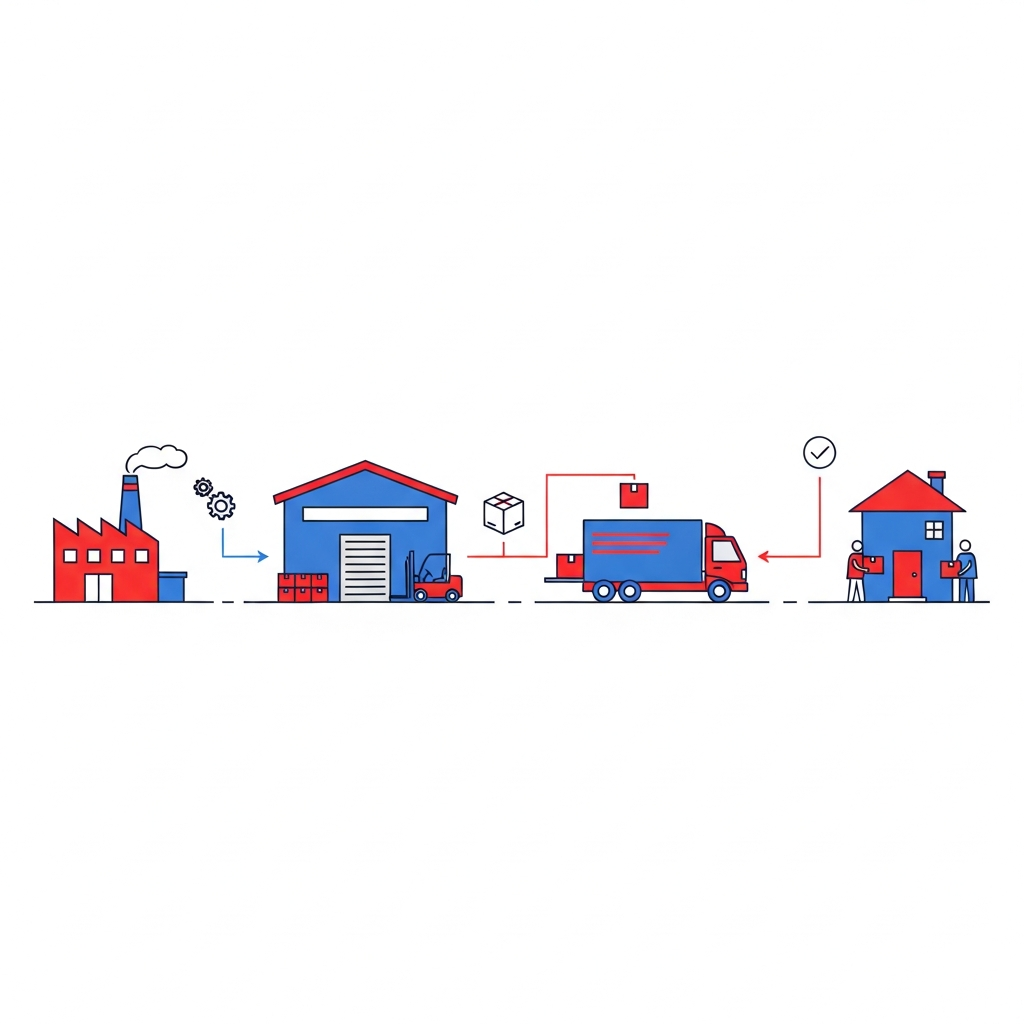 A practical 8-week migration playbook
The inventory variance discovery moment
Almost every 3PL migration includes an uncomfortable moment: the new 3PL physically receives and counts your inventory, and the count differs from what your old 3PL's WMS reported you had. Variance typically ranges 0.5% to 4% of inventory value depending on the discipline of the previous operation. The variance is sometimes physical loss, sometimes counting errors, sometimes inventory in transit or in returns processing not reflected in the WMS, sometimes systemic accuracy gaps that have been hidden for months or years. The discovery moment is operationally awkward — you have to reconcile against the old 3PL's records, decide whether to pursue them for missing inventory (rarely productive), and update your accounting system. Plan for this discovery rather than being surprised by it: brand finance teams should expect a one-time inventory adjustment as part of any migration.
Communicating with customers during migration
Best practice: don't communicate to customers about the migration unless something visible to them actually changes. Most well-executed migrations have zero customer-visible difference — same brand experience, same packaging, same shipping speeds. Customers do not need to know there's a different warehouse behind the scenes. The exception: if shipping speeds will change (faster from new 3PL is a positive announcement; slower needs honest expectation-setting), if packaging will materially change, or if new tracking systems mean their tracking links look different. In those cases, communicate clearly and proactively rather than letting customers discover surprises. Internal stakeholders (your customer service team, your retail buyers if applicable) should be informed in advance regardless of customer-facing change.
Evaluating the new 3PL: what's different from initial selection
Evaluating a new 3PL when you're switching is meaningfully different from evaluating your first 3PL. You now have data the first-time evaluator doesn't — your actual order patterns, your real KPI requirements, your actual integration needs, your real seasonal patterns, and a clear list of things your previous 3PL did poorly that you don't want repeated. Use this advantage. Ask prospective new 3PLs specifically about the operational issues that drove your switch, demand specific commitments on the KPIs that matter to you, and verify with current customer references whether the new 3PL actually delivers on those commitments. Brands switching 3PLs frequently make the same mistakes they made on initial selection because they don't structure the second evaluation around the lessons of the first.
How ByExpress handles migration onboarding
ByExpress runs migration onboardings as structured projects with named leads, defined milestone schedules, and explicit go/no-go gates. Standard migration timeline runs 6–10 weeks depending on integration complexity and inventory volume. Inventory transfer is coordinated across our trucking partners with insurance coverage and explicit chain-of-custody documentation. Receiving and reconciliation against your prior 3PL's expected counts is documented and shared with your finance team. Parallel operations period is structured to catch issues before customer-visible damage. We do not charge separate setup or onboarding fees for migrations from other 3PLs — our view is that the cost of migration is your cost, not your reason to delay leaving a 3PL that no longer serves you.
Frequently Asked Questions
How do I know if I should switch 3PLs?
Strong signals include: persistent KPI degradation despite escalation, inability to support your growth phase, pricing increases without service improvement, persistent integration issues, account management deterioration, KPI opacity, or compliance risk. The clearest indicator: you've raised the same operational issue more than three times across more than three months and nothing has structurally changed.
How much does it cost to switch 3PLs?
Visible costs: $4,000–$25,000 inventory transfer, $2,000–$15,000 new 3PL setup, 2–4 weeks parallel operations overhead. Invisible costs: 4–10 hours/week of founder/ops time during migration, customer experience risk during transition, and inventory variance discovery (0.5–4% of inventory value). Most well-executed migrations cost $20,000–$80,000 all-in for mid-market brands.
How long does a 3PL migration take?
6–10 weeks for well-executed migrations between operationally mature 3PLs. Compressed phases: contracting (week 1), integration build-out (weeks 2–4), inventory transfer planning and execution (weeks 4–5), parallel operations (weeks 6–7), cutover (week 8). First-time migrations or migrations involving complex EDI or ERP integration can run 10–16 weeks.
Should I tell my customers I'm switching 3PLs?
Generally no, unless something visible to them changes (shipping speed, packaging, tracking system). Most well-executed migrations are invisible to customers and don't require communication. Exceptions: positive change worth announcing (faster shipping), or unavoidable temporary disruption requiring expectation-setting. Internal stakeholders (customer service, retail buyers) should be informed regardless.
What if my old 3PL's inventory count was wrong?
Almost every migration discovers some variance between the old 3PL's reported inventory and the physical inventory transferred to the new 3PL. Variance typically runs 0.5–4% of inventory value. Pursuing the old 3PL for missing inventory is rarely productive (contracts usually limit liability). Plan for a one-time inventory adjustment in your accounting and treat it as a cost of migration.
How do I avoid making the same 3PL selection mistakes?
You now have data the first-time evaluator didn't — your actual order patterns, real KPI requirements, real integration needs. Structure the second evaluation around the lessons of the first: ask specifically about the operational issues that drove your switch, demand specific KPI commitments that matter to you, and verify with current customer references whether the new 3PL actually delivers. Don't repeat first-time evaluation mistakes.
Related ByExpress resources