Guide · · 12 min read
Is Amazon FBA Still Worth It, or Should You Use a Canadian 3PL?
Amazon FBA remains a powerful engine for Prime eligibility and marketplace visibility — but rising fees, storage penalties, and the loss of branding control push many Canadian sellers to reconsider. Here's a practical comparison of Amazon FBA and a Canadian 3PL, and how a hybrid model often wins.
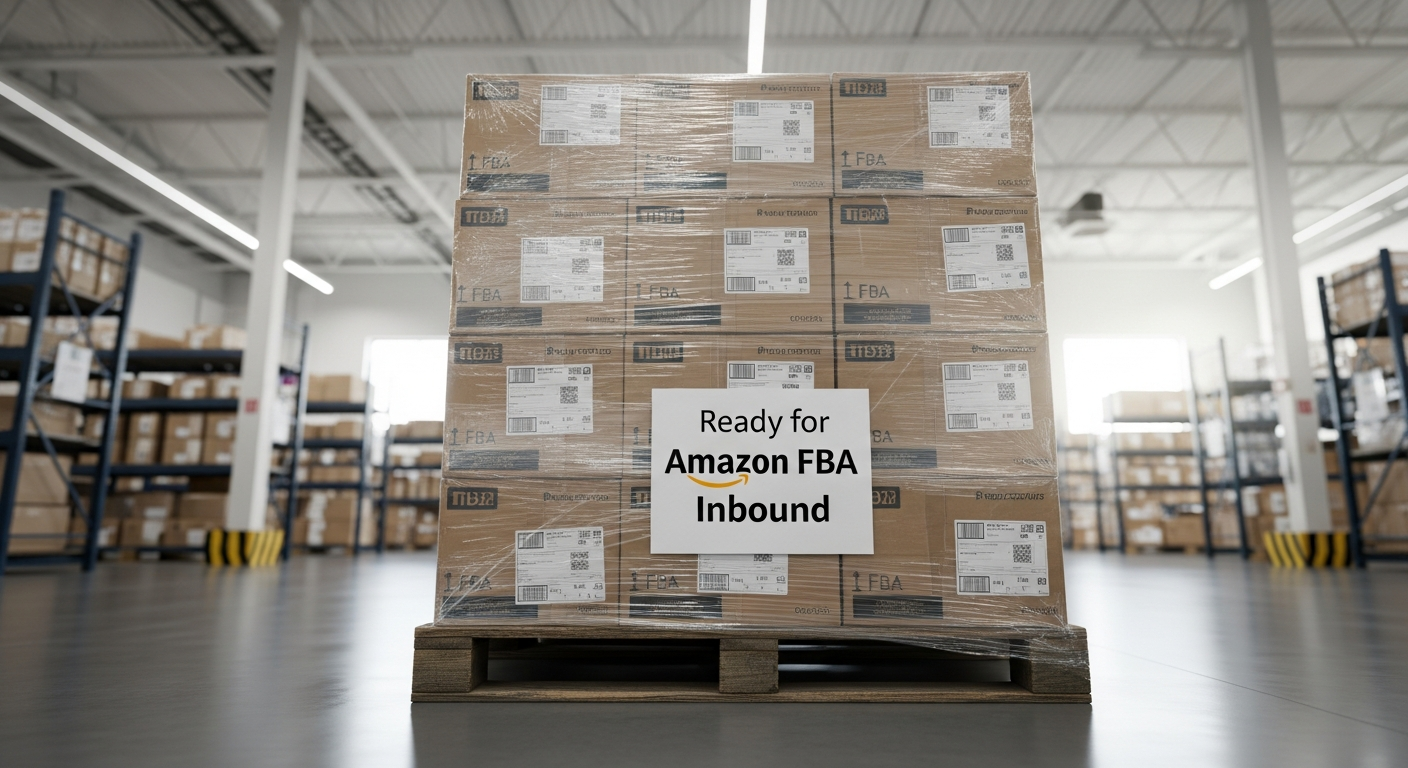
Amazon FBA (Fulfillment by Amazon) built its reputation on a simple promise: send your inventory to Amazon, and Amazon handles storage, picking, packing, shipping, returns, and customer service while your listings earn the Prime badge. For many Canadian sellers, that promise is still worth paying for. But the economics have shifted. Fulfillment fees, monthly storage rates, aged-inventory surcharges, low-inventory-level fees, inbound placement charges, and returns processing have all climbed in recent years, while the branding and data limitations of FBA remain unchanged. At the same time, Canadian 3PLs have matured — offering national two-day-ground coverage, FBA prep, marketplace integrations, and full control over your unboxing experience. The real question in 2026 isn't 'FBA or 3PL?' as a binary; it's understanding where each model wins and how a hybrid approach lets Canadian brands keep Prime eligibility while recovering margin, branding, and multichannel flexibility.
What Amazon FBA actually does for Canadian sellers
FBA is genuinely good at what it does. You ship inventory into Amazon's Canadian fulfillment network, and Amazon takes over storage, order picking, packing, delivery, customer service, and returns handling for orders placed on Amazon.ca (and, with the North American remote fulfillment or export programs, cross-border orders). Your listings become Prime-eligible, which measurably improves conversion and Buy Box competitiveness. For a seller whose sales are overwhelmingly on Amazon, FBA removes an enormous amount of operational complexity — there is no warehouse to lease, no pick-pack labour to manage, and no carrier contracts to negotiate. The trade-off is that you hand over control of cost structure, inventory placement, packaging, and the customer relationship in exchange for that convenience and the Prime badge.
- Prime badge and eligibility that improves conversion and Buy Box share
- Storage, pick, pack, ship, and customer service handled end-to-end
- Returns processing managed inside Amazon's network
- Access to Amazon's delivery speed and coverage across Canada
- No warehouse lease, labour management, or carrier contracts to run
Where FBA costs add up in 2026
The headline fulfillment fee is only part of the FBA cost picture. Layered on top are monthly storage fees (which spike sharply in Q4), long-term or aged-inventory surcharges on units sitting past defined thresholds, low-inventory-level fees when your weeks-of-cover run thin, inbound placement fees depending on how you distribute inventory across fulfillment centres, removal and disposal fees, and returns processing charges. For low-price, bulky, slow-turning, or seasonal products, these compounding fees can quietly erode a healthy gross margin into a marginal one. The units most punished by FBA economics are exactly the ones many Canadian brands carry: heavier items, larger cartons, seasonal inventory, and slow movers that accumulate aged-inventory surcharges. Modelling your true landed cost per unit under FBA — including all surcharges, not just the base pick-pack fee — is the single most useful exercise before deciding whether to keep everything in FBA.
The FBA fee that surprises sellers most isn't the base fulfillment fee — it's the combination of aged-inventory surcharges and Q4 storage rates on slow-moving SKUs. Slow movers and bulky items are where a Canadian 3PL most often wins on cost.
Branding control and customer data
Beyond cost, FBA imposes structural limits that a growing brand eventually feels. Your product ships in Amazon packaging, not yours — no branded box, no insert, no marketing collateral, no sample, no unboxing moment that turns a first-time buyer into a repeat customer. You also don't own the customer relationship: Amazon holds the buyer data, so retargeting, loyalty programs, email marketing, and post-purchase communication are largely off the table. For commodity products this may not matter. For brands trying to build repeat purchase behaviour, subscription revenue, or a distinct identity, the loss of the unboxing experience and the customer relationship is a real strategic cost. A Canadian 3PL fulfilling your Shopify and direct-to-consumer orders lets you design the entire post-purchase experience — branded packaging, inserts, kitting, and full ownership of customer data.
Delivery speed: FBA versus a Canadian 3PL
FBA's delivery speed on Amazon.ca is excellent and hard to beat for Prime orders. But for your non-Amazon channels — Shopify, your own website, wholesale, other marketplaces — FBA does nothing, and multi-channel FBA (using FBA to fulfill off-Amazon orders) tends to be expensive and slower with generic packaging. A well-placed Canadian 3PL network changes the math for those channels. With inventory positioned across hubs such as the Greater Toronto Area, Montreal, Vancouver, Calgary, and Ottawa, a 3PL can reach the large majority of the Canadian population within one to two ground-transit days at ground rates — no air premiums required. That national ground coverage is what lets a direct-to-consumer brand promise fast delivery on its own storefront without paying FBA multi-channel rates or surrendering its packaging.
| Dimension | Amazon FBA | Canadian 3PL |
|---|
| Prime eligibility | Yes (native) | Only via Seller Fulfilled Prime, if qualified |
| Branded packaging & inserts | No | Yes, full control |
| Customer data ownership | Amazon holds it | You own it |
| Off-Amazon channels (Shopify, DTC, wholesale) | Costly / slow via MCF | Native strength |
| Cost on slow / bulky SKUs | Surcharges accumulate | Often lower total landed cost |
| Setup & operational complexity | Very low | Moderate (managed by 3PL) |
The hybrid model most Canadian brands land on
In practice, the strongest answer for many Canadian sellers is not choosing one model but splitting inventory intelligently. Keep fast-moving, high-velocity SKUs in FBA to preserve Prime eligibility and Amazon conversion, while shifting slow movers, bulky items, seasonal overflow, and all off-Amazon channels to a Canadian 3PL. The 3PL fulfills your Shopify and DTC orders with branded packaging, handles wholesale and B2B, manages returns on your terms, and can also act as your FBA prep and replenishment point — receiving bulk inbound, prepping to Amazon's specifications, and drip-feeding units into FBA to minimize storage and aged-inventory fees. This keeps just enough inventory in FBA to stay in stock and Prime-eligible while parking the rest at lower 3PL storage rates. The result is Prime coverage where it matters plus recovered margin, branding, and channel flexibility everywhere else.
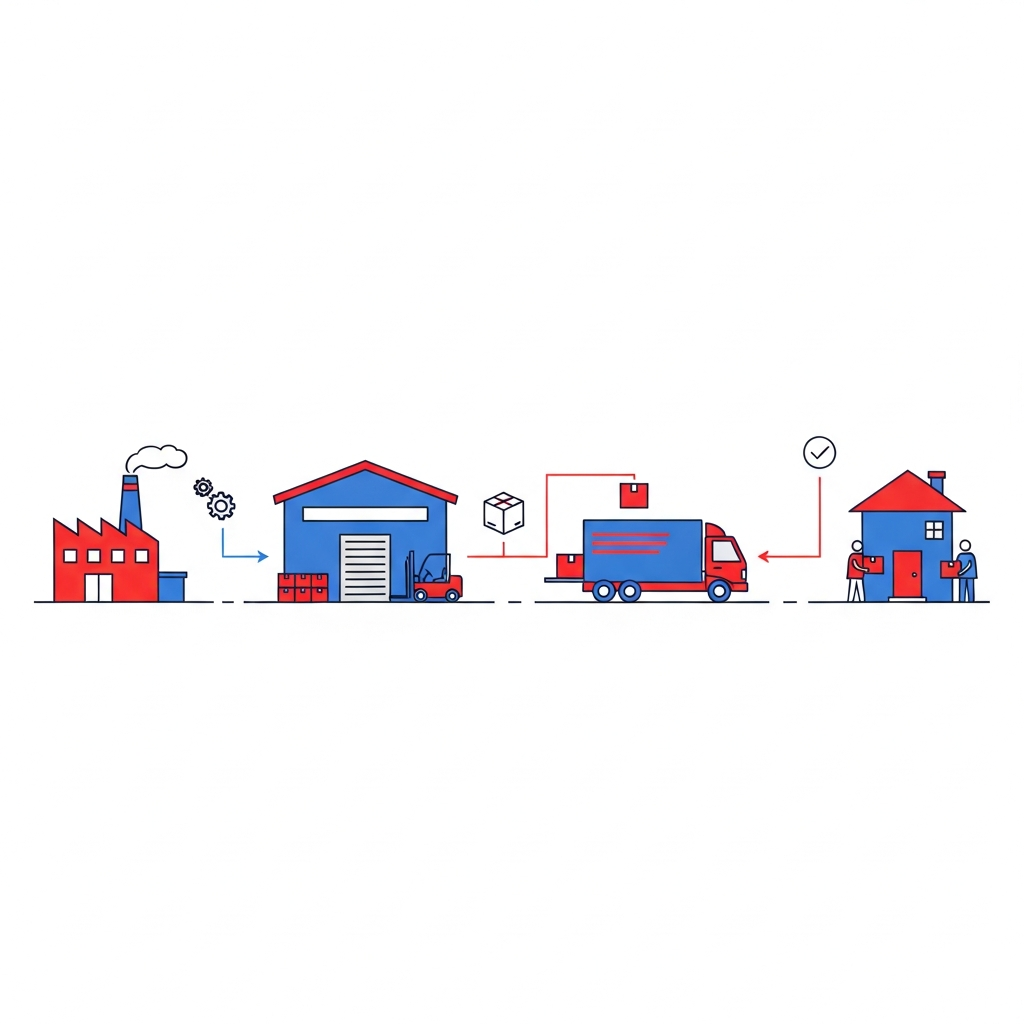 The hybrid model most Canadian brands land on
Using a 3PL as your FBA prep and replenishment partner
Even sellers who intend to stay heavily in FBA benefit from a Canadian 3PL upstream. Amazon's inbound requirements — labelling, polybagging, bundling, carton and case-pack specifications, prep for hazmat or expiry-dated goods — are exacting, and non-compliant shipments trigger fees, delays, or refusals. A 3PL that offers FBA prep receives your manufacturer or import shipments, prepares each unit to Amazon's current specifications, stores the buffer inventory at standard warehouse rates, and sends replenishment shipments in on a schedule tuned to your sell-through. That drip-feed model directly attacks the two most punishing FBA cost categories — monthly storage and aged-inventory surcharges — by keeping only weeks of cover inside Amazon rather than months. It also gives you a single Canadian inventory pool that can serve FBA, Shopify, wholesale, and other marketplaces from one reconciled source of truth.
- Receive bulk inbound from manufacturers or importers at standard rates
- Prep units to Amazon's labelling, polybag, and case-pack specifications
- Hold buffer inventory outside FBA to avoid storage and aged-inventory fees
- Replenish FBA on a cadence tuned to real sell-through
- Serve Shopify, wholesale, and other marketplaces from the same pool
When FBA is still the right call
FBA is not the villain here — for the right seller it is clearly the best option. If your sales are overwhelmingly on Amazon.ca, your products are small, light, and high-turning, your margins comfortably absorb FBA fees, and you place little value on branded packaging or owning customer data, FBA's convenience and Prime performance are hard to argue against. The operational simplicity alone — no lease, no labour, no carrier contracts — has real value for a lean team. The reconsideration point arrives when you start selling meaningfully off Amazon, when slow movers or bulky items accumulate surcharges, when you want to build repeat purchase and brand identity, or when you're carrying seasonal inventory that gets hammered by Q4 storage rates. That's the moment to model a hybrid or a full 3PL move rather than defaulting to FBA for everything.
How to decide: a practical checklist
Turn the decision into numbers and facts rather than instinct. Pull your FBA fee reports and calculate true landed cost per unit for each SKU — base fulfillment fee plus your allocated share of storage, aged-inventory, low-inventory, inbound placement, and returns fees. Separate your channels: what percentage of revenue is Amazon.ca versus Shopify, wholesale, and other marketplaces? Identify which SKUs are fast movers (keep in FBA) versus slow or bulky (candidates for a 3PL). Weigh how much branded packaging, inserts, and customer data ownership matter to your growth strategy. Then get a comparative 3PL quote on the SKUs and channels you'd move, including FBA prep and replenishment. For most growing Canadian brands, the honest conclusion is 'keep the winners in FBA, move everything else to a 3PL' — a hybrid that protects Prime while recovering margin and control.
Decision rule of thumb: high-velocity, small, light SKUs sold mostly on Amazon.ca stay in FBA. Slow movers, bulky items, seasonal overflow, and all off-Amazon channels move to a Canadian 3PL. Use the 3PL as your prep and replenishment point to shrink FBA storage fees.
Frequently Asked Questions
Is Amazon FBA still worth it for Canadian sellers in 2026?
For high-velocity, small, light products sold overwhelmingly on Amazon.ca, FBA is still often the best choice — the Prime badge, delivery speed, and operational simplicity are hard to beat. It becomes less attractive for slow-moving, bulky, or seasonal SKUs where storage and aged-inventory surcharges compound, and for brands selling meaningfully off Amazon or wanting branded packaging and customer data.
What are the main alternatives to Amazon FBA in Canada?
The primary alternative is a Canadian 3PL that fulfills your Shopify, direct-to-consumer, wholesale, and other-marketplace orders with branded packaging and full customer-data ownership. Many sellers also use Seller Fulfilled Prime (if qualified) to keep the Prime badge while shipping from a 3PL, and most land on a hybrid model that keeps top SKUs in FBA and moves the rest to a 3PL.
Can a 3PL save me money versus FBA?
Often yes on slow-moving, bulky, or seasonal SKUs, where FBA's storage and aged-inventory surcharges accumulate. A 3PL typically charges lower storage rates and lets you avoid holding months of inventory inside Amazon. The best way to know is to model true landed cost per unit under FBA — including all surcharges — and compare it to a 3PL quote on the same SKUs.
Do I lose the Prime badge if I move to a 3PL?
On the units you pull out of FBA, yes — unless you qualify for and use Seller Fulfilled Prime. That's why most Canadian brands adopt a hybrid: keep fast movers in FBA to preserve Prime and Amazon conversion, and move slow movers plus all off-Amazon channels to a 3PL. You keep Prime where it matters most and recover margin everywhere else.
Can a 3PL also handle my Amazon FBA prep?
Yes. A 3PL with FBA prep receives your bulk inbound, prepares each unit to Amazon's current labelling, polybag, and case-pack specifications, stores buffer inventory at standard warehouse rates, and sends replenishment shipments into FBA on a schedule tuned to your sell-through. This shrinks FBA storage and aged-inventory fees by keeping only weeks of cover inside Amazon.
How fast can a Canadian 3PL deliver compared to Prime?
For your own storefront and off-Amazon channels, a 3PL with inventory positioned across hubs like the GTA, Montreal, Vancouver, Calgary, and Ottawa can reach most of the Canadian population within one to two ground-transit days at ground rates. That's competitive delivery on your own site without paying FBA multi-channel rates or using generic Amazon packaging.
Related ByExpress resources