Guide · · 12 min read
Amazon FBA Prep Services in Canada: The 2026 Complete Guide
Amazon FBA Canada has its own quirks — different prep requirements, smaller FC network, and higher rejection rates than US FBA. Here's how to get FBA prep right and avoid the most common compliance failures.
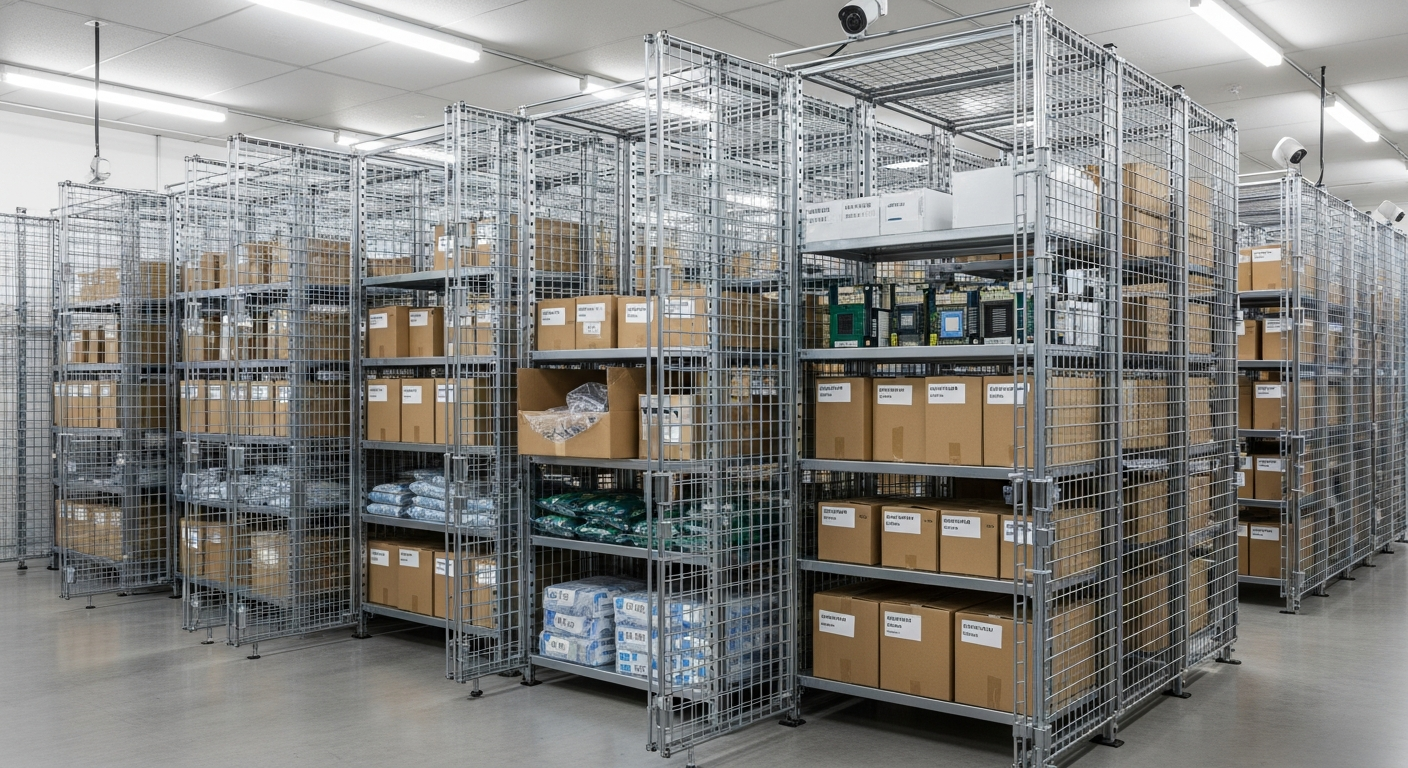
Amazon FBA in Canada is structurally different from FBA in the US — fewer fulfillment centres, stricter prep enforcement, longer inbound queues, and a higher rejection rate for non-compliant shipments. Canadian Amazon sellers who copy US FBA prep workflows often see 8–12% of inbound rejected, costing thousands per month in re-prep, re-shipment, and lost Buy Box time. This guide covers what Amazon Canada actually requires, what 2026 prep pricing looks like, the most common rejection causes, and how to choose a Canadian FBA prep service that prevents the failures rather than charging you to fix them.
Amazon FBA Canada vs FBA US: the real differences
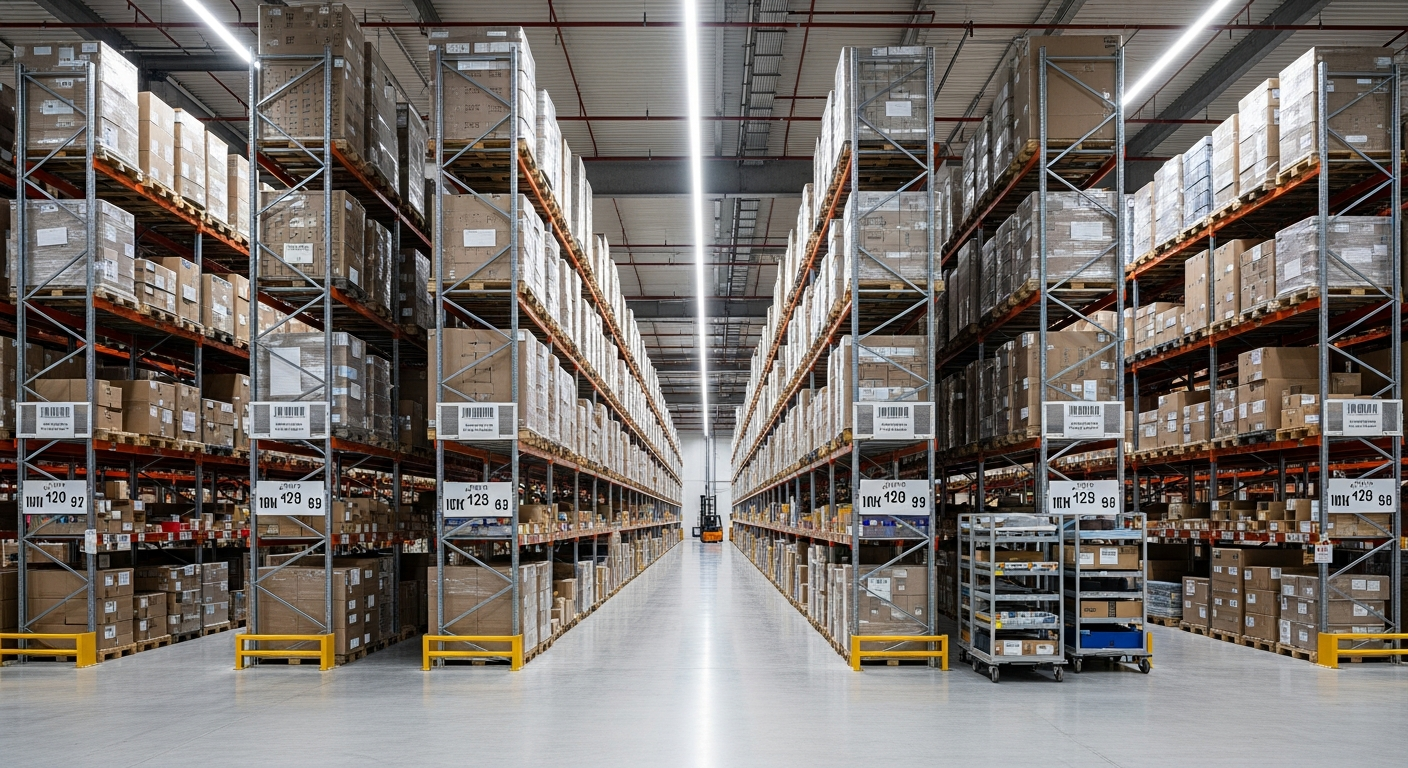
Selling on Amazon.ca with FBA is not the same operation as Amazon.com FBA. Amazon Canada operates roughly 12 fulfillment centres versus over 175 in the US, almost all clustered in the GTA (Brampton, Caledon, Bolton, Mississauga) with secondary nodes near Vancouver, Calgary, and Montreal. This concentration means: longer inbound queues during peak season because everything funnels through fewer FCs, more strict acceptance gating because operations cannot absorb errors, and significantly more aggressive long-term storage fees because Canadian FC capacity is constrained. The practical implication for Canadian sellers: prep quality matters more than in the US. A polybag without proper suffocation warning, an FNSKU label with reduced contrast, or a bundle without a 'Sold as Set' sticker that gets through US receiving will frequently get rejected at a Canadian FC.
 Amazon FBA Canada vs FBA US: the real differences
What FBA prep services actually include
FBA prep is the work of preparing inventory to meet Amazon's specific receiving requirements before it enters an FC. A typical FBA prep service in Canada handles seven categories of work: FNSKU barcode labeling (required on every unit), polybagging with suffocation warning for soft goods or kits, bubble wrapping for fragile items, bundling and 'Sold as Set' labeling for multi-pack listings, expiration date labeling for consumables (FEFO), opaque polybagging for adult goods, and full carton labeling with FBA shipment IDs. A proper Canadian FBA prep service also handles: removable price-sticker compliance (no third-party retail pricing visible), made-in-country labeling where required, and case-pack / inner-pack quantity verification against your Amazon shipment plan.
- FNSKU labeling on every unit (covers any retailer barcode)
- Polybag with suffocation warning (≥1.5 mil thickness, opening ≥5 inches)
- Bubble wrap for fragile / glass / ceramic
- Bundling with 'Sold as Set / Do Not Separate' label
- Expiration date labeling (MM-DD-YYYY format) for consumables
- Opaque polybag for adult products
- Carton labeling with shipment ID and box ID barcodes
- Pre-shipment quality check and SKU count verification
The top reasons Amazon Canada rejects FBA inbounds
Canadian Amazon FCs reject inbound for specific, repeatable reasons. The most common 2026 rejection causes (in order of frequency): FNSKU label barcode not scanning due to print quality or label adhesion, polybag suffocation warning text missing or incorrectly worded, expiration date missing on consumables or not in the required MM-DD-YYYY format, master carton dimension or weight exceeding limits (max 50 lbs / 25 inches per side for standard FCs), shipment carton not labeled with the correct shipment ID, mismatch between actual contents and the Amazon shipment plan, and missing 'Sold as Set' label on bundles. Each rejection means Amazon either disposes the inventory at your cost or returns it for re-prep, both of which destroy unit economics. A properly run FBA prep service should have rejection rates under 1% — ask any prospective prep service for theirs in writing.
Amazon Canada's rejection rate for non-compliant FBA inbounds runs 8–12% for sellers self-prepping or using under-experienced prep services. A specialist FBA prep service should keep your rate under 1%.
FBA prep pricing in Canada
Canadian FBA prep pricing has standardized over the past three years. Most prep services charge per-unit for prep work plus pass-through for inbound shipping to Amazon FCs. Bundled programs (where receiving, storage, prep, and shipment-to-Amazon are quoted together) are increasingly common and usually cheaper at volume than à la carte. For high-volume sellers shipping more than 1,000 units per month into FBA, expect bundled all-in pricing around $1.40–$2.20 per unit fully-prepared and shipped to the FC, depending on prep complexity.
| Prep Service | Typical 2026 Price | Notes |
|---|
| FNSKU label only | $0.30 – $0.55 | Per unit; the baseline service |
| Polybag + suffocation label | $0.50 – $0.95 | Per unit including bag material |
| Bubble wrap (fragile) | $0.65 – $1.20 | Per unit including material |
| Bundle / Sold as Set | $0.85 – $1.65 | Per bundle assembled |
| Expiration date labeling | $0.20 – $0.40 | Per unit, on top of FNSKU |
| Master carton labeling | $1.50 – $3.00 | Per outbound carton to FBA |
| Inbound shipping to Amazon FC | Pass-through | Carrier cost + small handling fee |
Why location of your FBA prep service matters
Where your FBA prep service operates physically affects your inbound transit and your effective prep cost. Amazon Canada's largest fulfillment centers are in the GTA, so prep services in Mississauga, Brampton, or Vaughan can deliver inbound to an Amazon FC within 24 hours of completion via short-haul truck. Prep services in Ottawa or Montreal add one to two days for line-haul to Amazon GTA FCs. Prep services in Vancouver or Calgary handle Western Canada FBA volume efficiently but add three to five days plus cross-country freight cost for any inbound destined for an Eastern FC. For most national Amazon sellers, the right answer is a prep service with multi-node Canadian capability — GTA-based prep for the bulk of FBA volume, with Western Canada prep for SKUs going to Western FCs.
How to choose an FBA prep service in Canada
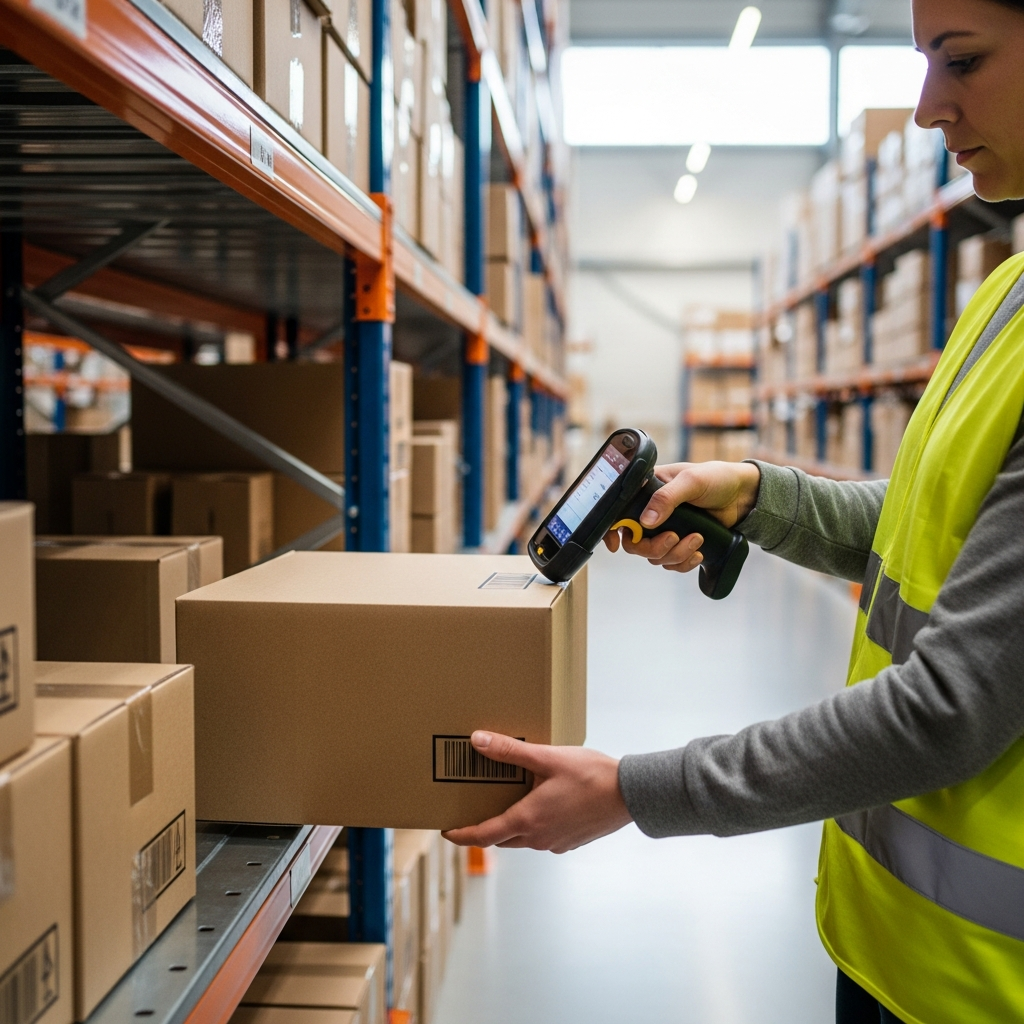
Eight questions separate a competent Canadian FBA prep service from a sub-scale operator. What is your current FBA rejection rate, broken down by rejection reason, for the past 6 months? What's your average inbound turnaround from receipt at your warehouse to receipt at the Amazon FC? Do you handle Amazon shipment plan creation, or do I need to create it and send you the labels? Do you provide photo proof of prep on a sample basis or full lot? Are you experienced with FDA-regulated FBA categories (supplements, cosmetics) and the additional prep requirements? What's your peak-season SLA — do you maintain turnaround during October–December? Do you handle returns from Amazon (FBA removals) and re-prep for re-listing? Do you have a documented escalation path for FC rejections? A prep service that hesitates on any of these is not a specialist.
 How to choose an FBA prep service in Canada
FBA + FBM hybrid: when to combine fulfillment models
Many successful Canadian Amazon sellers run hybrid fulfillment — keeping fast-moving SKUs on FBA for Prime eligibility and Buy Box velocity, while running slower SKUs through FBM (Fulfilled by Merchant, where your 3PL ships orders directly when an Amazon order comes in). This sidesteps Amazon's escalating long-term storage fees on slow inventory while preserving the FBA boost for hero SKUs. The same Canadian 3PL can typically handle both: prep and inbound for FBA SKUs, plus direct fulfillment for FBM SKUs from the same inventory pool. For seasonal brands, FBM-only during off-season and FBA-loaded for peak is a common pattern that materially improves working capital efficiency.
Frequently Asked Questions
How much does FBA prep cost in Canada?
Per-unit prep ranges from $0.30 (FNSKU label only) to $1.65 (full bundle assembly with packaging). Bundled all-in programs for high-volume sellers (1,000+ units/month) typically run $1.40–$2.20 per unit fully-prepped and shipped to an Amazon FC, including inbound carrier cost.
Why does Amazon Canada reject more inbound than Amazon US?
Canadian Amazon FCs are more capacity-constrained and operate stricter acceptance gating. The most common rejection causes are scan-quality issues with FNSKU labels, missing or incorrect polybag suffocation warnings, missing expiration dates on consumables, and master cartons exceeding dimension/weight limits. A specialist prep service should keep rejection rates under 1%.
Where should my FBA prep service be located?
For most Canadian sellers, the GTA — because Amazon Canada's largest FCs are in Brampton, Caledon, Bolton, and Mississauga, and same-day or next-day inbound is possible from any GTA prep location. Ottawa and Montreal prep services add one to two days. Vancouver/Calgary prep is best for SKUs destined for Western FCs.
Can my FBA prep service also handle FBM and DTC?
Yes — and most established Canadian 3PLs do. Running FBA prep, FBM (Fulfilled by Merchant), DTC ecommerce, and B2B retail from a single inventory pool simplifies operations and improves working capital. The key is choosing a 3PL with Amazon-specific expertise, not just a generic fulfillment provider.
What's the difference between FBA and FBM?
FBA (Fulfilled by Amazon) means your inventory is shipped to Amazon FCs and Amazon picks, packs, and ships orders. FBM (Fulfilled by Merchant) means you (or your 3PL) hold inventory and ship orders directly when an Amazon order comes in. FBA gets Prime eligibility and Buy Box advantages but charges fulfillment and storage fees that compound on slow inventory. FBM avoids those fees but requires you to maintain shipping speed and accuracy that meets Amazon's seller metrics.
Do I need different prep for Amazon Canada vs Amazon US?
Yes. Amazon US allows some prep flexibility that Amazon Canada does not — and Canadian FCs reject inbound for issues that US FCs would accept. Bilingual labeling requirements may apply for certain consumer categories. Canadian FCs also enforce 'Sold as Set' labeling on bundles more strictly than US. Use a Canadian prep service that specializes in Amazon Canada specifically.
Related ByExpress resources