Guide · · 12 min read
Shopify Fulfillment in Canada: The Complete 2026 Guide
Strategies for Canadian Shopify merchants to scale fulfillment, reduce shipping costs, optimize the post-purchase experience, and pick a 3PL whose Shopify integration genuinely works.
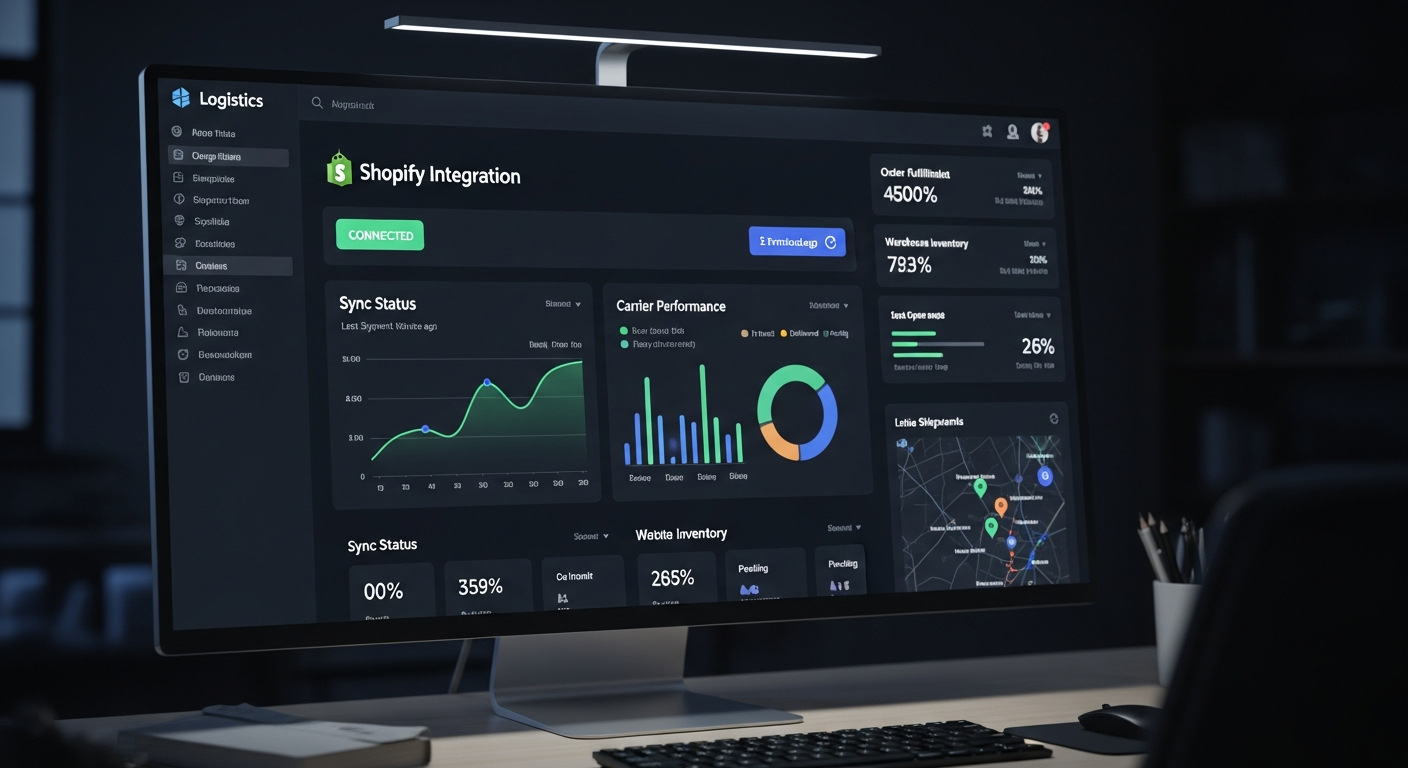
Shopify is the dominant e-commerce platform for Canadian DTC brands, and the relationship between Shopify and your 3PL is the single most consequential integration in your operational stack. A great Shopify-3PL integration is invisible — orders flow, inventory syncs, tracking updates, customers get accurate ETAs. A bad one creates daily friction: orders stuck in 'unfulfilled', inventory drift between Shopify and your 3PL's WMS, customer-service tickets about wrong tracking. This guide covers what a healthy Shopify-3PL integration actually looks like, how to handle multi-location inventory, the post-purchase experience that drives repeat purchase, and how to evaluate whether a Canadian 3PL's 'Shopify integration' is real or a CSV-and-prayer pretender.
What a real Shopify-3PL integration looks like
Shopify integrations come in three tiers, and the difference is operational. Tier 1: native API integration where the 3PL has a published, certified Shopify app, OAuth flow, real-time webhook subscriptions on order/inventory/customer events, and bidirectional sync with conflict resolution. Tier 2: middleware integration via tools like Celigo, Pipe17, or Codisto, where a third-party platform mediates between Shopify and the 3PL's WMS — workable but introduces latency and another vendor in the failure path. Tier 3: scheduled CSV import/export ('we pull orders every 4 hours and push back tracking via SFTP'), which is operationally fragile and not acceptable for any brand above hobby scale. Every credible Canadian 3PL today should offer Tier 1. If you're being offered Tier 3, walk away.
What a real Shopify-3PL integration looks like
The webhook events that actually matter
Shopify exposes dozens of webhook events. The ones a 3PL must subscribe to and handle correctly are: orders/create (new order to fulfill), orders/updated (address changes, quantity changes pre-fulfillment), orders/cancelled (cancel before pick), orders/fulfilled (mark fulfilled with tracking — back to Shopify after the 3PL ships), inventory_levels/update (push stock changes from WMS to Shopify), and customers/update (address book changes). Edge cases that break weak integrations: a customer changing their shipping address 30 minutes after placing the order; an order with a discount code being partially refunded then re-fulfilled; a Shopify Plus B2B order with payment terms; a Shopify subscription order from Recharge or Bold. Ask any prospective 3PL how they handle each of these specifically.
Multi-location inventory and Shopify Locations
Shopify's multi-location inventory model is fully supported by serious 3PLs. The 3PL configures each of its physical fulfillment centres as a Shopify Location, syncs inventory per Location, and lets Shopify (or a routing app) decide which Location fulfills each order based on rules: closest to ship-to, lowest stock at preferred location, balanced across locations, or override rules. For Canadian brands using a multi-node 3PL (e.g., Ottawa + Calgary), this lets Shopify automatically route eastern orders to Ottawa and western orders to Calgary, dramatically improving transit times and lowering parcel cost. Make sure your 3PL's integration supports per-Location inventory sync (not just aggregate inventory) and Location-aware fulfillment routing.
If your 3PL operates multiple warehouses but their Shopify integration only exposes one aggregate inventory number, you cannot use Shopify multi-location routing — and you'll never get the cost benefit of multi-node fulfillment.
Shopify Shipping vs. 3PL Shipping: which to use
Shopify Shipping (the in-house shipping label and rate offering) is excellent for founder-stage brands shipping under 200 orders per month from a home or studio. Above that, 3PL-managed shipping wins on three dimensions. First, rates: a Canadian 3PL with multi-million-dollar carrier volume negotiates parcel rates 15–35% below what Shopify Shipping offers individual merchants. Second, rate-shopping: 3PLs run real-time multi-carrier rate-shop engines that pick the cheapest viable carrier per parcel, where Shopify Shipping is essentially a single-carrier routing per service level. Third, automation: 3PL-side label generation eliminates the manual click-to-print workflow that scales to roughly nobody. The right pattern at scale: let Shopify handle checkout shipping rate display (Carrier-Calculated Shipping, fed by your 3PL's rate API), and let your 3PL handle actual label generation and rate-shop.
Carrier-Calculated Shipping at checkout
Shopify Plus and (with caveats) standard Shopify support Carrier-Calculated Shipping (CCS), where checkout rates are pulled live from a carrier or 3PL rate API rather than from static rate tables. The benefit is accuracy: customers see real shipping cost based on their actual address and the actual contents of their cart, rather than a flat-rate or zone-based approximation. The risk: latency. A slow rate API adds checkout friction. A serious 3PL with CCS support returns rates in well under 500ms and includes fallback logic for the rare cases the API fails. Implementing CCS reduces over-charging customers (good for conversion) and under-charging your business (good for margin) — both matter at scale.
The post-purchase experience and unboxing
For Shopify DTC brands, the customer journey doesn't end at checkout — it ends at unboxing and the post-purchase tracking experience. Three operational levers materially move repeat purchase rate. First: branded packaging and inserts, executed consistently. A 3PL that handles custom inserts, tissue, gift notes, and packaging variants by SKU at scale is materially differentiated. Second: tracking quality and proactive notifications via tools like Aftership, Shop App, or Klaviyo, which require accurate tracking handoff from the 3PL within minutes of label generation (not hours). Third: returns experience — customers expect a self-serve return portal that issues a label without an email exchange. A 3PL with a Loop Returns or Aftership Returns integration enables this; one that requires customers to email support to initiate a return doesn't.
 The post-purchase experience and unboxing
When to switch from in-house to a 3PL
Most successful Canadian Shopify brands fulfill in-house until somewhere between 300 and 1,000 monthly orders, then move to a 3PL. The trigger is rarely cost — in-house fulfillment with the founder packing in the garage is technically cheaper per order until the founder's time becomes the constraint on growth. The trigger is opportunity cost: every hour spent picking and packing is an hour not spent on product, marketing, or customer experience. Practical signals it's time: founder regularly working past 9pm packing orders, errors increasing as volume scales, customer-service tickets about delayed shipping increasing, peak season requiring temporary hires that don't make sense at non-peak volume, and inventory storage outgrowing the available space. None of these are about cost; they're about scaling.
Shopify apps that work well with a 3PL
Several Shopify apps integrate cleanly with a serious Canadian 3PL and are worth standardizing on. Recharge, Bold Subscriptions, Loop Subscriptions, or Stay AI for subscription management. Aftership or Shop App for post-purchase tracking and notifications. Loop Returns or Aftership Returns for self-serve return portals. Klaviyo for lifecycle email triggered by 3PL events (shipped, delivered, etc.). ShipperHQ for advanced checkout shipping logic. Avoid apps that duplicate functionality your 3PL provides natively — running a 3PL plus an additional 'fulfillment routing' app that doesn't talk to your 3PL's WMS creates conflicting sources of truth and operational chaos.
Frequently Asked Questions
What's the best 3PL for Shopify in Canada?
The best 3PL is one with a Tier-1 Shopify integration (certified app, OAuth, webhook-based real-time sync), multi-location inventory support, multi-carrier rate-shopping, and operational maturity in your specific category. ByExpress operates a multi-node Canadian network with native Shopify integration and is one of several credible options — but the right answer depends on your size, geography, and SKU mix.
How do I integrate Shopify with a 3PL?
If the 3PL has a published Shopify app: install it from the Shopify App Store, complete OAuth, and configure webhooks for order, inventory, and fulfillment events. The 3PL's onboarding team should handle WMS-side configuration in parallel. End-to-end integration takes 1–3 days of effective work for standard Shopify stacks; complex setups (Plus, B2B, subscriptions) can take 1–2 weeks.
Can a 3PL handle Shopify multi-location inventory?
Serious 3PLs do — they configure each fulfillment centre as a Shopify Location and sync per-Location inventory. This lets Shopify route orders to the closest location automatically, dramatically improving transit times for multi-node fulfillment. If a 3PL only exposes one aggregate inventory number, they don't truly support multi-location and you can't use Shopify's routing logic.
Should I use Shopify Shipping or my 3PL's shipping?
Below ~200 monthly orders, Shopify Shipping is fine. Above that, your 3PL's shipping wins on rates (15–35% below Shopify Shipping at volume), rate-shopping (real-time multi-carrier), and automation (no manual label clicks). The right pattern at scale: Shopify checkout displays rates via Carrier-Calculated Shipping fed by the 3PL's rate API, and the 3PL handles actual label generation.
What Shopify apps should I avoid with a 3PL?
Avoid any app that duplicates functionality your 3PL provides natively, particularly fulfillment-routing apps that compete with the 3PL's own location-routing logic. Avoid CSV-import-based 'integration' apps that bypass real webhook flow. Avoid shipping-rate apps that quote rates the 3PL can't actually deliver. The standard rule: every app in your stack should have a clearly distinct role from your 3PL's WMS.
How long does Shopify integration with a 3PL take?
Standard Shopify (single store, basic catalog, no subscriptions) integrates in 1–3 days of work. Shopify Plus with B2B, multi-currency, or expansion stores adds 3–7 days. Subscription stack (Recharge or Bold) adds 2–5 days for webhook configuration. Custom or headless Shopify can take 2–4 weeks. The 3PL's onboarding team should provide a timeline before you sign.
Related ByExpress resources