Guide · · 13 min read
DDP vs DDU for Canada–US Ecommerce: Duties, Taxes and 3PL Fulfillment Choices
A practical comparison of duty-paid and recipient-paid Canada–US delivery models, with questions to resolve across checkout, customs, brokerage, fulfillment and returns.
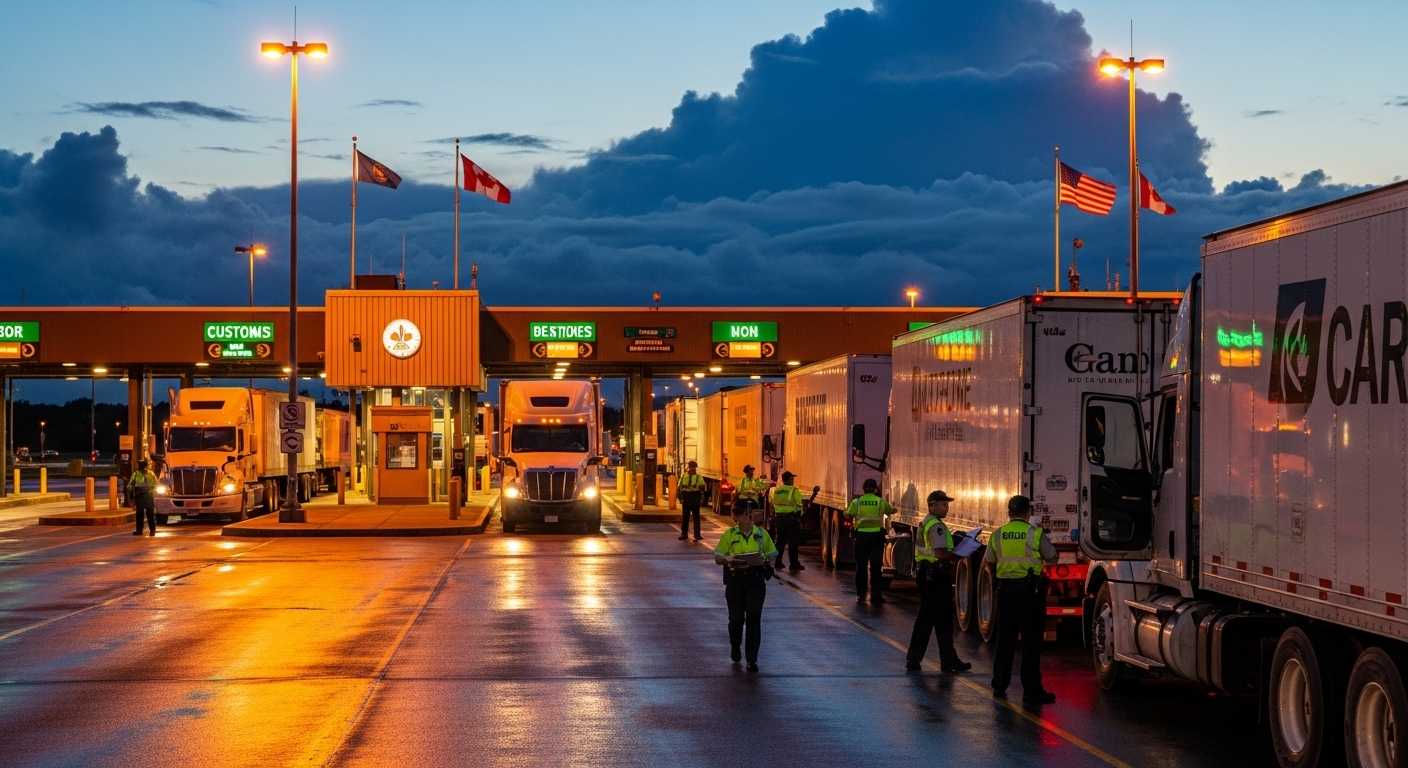
A cross-border checkout promise is only credible when the commercial terms, customs data, carrier service and returns process all agree. Many brands want shoppers to see a complete landed price and receive a parcel without an unexpected collection request. That experience is often described as delivered duty paid, or DDP. Other shipments leave import charges for the recipient, commonly called DDU in ecommerce conversation, although the current Incoterms® rule normally relevant to that structure is DAP—Delivered at Place. The label alone does not decide who can act as importer, how tax obligations apply, or what a carrier will collect. Those details depend on the shipment direction, goods, value, parties and applicable requirements. This guide provides an operational framework for Canada–US ecommerce and 3PL design. It is not legal, customs, tax or regulatory advice; obtain guidance from qualified customs brokers, tax professionals and legal advisers for your facts.
Start with precise terms: DDP, DAP and the legacy DDU label
Under Incoterms® 2020, DDP means the seller delivers at the named destination with import clearance and import duties and taxes allocated to the seller, subject to the rule's detailed obligations. DAP means the seller delivers at the named place ready for unloading, while import clearance and import charges generally sit with the buyer. DDU, or Delivered Duty Unpaid, was removed from the Incoterms rules in 2010, but carriers, platforms and consumers still use it informally. If a checkout or integration says DDU, determine whether the actual contract and carrier workflow are DAP. Incoterms allocate certain costs, tasks and risks between seller and buyer; they do not replace customs law, determine title, set payment terms or by themselves make a foreign seller eligible to be importer of record.
Do not configure a border program from a three-letter label alone. Name the place, identify the contracting parties, and document who clears, pays, files, collects and handles exceptions.
Build landed cost from product data, not a flat border allowance
Landed cost can include product cost, outbound fulfillment, transportation, brokerage or clearance fees, customs duty where applicable, import taxes and disbursement or advancement charges. The amount depends on reliable item data such as description, classification, origin, value and quantity, plus shipment destination and treatment. Preferential tariff treatment may be available for qualifying goods when origin requirements and records are met; merely shipping from Canada or the United States does not establish origin. Build a SKU-level data owner and validation process before promising an exact checkout amount. Model low, typical and high baskets, because order composition and thresholds can change the economics. Reconcile estimates against broker and carrier entries to identify classification, value, currency or fee discrepancies.
| Decision area | Seller-paid / DDP-style experience | Recipient-paid / DAP-style experience |
|---|
| Checkout | Duties, taxes and fees included or clearly represented | Potential import charges disclosed before purchase |
| Import process | Seller-arranged structure and eligible importer must be established | Recipient generally handles import obligations |
| Delivery | Designed to avoid collection from recipient | Carrier or broker may request payment before delivery |
| Cost risk | Seller bears estimation and reconciliation risk | Recipient bears variable import-charge experience |
| Returns | Refund and drawback/recovery process must be designed | Customer-paid charges may be difficult to recover |
Resolve importer-of-record implications before launch
The importer of record is responsible for the import declaration and related obligations under the destination country's framework. A commercial preference to offer DDP does not automatically make a seller eligible or operationally ready to fill that role. Canada and the United States have different programs, registration concepts and agency requirements, and product categories can involve other authorities. Ask a qualified customs broker and adviser who may act as importer for each direction, what registrations or security may be needed, how records are maintained, and whether agency, marketplace or non-resident structures affect the answer. Document powers of attorney and party identifiers accurately. Your 3PL can support product data, labels, manifests and handoff, but should not be assumed to become importer merely because it stores or ships the goods.
Importer-of-record responsibility should be explicit in contracts and customs instructions. Never infer it from who bought the shipping label or who physically tendered the parcel.
Align the checkout promise with the border workflow
Customers should know before payment whether import charges are included, estimated, or potentially collected later. Use plain language alongside any trade term, state the destination service and avoid promising that charges are 'guaranteed' unless the provider contract and reconciliation model support that claim. The ecommerce platform must pass item value, discounts, currency, origin and product descriptions consistently to the shipping or landed-cost engine. Test mixed baskets, refunds, promotions, gifts, split shipments and subscription renewals. A DDP-style experience can reduce surprise, but an inaccurate estimate creates margin leakage or later customer disputes. A DAP model can be appropriate where buyer-led importing is expected, yet consumer orders require especially clear disclosure because collection messages can look fraudulent or cause refusal.
- Display whether duties, taxes and clearance fees are included before payment.
- Pass SKU-level description, classification, origin, value and quantity.
- Define treatment for discounts, shipping charges, replacements and free samples.
- Test split shipments so charges and customer messaging do not duplicate.
- Keep customer-service scripts consistent with the actual carrier and broker process.
Design brokerage, carrier and 3PL handoffs as one flow
The 3PL creates shipment data and labels; the carrier moves and presents the parcel; the broker or carrier brokerage function submits import information; agencies make admissibility and assessment decisions. Map each handoff and define who resolves missing data, rejected entries, inspections, payment requests and address changes. Compare services on the full charge structure and data capability, not transportation rate alone. Confirm whether duties and taxes are estimated or finalized, how disbursement fees work, when invoices arrive and how corrections are submitted. Service availability can vary by origin, destination, value, commodity and account. Maintain a broker escalation path and prevent warehouse staff from improvising classifications or origin when master data is incomplete.
Know when a DDP-style customer experience helps
Seller-paid delivery can be valuable for consumer brands that compete on checkout clarity, have enough basket margin to absorb or price landed costs, and maintain accurate catalogue data. It may also support repeat purchase by avoiding unfamiliar collection requests. The model is less attractive when products have uncertain classification or admissibility, landed-cost tooling is immature, margins cannot absorb estimation differences, or the proposed importer structure is unresolved. DAP can suit certain business buyers accustomed to importing on their own accounts, or early market tests where clear recipient-paid terms are acceptable. Avoid treating one model as universally superior. Compare conversion goals, cost volatility, customer support burden, operational readiness and compliance advice for each lane and channel.
Plan returns, refunds and refused parcels before the first shipment
A cross-border return can reverse the physical movement without automatically reversing every duty, tax or brokerage amount. Decide where customers send returns, who is exporter and importer on the reverse movement, what value and reason are declared, and whether goods are restocked in-country or moved back across the border. Assess potential refund, drawback or relief mechanisms with a broker or adviser; eligibility, evidence and economics vary, and low-value recoveries may cost more to pursue. For DAP orders, the merchant may not control charges the customer paid directly. For DDP orders, link original entry and shipment records to the return. Distinguish refused, undeliverable, warranty replacement and ordinary return scenarios because each can need different instructions.
- Capture the original tracking, entry reference, SKU, value and charge record.
- Use an authorized return workflow with a clear declared reason.
- Choose domestic consolidation versus individual cross-border returns deliberately.
- Define who refunds product, shipping and any import-charge component.
- Track refused parcels separately and investigate customer messaging failures.
Implement with a cross-functional control checklist
Bring ecommerce, finance, tax, customs, customer service, 3PL, carrier and broker stakeholders together. Document shipment direction, named place and contractual term; importer and exporter roles; product-data ownership; checkout calculation; clearance service; payment flow; exception handling; reconciliation; record retention; and returns. Pilot representative products and baskets rather than only the simplest SKU. Compare checkout estimates, label data, customs submission, delivery outcome and final invoice. Monitor clearance exceptions, recipient payment requests, refused parcels, estimate-to-actual variance and support contacts. Expand only when the evidence shows that the promised experience and operating process agree. Revisit the design as products, destinations, marketplaces and official requirements change.
Frequently Asked Questions
What is the difference between DDP and DDU for Canada–US shipping?
DDP allocates import clearance and import duties and taxes to the seller under the rule's terms. DDU is a legacy term; the current Incoterms rule commonly intended is DAP, where the buyer generally handles import clearance and charges.
Does DDP mean the seller is automatically the importer of record?
No. The commercial term does not itself create eligibility or satisfy customs requirements. Confirm the importer structure, registrations, authority and records with qualified brokers and advisers for each direction.
Are goods shipped from Canada to the US automatically duty-free?
No. Treatment depends on factors including classification, origin, value and applicable rules. Shipping origin is not necessarily the product's origin, and preferential treatment can require qualification and records.
Can a 3PL calculate duties and taxes at checkout?
A 3PL may integrate shipment and catalogue data with a platform, carrier or landed-cost provider, but calculation quality depends on accurate product and transaction data. Clarify who supplies, validates and reconciles each field.
When is DAP preferable to DDP?
DAP may fit business buyers that routinely import on their own accounts or situations where the seller is not ready to manage importer and landed-cost responsibilities. For consumers, disclose potential collection clearly before purchase.
Are duties and taxes automatically refunded when a cross-border order is returned?
Not necessarily. Recovery depends on the jurisdiction, facts, records, charge type and available process. Link returns to original import records and seek case-specific broker or tax advice.
Related ByExpress resources