Guide · · 13 min read
Canada–US Ecommerce Returns: A 3PL Workflow for Labels, Customs and Refunds
A cross-border return needs more than a label. This operational workflow connects customer eligibility, return data, carrier and broker handoffs, consolidation, inspection, disposition and refund controls.
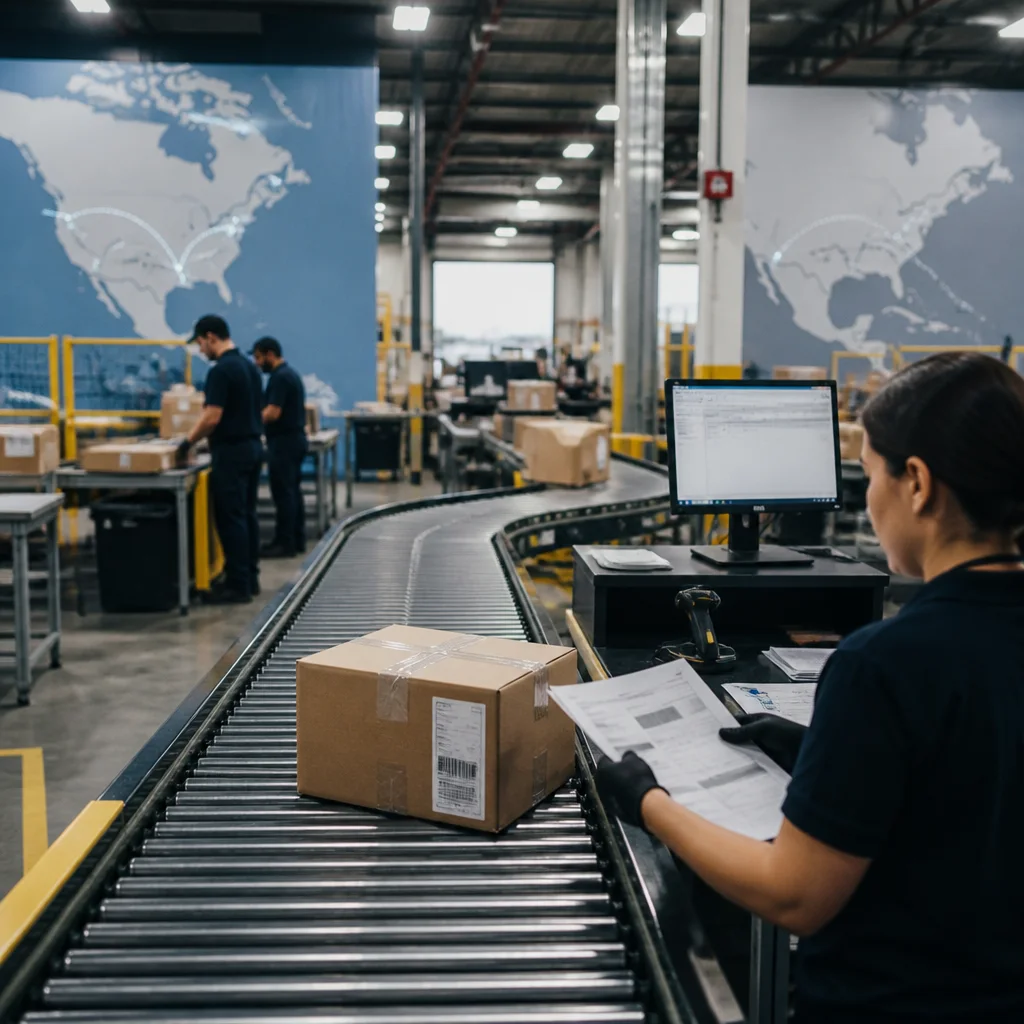
The best Canada–US ecommerce returns workflow is a controlled sequence: authorize the return, issue the right label, capture the item and declared reason, prepare accurate customs information, hand the parcel to the agreed carrier or broker, consolidate where appropriate, inspect it, and release the refund under the merchant’s policy. ByExpress Logistics can help merchants map that sequence around warehouse, shipping and returns operations; specific carrier services, customs treatment, timelines and contract terms must be verified for each product and lane. This guide is operational planning, not legal or tax advice. It deliberately focuses on returns execution rather than repeating a DDP or customs-documentation guide.
Six checkpoints in a Canada–US ecommerce return
Treat each checkpoint as an owned operational event.
- Authorize: Apply the merchant policy and create one return authorization.
- Label: Select the lane, service, payer and destination; link the tracking number.
- Declare: Provide accurate item, value, origin and return-reason data for the agreed customs process.
- Move: Monitor carrier and broker scans, exceptions and consolidation custody.
- Inspect: Reconcile identity and condition, quarantine exceptions and record evidence.
- Resolve: Release the approved refund and route the item to its authorized disposition.
A return is complete only when the parcel, decision, money and inventory record agree.How should a merchant decide whether to authorize a cross-border return?
The first control is a return-policy gate that produces one clear disposition: approve, request more information, offer an alternative remedy, or decline under the merchant’s published policy. Check order identity, item eligibility, purchase date, condition requirements, warranty or damage evidence, destination, and whether the customer is the importer or recipient recorded in the transaction. The support system should retain the decision, reason code and approver, while the warehouse receives only the handling instructions it needs. Do not promise a refund merely because a label was created; authorization and receipt are separate events.
Write the customer message in plain language and state who pays transport, where the parcel goes, the label expiry, packaging expectations, inspection conditions and the event that triggers a refund. Policies differ by product and jurisdiction, so merchants should have qualified counsel review consumer-law wording rather than copying a generic template. A 3PL can enforce the operational version of an approved policy, but it should not invent eligibility rules. If the item may contain batteries, liquids, food, medical products or other regulated materials, pause the normal flow until the carrier and compliance requirements are verified.
Which return label and routing decision fits the Canada–US lane?
A return label should match the parcel’s actual origin, destination, service level, package profile and account arrangement. Decide whether the customer sends to a Canadian facility, a US facility, or a carrier consolidation point; then confirm that the label’s shipper, payer, service and return address agree with that decision. The cheapest label is not necessarily the lowest-cost option if it creates cross-border brokerage work, a remote-area surcharge, slow recovery or a second customer contact. Record the label number against the original order and return authorization before sending it.
Give the customer packaging instructions that reflect the product’s fragility and the carrier’s acceptance rules. A prepaid label does not remove the need for accurate parcel weight, dimensions or contents. For exchanges, replacement orders and repair flows, use distinct transaction and tracking identifiers so an outbound replacement is not mistaken for the returned unit. Test labels in both countries before launch, including address formatting, apartment or suite fields, scan events and failed-label handling. Carrier availability and service names change; confirm current terms instead of treating this workflow as a service guarantee.
What customs data must be captured on a Canada–US return?
Capture a truthful, item-level description, quantity, country of origin, value and reason for return, along with the original order and return authorization identifiers. The data should make clear that the parcel is a returned commercial good when that is factually correct, but merchants must not choose a customs treatment simply to avoid charges. Match the return record to the original shipment’s documents where available and keep the commercial invoice or electronic data consistent with the physical contents. A vague description such as “goods” is difficult for a broker to review and can delay the parcel.
The merchant, importer, exporter and broker should agree which party supplies each field and who resolves a customs query. Product classification, valuation, origin and duty or tax treatment can depend on facts not present in a warehouse system; obtain professional customs advice when uncertain. Keep evidence of the original sale, export and return reason according to the merchant’s retention policy. This is not a tax recommendation: confirm treatment with a licensed broker or adviser and current Canada Border Services Agency and US Customs and Border Protection guidance before operationalizing an exception.
How do carrier and broker handoffs prevent a return from stalling?
Assign ownership at each handoff: the customer tenders the parcel, the carrier accepts and scans it, the broker resolves admissibility or documentation questions, and the 3PL receives and reconciles it. Define the expected scan sequence and an escalation clock for label-created, tendered, in-transit, customs-held, delivered and exception states. A dashboard should connect those events to the order and SKU, not just display a tracking number. If a parcel is held, support should tell the customer what is known, what information is needed and who is responsible for the next action.
Before launch, test representative returns with both carrier and broker contacts. Confirm the return address, electronic customs message, account permissions, after-hours escalation, refused-parcel path and evidence required for claims. Never assume that an international outbound process automatically works in reverse. A 3PL should reconcile the manifest to physical receipts and flag duplicate labels, missing scans, unexpected duties or parcels addressed to the wrong node. Keep customer-facing status language narrower than internal assumptions: “awaiting customs review” is more accurate than claiming a parcel is lost.
When does return consolidation make operational sense?
Consolidation can reduce handling complexity when multiple eligible returns move toward the same inspection or restock location, but it changes the control points. Decide the consolidation node, minimum cadence, carrier handoff, manifest structure and maximum dwell time before using it. Each parcel must remain individually traceable inside the master movement. Separate goods that cannot safely travel together, such as leaking, damaged, temperature-sensitive or regulated items. The cost comparison should include warehouse labour, storage, repacking, brokerage, linehaul, loss exposure and refund delay rather than only the transport line.
At the consolidation node, scan every return authorization and parcel identifier, verify count, photograph exceptions and seal the movement under a manifest. Reconcile the master shipment at departure and again at receipt. Do not combine parcels merely because they share a destination if customs declarations or ownership differ. A merchant should compare consolidated and direct-return lanes using its own order density and service promise; no universal volume threshold applies. If a return is urgent, high value or already in a customs exception, a direct route may be more controllable than waiting for a batch.
What should a 3PL do when a Canada–US return arrives?
Receipt starts with an identity and condition check, not an automatic refund. Scan the return authorization, order, SKU, serial or lot identifier where applicable, parcel, carton count and visible condition. Photograph meaningful damage, missing parts and tampering before opening. Quarantine goods with leakage, contamination, safety concerns or an uncertain identity. Use a standard inspection form that records packaging, accessories, functionality, cosmetic grade and reason-code confirmation. The inspection outcome should be timestamped and attributable to a trained operator.
Route the result to an approved disposition: restock, repackage, repair, exchange, vendor return, liquidation, recycling or disposal. The right route depends on product policy, condition, safety and inventory controls, not on a picker’s improvised judgment. Record the disposition and any component consumption so available stock remains accurate. For high-value goods, add a second review or serial verification. ByExpress can coordinate warehouse and returns workflows, but the merchant retains the product policy and should approve any recovery standard that affects customer outcomes or financial reporting.
How should refunds and cross-border charges be reconciled?
Set the refund trigger before launch: it may be carrier-confirmed receipt, warehouse receipt, completed inspection, or another merchant-approved event. Separate that trigger from the customer’s return authorization and from the date a broker resolves a customs question. The order system should record refund amount, shipping treatment, exchange status, deductions permitted by the merchant policy, currency, payment instrument and reviewer. Never infer a refund amount from a carrier scan alone when the merchant’s policy requires condition inspection.
Reconcile operational and financial records by return authorization, order, tracking number and invoice. Investigate mismatches such as a refund without a receipt, a receipt without a refund, duplicate refunds, unexpected brokerage, duty or tax charges, and an item restocked under the wrong SKU. Currency conversion and tax treatment can depend on jurisdiction and transaction facts; merchants should verify them with accounting or tax professionals. A weekly exception queue is more useful than an impressive aggregate refund rate because it exposes failures before they become customer escalations.
Which metrics improve a Canada–US returns operation?
Measure the complete return journey: authorization-to-label time, label-to-tender time, first scan rate, customs exception rate, transit time, receipt-to-inspection time, inspection-to-refund time, recovery rate, cost per completed return and repeat contact rate. Segment by country, carrier, product, return reason and disposition. A single average can conceal a lane that is fast for low-value parcels but poor for oversized or damaged goods. Define each metric’s numerator, denominator and event timestamp so the merchant, carrier and 3PL calculate it the same way.
Review exceptions with evidence rather than assigning blame from the last scan. A high damage rate may reflect packaging, customer handling, carrier transfer or an inaccurate reason code; verify the pattern before changing the process. Sample accepted returns for data quality and rejected returns for consistency. Use a short operating review to assign an owner and due date for each fix. ByExpress-related service pages can help a merchant evaluate warehouse, shipping, inventory and returns capabilities, while lane pricing, brokerage scope and service levels must be confirmed in a current proposal.
Frequently Asked Questions
Should a Canada–US return always cross the border again?
No. A merchant can choose a Canadian or US return node when its inventory, customer promise, carrier network and customs process support that choice. Compare recovery value, transport, brokerage, handling and refund time for the actual lane.
Does a prepaid return label guarantee duty-free treatment?
No. A prepaid label pays for the transport arrangement and does not by itself determine customs classification, valuation, duty or tax treatment. Confirm the factual declaration and treatment with the carrier, broker and qualified adviser.
When should a customer receive a cross-border return refund?
The merchant should publish and operationalize a clear trigger, such as receipt or completed inspection, subject to its policy and applicable requirements. A label creation or an in-transit scan is not automatically proof that the item was returned.
Can a 3PL consolidate Canadian and US returns?
Yes, if the node, custody, manifest, individual parcel traceability, customs data and dwell limits are designed in advance. Do not combine parcels with incompatible goods or different declarations without broker and carrier confirmation.
What should happen to a return with missing customs information?
Place it in an exception workflow, identify the missing factual data, and assign the merchant or broker to resolve it. Do not guess a classification, value or origin merely to move the parcel.
What evidence should a warehouse capture during inspection?
Capture the authorization and SKU identity, parcel and carton count, visible and internal condition, accessories, serial or lot data where relevant, photographs, inspection result and approved disposition. Retention and privacy practices should match the merchant’s policy.
Related ByExpress resources