Guide · · 11 min read
Kitting and Bundling in Canada: How a 3PL Handles Ecommerce Product Configurations
Bundles can increase merchandising flexibility, but they also create component dependencies. A clear BOM, inventory model, build strategy and quality plan keep configurations accurate and available.
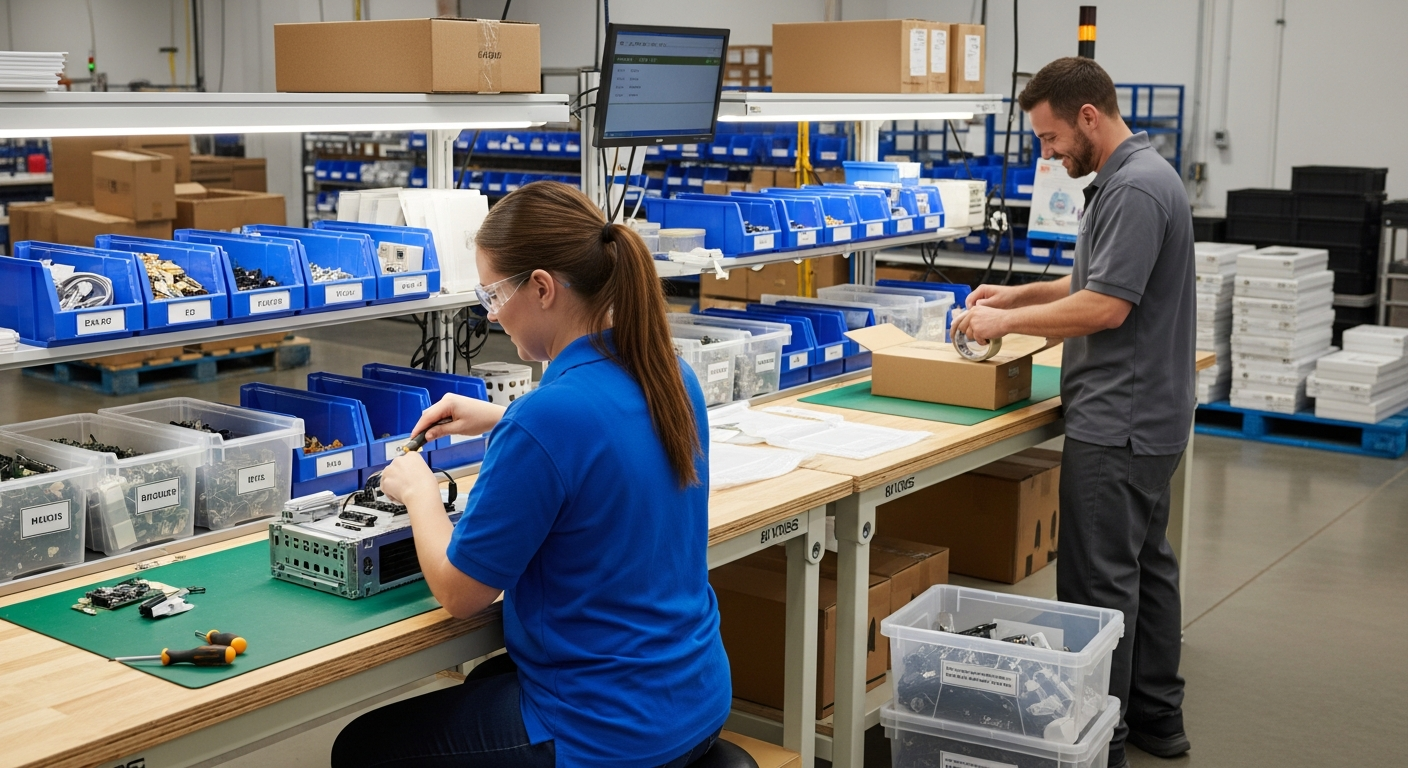
An ecommerce bundle looks simple on a product page: three items, one offer and one add-to-cart button. In the warehouse it may be a virtual relationship among components, a finished kit assembled in advance, or a presentation-ready pack with inserts, labels and a new barcode. Each model changes how availability is calculated, how labour is scheduled, how returns are processed and how costs appear. Without a controlled bill of materials, one missing component can create overselling across several channels. Without defined quality checks, a seasonal promotion can produce hundreds of consistently wrong packs. This guide explains how kitting and bundling 3PL Canada operations translate merchandising concepts into repeatable warehouse work. It covers master data, component control, pre-build versus on-demand decisions, quality assurance, cost drivers and channel-specific configurations. Product labelling, tax, consumer and sector-specific questions should be reviewed by the brand with appropriately qualified advisers; this is operational guidance, not legal or regulatory advice.
Choose the right product configuration before designing the workflow
A virtual bundle remains separate inventory until an order triggers component picks. A pre-built kit consumes components and creates a distinct finished good before sale or shipment. A multipack groups identical units, while an assortment combines different items. Subscription and gift sets may add sequence, personalization or presentation requirements. Clarify whether the customer sees one SKU or multiple lines and whether the warehouse may substitute. The answer affects barcodes, inventory promise, packing slips, returns and channel feeds. Avoid using “bundle” as a universal specification. Give each configuration a type, owner, effective date and lifecycle status so operations can distinguish an active promotion from an obsolete recipe.
The first kitting decision is not how fast to assemble. It is whether the offer should be virtual, pre-built or supplier-packed—and which system owns that truth.
Make the bill of materials an approved operating instruction
The bill of materials (BOM) defines finished SKU, component SKUs, quantity per kit, permitted revisions and yield. The work instruction adds sequence, orientation, packaging, inserts, labels, seals, lot rules and images of an acceptable result. Version both records. A campaign should not quietly replace a component in the commerce platform while the warehouse follows an older worksheet. Set effective dates, approval roles and treatment of work in progress when a revision changes. If alternatives are permitted, list them explicitly and specify authorization. Confirm component units of measure: “one case” and “one each” can both look valid while producing a costly error. For traceable products, define whether component lot genealogy must be carried into the finished kit.
- Assign a unique finished SKU and, where needed, a scannable barcode.
- List exact component SKUs, quantities and units of measure.
- Version packaging, inserts, labels, sequence and visual standards.
- Define substitutions, tolerances, effective dates and approvers.
- State de-kitting, expiry and component-lot requirements.
Protect component inventory from competing demand
Components may be sold individually, consumed by several bundles and reserved for wholesale orders at the same time. Virtual availability should equal the limiting component after reservations, safety stock and channel rules—not the sum of apparent demand. For example, a bundle requiring two units of component A can promise only half of A's eligible quantity, subject to every other component. Pre-building transfers quantities from component records to the finished SKU and should create linked consumption and production transactions. Decide how damaged components, assembly scrap and count variances are recorded. Forecast at both finished-offer and component levels, because a weak forecast for a low-cost insert can block an otherwise valuable kit.
Compare pre-build, on-demand and hybrid kitting
Pre-building makes order picking simpler and can support presentation, curing or inspection requirements, but it commits components and consumes finished-goods storage. On-demand kitting retains merchandising flexibility and shared component stock, but adds touches to the order path and can strain cutoff performance during promotions. A hybrid model pre-builds a base quantity and assembles overflow on demand. Choose using demand confidence, component overlap, labour capacity, shelf life, presentation complexity and the cost of reversing a kit. Small pilots can validate actual work content before a large campaign. Define replenishment triggers and maximum build quantities so the workcell does not create excess stock merely to stay busy.
| Model | Best fit | Main advantage | Main trade-off |
|---|
| Virtual bundle | Simple component sets, volatile demand | Maximum component flexibility | More picks and dependency at order time |
| Pre-built kit | Stable demand or detailed presentation | Fast, consistent outbound handling | Commits stock and storage |
| On-demand kit | Low-volume or personalized offers | Minimal finished-goods exposure | Adds order-cycle labour |
| Hybrid | Promotions with uncertain upside | Base readiness plus flexibility | More planning and two workflows |
| Supplier-packed | Long-running standardized sets | Reduces warehouse assembly | Longer change lead time |
Design the workcell and quality checks together
Stage components in scan-confirmed locations and control replenishment so look-alike products do not drift into the workcell. The instruction should show each step visually, including orientation and placement, not depend on memory. Scan components and finished identity where volume and risk justify it. Quality can include first-article approval, in-process sampling, weight checks, barcode validation, seal inspection and final count reconciliation. The right plan depends on the consequence of an error; not every simple bundle needs the same inspection as a serialized or premium presentation kit. Record defects by reason and work order so trends lead to process corrections. Quarantine suspect output until disposition is approved rather than mixing it with released kits.
Inspect the first completed kit before releasing the run. A wrong instruction repeated perfectly is still a failed production batch.
Model costs by activity, material and inventory consequence
Kitting cost can include setup, component picks, assembly touches, packaging material, labels, quality inspection, finished-goods storage, work-order administration and de-kitting. Receiving components in mixed or poorly labelled cartons adds preparation that may not appear in the quoted assembly rate. Compare total landed handling under realistic volumes and run sizes, not only a per-kit headline. Pre-building may lower order-path labour but create carrying cost and obsolescence; on-demand work may preserve stock but require more expensive peak capacity. Agree how scrap, brand-requested rework, material variance and unused custom packaging are approved and reported. A trial run is often the best source for an activity-based estimate.
Keep channel bundles distinct without fragmenting control
Shopify, marketplaces, subscriptions and retailers may represent the same commercial offer differently. One channel may send a parent bundle SKU, another individual component lines, and a retailer may require a pre-labelled finished case. Maintain a channel-to-warehouse mapping that identifies offer code, warehouse SKU, BOM version, barcode, packaging and inventory rule. Do not assume a connector automatically understands bundle decomposition. Test inventory publication, order import, cancellations, partial availability and tracking writeback for each representation. Channel-exclusive inserts or labels should be rule-driven and date-bounded to prevent leakage into other orders. Where a retailer supplies routing or packaging instructions, the brand should provide the current approved requirements to the 3PL.
- Map every channel offer to one controlled warehouse configuration.
- Test parent-SKU decomposition and component reservations.
- Separate channel-specific labels, inserts and carton rules.
- Define returns at bundle and component level.
- Retire campaign mappings and residual materials deliberately.
Pilot, launch and manage each kit through end of life
Create a sample work order and inspect the first article with the brand. Run a pilot large enough to expose replenishment, scanning and packaging issues, then compare planned with actual labour and yield. Before launch, reconcile component consumption to finished output and confirm channel availability. Monitor build throughput, defect and rework reasons, component shortages, order-cycle impact and aged finished kits. At campaign end, decide whether remaining kits will continue selling, be discounted, de-kitted, returned or disposed of under approved instructions. Reconcile custom materials as well as products. A post-run review should update BOM data, work standards and costing assumptions so the next configuration starts from evidence rather than recollection.
Frequently Asked Questions
What is the difference between kitting and bundling?
Bundling often describes the commercial offer, while kitting describes physical assembly. A bundle can remain virtual until order time or become a pre-built finished kit with its own SKU and packaging.
What belongs in a bundle BOM?
Include finished identity, exact component SKUs and quantities, units of measure, revision and effective date. Link it to instructions for packaging, labels, inserts, sequence, substitution, quality and traceability.
Should a 3PL pre-build kits or assemble on demand?
Pre-build suits predictable demand and detailed presentation; on-demand suits volatile or personalized offers. A hybrid can cover base demand while preserving flexibility. Decide using demand, labour, storage, shelf life and reversibility.
How is virtual bundle inventory calculated?
Availability is constrained by the component that supports the fewest complete bundles after reservations, safety stock and channel rules. The system must also account for components shared with individual sales and other bundles.
How does quality assurance work for kitting?
Common controls include approved instructions, first-article inspection, component scans, in-process sampling, weight or barcode checks and final reconciliation. The plan should be proportional to product and error risk.
What happens when a bundle is returned?
The policy should state whether partial returns are accepted and how component condition is assessed. The 3PL should record received items and route them to restock, hold, rework or another approved disposition without assuming a complete kit.
Related ByExpress resources