Guide · · 14 min read
Lithium Battery Returns in Canada: Ecommerce and 3PL Handling Controls
Battery returns need a decision process before they re-enter ordinary inventory. This Canadian fulfillment guide covers intake, quarantine, classification review, transport, training, records and disposition.
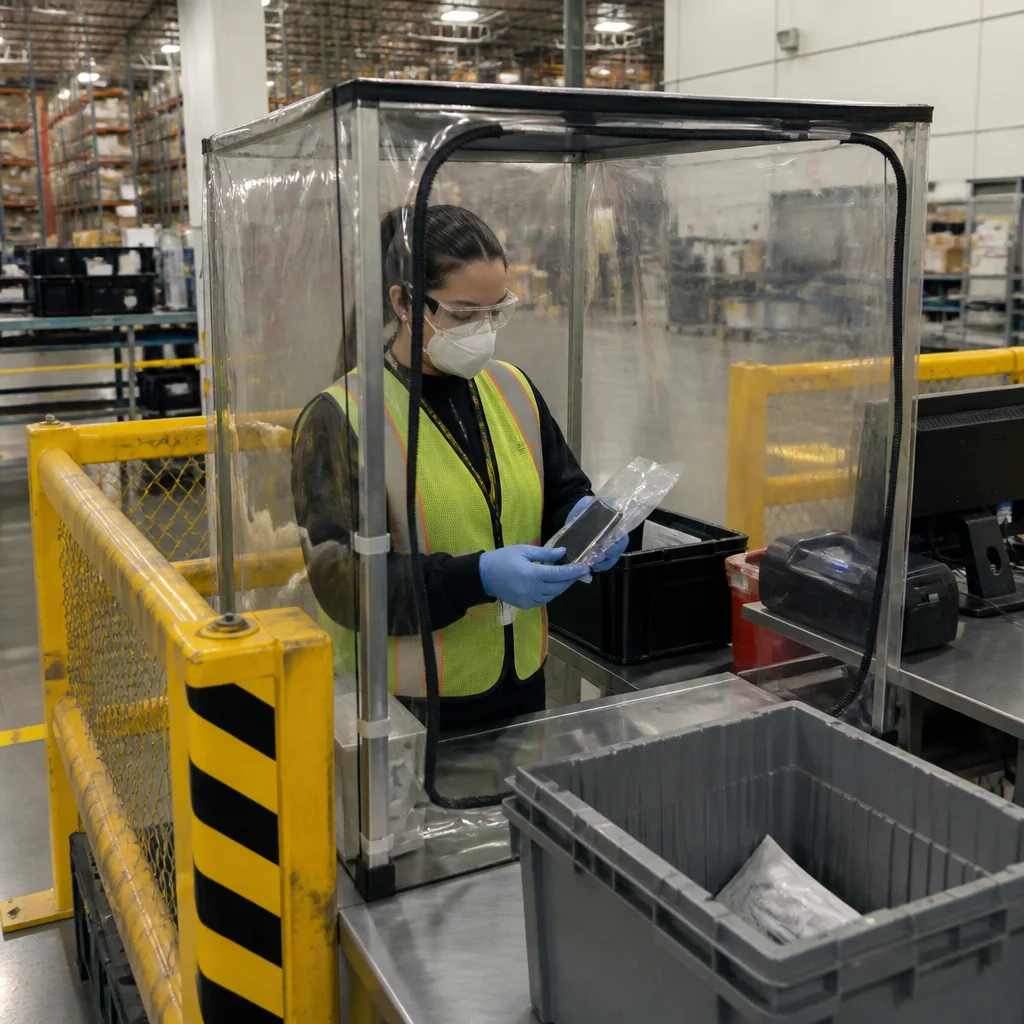
Lithium-battery returns should enter a controlled exception workflow, not ordinary restock. The correct handling depends on the battery type, state of charge, packaging, condition, quantity, transport mode and reason for return; a damaged, defective or recalled battery may require a different decision from a new unopened product. ByExpress Logistics can help structure intake, quarantine, records and disposition, but it does not classify shipments or replace a dangerous-goods adviser. Canadian Transportation of Dangerous Goods (TDG) requirements vary by battery and movement, so verify the current Transport Canada rules and carrier acceptance before transport. The operational objective is not to make every return follow one script; it is to make the next safe decision repeatable, visible and attributable. A documented exception route is especially important when customer support, a warehouse, a carrier and a manufacturer each hold part of the information. Clear ownership prevents an urgent safety question from waiting in an unassigned customer-service queue. The workflow should be reviewed after any incident, recall or carrier-policy change.
Six controls for a Canadian lithium-battery return
Keep the return out of ordinary inventory until each control is complete.
- Screen before label: Capture product, battery configuration, symptoms and damage indicators.
- Triage at intake: Stop normal processing when heat, swelling, leakage, impact or recall signals appear.
- Quarantine: Isolate uncertain units under the facility’s approved safety procedure.
- Review classification: Obtain shipment-specific dangerous-goods direction before movement.
- Use approved route: Apply the confirmed packaging, carrier, marks and documents.
- Record disposition: Document restock, repair, recall, recycling or authorized disposal.
Condition and transport details determine the safe path; a generic return label never does.Why do lithium-battery returns need a separate workflow?
A returned battery product carries operational information that an outbound order may not: it may have been installed, dropped, exposed to water, overcharged, modified, recalled or reported as hot, swollen, leaking or smoking. A customer’s description can be incomplete, but it is still a valuable safety signal. The first warehouse decision is therefore not “restock or refund”; it is “can this item enter the facility and what controls apply?” That change in mindset protects the next handler from inheriting an undocumented hazard and gives customer support a clear escalation path.
Different batteries and products can fall under different transport descriptions and requirements. Lithium-ion and lithium-metal batteries are not interchangeable categories, and a battery contained in equipment is not the same movement as a battery packed with or shipped separately from equipment. Condition and mode also matter. Never use a generic battery label or a familiar carrier service as proof that a return is acceptable. Product documentation should be available to the reviewer, including chemistry, rating and configuration information where it can be obtained safely.
What should ecommerce teams ask before authorizing a battery return?
The return form should identify the product and battery configuration, whether the battery is installed or separate, the reported problem, visible damage, unusual heat, odour, smoke, leakage, swelling, impact, water exposure and whether the item was involved in a recall. Ask the customer not to mail a visibly damaged or smoking item through an ordinary return label. Provide an escalation channel instead of asking a customer to diagnose a dangerous-goods category. Use plain language and a prominent stop instruction; a customer should not need technical vocabulary to report a concern.
Screening information should reach the warehouse and returns team before a label is issued. A normal parcel label can create an uncontrolled handoff when the product needs specialist advice or a different carrier. Keep the screening response tied to the order and return authorization, protect personal information, and show the decision, reviewer and date. If a response is unclear, route it to the trained adviser rather than guessing. Make the exception visible in the order system so an automated replacement or refund process cannot accidentally issue a second ordinary label.
How should a Canadian warehouse triage a returned battery?
Train receiving staff to stop the normal put-away process when a battery return presents a red flag. Visible swelling, puncture, crushing, leakage, smoke, fire damage, abnormal heat or a strong chemical odour should trigger isolation and escalation under the facility’s emergency plan. Staff should avoid manipulating, charging, powering on, opening or repacking a suspect item unless a competent procedure specifically permits it.
Use a designated quarantine area separated from saleable stock and ordinary returns, with access limited to trained personnel. The exact location, container and handling method require a site-specific hazard assessment; this article cannot prescribe a universal setup. Record condition with photographs where safe, product identifiers, arrival time, carrier, packaging state and the person who made the initial decision. Fire protection, emergency response and occupational-safety questions belong with qualified professionals and local requirements.
When is a battery classification or adviser review needed?
A classification review is appropriate whenever the battery chemistry, configuration, watt-hour or lithium content, state of charge, condition, packaging or transport mode could affect the applicable TDG treatment. A new, intact device may follow a different path from a defective or recalled battery. The shipper should confirm the proper shipping description, hazard information, packaging instruction, marks or labels, documentation and carrier acceptance before the item moves.
Transport Canada’s TDG resources are the starting point for Canadian requirements, but a web page is not a substitute for shipment-specific advice. Ask a trained dangerous-goods professional or the carrier’s qualified contact to review uncertain cases. Preserve the determination with the return record, including what facts were supplied and what assumptions remain. If an assumption changes—such as the item being damaged rather than merely unwanted—pause and reassess.
How should approved lithium-battery returns be packaged and routed?
Only use packaging and preparation approved for the specific battery and transport situation. Prevent movement and contact between terminals where required, protect the product from short circuit and physical damage, and follow the applicable packing instruction rather than copying an outbound carton. A return box that protected a new product may be unsuitable for a damaged unit. Do not consolidate uncertain items merely to save space.
Select a carrier and service that explicitly accepts the shipment as prepared. Confirm pickup conditions, required marks and labels, paperwork, service territory and restrictions before tender. Keep the approved route separate from ordinary parcel-return automation. If no compliant route is available, hold the item in quarantine and escalate to the responsible adviser or authorized waste contractor; do not hand it to a carrier without confirmation.
| Return signal | Immediate warehouse posture | Next decision |
|---|
| Unwanted, unopened and intact | Identify product and keep packaging controlled | Verify ordinary return route for the battery configuration |
| Used but apparently intact | Quarantine pending inspection and records | Confirm classification, testing and approved transport |
| Swollen, leaking, hot or crushed | Isolate and escalate under site procedure | Obtain competent safety and dangerous-goods direction |
| Recalled or defective | Do not restock or commingle | Follow recall owner, adviser and approved disposition plan |
| Unknown condition | Treat as an exception | Resolve facts before label, movement or charging |
What training do returns and warehouse staff need?
Training should be role-specific. Customer support needs a safe question set and escalation script; label creation staff need stop rules; receiving staff need visual red flags and quarantine procedures; packers need approved packaging instructions; supervisors need incident and carrier-escalation contacts. Training should explain what employees must not do, including charging, testing, disassembling or placing a suspect unit into general inventory without authorization.
Document the training topic, version, attendees, date and competency check. Refresh it when a product line, packaging method, carrier, facility layout or regulation changes. Run a tabletop exercise for a customer reporting smoke and another for a damaged return discovered at receiving. Exercises expose gaps in after-hours contacts and decision ownership without requiring staff to handle a hazardous item.
Which records support safe battery return decisions?
A complete record connects the original order, return authorization, product and battery identifiers, customer symptom, photos, intake condition, quarantine location, classification review, packaging decision, carrier, shipment documents, inspection result and final disposition. For a recall, connect the unit to the manufacturer’s instruction and affected lot or serial range. Keep records for the period required by applicable rules, contracts and the organization’s retention policy.
Disposition should be explicit: approved restock, repair, manufacturer return, recall hold, recycling, disposal or another authorized outcome. Do not send a questionable battery to ordinary recycling or municipal waste because it is inconvenient to store. Confirm that the downstream recycler or waste contractor accepts the relevant battery and condition. Record chain of custody and certificates or receipts where provided, while recognizing that environmental and hazardous-waste requirements can also vary by jurisdiction.
How should a 3PL and brand govern battery returns?
The service agreement should identify who owns product classification, who approves labels and carriers, who pays for specialist handling, who communicates a recall, who may authorize disposition and who responds to an incident. A 3PL can provide scan events, quarantine controls, photographs and inventory status; it should not make an unqualified legal or safety determination simply because it operates the warehouse. Brand, carrier and adviser responsibilities need named contacts and escalation times.
Useful measures include the share of returns screened before label creation, time from receipt to classification decision, quarantine ageing, missing product identifiers, unapproved carrier attempts, training completion and disposition cycle time. Treat incident counts as safety signals, not a target to minimize through under-reporting. ByExpress can help coordinate Canadian reverse-logistics workflows around the client’s approved rules, with actual carrier capability and service scope confirmed for each product and lane.
Frequently Asked Questions
Can a customer use a normal return label for a lithium battery product?
Not automatically. The seller should screen the product and condition first, then confirm the applicable TDG treatment and carrier acceptance. A damaged, defective, recalled or separately shipped battery may require a different process.
Should a swollen lithium battery be shipped back to the warehouse?
Do not instruct a customer to use an ordinary parcel return for a swollen battery. Use the seller’s safety escalation process and obtain shipment and disposition direction from qualified dangerous-goods and safety professionals.
Can a returned battery be charged to test it?
Not as a default warehouse step. Charging, powering or testing a return can create risk when its condition is unknown. Only trained personnel following an approved procedure should perform any evaluation.
Does TDG treatment depend on the transport mode?
Yes. Requirements can depend on the battery, configuration, condition, quantity, packaging and mode. Verify the current Transport Canada rules and carrier requirements for the specific movement.
How long should a 3PL keep battery-return records?
Use the retention period required by applicable regulations, contracts, recall instructions and company policy. Because periods and record types vary, the brand and qualified adviser should approve the retention schedule.
Can a 3PL dispose of a battery return?
Only within an approved scope and through an authorized route for the battery’s type and condition. The 3PL should document authorization, chain of custody and downstream acceptance rather than placing an uncertain unit in ordinary waste.
Related ByExpress resources