Blog · · 12 min read
The Biggest Logistics Challenges Canadian Businesses Face in 2026
Canadian supply chains in 2026 are contending with a tight labour market, elevated transportation costs, harder inventory decisions, cross-border friction, and customers who expect fast, free, and transparent delivery. Here's a clear-eyed look at each challenge and how businesses are responding.

Running a supply chain in Canada has always meant working against geography — a vast landmass, long lanes between a handful of dense population centres, harsh winters, and a shared border that carries the majority of the country's trade. In 2026 those structural realities are compounded by a tight labour market, transportation costs that have not fully retreated from their highs, inventory strategies caught between the cost of holding stock and the risk of running out, cross-border processes that add friction and unpredictability, and customers whose expectations for speed, cost, and visibility keep rising. None of these challenges is new, but their combination is squeezing margins and testing operations across sectors. This article looks clearly at the five biggest logistics challenges Canadian businesses face this year, why each one is hard, and the practical responses — including where partnering with a 3PL changes the equation.
Labour shortages in warehousing and transport
The people problem is arguably the hardest to solve because it is structural, not cyclical. Warehousing and freight rely on pickers, packers, forklift operators, and — most acutely — commercial truck drivers, and all of these roles face persistent shortages in Canada. The driver workforce skews older, recruitment into the trade lags retirements and attrition, and the seasonal and physical nature of warehouse work makes staffing volatile, especially around the Q4 peak when demand for labour spikes exactly when it's hardest to find. The consequences show up as higher wages, harder recruiting, quality and accuracy pressure when teams are stretched, and capacity that can't flex up fast enough for peak. Businesses are responding with automation and process improvement to reduce labour dependence, better retention and training to hold experienced staff, and by outsourcing fulfillment to 3PLs that maintain trained, cross-facility labour pools and can absorb seasonal surges without the client having to hire and lay off directly.
Labour scarcity hits hardest exactly when you need it most — the Q4 peak. Businesses that rely on hiring temporary staff at the last minute consistently struggle; those with automation or a 3PL's flexible labour pool absorb the surge far better.
Rising and volatile transportation costs
Transportation is a large share of landed cost in Canada, and it stays stubbornly elevated and volatile. Fuel prices move with global energy markets and feed directly into fuel surcharges, driver wages climb with the labour shortage, insurance and equipment costs rise, and Canada's long, thin lanes mean many shipments simply travel far. Layered on top are accessorials — residential delivery, remote-area premiums, dimensional-weight pricing, address corrections — that inflate the true cost per shipment well beyond the base rate. For businesses shipping nationally, the West is especially expensive to reach from Central and Eastern hubs. The most effective responses attack cost structurally rather than hoping rates fall: distribute inventory to shorten shipping zones, optimize packaging to cut dimensional weight, rate-shop across multiple carriers on every order, and negotiate — or access through a 3PL — volume-aggregated carrier rates. Treating shipping as a managed discipline rather than a fixed expense is what separates businesses that control this cost from those that absorb every increase.
- Fuel surcharges that track volatile energy markets
- Driver wage pressure from the labour shortage
- Long domestic lanes and remote-area premiums, especially reaching the West
- Accessorials and dimensional-weight pricing inflating true cost per parcel
- Responses: distributed inventory, packaging optimization, multi-carrier rate shopping, negotiated rates
Inventory management under conflicting pressures
Inventory sits at the centre of a genuine dilemma in 2026. Hold too much and you tie up cash, pay for warehouse space, and risk obsolescence and markdowns; hold too little and you stock out, lose sales, damage marketplace rankings, and disappoint customers. The lean, just-in-time posture that dominated pre-pandemic thinking has given way to more cautious buffering after years of supply disruption — but buffers are expensive and demand is hard to forecast when consumer behaviour is choppy. Compounding this, many businesses still lack real-time, accurate inventory visibility across channels and locations, so they're making buy and replenishment decisions on stale or fragmented data. The practical path forward is better data and discipline: real-time inventory visibility across all channels, demand forecasting tuned to actual sell-through, safety-stock levels set deliberately per SKU rather than uniformly, and — for many businesses — distributed inventory that positions stock closer to demand while a 3PL's WMS keeps a single reconciled source of truth across nodes and sales channels.
| Challenge | Symptom | Practical Response |
|---|
| Overstocking | Cash tied up, storage cost, markdowns | Demand forecasting, per-SKU safety stock |
| Stockouts | Lost sales, ranking damage | Real-time visibility, replenishment triggers |
| Fragmented data | Decisions on stale counts | Unified WMS across channels and nodes |
| Slow replenishment | Long lead times, missed peaks | Distributed inventory closer to demand |
Cross-border delays and friction
The Canada–US border carries the large majority of Canada's trade, so anything that adds friction there ripples through supply chains nationwide. In 2026, businesses continue to contend with customs documentation complexity, classification and duty determination, evolving trade-policy and tariff uncertainty, occasional congestion at major crossings, and the compliance overhead of programs and paperwork that must be exactly right to avoid holds, penalties, or refused shipments. For e-commerce sellers, cross-border returns and the tax and duty treatment of low-value shipments add further complication. Delays here are especially damaging because they're unpredictable — a shipment held at the border throws off inventory plans and customer promises simultaneously. Businesses reduce this friction with accurate, complete customs documentation, correct tariff classification, use of bonded or customs-experienced facilities, and by working with logistics partners who handle cross-border compliance routinely rather than treating each shipment as a one-off. Building buffer time into cross-border lead times is prudent given the unpredictability.
Rising customer delivery expectations
Customer expectations, shaped by the largest marketplaces, have become a logistics challenge in their own right. Shoppers increasingly expect fast delivery (often one to two days), free or heavily subsidized shipping, real-time tracking and proactive updates, easy and free returns, and a polished post-purchase experience — and they'll abandon carts or switch brands when those expectations aren't met. The tension is obvious: fast and free delivery is expensive in a country as large as Canada, and returns erode margin, yet meeting these expectations is increasingly the price of competing. Businesses can't simply opt out; instead they engineer toward the expectation efficiently. Distributed inventory shortens transit time so more of the country is reachable by ground within one to two days without air premiums; clear delivery-window and tracking communication manages expectations; and a streamlined, well-run returns process turns a cost centre into a retention and satisfaction lever rather than a source of friction.
- Fast delivery expectations (often one to two days) across a vast country
- Free or subsidized shipping eroding margin
- Real-time tracking and proactive delivery updates
- Easy, low-friction returns as a purchase decision factor
- Responses: distributed inventory, ground-speed positioning, clear communication, streamlined returns
The underlying constant: geography and climate
Beneath all five challenges sits a constant that no strategy eliminates — Canada's geography and weather. Population is concentrated in a few centres separated by long distances, so lanes are long and volumes thin outside the corridors. Winter adds seasonal disruption: weather delays, road and rail closures, and slower transit during storm events that ripple through delivery promises and inventory plans. Rail intermodal is part of how volume moves across these distances — in the Greater Toronto Area, CPKC operates its intermodal terminal in Vaughan while CN's GTA intermodal terminal is in Brampton — and choosing the right mode and node matters more here than in denser markets. Businesses that plan around this constant — positioning inventory across regions, building weather buffers into peak and winter plans, and choosing partners with the network to route around disruption — treat geography as a design parameter rather than a recurring surprise.
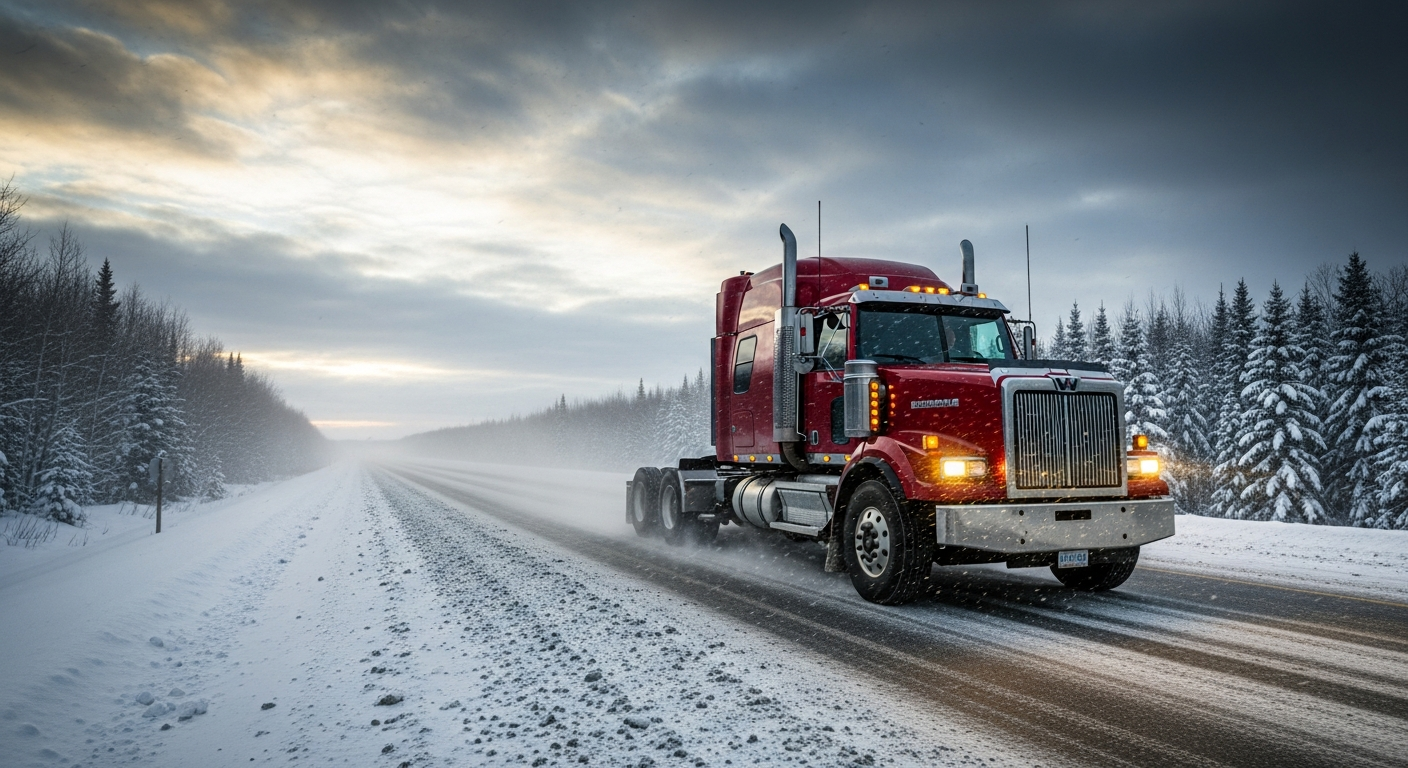 The underlying constant: geography and climate
How Canadian businesses are responding in 2026
The through-line across every one of these challenges is that they reward operational capability and network reach, and punish businesses trying to solve national logistics from a single site with a single carrier and a spreadsheet. The most resilient Canadian operations are doing a consistent set of things: distributing inventory across regions to shorten zones and speed delivery; investing in real-time inventory data and demand forecasting; automating and standardizing warehouse processes to reduce labour dependence; rate-shopping and negotiating across multiple carriers; handling cross-border compliance rigorously; and designing returns as a retention lever. Building all of this in-house is capital- and management-intensive, which is why many businesses partner with a 3PL to access a national network, flexible labour, multi-carrier rates, and inventory systems as an operating default rather than a build project — turning structural challenges into managed, predictable operations.
The common thread across all five challenges: they punish single-site, single-carrier, spreadsheet-run logistics and reward network reach, real-time data, and operational discipline — the capabilities a 3PL delivers as a default.
Where a 3PL changes the equation
A capable 3PL addresses these challenges directly and simultaneously. It maintains trained, cross-facility labour pools that flex for peak, absorbing the labour-shortage risk clients would otherwise carry alone. It brings volume-aggregated, multi-carrier rates and automatic rate shopping that attack transportation cost. Its national network — with nodes in centres such as Ottawa, Toronto, Montreal, Vancouver, and Calgary — lets clients distribute inventory to shorten zones and hit ground-delivery speeds without operating multiple leases. Its WMS provides the real-time, multi-channel inventory visibility that better buying decisions depend on. And customs-experienced facilities and processes reduce cross-border friction. For Canadian businesses weighing whether to keep building logistics capability internally or partner for it, 2026's combination of pressures increasingly tilts the calculation toward a partner who already operates at national scale.
Frequently Asked Questions
What are the biggest logistics challenges Canadian businesses face in 2026?
The five most significant are labour shortages in warehousing and trucking, rising and volatile transportation costs, inventory management caught between overstocking and stockouts, cross-border delays and customs friction, and rising customer expectations for fast, free, trackable delivery and easy returns. All are amplified by Canada's geography, long lanes, and winter weather.
Why is labour such a persistent logistics problem in Canada?
It's structural rather than cyclical. Commercial driving faces an aging workforce with recruitment lagging retirements, and warehouse roles are physical and seasonal, so staffing spikes hardest at Q4 peak when labour is scarcest. Businesses respond with automation, better retention and training, and by outsourcing to 3PLs that maintain trained, flexible labour pools that absorb seasonal surges.
How can businesses control rising transportation costs?
Attack the cost structurally instead of waiting for rates to fall: distribute inventory to shorten shipping zones, optimize packaging to reduce dimensional weight, rate-shop across multiple carriers on every order, and negotiate — or access through a 3PL — volume-aggregated carrier rates. Treating shipping as a managed discipline rather than a fixed expense is the key difference.
Why are cross-border shipments so unpredictable?
The Canada–US border carries most of Canada's trade, and friction there — customs documentation, tariff classification, trade-policy uncertainty, crossing congestion, and compliance overhead — can hold shipments unpredictably, disrupting both inventory plans and customer promises. Accurate documentation, correct classification, customs-experienced facilities, and buffer time in lead times reduce the risk.
How do rising customer expectations affect logistics?
Shoppers now expect fast (often one-to-two-day) delivery, free or subsidized shipping, real-time tracking, and easy returns — expensive to deliver across a country as large as Canada. Businesses meet these efficiently by distributing inventory to reach more of the country by ground within one to two days, communicating delivery windows clearly, and running a streamlined returns process.
How does partnering with a 3PL help with these challenges?
A 3PL addresses several at once: flexible trained labour for peak, volume-aggregated multi-carrier rates and automatic rate shopping, a national network to distribute inventory and shorten zones, real-time multi-channel inventory visibility, and customs-experienced cross-border handling. It delivers these as an operating default rather than a capital-intensive internal build.
Related ByExpress resources