Guide · · 12 min read
Ottawa Manufacturing Logistics (2026)
How manufacturing logistics actually works in Ottawa and Eastern Ontario — inbound supply, line-side feeding, finished-goods distribution, value-added work, and cross-border export.
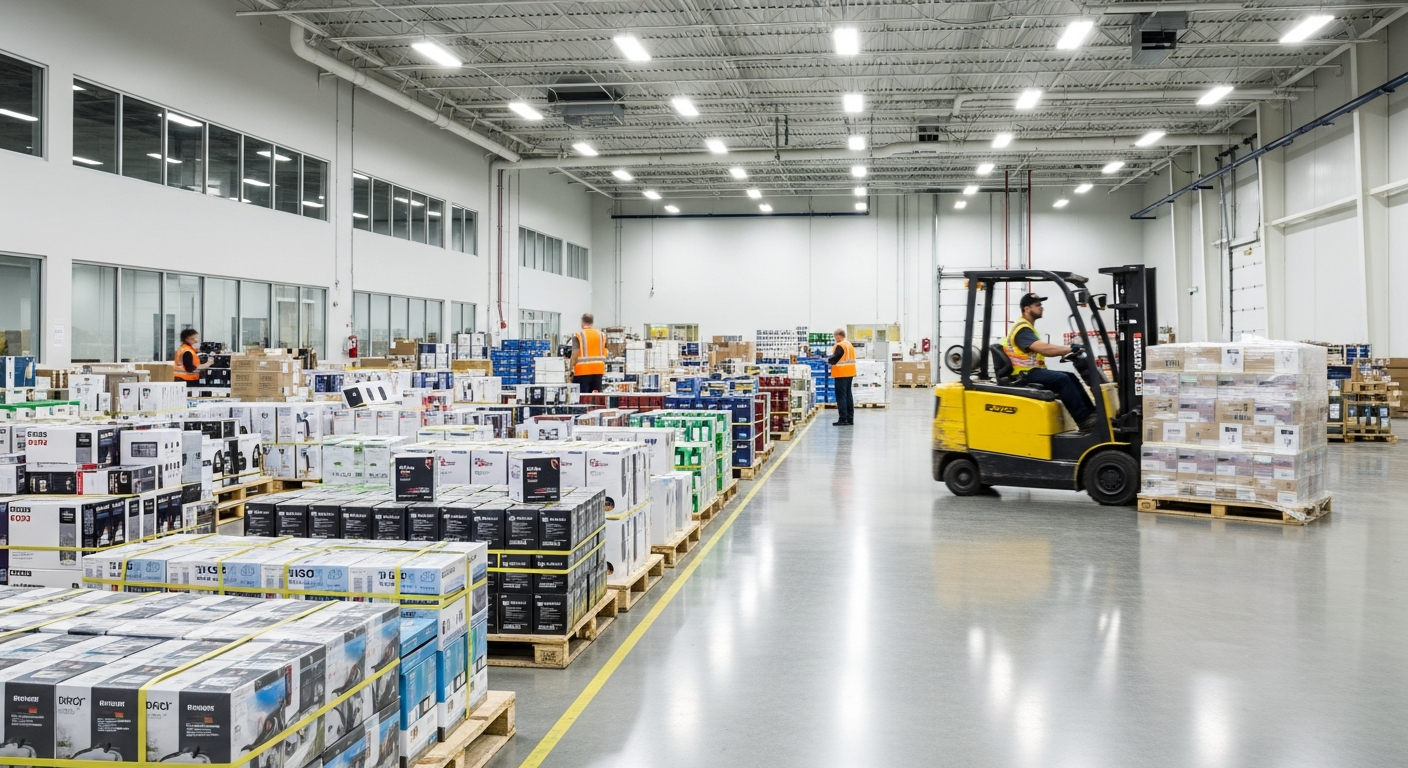
Ottawa's manufacturing base is smaller and more specialized than the GTA's, but it is real and it is demanding: Kanata North hosts one of Canada's densest clusters of telecom, photonics, and electronics hardware producers; the defence and aerospace supply chain feeds DND, the Canadian Armed Forces, and primes across the National Capital Region; and Eastern Ontario adds building products, food and beverage processing, automotive parts, and contract electronics from Arnprior and Renfrew through Smiths Falls, Brockville, and the 401 corridor. Manufacturing logistics here is not the same job as e-commerce fulfillment — it spans inbound raw-materials flow, supplier-managed inventory, line-side feeding, finished-goods warehousing, value-added assembly, and lot/serial traceability that has to survive a quality audit or a recall. This 2026 guide walks operators through what a real manufacturing 3PL looks like in the Ottawa region and how the inbound, plant-floor, and outbound pieces fit together.
The Ottawa & Eastern Ontario manufacturing landscape
Ottawa manufacturing concentrates in a few distinct clusters, each with its own logistics profile. Kanata North — Canada's largest technology park — is dominated by telecom, optical/photonics, semiconductor, and electronics hardware producers whose inbound supply is high-value, small-cube, and globally sourced. The defence and aerospace segment serves DND, the Canadian Armed Forces, and prime contractors, and carries security, traceability, and ITAR/controlled-goods requirements. Outside the city, Eastern Ontario along the Highway 417 and 401 corridors adds building products and millwork, food and beverage processing, automotive and equipment parts, and contract/electronics manufacturing. Each of these moves freight differently — the photonics shipper cares about ESD-safe handling and air-freight speed, while the building-products plant cares about flatbed, pallet density, and truckload economics.
- Kanata North tech corridor: telecom, photonics, semiconductor, electronics hardware
- Defence & aerospace: primes and tier suppliers serving DND/CAF with controlled-goods handling
- Building products & millwork: doors, windows, cabinetry, fabricated steel along the 417/401
- Food & beverage processing: bottling, packaged goods, craft beverage in Ottawa and the Valley
- Automotive & equipment parts, plus contract and electronics manufacturing in Smiths Falls, Brockville and Arnprior
Inbound raw materials and supplier-managed inventory
Most manufacturing problems start on the inbound side. A 3PL supporting Ottawa manufacturers manages receiving against purchase orders and advance ship notices, inspects and quarantines incoming lots, and stages raw materials and components so they are available when the line calls for them — not before, and not too late. Supplier-managed and vendor-managed inventory (VMI) programs let a 3PL hold a supplier's components near the plant and release them as consumption is reported, smoothing the gap between overseas lead times and a plant that wants daily or hourly availability. For Ottawa producers importing from Asia, Europe, or the US, the inbound chain usually combines ocean/air to a GTA or Montreal gateway, drayage or linehaul to an Ottawa-area warehouse, then short-haul delivery to the plant. Getting receiving, inspection, and put-away right is what keeps the rest of the chain stable.
Line-side feeding and just-in-time delivery
Once material is in the region, the question becomes how it reaches the production line. Just-in-time (JIT) and line-side replenishment move components from a nearby warehouse to the point of use in small, frequent, sequenced deliveries — often on milk-run routes that touch several stops per shift. This keeps work-in-process inventory and plant floor space to a minimum, which matters in older or space-constrained Ottawa-area facilities. The trade-off is that JIT only works with disciplined transport timing, accurate kanban or consumption signals, and a 3PL that can run scheduled routes reliably through Ottawa winters. We cover this in depth in our companion guide on JIT and line-side delivery for Ottawa manufacturers.
JIT lowers inventory carrying cost but raises the cost of a missed delivery. The right model depends on your line takt time, the value and cube of the parts, and how far the feeding warehouse sits from the plant — there is no single 'best' frequency.
Finished-goods warehousing and B2B distribution
On the outbound side, manufacturers need somewhere to put finished product and a way to get it to customers, distributors, and retailers. Finished-goods warehousing handles bulk pallet storage, B2B order picking at the pallet, case, and each level, and outbound shipping to wholesalers, retail DCs, and end customers across Eastern Ontario, the GTA, Quebec, and the US. For manufacturers selling into Canadian retail, this is also where EDI, ASN, SSCC labelling, and retailer compliance live — a missed routing window or a bad pallet label turns into a chargeback. Our finished-goods warehousing and distribution guide breaks down the storage, picking, and retail-compliance side in detail.
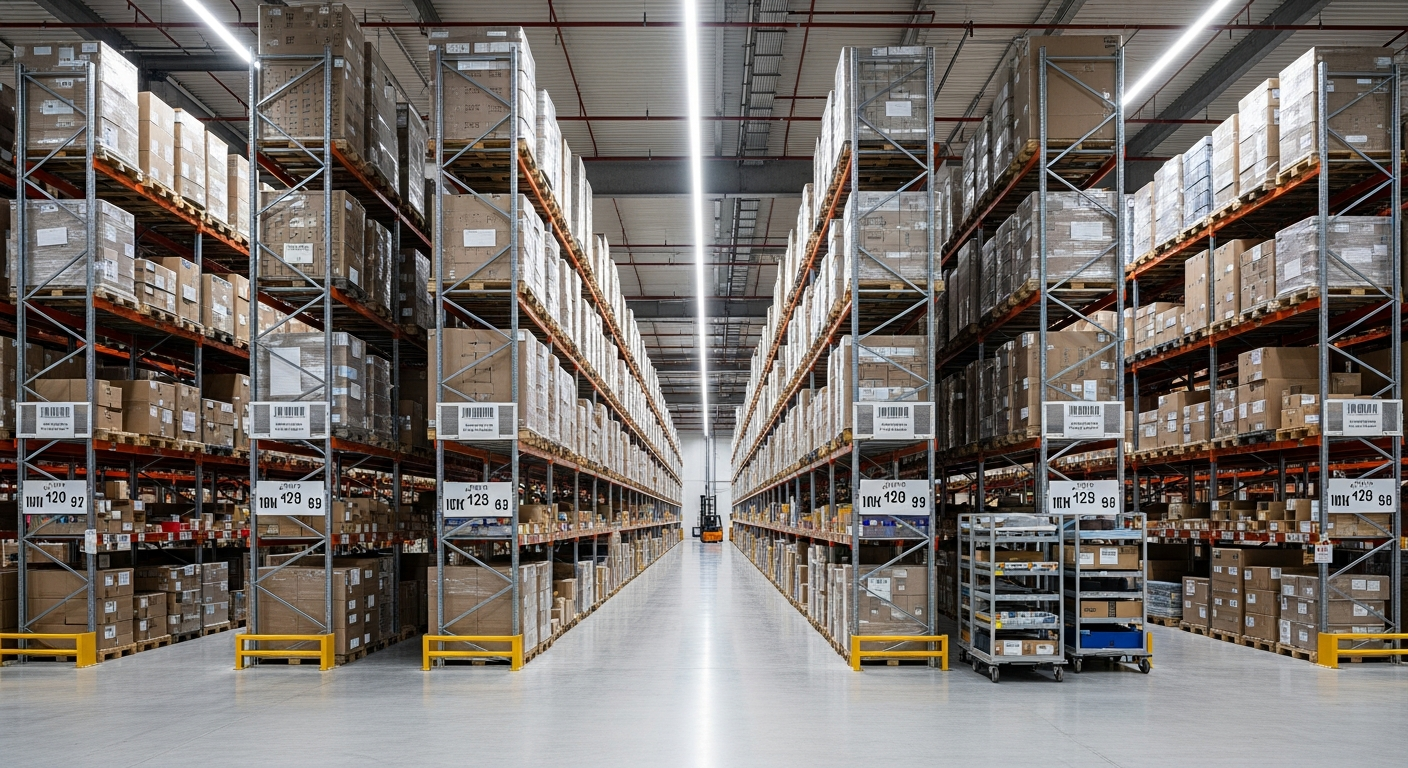 Finished-goods warehousing and B2B distribution
Value-added: kitting, light assembly, labelling and VMI
Manufacturing logistics increasingly absorbs work that used to happen on the plant floor. A 3PL can perform kitting (combining components into a single ship-ready kit), subassembly and light assembly, custom labelling and bilingual relabelling for the Canadian market, repacking, and postponement — holding generic product and configuring it to order at the last responsible moment. For Ottawa producers, moving this work to a flexible warehouse converts fixed plant labour into variable, scalable capacity and frees the line to do what only the line can do. Our kitting, subassembly and VMI guide details how these programs are scoped, costed, and run.
Lot and serial traceability, quality holds and recalls
Regulated and engineered products demand traceability that survives an audit. That means lot- and serial-controlled inventory captured at receiving and carried through every move, FIFO/FEFO rotation where shelf life or revision control matters, the ability to place inventory on quality hold and release it only after disposition, and recall execution that can identify and retrieve every affected unit one step forward and one step back through the chain. For defence, aerospace, medical-adjacent, and food/beverage manufacturers in the Ottawa region, traceability is not optional documentation — it is the difference between a contained issue and an uncontrolled one. A WMS that enforces lot/serial capture and gives auditable movement history is the backbone of this.
Export and cross-border for Ottawa manufacturers
A large share of Ottawa-region manufacturing output — especially tech hardware and defence-adjacent product — sells into the US and global markets. Cross-border logistics for manufacturers means accurate commercial invoicing and HS classification, CUSMA/USMCA origin documentation where it applies, customs brokerage, and choosing between LTL, full truckload, and air depending on value and urgency. Ottawa's position gives manufacturers reasonable access to the Highway 401 corridor toward the Prescott–Ogdensburg and Lansdowne–Thousand Islands border crossings, as well as Ottawa Macdonald–Cartier International Airport for air freight. A 3PL that understands both the production calendar and the border keeps shipments moving and avoids costly holds at the line.
| Flow | Typical mode | What the 3PL manages |
|---|
| Inbound raw materials | Ocean/air to GTA or Montreal, then linehaul | Receiving, inspection, quarantine, VMI release |
| Line-side / JIT | Scheduled milk-run / shuttle | Sequencing, kanban signals, on-time delivery |
| Finished goods to retail | LTL / truckload | EDI, ASN, SSCC labels, routing compliance |
| Export to US | LTL / truckload / air | Invoicing, HS codes, CUSMA, brokerage |
Frequently Asked Questions
What kinds of manufacturers operate in the Ottawa region?
The largest cluster is Kanata North technology hardware — telecom, photonics, semiconductor, and electronics. The region also has defence and aerospace suppliers, building products and millwork, food and beverage processing, and automotive/equipment and contract manufacturing along the 417 and 401 corridors.
What does a manufacturing 3PL do that a regular fulfillment 3PL doesn't?
Manufacturing 3PLs handle inbound raw-materials flow, supplier/vendor-managed inventory, line-side and JIT feeding, finished-goods B2B distribution, value-added kitting and assembly, and lot/serial traceability for quality holds and recalls — well beyond pick-pack of finished e-commerce orders.
Can a 3PL feed my production line just-in-time in Ottawa?
Yes. With a nearby warehouse, consumption or kanban signals, and scheduled milk-run routes, a 3PL can deliver sequenced components to the line in small, frequent drops. The right frequency depends on takt time, part value, and distance from the feeding warehouse.
How is traceability handled for defence or regulated manufacturing?
Through lot- and serial-controlled inventory captured at receiving and carried through every movement, FIFO/FEFO rotation, quality-hold and release workflows, and recall execution that can trace one step forward and one step back — all backed by auditable WMS movement history.
Can an Ottawa 3PL handle cross-border shipping for manufacturers?
Yes. That includes commercial invoicing, HS classification, CUSMA/USMCA origin documentation, customs brokerage, and mode selection (LTL, truckload, air) using the 401 corridor border crossings and Ottawa's airport for time-sensitive freight.
Related ByExpress resources