Guide · · 11 min read
Store Replenishment for Multi-Location Ottawa Retailers (2026)
How an Ottawa-area retailer with multiple store locations replenishes its own shelves from a central 3PL distribution centre — allocation, delivery windows, new-store kits, and store returns.
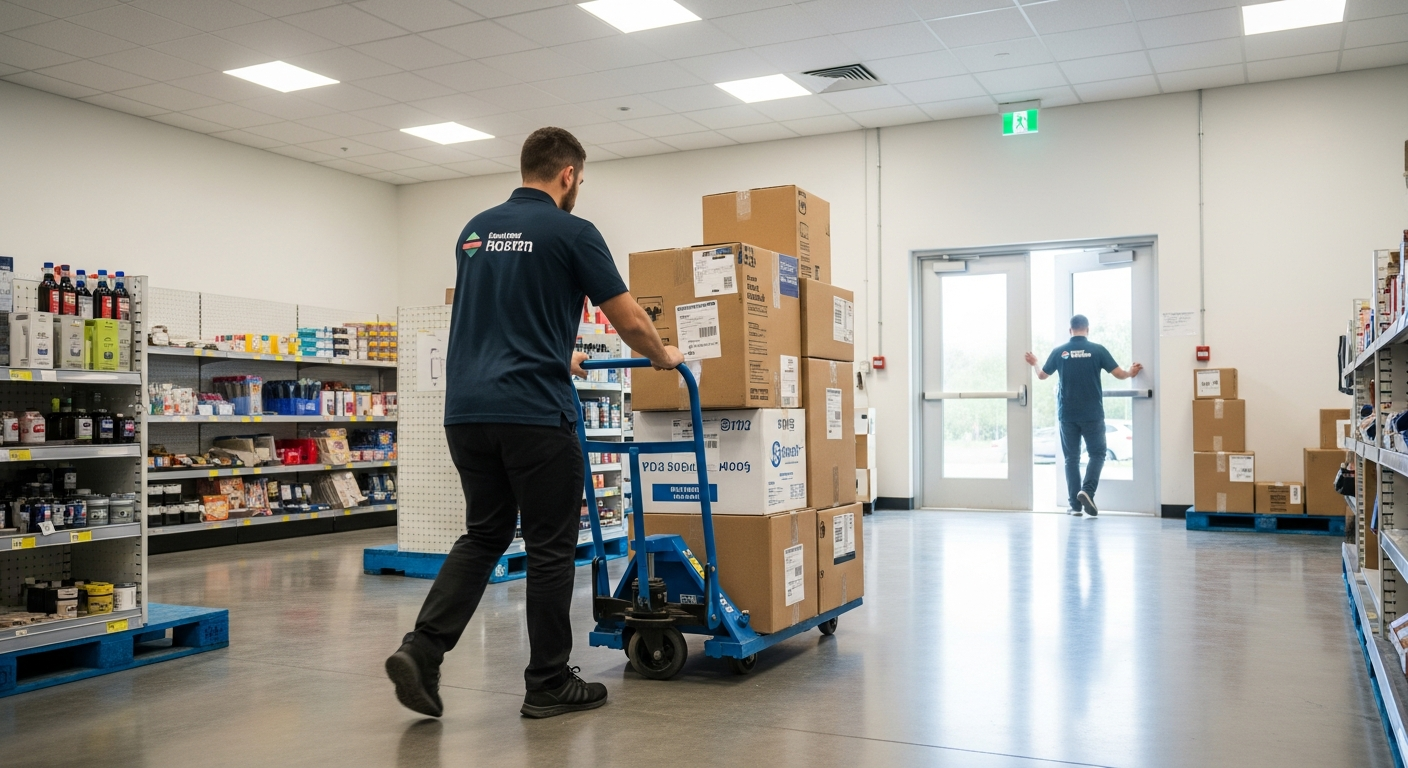
If you run a chain of retail stores across Ottawa and Eastern Ontario — whether five locations or fifty, in malls like Rideau Centre, Bayshore, and St. Laurent or in strip plazas along Merivale Road, Innes Road, and in Kanata, Barrhaven, Orléans, and downstream towns like Kingston, Cornwall, and Brockville — your logistics problem is the inverse of an e-commerce brand's. You aren't shipping single parcels to consumers; you're moving cases and full planograms to your own backrooms on a predictable rhythm. This guide is about distributing to stores you operate, not about shipping into someone else's big-box DC (that's a separate EDI-and-chargeback discipline). It covers central-DC allocation, backroom delivery windows, planogram and new-store kits, and the reverse flow of returns and seasonal pull-backs from stores — and how an Ottawa 3PL runs this as a managed program.
The central-DC model for a store chain
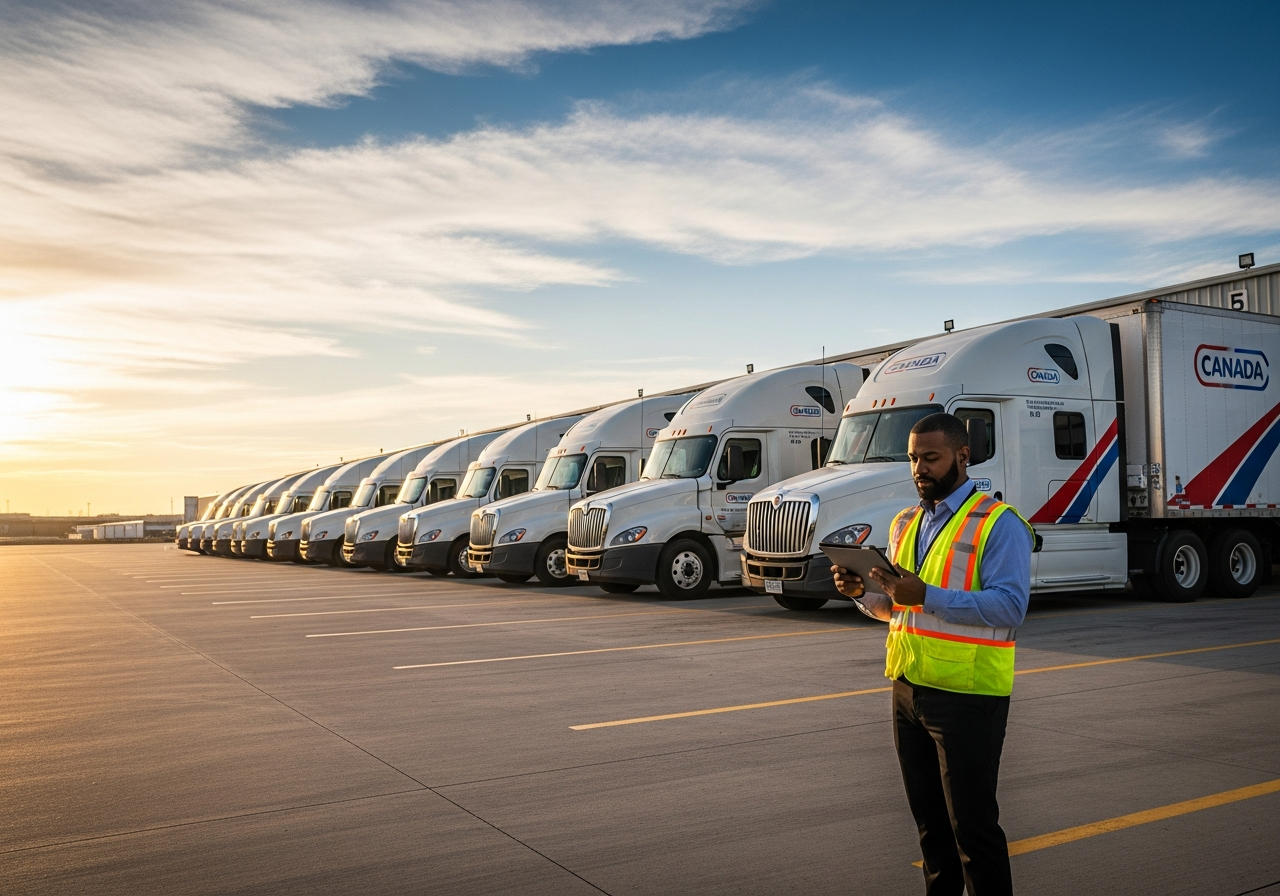
Multi-location retailers consolidate inventory in one central distribution centre and push allocated quantities out to each store, rather than holding a back-stock warehouse behind every storefront. In the Ottawa context, a central DC in the west-end industrial corridor (Kanata, Stittsville) or the east-end (around the Walkley/Sheffield Road and St. Laurent industrial areas) can reach every store in the National Capital Region within a single same-day delivery loop, and Eastern Ontario satellites (Kingston, Cornwall, Pembroke) on next-day scheduled runs. The 3PL receives bulk inbound from your vendors or import containers, stores it on pallet racking, then breaks it down into store-level shipments on a replenishment calendar. The retailer keeps one source of truth for inventory and avoids dead stock trapped in dozens of backrooms.
Allocation: getting the right quantity to the right store
Allocation is the core intelligence of store replenishment — deciding how much of each SKU each store gets, and when. Most chains run one or more of these methods, often blended by category:
- Min/max replenishment: each store has a per-SKU minimum and maximum; the DC tops up to max when sales pull below min.
- Sell-through / pull replenishment: POS sales data feeds back daily so fast-moving stores get more and slow stores get less.
- Push allocation: new product, promotions, and seasonal sets are pushed to a planned grid regardless of current store stock.
- Capacity-constrained allocation: shelf and backroom capacity caps what a store can physically receive, so the DC holds the balance.
- Cluster allocation: stores grouped by size, demographic, or trade area (e.g. downtown vs. suburban Kanata vs. small-town) get tailored assortments.
Good allocation lives in your retail or ERP system (or a planning tool), not in the 3PL's WMS. The 3PL executes the allocation file; you own the demand logic. Agree early on the file format, cadence, and cutoff times so picks are accurate and on schedule.
Backroom delivery windows and store receiving
Delivering to your own stores is an operational discipline of its own because retail backrooms are small, staffing is thin, and mall and plaza access is restricted. Enclosed malls like Rideau Centre, Bayshore, and St. Laurent enforce loading-dock booking and tight delivery windows — typically early morning before opening — and may prohibit deliveries through the mall concourse during trading hours. Strip-plaza and street-front stores usually take deliveries at a rear door with no dock leveller, so trucks need lift-gates and deliveries arrive on hand-carts or pallet jacks. A managed replenishment program builds fixed store delivery days and time windows (e.g. each store gets two scheduled runs a week), so store staff know when freight lands and can plan labour for put-away and shelf stocking.
 Backroom delivery windows and store receiving
Replenishment cadence by store type
There is no single right frequency — it depends on store sales velocity, backroom size, and category. The table below shows typical patterns for an Ottawa-area chain served from one central DC.
| Store / location type | Typical replenishment frequency | Delivery method | Notes |
|---|
| High-volume mall (Rideau, Bayshore) | 3–6× per week | Dock-booked, pre-open windows | Small backroom; needs frequent top-ups |
| Suburban big-box / plaza (Kanata, Barrhaven) | 2–3× per week | Rear-door, lift-gate truck | Larger backroom absorbs bigger drops |
| Downtown / street-front | 2–4× per week | Curb or rear-door, hand-cart | Parking and access constraints |
| Eastern Ontario satellite (Kingston, Cornwall) | 1–2× per week | Scheduled next-day linehaul | Consolidated multi-store runs |
| Seasonal / pop-up | On demand | Project-based delivery | Set-up and tear-down support |
Planograms, new-store kits, and resets
Opening a new location or running a seasonal reset is a project, not a top-up. A 3PL builds new-store opening kits — fixtures, signage, opening inventory by planogram, POS and supply consumables — palletized and labelled by department so the store team can install a floor set without sorting through mixed cartons. For planogram resets (a new spring layout, a promotional end-cap program, a brand refresh across all stores), the DC kits each store's reset pack to match its specific planogram cluster and ships them to land the day before the reset date. This is where central distribution pays off: one team kits and quality-checks every store's set, instead of each store improvising from bulk freight. Returns of the old set (de-merchandised fixtures, discontinued stock) flow back to the DC on the same trucks.
Reverse flow: store returns, recalls, and transfers
Stores generate a constant reverse flow that a replenishment program has to handle cleanly: customer returns consolidated for processing, discontinued and end-of-season stock pulled back for liquidation or vendor return, damages and recalls, and inter-store transfers of overstock to stores where an item still sells. Running this through the central DC means the 3PL receives returns on the same vehicles that delivered replenishment (no wasted backhaul), inspects and dispositions them — restock, repackage, return-to-vendor, liquidate, or scrap — and credits inventory back to the system of record. For Ottawa retailers, consolidating returns at the DC also avoids backrooms clogging with unsellable stock, which is the single most common space problem in small mall and plaza stores.
Systems, visibility, and integration
A replenishment program is only as good as the data moving between your retail system and the 3PL. Practical requirements: a clean SKU and store master kept in sync, a daily inventory feed so head office sees DC stock in real time, allocation/replenishment files exchanged on a fixed schedule, ASNs (advance ship notices) so each store knows what's arriving, and confirmation of delivery back to the system. Integration is typically via API, SFTP flat files, or an EDI connection to your retail/ERP platform — and yes, store-level EDI exists, but it's a different use case from supplier-to-big-box EDI. For chains scaling past a handful of stores, scan-based receiving at the store and DC-level cycle counting keep inventory accuracy high enough that allocation stays trustworthy.
 Systems, visibility, and integration
Frequently Asked Questions
How is store replenishment different from shipping into a big-box retailer?
Store replenishment means distributing to stores you operate from your own central DC — you control allocation, timing, and the backroom. Shipping into a big-box retailer means meeting that retailer's EDI, SSCC labelling, ASN, and appointment rules to avoid chargebacks. They are different disciplines; this guide covers the first.
Can one Ottawa DC serve all my stores in the National Capital Region?
Yes. A single central DC in Ottawa's west-end (Kanata/Stittsville) or east-end (St. Laurent/Walkley) industrial areas can reach every store in the NCR on same-day loops, with Eastern Ontario towns like Kingston, Cornwall, and Pembroke on scheduled next-day runs.
Who owns the allocation logic — me or the 3PL?
You do. Allocation (min/max, sell-through, push, cluster) lives in your retail or ERP system. The 3PL executes the allocation file you send — picking, kitting, and delivering to each store on the agreed cadence and cutoffs.
How do you deliver to stores inside Ottawa malls?
Malls like Rideau Centre, Bayshore, and St. Laurent require booked dock windows, usually before opening, and often prohibit concourse deliveries during trading hours. Street-front and plaza stores take rear-door deliveries with lift-gate trucks and hand-carts. A managed program builds fixed delivery days and windows per store.
Can the 3PL handle returns and seasonal pull-backs from my stores?
Yes. Returns, discontinued and end-of-season stock, recalls, and inter-store transfers flow back to the central DC on the same trucks that delivered replenishment, where they're inspected, dispositioned, and credited back to inventory — keeping unsellable stock out of small store backrooms.
Related ByExpress resources