Guide · · 11 min read
Omnichannel, Ship-from-Store & BOPIS Fulfillment for Ottawa Retailers (2026)
How Ottawa retailers blend stores and e-commerce — ship-from-store, BOPIS, curbside, and a central 3PL DC working as the safety net behind the store network.
Ottawa shoppers increasingly buy across channels — they research online, pick up in store at Rideau Centre or Bayshore on the way home, get same-day delivery to Kanata or Barrhaven, or return an online order to the nearest location. For a retailer operating stores plus an online channel, omnichannel fulfillment means treating every store and your central DC as one connected pool of inventory. This guide covers the core omnichannel patterns — ship-from-store, BOPIS (buy online, pick up in store), curbside, and endless aisle — and how an Ottawa 3PL running your central distribution centre acts as the backstop that keeps the whole network stocked and accurate. It is written for retailers who operate their own stores, complementing — not competing with — the separate discipline of shipping into big-box retailers via EDI.
What omnichannel fulfillment actually means
Omnichannel fulfillment is the ability to take an order in any channel and fill it from wherever the inventory and economics make most sense. In practice it means a single view of inventory across your central DC and every store, and routing logic that decides — order by order — whether to ship from the DC, ship from a store, or have the customer pick up. The payoff is fewer lost sales (you can sell store inventory online), faster delivery (a store in Orléans is closer to an east-end customer than a DC), and better inventory turns (slow stock in one store can fill demand from another trade area). The cost is complexity: you need accurate store-level inventory, clear routing rules, and store staff trained to pick and pack alongside serving walk-in customers.
The core omnichannel patterns
Most Ottawa retailers run some mix of these fulfillment patterns, each with different operational demands:
- Ship-from-DC: classic e-commerce — orders picked, packed, and shipped from the central 3PL warehouse.
- Ship-from-store: a store nearest the customer fulfils the online order, cutting transit time and zones.
- BOPIS (buy online, pick up in store): customer orders online and collects in store, often within hours.
- Curbside pickup: a BOPIS variant where staff bring the order to the customer's car — popular since 2020.
- BORIS (buy online, return in store): online returns handled at any store, then consolidated to the DC.
- Endless aisle / ship-to-store: customer buys an out-of-stock item in store and has it shipped to home or the store from the DC or another location.
Ship-from-store: turning stores into mini-fulfillment nodes
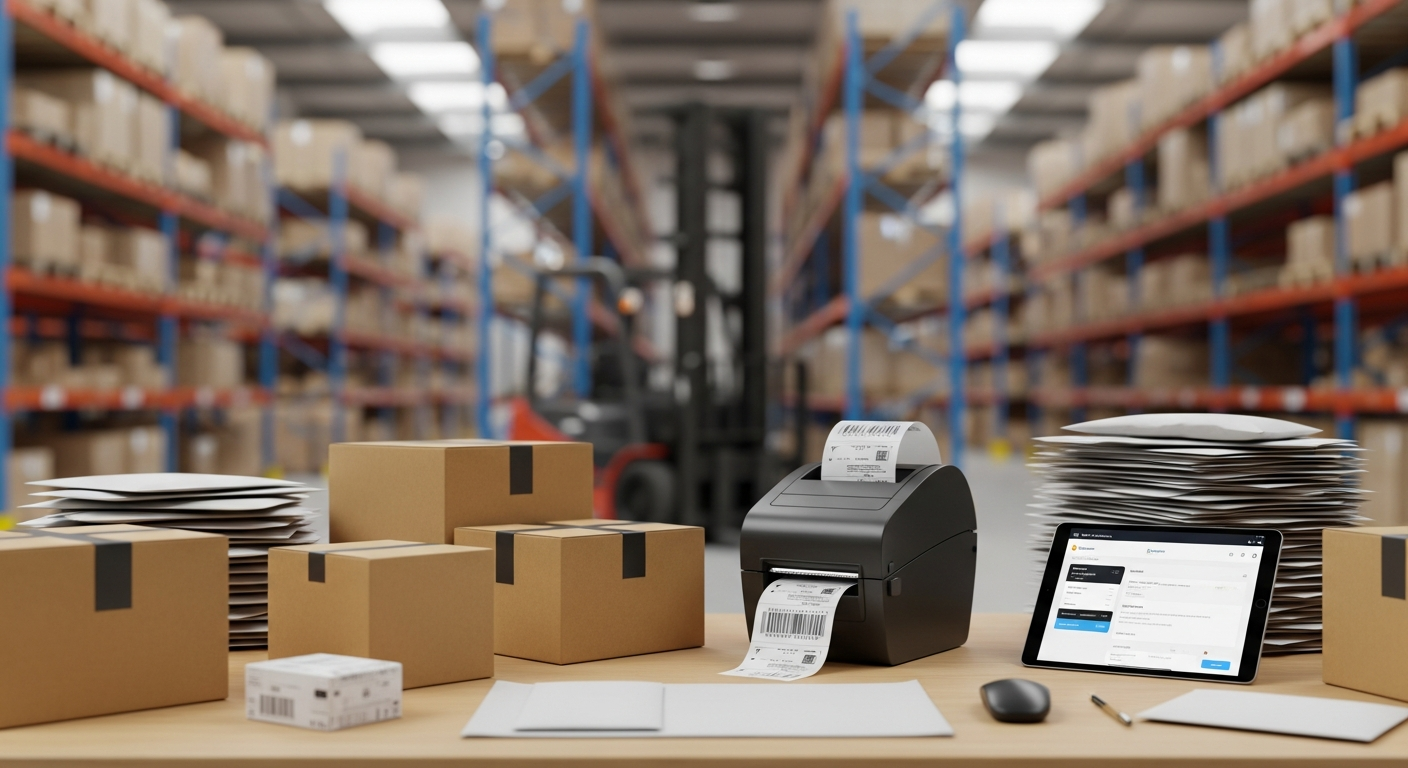
Ship-from-store uses store inventory to fill online orders, which is powerful in a geographically spread market like the NCR — an order from Gatineau or the east end can ship from a closer Orléans or St. Laurent store instead of crossing the city from the DC. But stores are not warehouses: backrooms are small, staff are serving customers, and pick accuracy suffers without process. The realistic model is hybrid — stores handle a capped number of daily online picks for nearby orders, and the central 3PL DC absorbs volume spikes, multi-line orders, and anything a store can't fulfil cleanly. The 3PL also handles carrier pickup consolidation so store-shipped parcels join the same Purolator, Canada Post, FedEx, or UPS pickups, and provides the packing materials and label workflow so every store ships consistently.
 Ship-from-store: turning stores into mini-fulfillment nodes
BOPIS and curbside: the in-store pickup experience
BOPIS and curbside are now table stakes for Ottawa retailers, and the logistics behind them matter more than the website. To promise reliable pickup, the store's on-hand inventory has to be accurate (so you don't accept an order for something that isn't really there), staff need a clear pick-and-stage workflow, and there has to be a holding area for pickup orders. When a store is short, the central DC backfills via ship-to-store so the customer's pickup promise is still met the next day. Curbside adds a notification and parking-spot workflow — common at suburban plaza stores in Kanata, Barrhaven, and Orléans where parking is plentiful, harder at downtown and enclosed-mall locations where the 3PL-supported model often routes pickup to a back-of-house or mall-designated pickup point.
Inventory accuracy is the make-or-break
Every omnichannel pattern collapses without accurate, near-real-time inventory across all nodes. The table below shows what accuracy underpins each promise and how a central 3PL helps.
Aim for 98%+ inventory accuracy at any node you expose to customers for pickup or ship-from-store. Below that, broken promises and cancellations erode trust faster than the channel adds sales.
| Promise to customer | What it needs | How the central DC / 3PL supports it |
|---|
| "In stock for pickup today" | Accurate store on-hand | DC-level cycle counts + ship-to-store backfill |
| "Ships in 1 business day" | Single inventory view | DC absorbs overflow store can't fill |
| "Same-day delivery in Ottawa" | Local stock + courier | Ship-from-store or DC same-day courier loop |
| "Return at any store" | Reverse logistics flow | Consolidate store returns to DC for disposition |
| "Find it at another location" | Cross-store visibility | Transfers run through the DC hub |
Omnichannel returns: BORIS and consolidation
Omnichannel multiplies returns because customers buy in one channel and return in another. Letting customers return online orders to any store (BORIS) drives footfall and convenience, but it floods small backrooms with mixed returns unless there's a process. The clean model: stores accept and scan returns, hold them briefly, and the central 3PL DC collects them on regular replenishment trucks for inspection and disposition — restock, repackage, return-to-vendor, or liquidate. Consolidating at the DC keeps unsellable stock out of stores, recovers value faster, and gives head office one accurate returns picture. For Ottawa retailers, this also means seasonal returns spikes (post-holiday in January) are handled at the DC rather than overwhelming mall stores during their busiest sale period.
Order routing, integration, and the 3PL's role
The brain of omnichannel is an order management or routing layer (often part of your Shopify, commerce platform, or OMS) that decides where each order is filled based on inventory, distance, store capacity, and cost. The 3PL connects to it via API or EDI so the DC receives the orders routed to it, sends back inventory feeds and shipment confirmations, and exposes DC stock for the routing engine to draw on. The practical division of labour: you own the routing rules and customer experience; the 3PL executes DC fulfillment, provides the inventory backbone, runs the reverse logistics, and supports store shipping with materials and carrier consolidation. Start simple — DC fulfillment plus BOPIS — and layer in ship-from-store once store inventory accuracy and staff process are proven.
Frequently Asked Questions
What is ship-from-store and is it worth it for an Ottawa retailer?
Ship-from-store uses store inventory to fill online orders so they ship from the location nearest the customer — valuable in a spread-out market like the NCR. It works best as a hybrid: stores handle a capped number of nearby orders while the central 3PL DC absorbs volume, multi-line orders, and overflow.
How does BOPIS work behind the scenes?
Buy online, pick up in store needs accurate store on-hand inventory, a pick-and-stage workflow for staff, and a holding area for pickup orders. When a store is short, the central DC backfills via ship-to-store so the pickup promise is still met, usually next day.
What inventory accuracy do I need for omnichannel?
Target 98% or higher at any node you expose for pickup or ship-from-store. Below that, you accept orders for stock that isn't really there, leading to cancellations and lost trust. DC-level cycle counting and store scan discipline keep accuracy high.
Can customers return online orders to my stores?
Yes — that's BORIS (buy online, return in store). Stores accept and scan returns, then the central 3PL DC collects them on regular trucks for inspection and disposition. Consolidating at the DC keeps small backrooms clear and recovers value faster.
How does a 3PL fit into omnichannel if my stores fulfil some orders?
The 3PL runs your central DC fulfillment, provides the inventory backbone and reverse logistics, and supports store shipping with packing materials and carrier consolidation. You own the order-routing rules and customer experience; the 3PL executes the warehouse side and backstops the stores.
Related ByExpress resources