Guide · · 12 min read
Should Canadian Businesses Outsource Fulfillment to a 3PL in 2026?
Outsourcing fulfillment is one of the highest-leverage operational decisions a growing Canadian brand makes. This guide walks through when in-house fulfillment stops making sense, how in-house and 3PL costs actually compare, and the concrete signs you've outgrown your own warehouse.
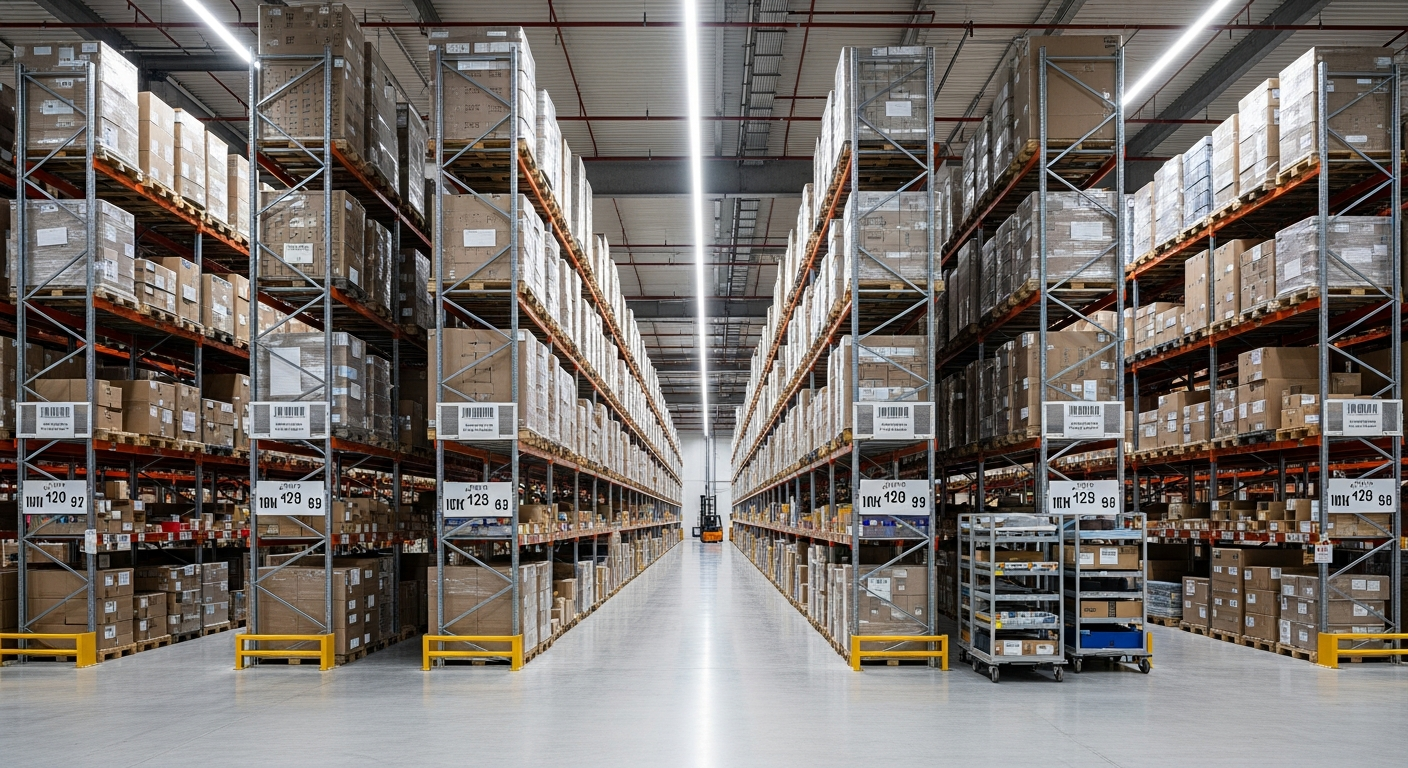
For most Canadian brands, in-house fulfillment starts as the obvious choice. When you're shipping ten or twenty orders a day from a garage, a spare office, or a small leased unit, packing your own boxes feels cheap, controllable, and simple. The problem is that in-house fulfillment scales badly — costs, labour headaches, and error rates all climb faster than revenue as volume grows, and the founder's time gets consumed by warehouse logistics instead of growth. Outsourcing to a third-party logistics (3PL) provider trades some control for scalability, national shipping reach, and predictable per-unit economics. But outsourcing is not automatically the right answer, and it's not right at every stage. This guide lays out when in-house fulfillment stops making sense in 2026, how the true costs of in-house and 3PL fulfillment actually compare once you count everything, and the concrete signals that tell you you've outgrown your own warehouse.
What outsourcing fulfillment actually means
Outsourcing fulfillment means handing the physical and operational side of order fulfillment — receiving inventory, storing it, picking and packing orders, and shipping them to your customers — to a specialist 3PL provider, while you keep ownership of your brand, your products, your marketing, and your customer relationships. A modern Canadian 3PL integrates directly with your sales channels (Shopify, Amazon, Walmart, retail EDI), receives orders automatically, and ships them from one or more warehouses positioned to reach your customers quickly and affordably. You are effectively renting warehouse space, labour, technology, and carrier buying power instead of building all of it yourself. Crucially, outsourcing is not all-or-nothing: many brands outsource e-commerce fulfillment while keeping wholesale or a small in-house operation for high-touch orders, or use a 3PL for national coverage while handling local same-day themselves.
Why 2026 is a decision year for many Canadian brands
Several 2026 pressures push the outsourcing question to the front of the queue. Commercial warehouse rents in the major Canadian markets — the Greater Toronto Area, Metro Vancouver, and Montreal in particular — remain elevated after years of tight industrial vacancy, so the fixed cost of holding your own space is high. Labour is harder to hire and retain for warehouse roles, and wage floors have climbed. Customer expectations for fast, tracked, affordable shipping have hardened, and meeting them from a single location is expensive. At the same time, 3PL technology and multi-node networks have matured, making outsourced fulfillment more capable and more transparent than it was even a few years ago. For a brand deciding where to put its next dollar, the calculus increasingly favours variable, outsourced capacity over fixed, self-operated capacity.
The core trade in 2026: in-house fulfillment converts your growth into fixed cost and founder time; outsourcing converts it into a predictable per-order variable cost that scales up and down with demand.
In-house vs. 3PL: the honest cost comparison
The most common mistake brands make is comparing a 3PL's per-order price against only the visible costs of in-house fulfillment (postage and packaging) while ignoring the hidden ones (rent, labour, equipment, software, shrinkage, and the founder's time). A fair comparison counts the fully loaded cost of each model. In-house fulfillment carries large fixed costs — lease, racking, packing equipment, insurance, WMS software, and payroll — that you pay whether you ship 500 orders or 5,000. A 3PL converts most of that into a per-unit variable cost, plus storage you only pay for on the space you use. The table below shows how the two models typically compare for a growing Canadian e-commerce brand. Figures are illustrative ranges, not quotes — your actual numbers depend on order profile, product size, and location.
| Cost element | In-house fulfillment | Outsourced 3PL |
|---|
| Warehouse space | Fixed monthly lease (often 3–5 yr term) | Pay only for storage used (per bin / pallet) |
| Labour | Fixed payroll + hiring, turnover, training | Bundled into per-order pick & pack fees |
| Equipment & racking | Upfront capital + maintenance | Included in 3PL overhead |
| Software / WMS | Licensed or built, plus IT time | Included; integrated to your store |
| Shipping rates | Your own carrier accounts (retail rates) | 3PL's negotiated multi-carrier volume rates |
| Scaling for peak | Over-hire or scramble; risk of missed orders | Elastic — capacity flexes with volume |
| Founder / ops time | High and hard to recover | Redirected to growth and product |
When keeping fulfillment in-house still makes sense
Outsourcing is not automatically correct. In-house fulfillment can remain the better choice in several situations, and pretending otherwise leads to premature, expensive outsourcing. Keep it in-house when the conditions below hold — and revisit the decision as volume grows.
- Low, stable volume (roughly under a few hundred orders per month) where a 3PL's minimums would cost more than your own labour.
- Highly custom, hands-on packaging or personalization that is core to the brand experience and hard to systematize.
- Products requiring specialized handling you already have in place (regulated goods, extreme fragility, unusual dimensions).
- A single local market where you deliver yourself and shipping economics don't favour a national network.
- Very early stage, where you're still learning your product mix, SKU behaviour, and packaging before committing to a partner.
Rule of thumb: outsource when the fully loaded cost and opportunity cost of doing it yourself exceeds a 3PL's variable price — not the moment shipping feels annoying.
Signs you've outgrown your own warehouse
Most brands don't reach a clean decision point; they accumulate strain until something breaks during a busy period. The signals below indicate that in-house fulfillment has become a growth constraint rather than a cost saving. Any one of them is a prompt to model the 3PL alternative; several together usually mean the decision has already made itself.
- You're renting or eyeing additional space purely to hold inventory, and rent is becoming a meaningful line item.
- Order accuracy and ship times slip during promotions or peak season because you can't flex labour fast enough.
- The founder or a senior operator still spends hours a week packing or firefighting instead of on growth.
- You can't offer competitive shipping speeds or rates because you ship from one location on retail carrier pricing.
- Hiring, training, and retaining reliable warehouse staff has become a recurring distraction.
- You're turning down or delaying channel expansion (retail, Amazon, US) because you can't fulfil it operationally.
- Inventory counts drift, and you have no real-time, channel-synced view of what you actually have on hand.
 Signs you've outgrown your own warehouse
What you gain — and what you give up
Outsourcing delivers real, compounding benefits: elastic capacity that absorbs peaks without panic hiring, national and cross-border shipping reach from multiple warehouse nodes, negotiated multi-carrier rates you'd struggle to match alone, professional WMS technology with real-time inventory visibility, and — most valuable for many founders — the return of the time previously lost to warehouse operations. What you give up is direct, hands-on control of the physical process, and you take on the work of choosing and managing a partner well. The healthiest way to think about it is that you're not losing control; you're changing what you control — moving from managing boxes and pickers to managing a service relationship and a set of performance metrics (order accuracy, on-time ship, returns cycle time). Brands that outsource successfully treat their 3PL as an accountable operating partner with clear KPIs, not a black box.
A simple framework for deciding in 2026
You can make this decision rigorously without a consultant. First, build your fully loaded in-house cost per order: total all fixed costs (rent, equipment amortization, software, insurance) plus variable costs (labour, packaging, postage) over a representative month, and divide by orders shipped. Second, get a like-for-like 3PL quote based on your real order profile — your SKU count, average units per order, storage footprint, and shipping destinations. Third, add the factors a spreadsheet misses: the value of founder and ops time returned, the revenue unlocked by faster shipping and new channels, and the risk reduction of elastic peak capacity. If the 3PL's per-order economics are close to or below your fully loaded in-house cost — and they usually converge as volume grows — the qualitative benefits typically tip the decision toward outsourcing. If in-house is still clearly cheaper all-in and you're not constrained on growth, stay put and revisit in a quarter or two.
How ByExpress approaches the outsourcing decision
ByExpress operates a coast-to-coast Canadian fulfillment network from Ottawa, Toronto, Montreal, Vancouver, and Calgary, which lets brands position inventory close to their customers and cut both transit time and shipping cost. Our onboarding starts with a written analysis of your current fulfillment operation and a like-for-like cost model — not a generic price sheet — so you can compare outsourcing against your real in-house numbers honestly. We integrate directly with Shopify, Amazon, Walmart, and retail EDI, provide real-time inventory visibility, and report against the KPIs that actually matter (order accuracy, on-time ship, returns cycle time). If outsourcing isn't the right move for your stage, we'll tell you — the goal is a decision that holds up as you grow, not a signature this quarter.
Frequently Asked Questions
At what order volume should I outsource fulfillment?
There's no universal threshold, but many Canadian brands find the economics tip toward outsourcing somewhere between a few hundred and a couple of thousand orders per month — the point where fixed in-house costs (rent, labour, equipment) and lost founder time exceed a 3PL's variable per-order price. The right answer depends on your product size, SKU count, and shipping destinations, so model your fully loaded cost per order against a real 3PL quote rather than guessing.
Is outsourcing to a 3PL cheaper than doing fulfillment in-house?
It depends on volume and how you count. In-house often looks cheaper if you only count postage and packaging, but a fair comparison includes rent, labour, equipment, software, shrinkage, and founder time. Once fully loaded, 3PL per-order economics frequently match or beat in-house as volume grows — and the 3PL adds negotiated carrier rates and elastic peak capacity that are hard to replicate alone.
What do I give up by outsourcing fulfillment?
You give up direct, hands-on control of the physical picking, packing, and shipping process, and you take on the responsibility of choosing and managing a partner well. In practice you're trading control of boxes and staff for control of a service relationship measured by KPIs like order accuracy, on-time ship, and returns cycle time. With a well-run 3PL and clear reporting, most brands find they gain more visibility than they lose.
Can I outsource only part of my fulfillment?
Yes. Outsourcing isn't all-or-nothing. Many Canadian brands outsource e-commerce fulfillment while keeping wholesale or high-touch custom orders in-house, or use a 3PL for national and cross-border coverage while handling local same-day delivery themselves. A hybrid approach is common during a transition and can be a permanent operating model.
How do I know I've outgrown my own warehouse?
Common signals: you're leasing extra space just to hold inventory, accuracy and ship times slip during peak because you can't flex labour, the founder still spends hours packing or firefighting, you can't offer competitive shipping speeds from a single location, or you're delaying channel expansion because you can't fulfil it operationally. Any one is a prompt to model a 3PL; several together usually mean the decision is already made.
Will outsourcing hurt my customer experience?
A well-executed transition should be invisible to customers — same brand experience and often faster, cheaper shipping thanks to a multi-node network and negotiated carrier rates. The risk comes from choosing a poor partner or migrating carelessly, not from outsourcing itself. Set clear KPIs, verify references, and structure onboarding so issues are caught before they reach customers.
Related ByExpress resources