Guide · · 11 min read
How Fast Should Your Fulfillment Center Ship Orders?
Fulfillment speed is one of the most visible parts of the customer experience, but faster is not always better — it is a trade-off between customer expectations, cost, and operational capability. This guide explains same-day versus next-day shipping, how order cutoff times actually work, and how warehouse efficiency determines how fast you can realistically promise.
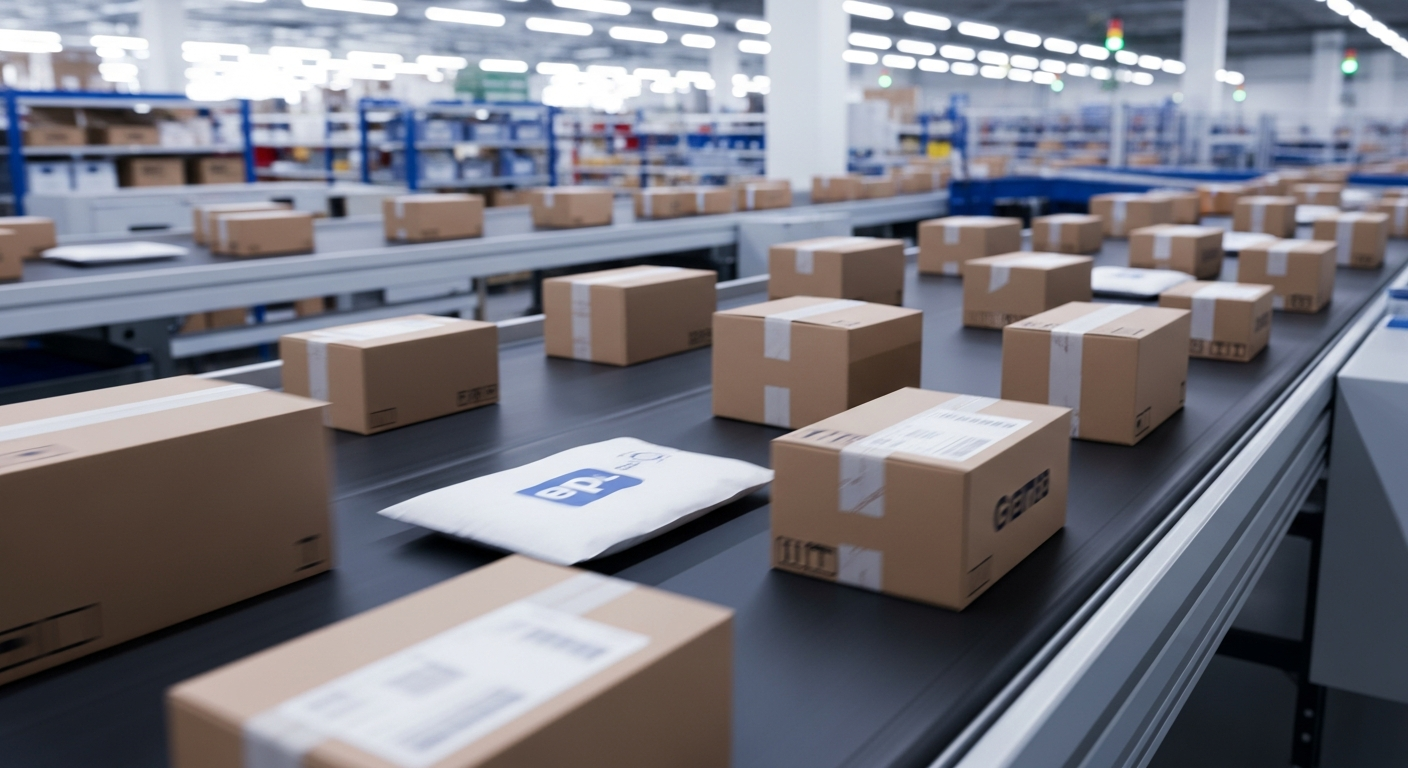
Ask a customer how fast they want their order and the answer is always 'faster.' Ask an operations leader and the answer is more nuanced: how fast, at what cost, and can we do it reliably? Fulfillment speed has become one of the most visible signals of a brand's competence — a promise made at checkout and either kept or broken a day or two later. The pressure to ship faster is real, driven by the delivery expectations that large marketplaces have trained into Canadian shoppers. But speed is not free, and promising a speed you cannot consistently hit is worse than promising a slower one you always meet. The right answer for most brands is not 'as fast as physically possible' — it is the fastest speed you can deliver reliably, at a cost your margins support, for the customers who actually value it. This guide breaks down what same-day and next-day fulfillment really require, how order cutoff times shape the promise, and why warehouse efficiency is the factor that quietly determines how fast you can ship at all.
Shipping speed versus delivery speed
The first source of confusion in any conversation about fulfillment speed is the difference between how fast an order ships and how fast it is delivered. Fulfillment speed — the part a warehouse controls — is the time between an order being placed and the parcel leaving the building with a carrier. Delivery speed is fulfillment speed plus transit time in the carrier network, which depends on distance, service level, and geography. A fulfillment centre can ship an order the same day it is placed, but if the customer is three provinces away on a ground service, delivery still takes several days. This distinction matters because brands often blame their fulfillment operation for slow delivery when the real constraint is transit distance or the carrier service chosen. Getting speed right means being clear about which lever you are actually pulling: shipping faster, shipping from closer, or paying for a faster carrier service.
Same-day fulfillment means the order leaves the warehouse the same day. Same-day delivery means it reaches the customer the same day. They are very different promises with very different operational requirements — do not conflate them at checkout.
Same-day versus next-day shipping
For most Canadian e-commerce brands, the practical question is whether to offer same-day shipping (orders placed before a cutoff ship that same business day) or next-day shipping (orders ship the following business day). Same-day shipping is a strong competitive signal and shortens total delivery time by roughly a day, but it compresses the warehouse's working window and demands tight operational discipline. Next-day shipping is far easier to deliver consistently, gives the warehouse a full day to pick, pack, and dispatch, and is more than adequate for many product categories. The right choice depends on what your customers actually expect and what your category demands: a subscription supplement reorder rarely needs same-day treatment, while a same-day promise can be a genuine differentiator for gifting, urgent replacements, or premium positioning. The table below summarizes the trade-offs.
| Factor | Same-Day Shipping | Next-Day Shipping |
|---|
| Order cutoff window | Tight — often early afternoon | Relaxed — full following day to fulfil |
| Operational demand | High — no buffer for errors | Moderate — buffer to absorb spikes |
| Cost to operate | Higher — staffing and carrier pickups | Lower — steadier workload |
| Reliability risk | Higher if volume spikes | Lower — easier to sustain |
| Customer impact | Strong differentiator for urgent needs | Meets most expectations comfortably |
| Best for | Gifting, replacements, premium brands | Most everyday e-commerce categories |
What Canadian customers actually expect
Customer expectations around speed have been shaped almost entirely by the largest marketplaces, which have normalized fast, free, and predictable delivery. That has raised the baseline for everyone, but it has not made same-day a universal requirement. What Canadian customers consistently value is predictability and transparency more than raw speed: a clear, accurate promise at checkout that is then kept matters more than a vague promise of speed that sometimes slips. A brand that reliably ships next business day and communicates that clearly usually outperforms a brand that advertises same-day but misses it a quarter of the time. Expectations also vary by geography — customers in and around major metros are conditioned to expect faster delivery than customers in remote regions, where transit distance dominates. The practical takeaway is to understand your specific customers' expectations rather than assuming everyone demands the fastest possible option, and then to make a promise you can keep every time.
How order cutoff times really work
The order cutoff time is the deadline by which an order must be placed to be processed on a given day — and it is the single most important mechanism behind any speed promise. A same-day shipping promise is really a promise that orders placed before the cutoff will ship that day; orders after the cutoff ship the next business day. The cutoff is not arbitrary. It is set by working backward from the carrier's last pickup or drop-off of the day, subtracting the time the warehouse needs to pick, pack, and manifest everything in the queue. A warehouse that processes orders efficiently can push its cutoff later in the day, which is a genuine benefit to customers because more orders qualify for same-day treatment. A slow or disorganized operation is forced into an early cutoff, which quietly shrinks the value of a same-day promise. Cutoff times also need to be displayed honestly at checkout — showing a countdown to the cutoff sets accurate expectations and often nudges customers to order sooner.
- Cutoff is set by the carrier's last pickup minus warehouse processing time
- Efficient operations can offer later cutoffs, qualifying more orders
- Orders after cutoff ship the next business day — communicate this clearly
- Weekends and holidays shift cutoffs; publish the real schedule
- A visible countdown at checkout sets honest expectations
Warehouse efficiency: the real speed constraint
Behind every speed promise is the warehouse's ability to actually process orders quickly, and this is where most speed problems originate. Fulfillment speed is a function of how efficiently an operation converts an incoming order into a labelled, manifested parcel. Efficient warehouses achieve speed through slotting that places fast-moving items close to packing, pick paths that minimize walking, batch and wave picking that group orders intelligently, and packing stations organized to eliminate hunting for materials. Accurate, real-time inventory prevents the single biggest speed-killer — discovering at pick time that an item is not where the system says it is. Efficiency is also what makes speed sustainable under load: an operation that is fast when volumes are low but collapses during a promotion or peak season cannot honestly promise same-day. The brands that ship fastest are rarely the ones that simply push staff harder; they are the ones whose processes are designed so that speed is the natural output rather than a heroic exception.
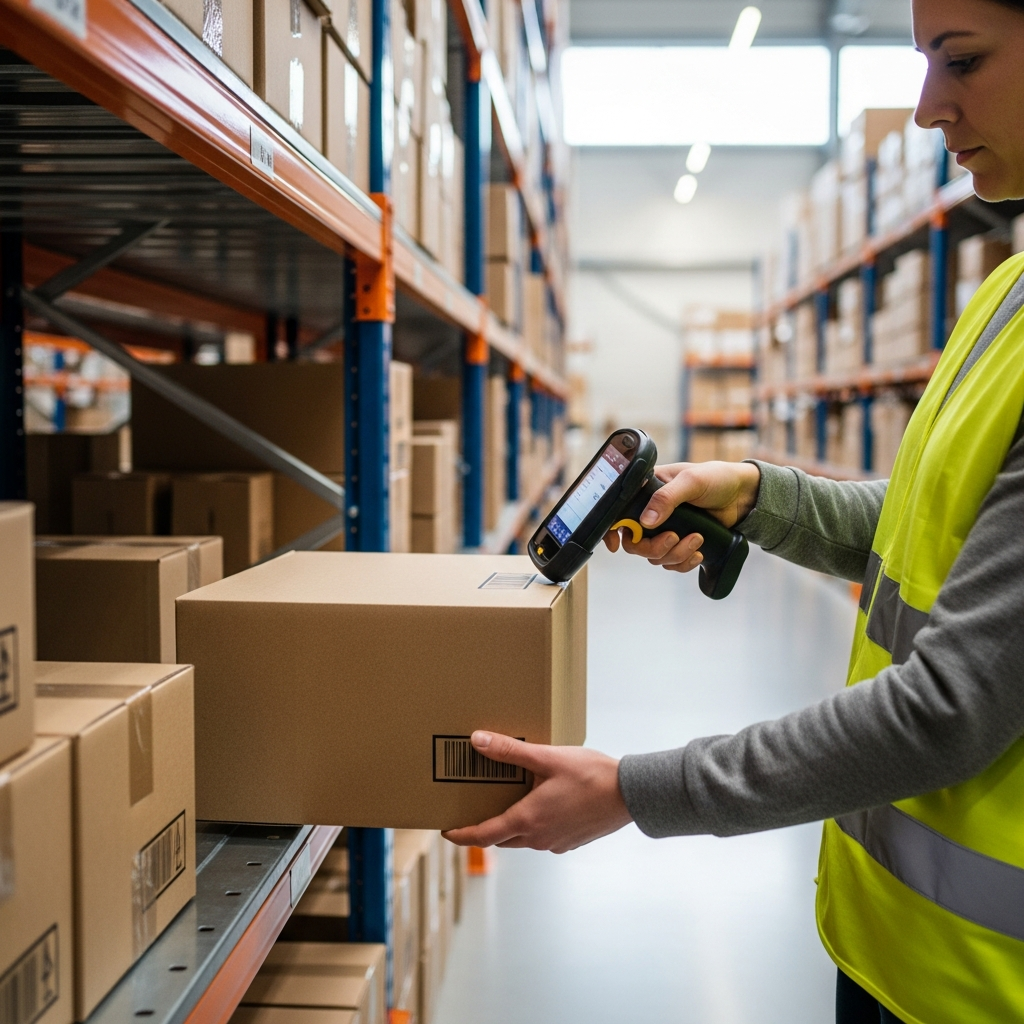 Warehouse efficiency: the real speed constraint
Geography and facility placement
In a country as large as Canada, geography may be the most underappreciated factor in delivery speed. Shipping fast from a single facility still means multi-day transit to customers on the far side of the country, no matter how efficient the warehouse is. Distributing inventory across multiple facilities — for example holding stock near the major population centres in Ontario, Quebec, British Columbia, Alberta, and the National Capital Region — shortens the distance to most customers and lets more of them receive next-day or even same-day delivery on standard ground services, without paying for expedited air. This is why facility placement is often a bigger lever on delivery speed than warehouse processing speed. For brands with national customer bases, the question is not only 'how fast can our warehouse ship?' but 'how close is our inventory to our customers?' — and the second question frequently offers the better return.
Balancing speed against cost
Every increment of speed carries a cost, and the discipline is matching speed to what customers value rather than chasing speed for its own sake. Same-day operations require staffing to clear the queue before cutoff, more frequent carrier pickups, and less tolerance for error. Expedited carrier services cost more than ground. Distributed inventory reduces transit time but increases the complexity and carrying cost of holding stock in multiple places. None of these are wrong — they are trade-offs to make deliberately. The most profitable approach is usually tiered: offer a fast option for customers willing to pay for it or who genuinely need it, while making a reliable standard speed the default. That lets the customers who value speed self-select and pay for it, while protecting margin on the majority of orders where next-business-day shipping is perfectly acceptable. The worst outcome is subsidizing universal same-day service that most customers did not ask for.
The goal is not to be the fastest possible. It is to make the fastest promise you can keep every single time, at a cost your margins support, for the customers who actually value speed.
How ByExpress approaches fulfillment speed
ByExpress builds speed on operational efficiency rather than heroics. Same-day and next-day shipping are supported where the process reliably allows it, with order cutoff times set honestly by working back from carrier pickups so that the promise made at checkout is the promise kept. Real-time inventory and disciplined slotting and pick paths keep processing fast and consistent, including through promotional spikes and peak season when reliability matters most. With facilities across Canada — including the National Capital Region, Toronto, Montreal, Vancouver, and Calgary — inventory can be positioned close to your customer base, shortening transit and expanding how many customers qualify for fast delivery on standard services. The result is a fulfillment operation designed to hit the speed your customers actually expect, every time, rather than an aggressive promise that slips under pressure.
Frequently Asked Questions
What is the difference between same-day fulfillment and same-day delivery?
Same-day fulfillment means the order leaves the warehouse the same day it is placed. Same-day delivery means it reaches the customer the same day, which also depends on carrier transit and distance. A warehouse can ship same-day, but a customer far from the facility may still wait several days for delivery. They are different promises with very different operational requirements.
Should my brand offer same-day or next-day shipping?
It depends on your customers and category. Next-day shipping is easier to deliver reliably and adequate for most everyday e-commerce. Same-day is a strong differentiator for gifting, urgent replacements, or premium positioning, but it compresses the working window and costs more. Choose the fastest speed you can hit reliably, not the fastest speed you can theoretically achieve.
How does an order cutoff time work?
The order cutoff is the deadline by which an order must be placed to ship that day. It is set by working back from the carrier's last pickup, minus the time the warehouse needs to pick, pack, and manifest orders. Efficient operations can offer later cutoffs, so more orders qualify for same-day shipping. Orders placed after the cutoff ship the next business day.
Why does warehouse efficiency affect shipping speed so much?
Fulfillment speed is how quickly a warehouse turns an order into a dispatched parcel. Efficient slotting, short pick paths, batch picking, organized packing stations, and accurate real-time inventory all reduce that time. Efficiency also makes speed sustainable during promotions and peak, when a poorly designed operation slows down. Speed is the output of a well-designed process, not just working staff harder.
Is shipping from one warehouse fast enough for a national customer base?
Often not, because Canada's size means multi-day ground transit from a single facility to distant customers regardless of how fast the warehouse ships. Distributing inventory across facilities near major population centres shortens the distance to most customers and lets more of them receive next-day or same-day delivery on standard services. Facility placement is frequently a bigger lever on delivery speed than warehouse processing speed.
Is faster shipping always worth the cost?
No. Every increment of speed adds cost through staffing, more frequent pickups, expedited carriers, or distributed inventory. The most profitable approach is usually tiered: offer a fast option for customers who value or need it while keeping a reliable standard speed as the default. Match speed to what customers actually want rather than subsidizing universal same-day service most did not ask for.
Related ByExpress resources