Guide · · 12 min read
TikTok Shop Fulfillment in Canada: A 2026 Operations Playbook
TikTok Shop has rewritten the rules for DTC fulfillment in Canada — viral demand spikes, tight delivery promises, and a customer base that punishes slow shipping. Here's how to operate TikTok Shop fulfillment without burning down your inventory or your customer reviews.
TikTok Shop has changed the operating reality of Canadian DTC fulfillment more than any single platform since Shopify. The combination of algorithmic demand spikes (a single viral video can generate 5,000+ orders in 12 hours), tight delivery expectations (TikTok customers expect 2-day delivery as the default), and a customer base hyper-sensitive to negative review virality means the fulfillment infrastructure that worked fine for Shopify-only DTC frequently buckles under TikTok-driven load. This guide explains what TikTok Shop fulfillment actually requires, how to plan for viral demand without overcommitting working capital, and what to demand from a Canadian 3PL serving TikTok Shop sellers.
What TikTok Shop is and what's different about it operationally
TikTok Shop is TikTok's native e-commerce platform, allowing sellers to list product directly within TikTok and customers to purchase without leaving the app. Sellers can fulfill themselves (seller-fulfilled), use TikTok's Fulfilled by TikTok (FBT) program in some markets, or use third-party 3PLs. TikTok Shop launched in Canada in stages through 2024–2025 and has rapidly become a top-five DTC channel for several categories — beauty, fashion, supplements, kitchen gadgets, fitness, and pet. Operationally, TikTok Shop differs from other channels in three meaningful ways: demand is algorithmic and bursty (a video that gets 100K views can generate 0 orders or 5,000 orders depending on conversion), delivery promises are tight and visibly displayed (TikTok shows estimated delivery dates prominently), and customer reviews are public, video-format, and viral — bad fulfillment experiences spread fast.
A TikTok Shop video that goes viral at 11 PM can drive 2,000+ orders before your operations team is awake the next morning. The fulfillment infrastructure that handles your steady-state Shopify volume gracefully often crumbles under that kind of overnight spike — and the customers from a viral video are often first-time buyers whose entire impression of your brand depends on the delivery experience.
Demand-spike planning: the TikTok-specific discipline
The single biggest operational challenge in TikTok Shop fulfillment is variability. A brand running 200 orders/day on Shopify might suddenly need to fulfill 3,000 orders in a single day after a viral moment, then drop back to 250 the next day. Traditional fulfillment infrastructure (fixed pick-pack capacity, conservative inventory positions, slow-cadence carrier negotiations) is poorly suited to that pattern. The brands and 3PLs that win on TikTok Shop have specific demand-spike disciplines: surge-capacity arrangements with their 3PL (the ability to ramp pick-pack capacity 5–10x within 24 hours, typically through pre-approved overtime or temp-staffing); inventory positioning that anticipates spike potential (more buffer on SKUs being actively promoted in TikTok content); carrier capacity reservations during forecasted promotional windows; and real-time order-volume monitoring with automated alerting to ops teams when volume exceeds defined thresholds.
Delivery expectations and carrier strategy for TikTok Shop
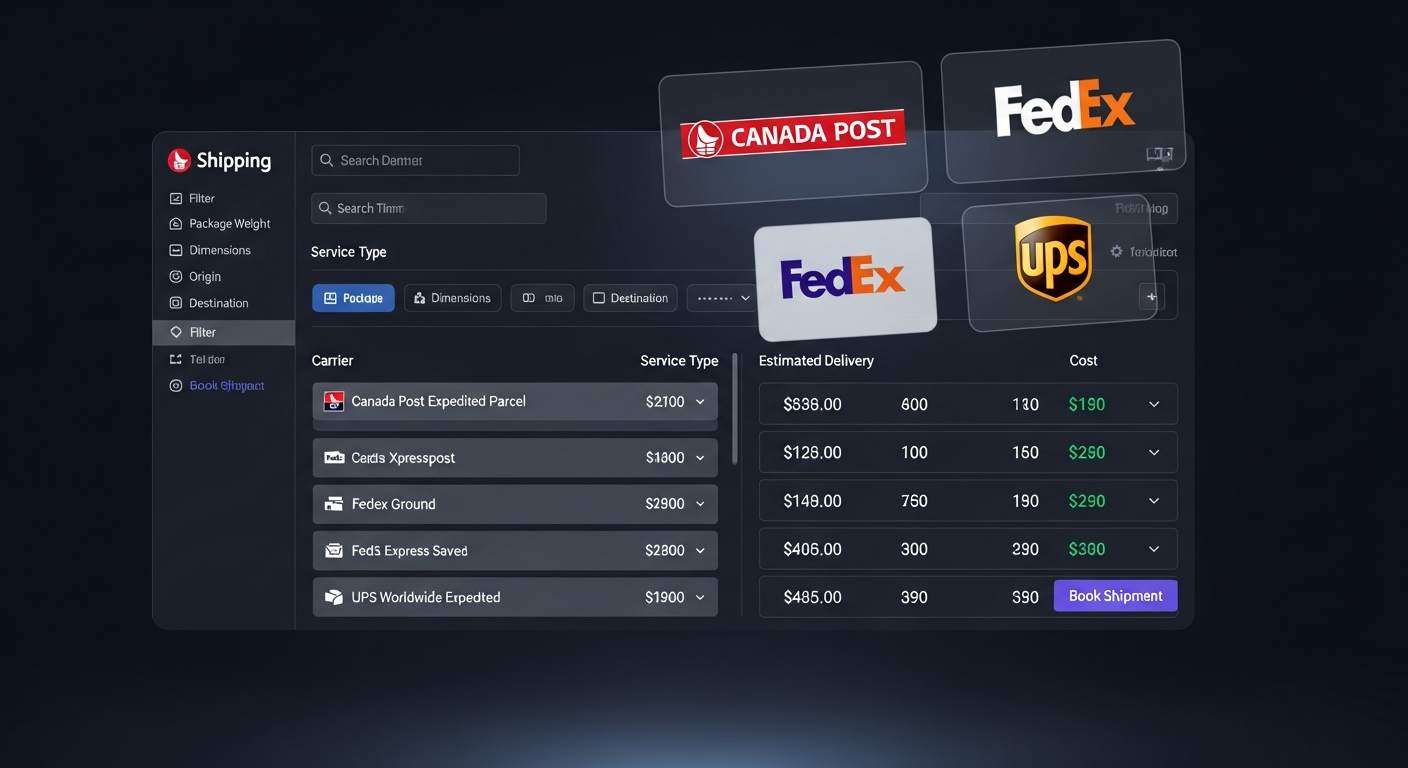
TikTok Shop displays an estimated delivery date prominently on every product listing — and unlike Amazon's somewhat opaque 'Prime delivery' promise, TikTok's date is calculated specifically against your fulfillment SLA and carrier transit time. Slow promised dates suppress conversion; missed promised dates trigger negative reviews. Most Canadian TikTok Shop sellers target a 2-day delivery promise to high-density markets (GTA, Montreal, Vancouver, Calgary, Ottawa-Gatineau, Edmonton) and a 3-5 day promise to far regions. Hitting that promise consistently requires: same-day or next-business-day order cutoff (rather than the 1-2 day window many 3PLs use); aggressive multi-carrier rate shopping that prioritizes speed over absolute lowest cost when transit time is the constraint; multi-location inventory positioning to reduce zone count; and carrier relationships that handle volume spikes without putting your shipments in next-day carrier-side queues.
 Delivery expectations and carrier strategy for TikTok Shop
TikTok Shop returns: a different beast
TikTok Shop return rates run higher than most other DTC channels — typically 18–28% across categories, versus 12–25% category averages on other platforms. Several drivers: TikTok customers are often first-time buyers from a viral moment with weaker brand affinity; TikTok product discovery is video-driven, which over-sells on appearance and under-explains on detail (sizing, ingredients, technical specs); and TikTok's customer base skews younger and is more comfortable with returns as a normal part of online shopping. Returns volume hits 3PL operations on a delay — usually 7–21 days after the original viral spike — meaning a single viral moment creates two distinct operational waves: outbound spike, then returns spike. Returns operations need to be sized to absorb both.
Compliance and category considerations on TikTok Shop Canada
TikTok Shop has specific category rules that vary by jurisdiction. In Canada, supplements and natural health products require valid NPN (Natural Product Number) registration with Health Canada and TikTok validates this during seller onboarding. Cosmetics require Cosmetic Notification Form (CNF) submission. Food products require SFCR compliance. Restricted categories (CBD, certain weight-loss products, certain wellness claims) are either prohibited or heavily moderated. A TikTok-ready 3PL needs documented experience handling category-specific compliance — not just fulfillment, but understanding which categories require what documentation and how to maintain compliance documentation accessible to TikTok's seller support team during account audits.
What to look for in a TikTok-ready 3PL
Beyond standard 3PL evaluation criteria, TikTok-specific considerations: documented surge capacity (specifically: how many orders/day can you scale to within 24 hours notice, and what is the cost premium); same-day or next-business-day order cutoff; direct TikTok Shop API integration with real-time order sync; multi-carrier rate shopping prioritizing TikTok's promised delivery dates; multi-location inventory positioning if your TikTok demand is geographically diverse; experience with TikTok-specific category compliance (NPN, CNF, SFCR documentation handling); and returns infrastructure sized for TikTok-elevated return rates. Critically: ask for case studies or references from other TikTok Shop brands the 3PL has handled through a viral moment — generic 'we can handle volume' claims are not the same as documented operational performance during actual spikes.
 What to look for in a TikTok-ready 3PL
Creator collaborations and influencer-driven fulfillment
Beyond TikTok Shop's primary commerce flow, many brands use TikTok creator partnerships and seeding programs that drive fulfillment requirements distinct from primary commerce. Creator seeding programs (sending free product to influencers in exchange for content) require small-batch personalized fulfillment with specific creator names, addresses, and packaging treatments — different operational profile than commerce fulfillment. Creator-driven affiliate links and Spark Ad campaigns can drive demand spikes that look operationally identical to viral organic moments. A serious TikTok-ready 3PL handles both standard commerce fulfillment and creator-seeding fulfillment as distinct workflows, with batch processing and personalization for the latter.
TikTok Shop operations at ByExpress
ByExpress operates direct TikTok Shop API integration with real-time order sync, automated SLA monitoring against TikTok's promised delivery dates, and surge-capacity arrangements that allow pick-pack ramp of 5–10x within 24 hours notice for brands with active TikTok marketing programs. Multi-location inventory positioning across our five Canadian fulfillment locations supports tight delivery promises into the GTA, Montreal, Vancouver, Calgary, Edmonton, and Ottawa-Gatineau regions. Returns infrastructure is sized to absorb the post-viral returns wave that follows demand spikes. Creator-seeding workflows are supported as a distinct service alongside primary TikTok Shop commerce fulfillment.
Frequently Asked Questions
Is TikTok Shop available in Canada?
Yes — TikTok Shop launched in Canada in stages through 2024–2025 and is now widely available to Canadian sellers across most categories. Some restricted categories (CBD, certain wellness products) remain prohibited or limited; supplements and cosmetics require valid Health Canada documentation (NPN, CNF) before activation.
What's different about TikTok Shop fulfillment versus Shopify or Amazon?
Three things: demand is algorithmic and bursty (viral moments can drive 5,000+ orders in 12 hours); delivery promises are tight and prominently displayed (typically 2-day expected for major Canadian metros); and customer review virality means fulfillment failures spread fast through the same algorithm that drives demand. Operations need surge capacity, fast cutoffs, and tight carrier discipline that's not always required on other channels.
How do I plan for TikTok demand spikes?
Pre-arranged surge capacity with your 3PL (defined ramp-up SLA, typically 5–10x daily volume within 24 hours), inventory positioning that anticipates spike potential on actively-promoted SKUs, carrier capacity reservations during forecasted promotional windows, and real-time order-volume monitoring with automated alerting. Brands without these arrangements regularly miss delivery promises during viral moments and absorb the resulting customer experience damage.
What's the typical return rate on TikTok Shop?
Higher than most other DTC channels — typically 18–28% across categories versus 12–25% category averages elsewhere. Drivers include first-time-buyer customer mix, video-driven product discovery that under-explains detail, and a younger customer base more comfortable with returns. Plan returns operations to absorb both the original spike volume and the returns wave 7–21 days later.
What carrier strategy works best for TikTok Shop?
Multi-carrier rate shopping that prioritizes TikTok's promised delivery dates rather than absolute lowest cost. For tight 2-day promises into far regions, FedEx and UPS Express services often beat ground options. For dense urban deliveries, Intelcom and FlashBox can hit 1-day promises at competitive rates in Quebec and Ontario. The right carrier depends on the specific shipment — single-carrier strategies miss the optimization.
Can I use Walmart WFS or Amazon FBA for TikTok Shop orders?
Generally no — both WFS and FBA are designed for their respective marketplace orders, with technical and contractual restrictions on routing other-channel orders through them. Some brands use multi-channel FBA (MCF) for limited cross-channel order routing, but TikTok Shop's tight delivery promises and surge dynamics typically don't fit MCF's operational profile well. A dedicated 3PL with TikTok Shop integration is usually the right approach.
Related ByExpress resources