Guide · · 16 min read
Setting Up Warehousing & Fulfillment Operations in Vancouver: The Complete 2026 Guide
Standing up a Vancouver warehouse is a six-figure decision with a five-year tail. This is the operator's guide — submarkets, equipment, hiring, WMS, carrier mix, and how to move inventory into BC without breaking reconciliation.
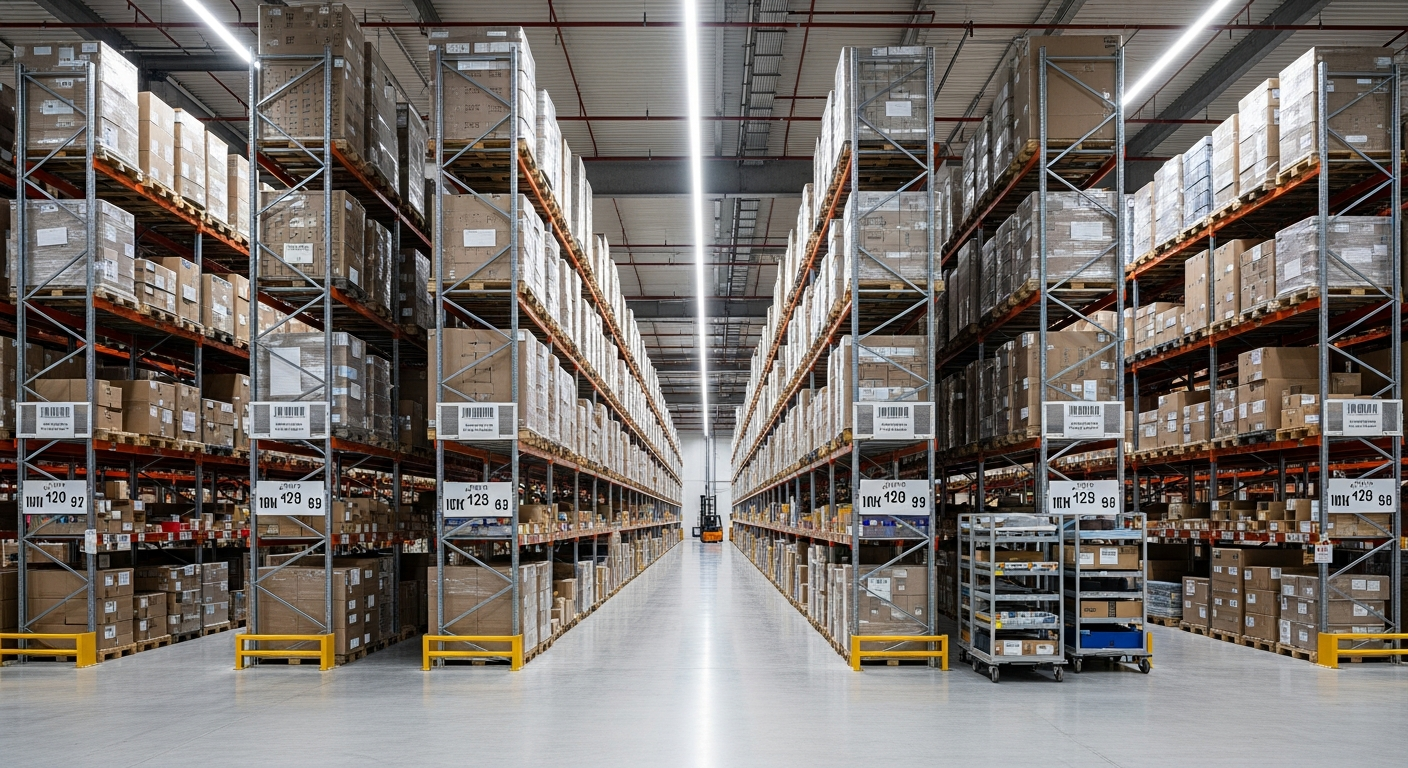
Standing up a warehousing or fulfillment operation in Vancouver is one of the most consequential decisions a growing brand will make. It is a six-figure commitment with a five-year tail — once a lease is signed, racking is installed, and a team is hired, the operation is effectively locked in until the next major lease event. Get it right and Vancouver becomes the highest-leverage node in your Canadian network: the closest North American port to Asia, the fastest path to the U.S. Pacific Northwest, and a launchpad for Western Canada that no Eastern Canadian node can match on transit time. Get it wrong — wrong submarket, wrong equipment, wrong hiring profile, wrong carrier mix — and the same operation becomes the most expensive line on your P&L. This 2026 guide walks through every decision in the order it has to be made, with the honest numbers and the surprises that catch most first-time BC operators off-guard.
Before anything else: is Vancouver actually the right node?
The first decision is the one most brands skip. Vancouver is not the right primary node for every Canadian operation, despite its strategic importance. The honest test has three questions. First: is your demand more than 35% Western Canada (BC, Alberta, Saskatchewan, Manitoba) plus U.S. Pacific Northwest? If yes, Vancouver pays for its premium in carrier savings within the first year. If no, you are likely better off anchoring inventory in Toronto, Ottawa, or Montreal and using Vancouver as a secondary node only. Second: do you import meaningful volume from Asia? Brands importing 20+ containers per year through the Port of Vancouver capture the full transit advantage and the duty deferral upside of bonded warehousing. Third: do you sell into the U.S. West Coast at any scale? If Seattle, Portland, San Francisco, and LA together represent more than 15% of your U.S. demand, Vancouver becomes a viable cross-border-injection node and the math swings heavily in BC's favour.
Cheap test: pull your last 12 months of orders, weight them by postal code/ZIP, and calculate the average outbound shipping cost if everything shipped from Toronto vs Vancouver. The delta is usually larger than founders expect — and it answers the 'do I need Vancouver' question more reliably than any consultant deck.
The submarket decision: Surrey, Delta, Burnaby, Richmond, Tri-Cities
Greater Vancouver industrial real estate is at least five separate markets with materially different cost structures, transit profiles, labour pools, and risk characteristics. Surrey is the largest, fastest-growing, and generally cheapest of the major submarkets — newer high-clear buildings, more available land, and the most depth of warehouse-labour talent. Delta sits adjacent to Deltaport and Roberts Bank, making it the most cost-efficient choice for high-throughput container operations where drayage cost dominates. Burnaby is closer to downtown and the densest urban delivery zones, justifying its premium for any operation where last-mile speed into Vancouver proper matters. Richmond is closest to YVR airport, ideal for time-sensitive air-cargo and reverse logistics involving import returns. The Tri-Cities (Coquitlam, Port Coquitlam, Port Moody) are the secondary-distribution and overflow submarket — typically 15–20% cheaper than Burnaby with acceptable transit into Metro Vancouver but materially worse access to the port.
| Submarket | 2026 Lease ($/sq ft) | Drive to Port | Best For |
|---|
| Surrey | $17 – $22 | 35–55 min | General fulfillment, larger footprints, growing brands |
| Delta / Tilbury | $19 – $24 | 15–25 min | Container-heavy import operations near Deltaport |
| Burnaby | $22 – $27 | 25–35 min | Urban same-day delivery, downtown DTC density |
| Richmond | $23 – $28 | 20–30 min | Air cargo, YVR-adjacent, reverse logistics |
| Coquitlam / PoCo | $18 – $22 | 45–60 min | Mid-Fraser overflow, secondary distribution |
| Annacis Island | $20 – $25 | 20–30 min | Mid-size import operations, balanced port + labour access |
Equipment, racking, and the MHE budget no one warns you about
Once a lease is signed, the first six-figure surprise is usually the equipment list. A 20,000 sq ft fulfillment operation typically requires: pallet racking ($35–$55 per pallet position installed, so ~$60K–$110K for a 1,600-position rack layout), one to two electric forklifts ($28K–$45K each new, $14K–$22K used and serviceable), pallet jacks ($600 new manual, $4,500 electric), packing benches and packout stations ($1,800–$3,500 each fully equipped), label printers ($1,200–$2,200 each), barcode scanners and mobile terminals ($800–$1,800 each), and WMS licensing ($800–$3,500/month depending on platform and modules). For a brand standing up its own operation rather than partnering with a 3PL, the equipment-and-fit-out budget for a 20,000 sq ft Vancouver facility typically runs $180K–$320K all-in, before any inventory arrives.
- Racking: $35–$55 per pallet position installed
- Electric forklift: $28K–$45K new, $14K–$22K used (verify maintenance history)
- Pallet jack: $600 manual, $4,500 electric
- Packout station: $1,800–$3,500 each fully equipped
- Label printer: $1,200–$2,200 (Zebra ZT411 or equivalent)
- Mobile barcode terminal: $800–$1,800 each
- WMS license: $800–$3,500/month depending on modules and order volume
- Network/wireless infrastructure for warehouse-grade scanner coverage: $8K–$18K
Hiring warehouse staff in BC: the labour-market reality
BC warehouse labour is the tightest of any major Canadian industrial market. BC's minimum wage rose to $17.85 in mid-2025 and is indexed to inflation; competent warehouse pickers in Vancouver generally start at $20–$22/hr in 2026, experienced supervisors at $32–$42/hr, and inventory-control specialists at $28–$36/hr. Beyond the wage rates, the harder constraint is availability — Surrey, Delta, and Burnaby industrial employers compete aggressively for the same labour pool, and any hiring strategy that assumes 'we'll just post a job and the right people will apply' will fail. The reliable pattern is referrals from current staff (paid out as $300–$800 referral bonuses), partnerships with one or two specialized industrial staffing agencies (commission typically 18–25% of first-year wages), and a willingness to hire a 50/50 mix of full-time and casual labour to absorb peak-season demand without locking in headcount that becomes idle in Q1.
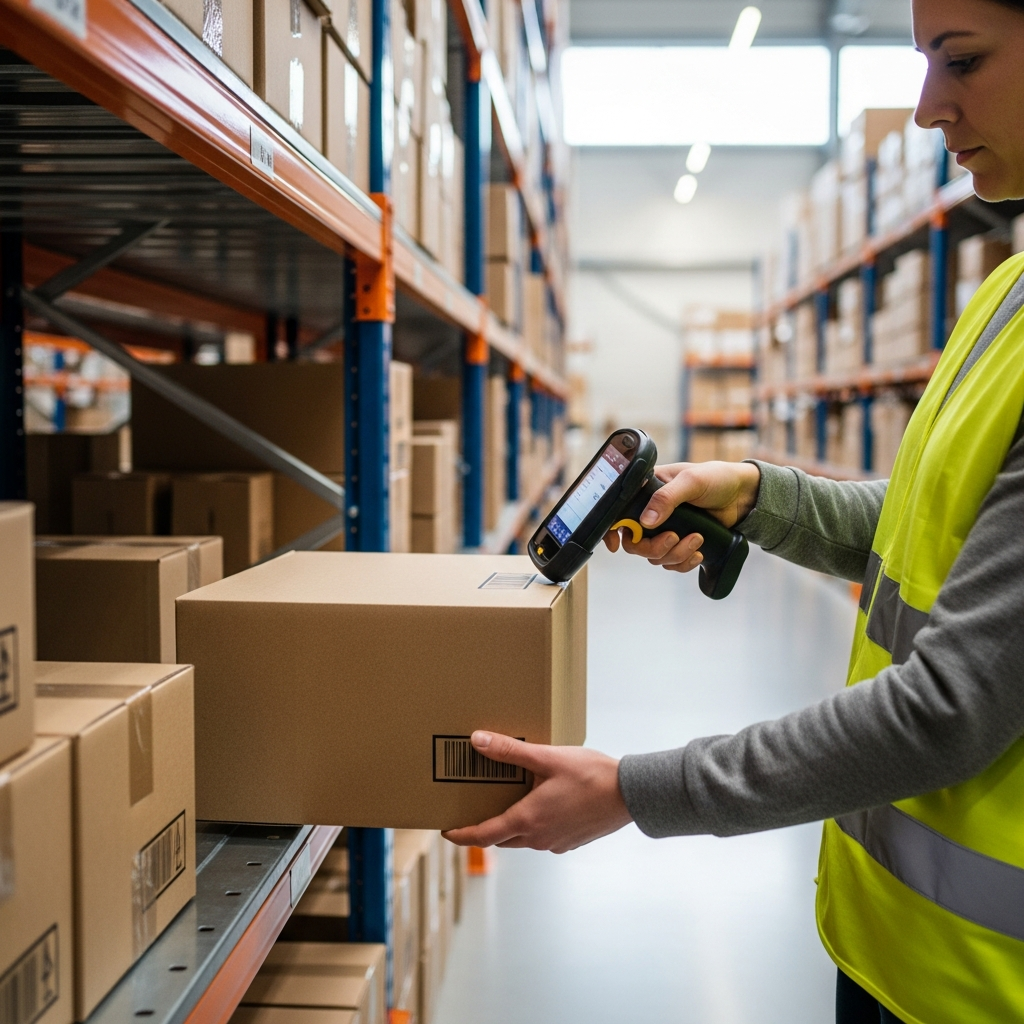 BC warehouse labour is the tightest in Canada — referral programs and staffing agency partnerships are essential.
Transferring existing inventory into Vancouver
If you are standing up a Vancouver operation while maintaining an existing eastern node, the inventory transfer is the highest-risk leg of the project. The cleanest pattern: identify the SKUs that will live in Vancouver (typically your top-50 by Western Canada and U.S. West Coast velocity), cycle-count those SKUs to a clean baseline in the source warehouse, freeze inbound and outbound on those SKUs for the transfer window, ship by full pallet on a dedicated trailer (do not split across LTL — too many touch points, too much damage and miscount risk), receive at the Vancouver facility with carton-level scan-in matched to the origin scan-out, and reconcile within 24 hours. A 20,000-unit transfer from Toronto to Vancouver typically takes 5–7 calendar days door-to-door and costs $4,200–$7,500 in line-haul plus the staff time on both ends. Brands that try to save money by splitting the transfer across multiple smaller shipments routinely lose 1–4% of the inventory to reconciliation gaps — a false economy.
Building the right Vancouver carrier mix
Vancouver's carrier landscape is richer than most Canadian markets and rewards aggressive rate-shopping. The national carriers (Canada Post, Purolator, FedEx, UPS, DHL eCommerce) all run aggressive Vancouver hubs and compete hard for B2B and longer-distance lanes. The regional carriers are where Vancouver's real cost advantage lives: Intelcom and FlashBox specialize in urban residential density at price points the national carriers cannot match for Metro Vancouver delivery; ATS Healthcare, Day & Ross, and Manitoulin compete on B2B and oversize LTL; and a number of owner-operator regional carriers handle BC Interior and Vancouver Island routes that the nationals price punitively. A rate-shopping setup that automatically selects the cheapest viable carrier per parcel at label-time typically saves 12–18% versus a single-carrier rate card — and 18–25% versus pure Canada Post for any operation with meaningful urban residential volume.
| Carrier Type | Best For (Vancouver) | Typical Rate Position |
|---|
| Canada Post | Rural BC, residential nationwide, Atlantic | Baseline — beat on urban density, win on rural |
| Purolator Ground | B2B next-day Lower Mainland + Western Canada | 10–18% premium to Canada Post on residential |
| FedEx International / Ground | U.S. West Coast cross-border, expedited | Strongest on Section 321 + U.S. injection |
| UPS Canada | Cross-border, B2B Western Canada | Comparable to FedEx; rate-shop both |
| Intelcom / FlashBox | Metro Vancouver residential density | 15–30% under national carriers on urban DTC |
| Day & Ross / Manitoulin | B2B LTL, oversize, Western Canada lanes | Often beats Purolator Freight on >150 lb |
WMS and integrations: the operational nervous system
The WMS decision is the technical decision with the longest tail. The wrong WMS choice in year one becomes a multi-quarter migration project in year three. The right WMS for a brand standing up a Vancouver operation depends primarily on order volume, channel mix, and integration requirements. Brands shipping under 10,000 orders per month and selling primarily through Shopify, Amazon, or one or two retail channels are well-served by mid-market WMS platforms (ShipHero, Extensiv, Logiwa, Cin7 Core) that integrate natively with the major e-commerce platforms and offer reasonable per-order pricing. Brands above 10,000 monthly orders, with multi-channel B2B and EDI requirements, multi-currency, or complex returns flows, typically need a higher-tier WMS (Manhattan Active, Körber, Microlistics, or a deep NetSuite WMS deployment). The single most common mistake: choosing a low-end WMS to save money in year one, then discovering in year two that it cannot handle EDI 940/856 for a Walmart Canada or Loblaw vendor program — at which point the migration cost dwarfs the year-one savings ten times over.
Port of Vancouver drayage and bonded warehousing — the import lever
For brands importing from Asia, drayage and bonded warehousing are the two levers that determine whether the Vancouver premium pays off. Drayage from Centerm, Vanterm, or Deltaport to a Surrey, Delta, or Burnaby warehouse costs $475–$725 per container move in 2026 before fuel surcharges, chassis splits, and waiting-time charges — and Vancouver port congestion regularly pushes gate turn times to 4+ hours per move. Brands importing 20+ containers per year should prioritize 3PLs (or in-house operations) with direct drayage carrier relationships, which typically negotiate $75–$125 per container off published rates and crucially avoid demurrage by pre-staging inland moves. Bonded warehouse status, meanwhile, allows imported inventory to be stored without paying duty until it actually leaves the warehouse for sale — a meaningful working-capital advantage for any brand with more than ~$500K in landed annual inventory. The Canada Border Services Agency licenses bonded warehouses by class; a Class 2 license covers most general-merchandise import operations.
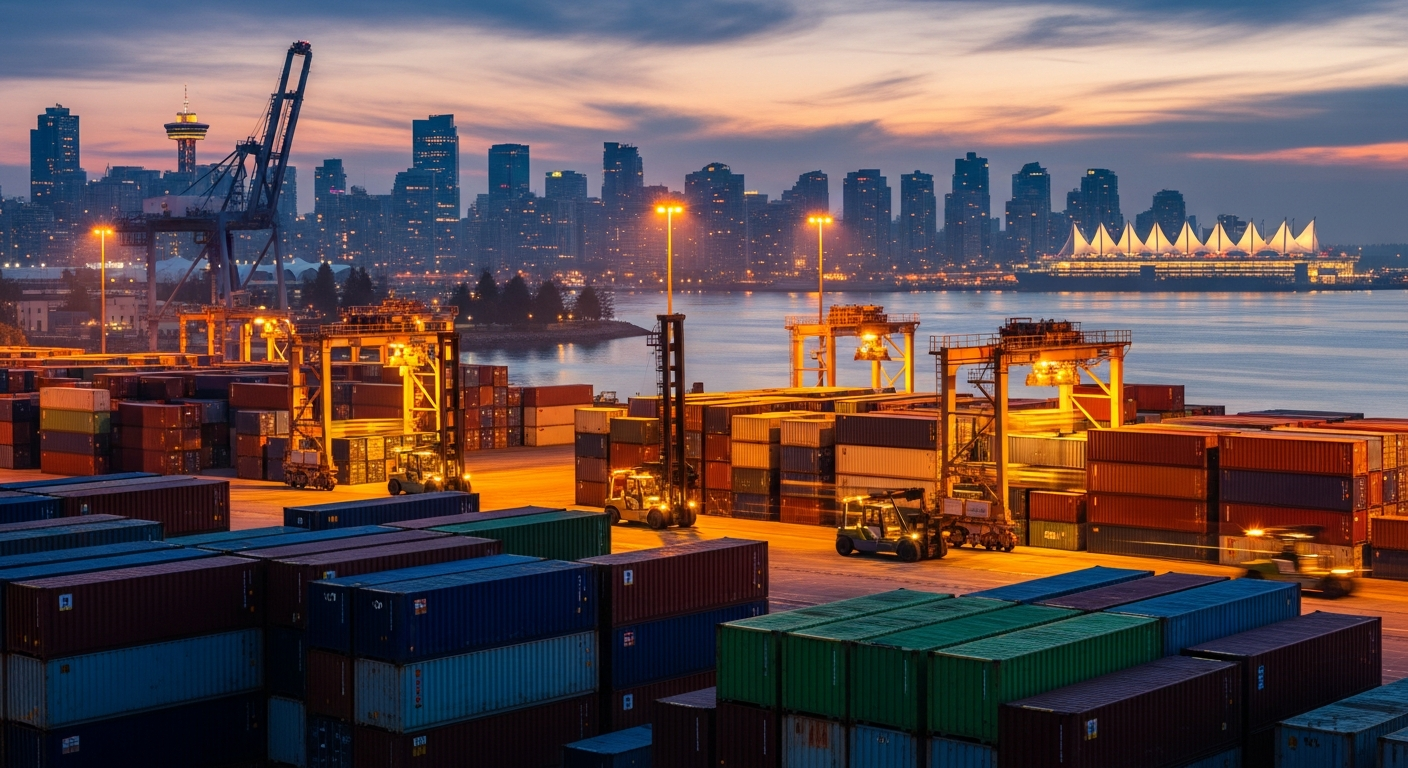 Vancouver drayage ($475–$725/container) and bonded warehousing decisions determine whether the Vancouver premium pays off.
Build your own vs partner with a Vancouver 3PL
The build-vs-buy decision is rarely binary. For brands shipping under 4,000 outbound parcels per month, partnering with an established Vancouver 3PL is almost always cheaper than running your own operation once rent, labour, WMS licensing, MHE, and management overhead are honestly modelled. Between 4,000 and 12,000 monthly parcels, the answer depends on SKU count, returns rate, channel mix, and how integrated fulfillment is with your product team — many brands at this stage run a hybrid (3PL for DTC, in-house for B2B and retail-replenishment). Above 12,000 monthly parcels, in-house typically wins on unit economics but loses on flexibility — the brand is now locked in to a specific cost structure that does not scale down in slow quarters. The cleanest build-vs-buy framework is to model three years of unit economics for both options at projected volume, then add a 20% pessimism adjustment to the in-house numbers (because in-house operations almost always cost more than the spreadsheet suggests) and re-decide.
Hybrid model worth considering: partner with a Vancouver 3PL for the first 18 months while you validate the BC operation, learn the carrier mix, and build customer-facing reliability — then re-evaluate in-house once you have real data on volume, mix, and seasonality. Brands that try to skip the 3PL phase frequently underestimate their own learning curve.
Ongoing operations: storage, scaling, and seasonality
Once the Vancouver operation is live, the ongoing operational reality is shaped by three forces: storage cost, peak-season scaling, and the BC weather/event calendar. Storage in Vancouver runs $28–$40 per pallet per month for ambient, $32–$46 for bonded, and $58–$95 for climate-controlled or food-grade — materially above other Canadian markets and worth aggressive cycle-counting to avoid carrying obsolete stock. Peak-season scaling (October through January for most consumer brands) requires planning by August at the latest; staffing agencies serving BC industrial book peak-season slots three to four months in advance. The BC weather/event calendar is the underappreciated variable: the Lower Mainland sees occasional but significant snow events that paralyze drayage and Lower Mainland trucking for 24–72 hours, BC ferry disruptions affect Vancouver Island delivery, and the Pacific port labour environment (ILWU Canada represents BC longshore workers) creates contract-cycle risk every few years. Any Vancouver operation should maintain 1.2–1.5x normal inventory on the most velocity-sensitive SKUs as buffer against these events.
Frequently Asked Questions
How much does it cost to set up a Vancouver warehouse from scratch?
All-in fit-out for a 20,000 sq ft operation typically runs $180,000–$320,000 before inventory arrives — racking, MHE (forklifts, pallet jacks), packout stations, label printers, scanners, network infrastructure, and WMS licensing. Add 12–18 months of $22/sq ft lease, three to four staff at $20–$22/hr, and a working-capital cushion to model the true year-one investment.
Which Vancouver submarket is best for fulfillment?
Surrey for general-purpose fulfillment and larger footprints (it has the most depth of labour and the lowest lease cost). Delta for container-heavy import operations adjacent to Deltaport. Burnaby for urban same-day delivery into Metro Vancouver. Richmond for air-cargo and YVR-adjacent operations. Tri-Cities (Coquitlam, Port Coquitlam, Port Moody) for overflow and secondary distribution at 15–20% lower cost than Burnaby.
What does Vancouver warehouse storage cost per pallet?
Ambient pallet storage in 2026 runs $28–$40 per pallet per month, bonded $32–$46, and climate-controlled or food-grade $58–$95. Vancouver is the most expensive storage market in Canada — 15–25% above Toronto and 25–40% above Ottawa or Calgary — driven by the highest industrial lease rates in the country.
How long does inventory transfer from Toronto to Vancouver take?
Five to seven calendar days door-to-door for a full pallet shipment on a dedicated trailer. Costs run $4,200–$7,500 in line-haul, plus the staff time to scan-out at origin, scan-in at destination, and reconcile. Do not split the transfer across multiple LTL shipments — the savings rarely exceed 1% of inventory value, and reconciliation losses typically run 1–4% on split transfers.
Do I need bonded warehousing in Vancouver?
If you import more than approximately $500,000 in landed inventory per year from outside Canada, bonded warehousing usually pays for itself in working-capital savings within the first quarter. Bonded status allows duty to be deferred until the inventory leaves the warehouse for sale, which is a meaningful cash-flow advantage. Brands with under $500K annual landed import value typically do not see enough deferral upside to justify the bonded premium.
How does Vancouver compare to other Canadian fulfillment cities on cost?
Vancouver is the most expensive Canadian fulfillment market, running 12–20% above Ottawa, 8–14% above Toronto, and 18–28% above Calgary on a comparable cost-per-order basis. The premium is paid back when your demand is meaningfully Western-Canada-weighted, you import significant volume from Asia, or you serve the U.S. Pacific Northwest at scale. For brands without those characteristics, Toronto or Ottawa is almost always more cost-efficient.
Should I use a 3PL or run my own Vancouver warehouse?
Under 4,000 monthly parcels, partnering with a Vancouver 3PL is almost always cheaper. Above 12,000 monthly parcels, in-house typically wins on unit economics but loses on flexibility. Between 4,000 and 12,000, the answer depends on SKU count, returns rate, channel mix, and how operationally integrated fulfillment is with your product team. Many brands run a hybrid: 3PL for DTC, in-house for B2B and retail replenishment.
Related ByExpress resources